 Sudden Valley Siding
 Composite Decking Built for Silver Beach's Climate
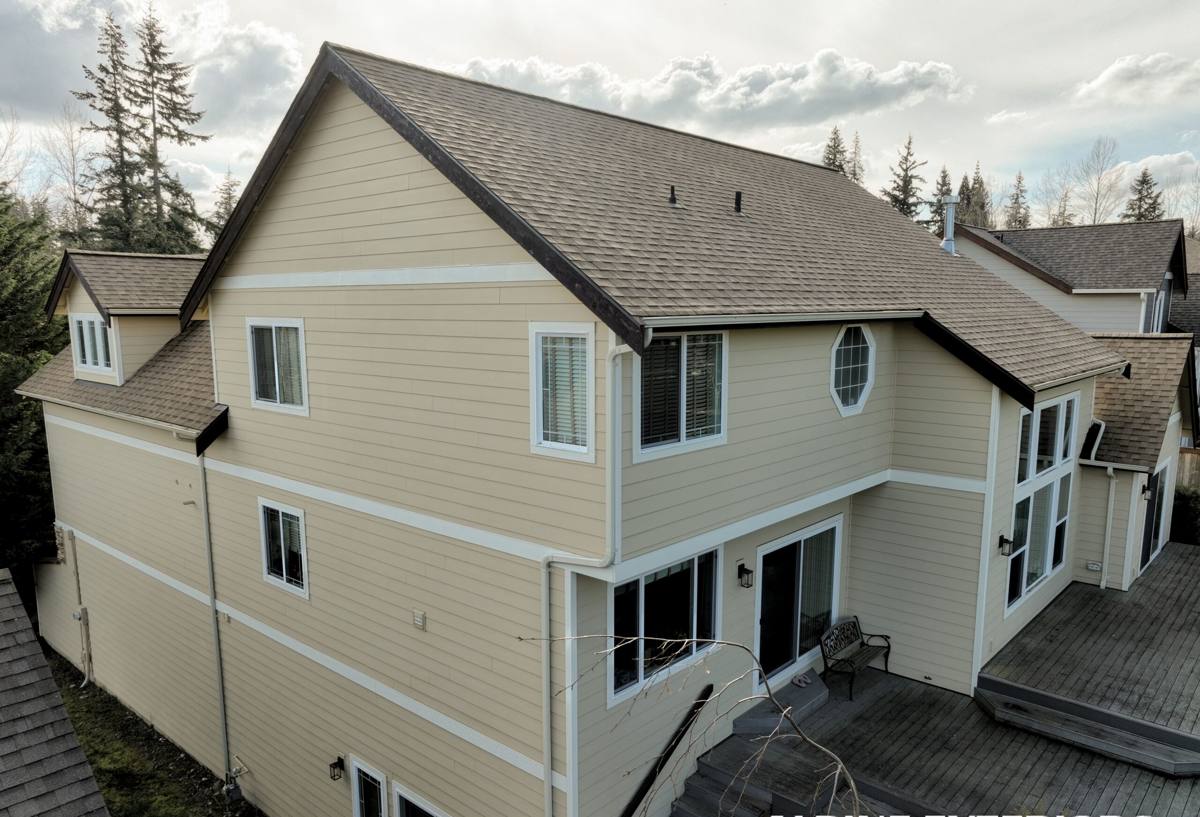
Silver Beach sits close enough to Lake Whatcom and the broader Sudden Valley area that decks here take a beating most inland Washington homes never see. Between the driving rain off the water, a moss season that can stretch from October well into spring, and the damp, shaded microclimate that comes with mature tree cover and lake proximity, an outdoor deck in this neighborhood is working hard year-round. Composite decking, installed correctly, is one of the few deck systems that actually holds up to that combination without turning into a maintenance chore every spring.
This page is about composite decking specifically for Silver Beach — what the climate demands, what a correct installation actually involves, and how we approach the job when we're building or replacing a deck in this part of Whatcom County.
What Silver Beach's Climate Does to a Deck
Three things drive most of the deck problems we see in this area:
- Persistent moisture. Rain that comes in sideways off the lake, combined with shade from surrounding trees, means decking surfaces and the framing underneath rarely get a full, fast dry-out between storms.
- Moss and algae growth. A long moss season isn't just cosmetic — moss holds moisture against the board surface and, on wood decking, accelerates rot. It also makes boards dangerously slick underfoot.
- Air-borne salt and mineral residue. Even lake-adjacent air carries fine mineral and organic residue that settles into porous surfaces over time, dulling finishes and feeding mildew growth faster than it would in a drier inland yard.
None of this is unique to any one house — it's the baseline for outdoor structures anywhere near Sudden Valley and the Lake Whatcom corridor. The difference between a deck that looks good in year eight and one that's already cupping, staining, or growing moss in the shaded corners usually comes down to material choice and how the substructure was built, not luck.
Why Composite Makes Sense Here
Wood decking can look great on day one, but in this climate it needs annual attention — cleaning, brightening, sealing — to keep moisture from getting into the grain. Skip a year and moss gets a foothold, the seal fails, and the board starts absorbing water it can't shed fast enough between rain events. Over a few seasons that shows up as cupping, splintering, and soft spots, especially in shaded sections of a deck that never fully dries.
Composite boards are made from a blend of wood fiber and plastic, and on capped products the outer shell is a solid polymer layer that doesn't have open wood grain for moisture or moss spores to grab onto. That doesn't mean composite is maintenance-free — it still needs regular cleaning, and moss will grow on any horizontal surface that stays damp and shaded long enough — but a stiff brush and a wash handle it, without the sanding, brightening, and re-sealing wood requires. For homeowners who want a deck that looks consistent from one end of the moss season to the other without a yearly restoration project, that's the practical trade-off composite is solving for.
What We Don't Recommend, and Why
We steer clients away from uncapped, first-generation composite boards for lake-adjacent, high-moisture lots like Silver Beach. Uncapped composite has exposed wood fiber at the surface, and in a climate with this much sustained dampness, that fiber can absorb moisture and support mold growth over time — a maintenance burden that defeats the reason most people choose composite in the first place. It's not that the product is defective; it's a design that suits drier climates better than this one. Our standard is fully capped composite for this area, full stop.
What a Correct Installation Involves
Composite decking is only as good as what's underneath it. Most of the deck failures we get called out to inspect aren't board failures — they're framing, drainage, or fastening mistakes that would have caused problems no matter what decking material sat on top.
A correct install in this climate covers:
- Joist spacing matched to the board. Composite boards have manufacturer-specified maximum joist spacing, and it's often tighter than what's standard for wood decking, especially on diagonal layouts. Installing to wood-decking spacing under composite boards is a common shortcut that leads to bounce and premature sagging.
- Ledger and flashing details. Where the deck ties into the house, proper flashing keeps water from tracking behind the siding and into the wall assembly — a bigger deal in a climate that sees this much sustained rain.
- Joist tape or flashing on the framing. Composite boards don't rot, but the wood joists underneath them still can. Taping the tops of joists sheds water off the framing before it pools against the wood.
- Consistent gapping between boards. Correct end-gap and side-gap spacing lets water drain through rather than pooling on the surface, and gives the boards room to expand and contract with temperature swings.
- Hidden fastener systems installed to spec. Most composite lines use a clip-and-groove fastening system rather than face screws. Installed correctly it gives a clean surface and consistent board spacing; installed loosely or over-driven it causes squeaks, movement, and uneven gapping over time.
Drainage and Moss Prevention Start Below the Boards
Because moss and standing moisture are the two biggest long-term issues for decks in this area, we pay close attention to what happens under and around the deck, not just on top of it:
| Detail | Why It Matters Here |
|---|---|
| Grade and slope beneath the deck | Poor drainage under a low deck traps moisture that wicks up into board undersides and framing, feeding moss and mildew from below |
| Board gapping | Correct gaps let rain drain through instead of sheeting across the surface, where it sits in shaded spots and grows moss |
| Airflow under the deck | Skirting without ventilation gaps traps humid air against the framing; vented skirting lets the underside dry out between storms |
| Board color and finish | Lighter, textured composite finishes show less mineral residue and moss staining than dark, smooth-finish boards in shaded, damp areas |
Choosing the Right Board for a Silver Beach Property
Not every composite line is a fit for every lot. Sun exposure, tree cover, and how close the deck sits to grade all factor into which board and color make sense.
| Factor | Better Fit for Heavy Shade/Moisture | Fine in Sunnier, Drier Spots |
|---|---|---|
| Cap type | Fully capped (all four sides) | Capped or partially capped |
| Color | Mid-tone, textured grain finish | Any finish, including smooth or dark tones |
| Board profile | Grooved for hidden fasteners, good drainage channel | Grooved or square-edge |
| Deck height off grade | Needs vented skirting if low | Less critical if well elevated |
We walk through these choices with homeowners before ordering material — the right board for a shaded, lake-adjacent backyard isn't always the same one that makes sense for a sunny south-facing deck two streets over.
Our Process
- On-site walkthrough. We look at the existing deck or build site, note sun and shade patterns, drainage, and how the deck ties into the house.
- Framing assessment. On replacement projects, we check the substructure before assuming it's reusable — composite decking is heavier than wood and needs framing that meets its spacing requirements.
- Material selection. We go over board and color options suited to the specific lot, not a generic recommendation.
- Written estimate. Scope, materials, and cost laid out before any work starts — no surprise line items.
- Installation. Framing corrections or upgrades first, then flashing and joist tape, then boards, with attention to gapping and fastening throughout.
- Final walkthrough. We check the finished deck with the homeowner and cover basic care specific to their site conditions.
What Affects the Cost
| Factor | How It Affects Price |
|---|---|
| Framing condition | Reusable framing costs less than a full substructure rebuild |
| Deck size and shape | Multi-level decks and angled layouts take more labor and material than a simple rectangle |
| Board tier | Fully capped, premium composite lines cost more upfront than entry-level composite or capped boards |
| Railing and stairs | Composite or metal railing systems add cost beyond the decking itself |
| Site access | Tight lots, slopes, or lake-side access limitations can add labor time |
We don't quote composite decking off a square-footage rule of thumb over the phone — every deck in this neighborhood has a different framing condition and layout, which is why the on-site walkthrough comes before any number.
Caring for a Composite Deck in This Climate
Composite decking cuts down on maintenance, but "low-maintenance" isn't "no-maintenance" — especially with a moss season this long. A simple seasonal routine keeps a composite deck looking right:
- Sweep debris and standing leaves off the surface regularly, especially in fall when they trap moisture against the boards
- Wash the deck with a soft-bristle brush and mild soap a couple of times a year, more often in heavily shaded sections
- Check and clear board gaps and drainage channels of built-up debris
- Rinse off mineral residue and organic buildup rather than letting it accumulate over multiple seasons
- Inspect railing posts and stair connections annually for movement
- Keep nearby vegetation trimmed back so shaded areas of the deck get more light and airflow
Why a Crew That Already Works Silver Beach Matters
A lot of deck problems in this area trace back to a crew that built to a generic spec rather than the local conditions. Joist spacing that's fine in a dry inland yard isn't fine under a shaded, damp Silver Beach deck. Skirting that looks good but blocks airflow turns into a moss and mildew problem within a couple of seasons. A crew that works this part of Whatcom County regularly has already seen which details matter here and builds to that standard from the start, rather than treating every deck as identical.
That local knowledge extends to timing and sequencing too — knowing when to schedule around the wettest stretches of the year, and building in the drainage and ventilation details that a one-size-fits-all install skips.
If you're planning a new composite deck or replacing one that hasn't held up to the moss and moisture in this area, we're happy to walk the site and put together a free, no-pressure estimate. There's a form below — reach out and we'll set up a time to take a look.