 Sudden Valley Siding
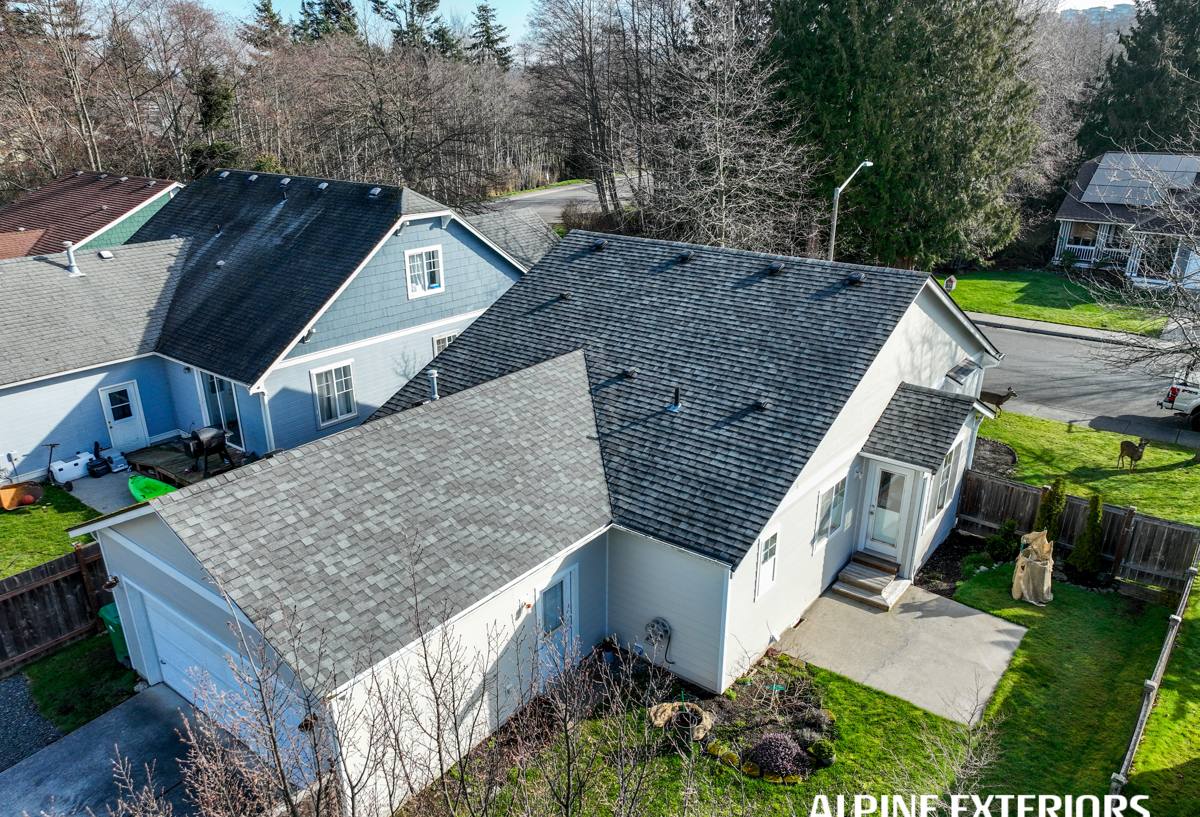
 Deming sits along the Mount Baker Highway corridor in Whatcom County, in the shadow of the foothills and surrounded by heavy tree cover. That setting is part of what makes the area beautiful, and it's also exactly what makes exterior siding work here harder than it looks. Homes in Deming spend much of the year shaded, damp, and exposed to driving rain that comes in sideways during fall and winter storms. Add in the marine-influenced moisture that moves through the whole Whatcom County lowlands, and you get a climate that is genuinely tough on exterior cladding — not in a dramatic way, but in a slow, cumulative way that shows up as soft trim, peeling paint, and moss creeping up north-facing walls.
We work on homes throughout Sudden Valley and the surrounding Whatcom County communities, and Deming's mix of rural properties, wooded lots, and older homes is a pattern we see often. This page covers what that climate does to siding over time, how we approach siding, roofing, window, and deck work for homes in this specific setting, and why we install only one siding product on the exteriors we're responsible for.
What Deming's Climate Does to a House
Three things drive most of the exterior wear we see on Deming homes: near-constant moisture, heavy shade from surrounding trees, and long stretches where a wall simply doesn't get the sun exposure it would need to dry out quickly after a storm.
Moss and Organic Growth
Shaded, moisture-retaining surfaces are where moss and algae take hold, and Deming has no shortage of either condition. On wood-based siding products, moss isn't just cosmetic — its root structure holds water directly against the surface, which accelerates rot in anything that isn't fully sealed and maintained. On siding that isn't engineered to resist moisture intrusion, a few seasons of untreated moss growth can turn into a real structural problem at the wall sheathing level.
Driving Rain and Wind-Driven Moisture
Whatcom County storms don't always fall straight down. Wind-driven rain gets forced into seams, laps, and fastener points that were never designed to handle water moving sideways or upward. Over years, this is usually where siding failure actually starts — not on the open face of a wall, but at the joints, corners, and penetrations where installation quality matters more than the product itself.
Limited Drying Time
A wall that gets full sun for a few hours a day dries out between rain events. A wall tucked under fir and cedar canopy, which describes a lot of Deming properties, may stay damp for days. Materials that absorb moisture and rely on that drying cycle to stay stable are working against the local environment from day one.
How We Approach Siding in Deming
Every property is different, but the process we follow stays consistent: we look at what's actually happening on the walls before we talk about products.
- Inspect existing siding for soft spots, delamination, moss buildup, and failure points at trim, corners, and penetrations
- Check the condition of the water-resistive barrier and flashing details wherever siding is removed
- Assess sun exposure and tree cover on each elevation, since north and shaded walls need different attention than south-facing ones
- Confirm proper drainage plane and rainscreen detailing so new siding doesn't trap moisture against the sheathing
- Match trim, corner, and color details to the home rather than defaulting to a one-size approach
Why We Install Only James Hardie Fiber Cement
We get asked fairly often why we don't offer vinyl, LP SmartSide, or cedar siding alongside Hardie. The honest answer is that we made a decision to standardize on one product because we were tired of being the crew called back out to fix moisture damage on materials that looked fine at installation and failed years later — and in a climate like Whatcom County's, that failure timeline moves faster than it would somewhere drier.
What We're Not Installing, and Why
Vinyl siding is inexpensive and easy to install, but it expands and contracts with temperature swings, can crack in impact events, and isn't a fire-resistant material — a real consideration for properties near wooded terrain like much of Deming. Engineered wood products such as LP SmartSide perform reasonably well when installation and maintenance are done exactly to spec, but they still rely on a wood-strand core that is vulnerable if water gets past the surface treatment, which is a real risk given how long walls here stay damp. Primed spruce and cedar are honest, attractive materials, but they require an ongoing maintenance commitment — re-staining or re-painting on a real schedule — that most homeowners underestimate until moss and moisture have already done damage. None of these are bad products in every context. They're just products whose weak points line up closely with exactly what this climate delivers.
Why Hardie Fits This Climate
James Hardie fiber cement is non-combustible, doesn't rot or delaminate from moisture the way wood-based products can, and comes with a factory-applied ColorPlus finish that's baked on rather than field-applied — which matters in an area where damp walls make on-site paint adhesion less reliable. Hardie's HZ5 product line is engineered specifically for climates with sustained moisture exposure and freeze-thaw cycling, which describes Whatcom County's weather well. It also carries a strong transferable warranty, which gives homeowners real protection instead of a paint-touch-up promise.
| Factor | Vinyl | Engineered Wood | James Hardie Fiber Cement |
|---|---|---|---|
| Moisture resistance | Moderate (seam-dependent) | Depends on maintenance | Engineered for wet climates |
| Fire resistance | Combustible | Combustible | Non-combustible |
| Finish durability | Fades over time | Field-applied, needs upkeep | Factory-baked ColorPlus finish |
| Maintenance | Low, but limited repair options | Regular sealing/painting needed | Periodic cleaning, minimal repainting |
| Warranty structure | Varies by manufacturer | Varies, moisture exclusions common | Strong transferable warranty |
Roofing, Windows, and Decks in the Same Climate
Siding doesn't fail in isolation, and neither does the rest of a home's exterior. We handle roofing, windows, and decks for the same reason we handle siding: they're all exposed to the same driving rain, shade, and moisture cycles.
Roofing
A roof under heavy tree cover collects needle debris and moss faster than an open roof, which can hold moisture against shingles and shorten their life. We check attic ventilation and moss buildup as part of any siding project, since a roof that's trapping moisture will eventually push that problem down into the walls.
Windows
Window flashing and trim are common failure points in wind-driven rain, and it's common to find water staining around older window units when siding comes off during a replacement. Replacing siding is a natural time to address window flashing details that may have been installed to older standards.
Decks
Decking exposed to shade and rain has the same drying-time problem as siding does. Ledger board connections and flashing where a deck meets the house are worth inspecting anytime exterior work is underway, since that's where water intrusion into the structure most often starts.
Why a Local Crew Matters Here
Installation quality determines whether siding performs for decades or fails in years, and that's especially true in a climate like this one, where moisture problems compound quietly before they become visible. A crew that works regularly in Whatcom County understands how much drying time a given elevation realistically gets, how aggressive moss growth can be under fir and cedar canopy, and where wind-driven rain actually finds its way into a wall assembly. That local pattern recognition is hard to get from a crew that only occasionally works in this kind of coastal-influenced, tree-shaded environment.
What to Expect From a Deming Siding Project
- An on-site inspection that looks at existing siding condition, sheathing, and moisture history before any product discussion
- A written estimate that separates material, labor, and any additional scope like flashing repair or sheathing replacement
- A installation plan that accounts for proper rainscreen and drainage detailing, not just face-nailing panels to the wall
- Color and trim selection from Hardie's ColorPlus lineup to match the home's style
- A realistic timeline that accounts for Whatcom County's wetter months, since siding work is weather-dependent
Cost Factors Homeowners Should Understand
Every project is different, and we don't quote broad numbers without seeing the home, but a few factors consistently drive cost on Deming properties specifically: the amount of existing moisture or rot damage found once old siding comes off, the complexity of the home's trim and corner details, the number of elevations under heavy shade that may need extra flashing attention, and whether roofing, window, or deck work is bundled into the same project. Bundling exterior work often saves money compared to doing each system separately, since scaffolding, access, and disposal costs are shared across trades.
If your home in Deming is showing moss buildup, soft trim, or siding that's due for replacement, we're happy to take a look and walk through what we're seeing — no pressure, no obligation. A free estimate is the easiest way to find out what your home actually needs before deciding on anything.