 Sudden Valley Siding
 Siding, Roofing, Windows, and Decks for Ferndale Homes
Ferndale sits close enough to the water and the lowland river valley that its homes see a specific mix of weather stress: salt-tinged air moving in off the Strait, long stretches of driving rain through fall and winter, and a moss season that seems to start earlier every year. We work throughout Whatcom County, and Ferndale is a regular stop for us because the exterior problems here are consistent and predictable once you know what to look for. This page covers how we approach siding, roofing, windows, and decks for homes in this area, and why we've standardized our siding installs on one product system rather than offering a menu of options.
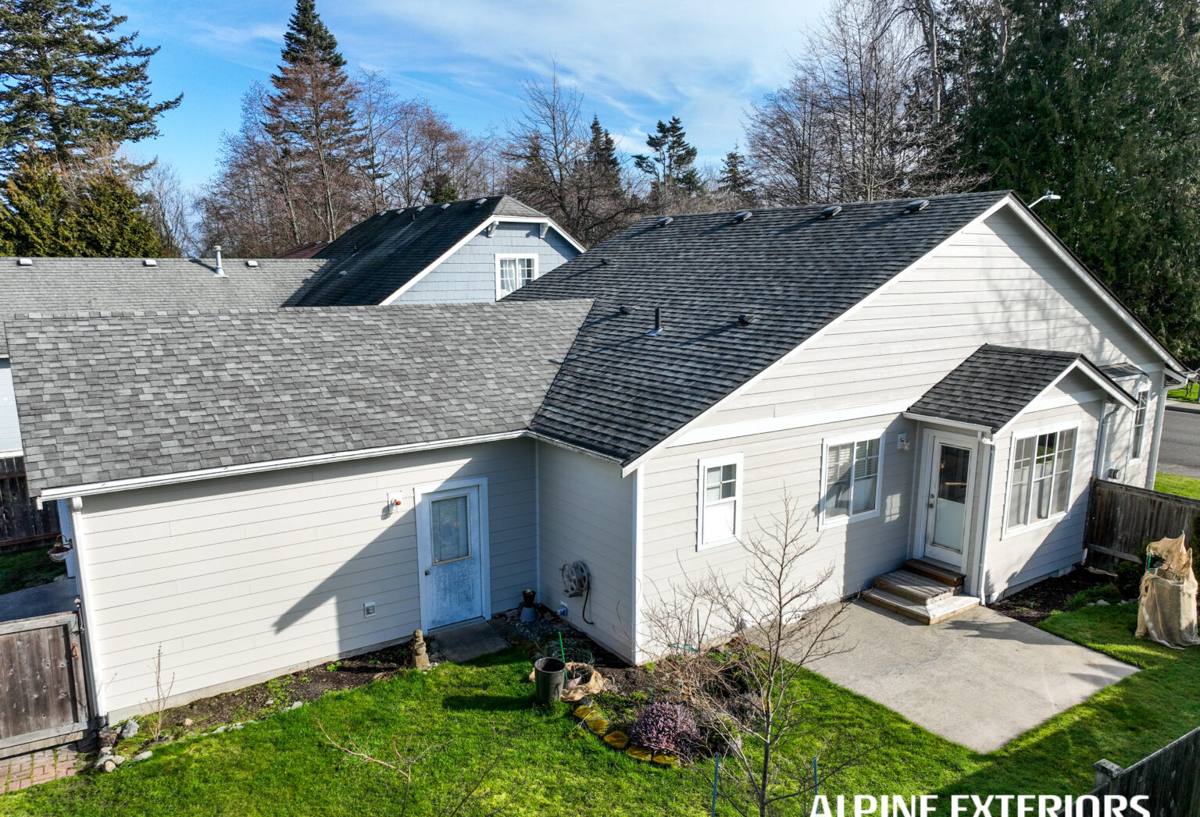
What Ferndale's Climate Does to a House Exterior
Every coastal Whatcom County community shares a version of this problem, but Ferndale's mix of proximity to the water and river-valley humidity gives it its own flavor. Three things drive most of the exterior wear we see on service calls out here:
Salt Air and Metal Fatigue
Homes closer to the water take on a fine salt content in the air that accelerates corrosion on anything metal — nail heads, flashing, gutter fasteners, and old steel siding trim. It's not dramatic or sudden. It shows up as rust bleed streaks below fastener points, pitted flashing, and hardware that seizes up years before it should. Siding and trim materials that don't tolerate that exposure well end up needing more frequent paint and caulk maintenance just to keep ahead of it.
Driving Rain and Wind-Driven Moisture
Rain in this part of Washington doesn't always fall straight down. Storms off the water push rain sideways into exterior walls, which means the vertical joints, butt seams, and corner trim on a home take a real beating. Any siding system with weak points at the seams — caulked joints that shrink, lap seams that trap water, or panel materials that swell when they take on moisture — will show problems first in exactly those wind-exposed wall sections.
Moss and Sustained Damp
Shaded north and east-facing walls, roof valleys, and anywhere airflow is restricted stay damp for extended stretches much of the year. That's a moss and algae environment. On roofing it eats away at shingle granules and shortens roof life. On siding it holds moisture against the substrate, which is a serious problem for wood-based products and a much smaller one for materials that don't feed organic growth or absorb water into their core.
Why We Only Install James Hardie Fiber Cement Siding
We get asked fairly often why we don't offer vinyl, LP SmartSide, or other fiber cement brands like Cemplank or Allura. The honest answer is that after years of installing and repairing exteriors in this climate, we settled on James Hardie as the one product system we're willing to warranty and stand behind, and we stopped installing the rest.
That's not because every other product is a bad product in every application. It's that in a marine-influenced, high-moisture climate like ours, the trade-offs of the alternatives consistently show up as callbacks:
- Vinyl siding expands and contracts significantly with temperature swings, can warp or buckle over time, and its seams and J-channels are a common water entry point in wind-driven rain — plus it's a petroleum-based product that gives homeowners nothing in the way of a real fire-resistance benefit.
- LP SmartSide is an engineered wood product. Engineered wood is still wood at its core, meaning it's dependent on caulking, paint maintenance, and correct flashing to keep moisture out. In a moss-season, high-humidity area, that maintenance margin is thinner than we're comfortable installing behind a warranty.
- Other fiber cement brands (Cemplank, Allura) are chemically similar to Hardie in the broad strokes, but we don't have the manufacturer-backed installer training, regional engineering data, and factory-finish warranty structure with them that we do with James Hardie in this market.
James Hardie fiber cement is non-combustible, doesn't expand and contract the way vinyl does, and doesn't rely on its paint layer alone to keep water out the way wood-based products do. It's manufactured in HZ5 and HZ10 climate-engineered formulations designed specifically for wetter, harsher regions like the Pacific Northwest coast. The factory-applied ColorPlus finish is baked on rather than field-painted, which matters directly for the salt-air and moss concerns above — there's less exposed, unfinished cut edge and less reliance on a homeowner's future repainting schedule to keep the material protected.
How a Siding Project Works Out Here
Assessment
We start by walking the exterior and looking specifically at wind-exposed walls, north and east faces, and anywhere we can see prior moisture staining, moss buildup, or soft trim. On older homes we're also checking what's underneath the existing siding once we can access it — house wrap condition, sheathing, and flashing details around windows and doors.
Installation
Correct installation is what actually makes any siding system perform in this climate — the product only does its job if the water management behind it is right. That means proper house wrap or weather-resistive barrier, correctly lapped flashing at every window and door, rain screen or drainage gap where called for, and manufacturer-spec fastening and joint treatment. James Hardie is specific about installation requirements for a reason, and cutting corners there is where most siding failures — regardless of brand — actually originate.
Finish Details
Trim, corners, and butt joints get the same attention as the field of the siding. These are the areas driving rain finds first, so they're not a place to save time.
Roofing, Windows, and Decks — the Rest of the Envelope
Siding doesn't work in isolation. A roof shedding water improperly, windows with failed flashing, or a deck ledger board holding moisture against the house all undermine the exterior as a system. We handle all four trades for that reason:
- Roofing — moss-resistant material choices and proper valley/flashing work matter more here than in drier climates. A roof that traps moss holds water against decking and shortens its own life.
- Windows — correctly flashed window openings are one of the single most common water-intrusion points on any home. Window replacement is also a natural pairing with a siding project, since the old flashing is exposed anyway.
- Decks — ledger board connections and any wood-to-house contact points need real moisture management in a climate this wet, or they rot from the inside before the surface boards show it.
Comparing Siding Options for a Ferndale Home
| Factor | Vinyl | Engineered Wood (LP SmartSide) | James Hardie Fiber Cement |
|---|---|---|---|
| Moisture tolerance | Doesn't absorb water, but seams leak under wind-driven rain | Wood-based; depends on paint/caulk upkeep to resist moisture | Doesn't absorb moisture into a wood substrate; engineered for wet climates |
| Fire resistance | Petroleum-based, combustible | Combustible | Non-combustible |
| Finish durability | Color molded in, but can fade/chalk | Field or factory paint, needs recoating over time | Factory-baked ColorPlus finish |
| Movement with temperature | Expands/contracts noticeably | Moderate | Minimal |
| Typical maintenance | Occasional cleaning, seam checks | Regular paint/caulk inspection | Periodic cleaning, less repainting dependency |
What to Ask Any Contractor Before You Hire
Whether you call us or someone else, these are the questions that separate a crew that understands this climate from one that doesn't:
- Are you licensed and insured in Washington, and can you provide proof?
- Who is actually on the crew doing the install — is it your employees or a rotating subcontractor?
- What's your approach to flashing at windows, doors, and butt joints specifically?
- Do you install a rain screen or drainage gap behind siding, and when do you use one?
- What does the manufacturer's warranty actually cover, and does it require certified installation?
- Can you explain, in plain terms, why you recommend the material you're proposing for my specific walls and exposure?
If a contractor can't answer the flashing and drainage questions specifically, that's worth noting — those details matter more to long-term performance than almost anything else on the job.
A Local Crew Matters More Than It Sounds Like
A lot of exterior problems in Whatcom County are hyper-local. A wall exposure that's fine two miles inland can be a chronic problem right on the water. A crew that works this specific area regularly has already seen how a given wall orientation, roofline, and exposure behaves over a few winters — not just in a manufacturer's general spec sheet. That's the kind of judgment that shows up in where we add extra flashing, where we recommend a full rain screen, and which walls we flag for closer attention during the assessment.
Get a Free, No-Pressure Estimate
If you're noticing moss buildup, staining below trim, soft spots near the bottom of your siding, or you're simply planning ahead for a home in Ferndale, we're happy to come take a look. There's no obligation and no pressure — just a straightforward assessment of what your home's exterior actually needs. Fill out the form below to get started.