 Sudden Valley Siding
 A Different Kind of Weather Load Near the Water
Homes around Fairhaven and Sudden Valley sit close enough to open water and heavy tree cover that their siding works harder than siding on a house twenty miles inland. Whatcom County's marine climate means moisture is almost never fully gone from the air, wind-driven rain hits walls at an angle instead of just falling straight down, and shaded, tree-lined lots stay damp long after a storm has passed. None of this is dramatic on any given day. It's the accumulation — month after month, year after year — that determines whether a home's exterior is still doing its job in fifteen years or has already started failing in five.
We get calls from homeowners in this area who assumed their siding was fine because nothing looked obviously wrong from the street. Then we get a ladder up to the north side of the house, or behind a hedge, or under an eave that never quite dries out, and the picture changes. Salt-laden air off the water accelerates corrosion on fasteners and trim. Persistent dampness feeds moss, algae, and mildew. And any siding product with a weak spot in its moisture defenses will eventually show it — usually starting in the places you don't check.
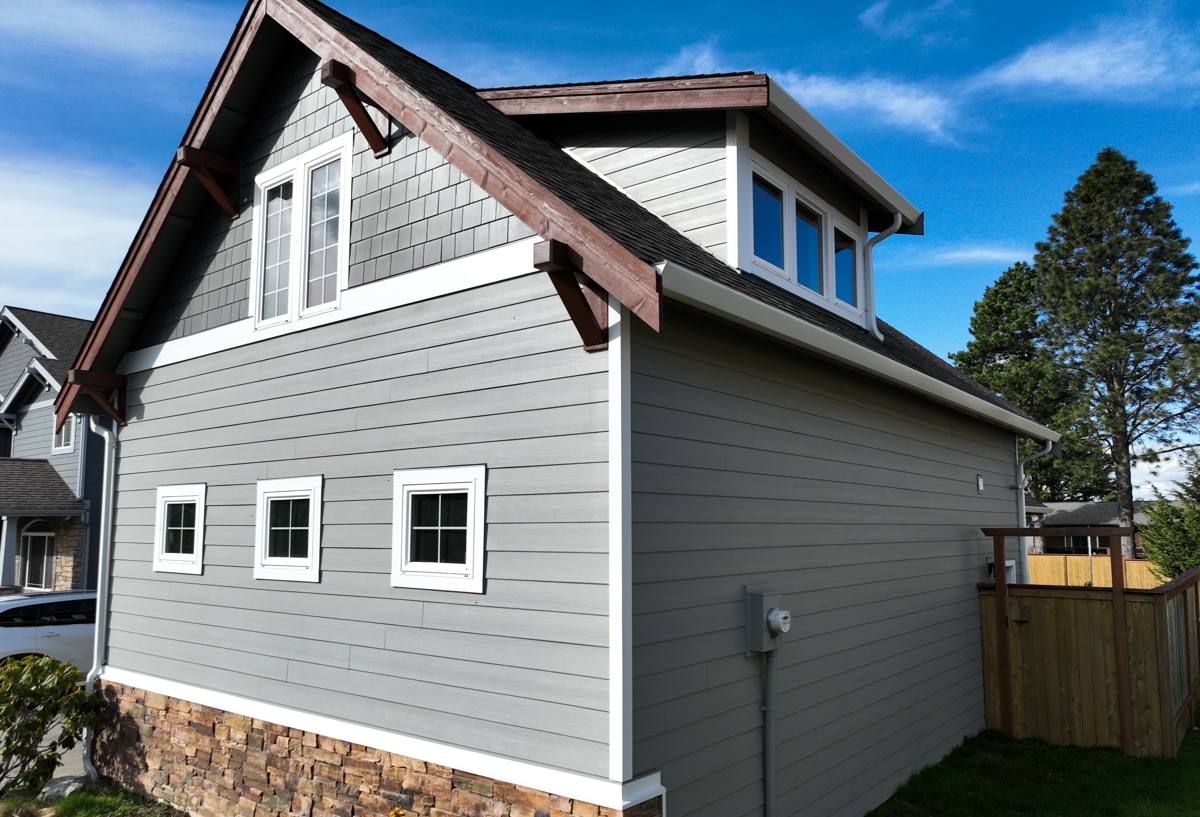
What Salt Air, Rain, and Moss Actually Do to a House
Salt Air and Metal Fatigue
Proximity to saltwater doesn't just mean occasional salty mist on windows. Over time, airborne salt accelerates corrosion on exposed metal — nail heads, flashing, hose bibs, light fixtures — and can degrade lesser-quality caulks and sealants faster than manufacturers' standard warranties assume. A siding system's long-term performance depends heavily on how well its fasteners and flashing details resist that corrosion, not just on the panel material itself.
Driving Rain and Wind-Loaded Walls
Coastal weather systems in this part of Washington regularly bring rain sideways, not straight down. That means wall assemblies facing the prevailing weather take on more water pressure at seams, laps, and penetrations than a standard rain event would suggest. Siding installed with generous but not code-correct overlaps, or with caulk used as a substitute for proper flashing, tends to reveal that shortcut here first — often as a soft spot or stain years before it becomes visible from the ground.
Moss, Algae, and the Long Wet Season
Whatcom County's growing season for moss and algae is long. Shaded elevations, north-facing walls, and anything near mature evergreens stay damp for extended stretches, and organic growth follows. Beyond looking bad, sustained moss and algae growth holds moisture against the siding surface, which matters more for some materials than others. A product that resists moisture absorption at its core handles this far better than one that relies entirely on a surface coating to keep water out.
Why We Install Only James Hardie Fiber Cement
We made a deliberate decision years ago to stop installing vinyl, LP SmartSide, and other engineered wood or composite siding products, and to standardize on James Hardie fiber cement. That wasn't a marketing choice — it came out of watching how different products actually perform in this specific climate over the long run, not just in a showroom or a sales brochure.
Non-Combustible by Composition
James Hardie siding is fiber cement — primarily sand, cement, and cellulose fibers — which means it doesn't burn the way wood-based or wood-fiber composite siding can. In a wildfire-adjacent region, that's a meaningful, practical difference, not a marketing point.
Engineered for Wet Climates
Hardie's HZ5 product line is specifically engineered for climates like ours, with moisture and freeze-thaw performance built into the formulation rather than added on afterward. That matters directly for a marine environment where wall assemblies stay damp longer than they would inland.
ColorPlus Factory Finish
Rather than relying on field-applied paint, Hardie's ColorPlus finish is baked on in a controlled factory process, which produces a more consistent, UV- and moisture-resistant color layer than most job-site painting can achieve — and it comes backed by its own finish warranty, separate from the substrate warranty.
A Warranty Built Around Real Performance
James Hardie backs its siding with a strong, transferable limited warranty. That's only meaningful because the product's track record supports it — a warranty is only as good as the material behind it.
We're upfront that this isn't the cheapest siding option on the market, and we won't pretend it's the right fit for every budget on day one. What we won't do is install a product we don't believe will hold up on a home in this climate just because it costs less upfront. If a homeowner wants vinyl or LP SmartSide, we'll say so honestly and point them elsewhere rather than install something we don't stand behind.
Beyond Siding: Roofing, Windows, and Decks in the Same Climate
Siding doesn't work in isolation — it's one part of a building envelope that also includes the roof, windows, and any exterior structures like decks. We handle all four because they interact directly with each other. A roof with poor drip-edge detailing can send water down behind siding at the eaves. Windows with failed flashing tape can leak into the wall cavity long before any exterior sign shows up. Decks attached to the house create ledger connections and water pathways that need to be handled correctly, or they become the weak point in an otherwise sound exterior.
Because we service all four systems, we look at a home's exterior as one connected system during an estimate, not as four separate quotes. That matters more in a wet, salt-air climate than it would somewhere drier, because a small gap in one system tends to accelerate wear in the next one over.
Why a Local Crew Matters Here
A crew that works Whatcom County homes regularly knows which details matter for this specific climate: how far to keep siding off grade, how to flash around windows facing prevailing weather, where moss and algae growth is likely to concentrate, and how salt air affects fastener choice over time. That knowledge doesn't come from a manual — it comes from seeing the same climate conditions play out on real homes, season after season.
It also matters for accountability. A local, licensed crew is easy to reach if a warranty question comes up five or ten years down the road, and has a reputation in the community worth protecting. We'd rather do a job right the first time than field a callback.
How We Approach a Project in This Area
- Walk the exterior and assess current siding, trim, flashing, and any moisture damage or moss buildup, including areas that aren't visible from the ground.
- Check how the siding interacts with the roof, windows, and any decks or attached structures, since problems often start at those transitions.
- Provide a clear, honest estimate that explains material choice, scope, and timeline — no pressure tactics, no artificial deadlines.
- Prep the site, remove old material responsibly, and install with correct flashing, fastening, and clearance details for a marine climate.
- Final walkthrough so the homeowner understands what was done and what to watch for going forward.
Cost Factors for Siding Projects Near Fairhaven and Sudden Valley
Every home is different, but a few factors consistently drive cost on projects in this area. This isn't a price list — it's a guide to what actually moves the number.
| Factor | Why It Matters Here |
|---|---|
| Existing damage and moisture issues | Hidden rot behind old siding, common on shaded or water-facing walls, adds repair scope before new siding can go on |
| Home size and wall complexity | More corners, dormers, and trim details mean more cutting, flashing, and labor time |
| Access and elevation | Steep lots or limited access common in this hilly, wooded terrain can add staging and labor costs |
| Siding profile and color | Lap width, shingle-style panels, and custom ColorPlus colors vary in material cost |
| Trim and accessory work | Corner boards, window trim, and fascia often get replaced or upgraded at the same time for a clean, watertight result |
A Maintenance Checklist for Homes in a Wet, Salty Climate
Whatever siding a home has, a few habits go a long way toward catching problems early in this climate.
- Rinse siding annually to remove salt residue, pollen, and early moss or algae growth before it takes hold
- Keep gutters clear so water isn't overflowing directly onto wall surfaces
- Trim back vegetation and tree limbs that keep walls shaded and damp longer than necessary
- Inspect caulking and trim joints yearly, especially on walls facing prevailing wind and rain
- Check fastener heads and metal trim periodically for early signs of corrosion
- Look closely at north-facing and heavily shaded walls, where moisture problems tend to start first
What This Means for Your Home
If you're weighing a siding, roofing, window, or deck project on a home in the Fairhaven or Sudden Valley area, the climate here isn't a minor detail — it's the whole reason certain materials and installation practices matter more than they would somewhere drier and calmer. We'd rather walk your home, tell you honestly what we see, and explain why we'd approach it a certain way than sell you on the fastest or cheapest option.
If you'd like a free, no-pressure estimate for your home, use the form below and we'll get in touch to schedule a walkthrough.