 Sudden Valley Siding
 Siding Built for Edgemoor's Particular Climate
Homes around Edgemoor and Sudden Valley sit in a stretch of Whatcom County where weather doesn't just pass through — it settles in. Proximity to open water means salt-laden air working on fasteners, trim, and paint film year-round. Add in the Pacific Northwest's long stretch of driving rain each fall and winter, and then the shaded, damp conditions that let moss and algae take hold on north-facing walls and anything under tree cover, and you've got a climate that is genuinely hard on exterior materials. This isn't a page about scare tactics — it's about what actually happens to siding, trim, and paint on homes in this specific area over ten, twenty, thirty years, and what we do about it.
What We See on Local Homes
Walk a few streets in this part of Whatcom County and you'll notice the same patterns repeating: paint that's chalking or peeling on the weather side of a house, caulk lines that have pulled away at trim joints, dark streaking or greenish moss growth on shaded siding, and soft or swollen spots near ground level or under gutters that aren't quite keeping up. None of this is unusual — it's what happens when a wall assembly is asked to shed constant moisture and salt air for years without a break. The materials that hold up best here are the ones engineered specifically for that kind of exposure, not general-purpose products borrowed from drier climates.
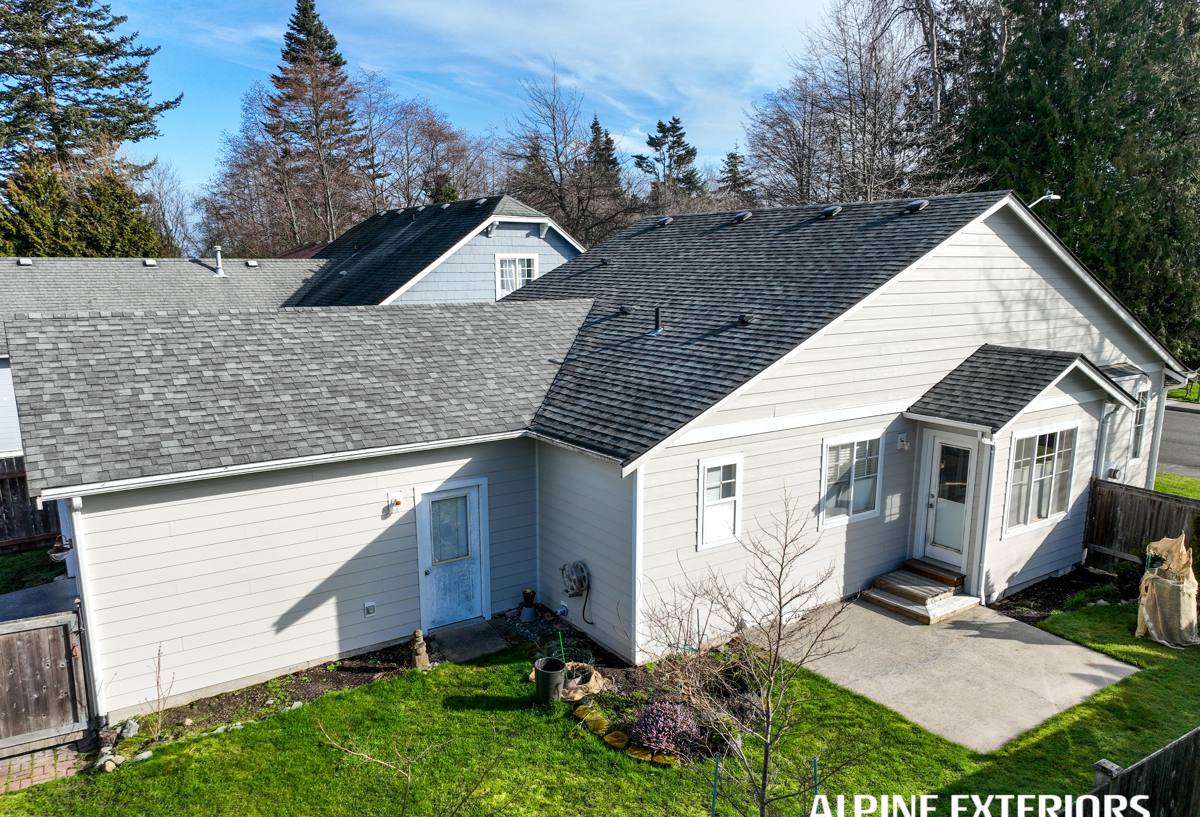
Why We Standardized on James Hardie — And Only James Hardie
Sudden Valley Siding Contractor installs one siding system: James Hardie fiber cement. We don't install vinyl, LP SmartSide, Cemplank, Allura, primed spruce, or cedar. That's not a marketing position — it's a decision we made after years of seeing how different products actually perform on homes in this climate versus how they're marketed.
Fiber cement is cement, sand, and cellulose fiber, pressed and cured into planks and panels. It doesn't feed moss the way wood does, it doesn't warp or rot when it takes on moisture the way engineered wood products can if a seam fails, and it's non-combustible — a real consideration as wildfire smoke and drought stress become more common even here in the wetter parts of the state. James Hardie's ColorPlus finish is baked on in a factory-controlled process rather than field-applied, which matters enormously in an area where a job site paint schedule is at the mercy of rain. We'd rather hand a homeowner a warranty and a product we trust fully than offer a menu of options where some are compromises.
What James Hardie Gets Right
- Engineered specifically for wet, coastal, and freeze-thaw climates through its HZ5 product line
- Factory-applied ColorPlus finish resists fading and doesn't rely on field paint conditions
- Non-combustible core material
- Doesn't provide a food source for moss, mold, or insects the way wood-based products can
- Strong transferable warranty backed by a large, established manufacturer
We're not going to pretend it's the cheapest option on the shelf, and it's not the lightest material to install — it requires proper fastening, joint treatment, and clearances to perform the way it's designed to. That installation sensitivity is exactly why we're selective about it and why we train our crews specifically on Hardie's installation requirements rather than treating it as interchangeable with other claddings.
Salt Air: The Slow, Quiet Damage
Salt air doesn't announce itself the way a storm does. It works gradually — on fasteners, on flashing, on paint film, on any seam where two materials meet. Homes closer to open water take the brunt of it, but airborne salt travels further inland than most homeowners expect, especially when it's riding on wind-driven rain. Over years, that combination corrodes lesser-grade fasteners, breaks down caulking faster than inland homes experience, and accelerates paint failure on materials that rely on a surface coating for protection.
This is one of the practical reasons we use corrosion-resistant fastening systems and factory-finished siding rather than field-painted alternatives. A factory finish cured under controlled conditions holds up to salt exposure in a way that a job-site paint job — applied in whatever weather window is available — simply can't match consistently.
Driving Rain and the Wall Assembly Behind the Siding
What's behind the siding matters as much as the siding itself. In an area that sees sustained, wind-driven rain, a wall assembly needs a real drainage plane, correctly lapped water-resistive barrier, properly flashed windows and doors, and siding installed with the clearances and fastening patterns the manufacturer actually specifies. Skip any one of those steps and you can end up with moisture trapped behind good-looking siding — a problem that often isn't visible until it's already caused rot in the sheathing or framing behind it.
When we tear off old siding on a home in this area, this is usually where we find the real story: not just what's failing on the surface, but what moisture has been doing behind it for years. Addressing that properly — not just covering it up — is part of every full siding replacement we do.
Moss Season and Shaded Exposures
Whatcom County's tree cover and extended damp season create ideal conditions for moss and algae growth on siding, especially on north-facing and heavily shaded walls. Wood-based sidings are more vulnerable here because moss and algae can take hold directly in the material's fibers, not just on the surface. Fiber cement doesn't offer that same foothold, which is a meaningful, practical advantage on a wooded lot or a home with significant shade from mature trees.
Siding Options: A Straight Comparison
| Material | How It Handles Salt Air & Rain | Moss/Algae Resistance | Finish Durability |
|---|---|---|---|
| James Hardie Fiber Cement | Engineered for coastal, wet climates (HZ5) | Doesn't feed moss growth | Factory-baked ColorPlus finish |
| Vinyl | Can warp/crack under temperature swings and impact | Moderate; surface growth still occurs | Color molded in but fades over time; not repaintable easily |
| LP SmartSide / engineered wood | Vulnerable at seams if moisture intrudes | Wood-based; more susceptible | Field or factory finish varies by product |
| Cedar | Requires consistent maintenance to resist rot | Higher susceptibility, especially shaded areas | Needs periodic refinishing |
This table is a general comparison, not a claim that any of these products fail outright — plenty of homes carry them for years. It's simply the reasoning behind why we chose to specialize in one system rather than offer all of them and let a lower price point make the decision.
What a Siding Project Looks Like for Edgemoor and Sudden Valley Homes
Every home is different, but the general process holds steady: an on-site inspection of the existing siding and, where accessible, the wall assembly behind it; a conversation about what we're seeing and what it means for your specific house; a Hardie product and color recommendation suited to your home's exposure (more shade, more salt air, more direct weather — these all factor in); and a written scope before any work begins. We also handle the trim, flashing, and water management details that determine whether new siding actually performs the way it's supposed to, not just installing panels over an unaddressed problem underneath.
Beyond Siding
Because the same climate factors — driving rain, salt air, sustained moisture — affect the whole exterior envelope, we also work on roofing, windows, and decks. A roof that's shedding water properly, windows that are flashed and sealed correctly, and a deck built with weather-appropriate materials all work together with the siding to keep a home dry. We'll flag issues in any of these areas if we see them during a siding inspection, even if it's not what we were originally called out for.
Cost Factors Homeowners Should Know
We don't publish blanket pricing because every home's size, current condition, and site access are different, but a few factors consistently move the number:
| Factor | Why It Matters |
|---|---|
| Condition behind existing siding | Rot or water damage found during tear-off adds repair scope |
| Home size and wall complexity | More corners, dormers, and trim detail means more labor |
| Siding profile and accessories | Lap siding, panel systems, and trim details vary in material and labor cost |
| Access and site conditions | Multi-story sections, tight lots, or steep grades affect staging and labor |
The only way to get an accurate number is a site visit — anything quoted without one is a guess.
Choosing a Contractor in This Area
A few things worth checking before hiring anyone for exterior work here:
- Are they licensed and insured to work in Washington, and can they provide proof without hesitation?
- Do they have specific, documented training on the product they're installing — not just general carpentry experience?
- Will they put the scope of work, materials, and warranty terms in writing before starting?
- Do they inspect what's behind the existing siding, or just cover it?
- Are they familiar with how this specific area's weather affects installation timing and material choice?
A local crew that works this area regularly will already understand which walls take the worst weather, how moss behaves on shaded lots nearby, and what water management details matter most — that familiarity shows up in the quality of the finished work.
Let's Take a Look at Your Home
If you're noticing paint failure, moss buildup, soft trim, or you're simply due for a siding replacement, we'll come take a look and give you a straightforward, no-pressure assessment of what your home actually needs. Use the form below to request a free estimate.