 Sudden Valley Siding
 Siding in Cordata: Built for Whatcom County Weather
Homes in and around Cordata deal with a specific combination of stresses that a lot of siding products simply weren't engineered for: salt-tinged air moving in off the Sound, long stretches of driving rain, and a moss and algae season that can run most of the year on shaded or north-facing walls. None of that is unusual for Whatcom County — it's the baseline. But it means the siding on your home is working harder here than the same product would in a drier, inland climate, and the difference shows up over years, not days.
We're a local crew that works this area regularly, and our approach to exterior work here starts with one decision we made a while back: we install James Hardie fiber cement siding exclusively. Not because it's the only decent product on the market, but because after years of servicing homes in this climate, it's the one we're comfortable standing behind for the long haul. Below is an honest look at what Cordata-area homes face, how we approach the work, and why we've standardized on one product line instead of offering the usual menu of options.
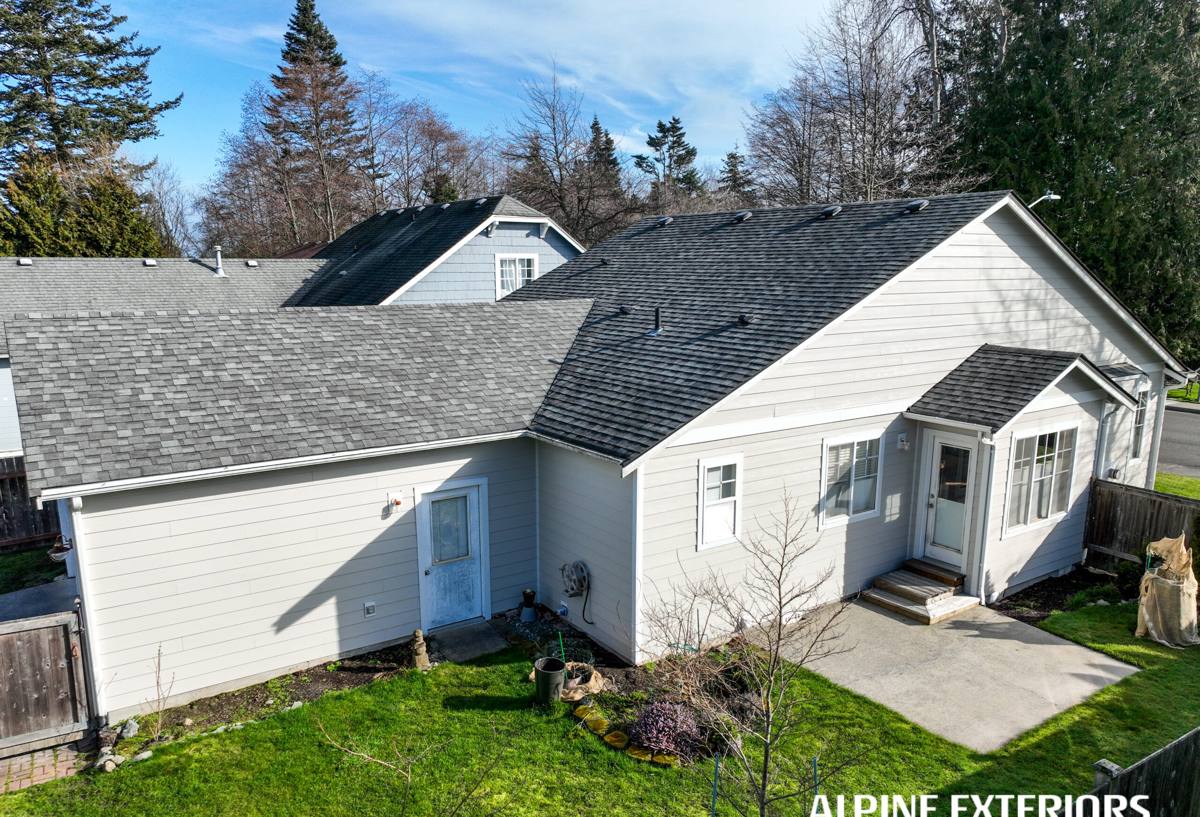
What This Climate Actually Does to Siding
Moisture That Doesn't Let Up
Western Washington's marine climate means long rainy seasons with low-intensity, sustained precipitation rather than short heavy downpours. That's actually harder on a building envelope in some ways — it gives water more time to find gaps, seams, and end cuts, and it keeps siding materials damp for days at a stretch instead of drying out quickly between storms.
Moss, Algae, and Shade
Mature tree cover and cooler, damp conditions are ideal for moss and algae growth on siding, trim, and roofing. Wood-based and wood-fiber products are especially vulnerable here — moss holds moisture against the surface, and that moisture is what eventually causes rot, delamination, or paint failure underneath.
Salt Air and Coastal Influence
Proximity to Bellingham Bay and Puget Sound puts a mild but real salt-air element into the mix. It accelerates corrosion on exposed fasteners and metal trim, and it can gradually degrade lower-grade paint and coating systems, especially on the weather-facing sides of a house.
Why We Only Install James Hardie
We used to install a wider range of siding products. Over time, watching how different materials actually performed on homes in this specific climate — not in a brochure, but ten and fifteen years out — we narrowed our offering to one system: James Hardie fiber cement.
- Non-combustible core. Fiber cement doesn't feed a fire the way wood-based products can, which matters more every wildfire season.
- Climate-engineered HZ product lines. Hardie's HZ5 formulation is specifically engineered for cold, wet Pacific Northwest conditions, with moisture and freeze-thaw performance built into the product rather than added afterward.
- Factory-applied ColorPlus finish. The color and protective coating are baked on in a controlled factory environment, not brushed or sprayed on site. That gives more even coverage and better long-term color retention than field-applied paint, particularly against sustained damp weather.
- Strong, transferable warranty. Hardie backs the product with a warranty structure that's meaningful and stays with the home if it sells — worth checking closely against whatever a competing product offers.
- Proven track record when installed to spec. Fiber cement's long-term performance in wet, mossy, salt-influenced climates is well documented, provided the installation follows manufacturer flashing and clearance details.
That last point is worth underlining: installation quality determines whether any siding product performs as advertised. A great product installed with the wrong flashing, gaps too tight to the ground, or nails driven wrong will still fail. That's a big part of why we run our own crews rather than subbing the work out.
What We Don't Install, and Why
We get asked regularly about vinyl, LP SmartSide, primed cedar, and other engineered wood or composite products. Each has legitimate uses and each has trade-offs we've decided we're not willing to build our reputation on in this climate:
| Product | What it does well | Why it's not what we install here |
|---|---|---|
| Vinyl siding | Low upfront cost, low maintenance in mild climates | Can warp or crack in temperature swings; seams and appearance don't hold up as well long-term against sustained wet weather |
| LP SmartSide / engineered wood | Wood-grain look, easier to install than fiber cement | Wood-fiber core is more sensitive to prolonged moisture exposure than cement-based siding if any water intrusion occurs |
| Primed cedar / natural wood | Classic look, renewable material | Requires ongoing repainting and sealing to resist rot, moss, and moisture in a climate that doesn't give it much of a break |
| James Hardie fiber cement | Non-combustible, factory finish, climate-engineered lines, strong warranty | Our standard — this is what we install |
We're not telling homeowners those other products are junk — plenty of houses around the region wear them fine. We're telling you why, after years of exterior work in this exact climate, we stopped offering them and put our name behind one system instead.
More Than Siding: The Whole Exterior Envelope
Siding doesn't work in isolation. Roofing, windows, and decks all interact with the same moisture and weather load, and a weak point in one system tends to show up as damage in another — a leaking roof valley that soaks a wall, a failed window flashing that rots the siding around it, a deck ledger board that's trapping water against the house.
Because we handle siding, roofing, windows, and decks, we look at a Cordata-area home as one connected exterior system rather than a series of separate projects. That matters most at transitions: where siding meets roofline, where trim meets window frame, where a deck attaches to the house. Those junctions are where most real-world moisture problems start.
How We Approach a Siding Project
- On-site inspection, including a check for existing moisture damage or rot behind current siding
- Honest assessment of whether repair, partial replacement, or full re-siding makes sense
- Removal of old material and inspection/repair of the underlying sheathing and weather barrier
- Installation of James Hardie siding to manufacturer flashing, clearance, and fastening specifications
- Attention to trim, transitions, and penetrations — the details that determine long-term performance
- Final walkthrough and cleanup
Why a Local Crew Matters Here
Whatcom County's building conditions and local permitting aren't identical to what a crew from outside the area deals with day to day. A local crew knows how the moss season behaves on shaded lots, understands which details matter most in a marine climate, and can respond quickly if something needs a follow-up look after a storm. That's harder to get from an outfit that's just passing through on a regional route.
It also means accountability. If a question comes up two years after installation, you're calling a crew that's still working in the area — not chasing down a company that moved on.
Maintenance: What Actually Matters in This Climate
Even the best siding benefits from basic upkeep, especially with the moss and moisture load in this region. A short annual routine goes a long way:
- Keep gutters clear so overflow isn't running down the siding face
- Trim back vegetation and tree limbs that keep siding shaded and damp
- Rinse off moss and algae buildup gently before it gets a foothold — avoid high-pressure washing that can force water behind panels
- Check caulking around windows, doors, and trim annually and reseal where it's cracked or gapped
- Walk the exterior after major storms and note any damage near flashing or trim for early repair
Cost Factors for a Cordata-Area Siding Project
Every home is different, but the same variables tend to drive cost on jobs in this area:
| Factor | Why it matters |
|---|---|
| Home size and stories | More square footage and taller walls mean more material and labor, plus added access requirements |
| Existing siding removal | Tear-off and disposal of old material adds time, especially if damage is found underneath |
| Trim and detail work | Homes with more corners, windows, and architectural trim take longer to finish correctly |
| Moisture or rot repair | Any sheathing or framing repair found during tear-off is addressed before new siding goes on |
| Product line and color | Hardie's various HZ lines and ColorPlus color options have different material costs |
We won't throw out a number without seeing the house — too many of these variables only become clear once old siding comes off and we can see what's underneath. What we can promise is a straightforward, honest estimate with no pressure to sign anything on the spot.
If you're weighing a siding project for a Cordata-area home, we're glad to come take a look, walk the exterior with you, and give you a clear, no-pressure estimate — just fill out the form below to get started.