 Sudden Valley Siding
 Yew Street and the Climate Homes Are Up Against
Homes along Yew Street and the surrounding Sudden Valley community sit inside one of the wetter, greener corners of Whatcom County. That's part of the appeal — mature trees, lake proximity, a quieter pace than in-town living. It's also exactly the kind of setting that's hard on exterior building materials. A long, overcast rainy season, moisture that lingers in shaded and tree-covered lots, and the general marine-influenced air that moves through the Pacific Northwest all combine to create conditions that most siding products simply weren't built to handle over the long haul.
Driving rain is the biggest factor. Whatcom County doesn't get hammered by short, violent storms the way some regions do — instead, it gets weeks of steady, wind-driven moisture that finds every gap, seam, and unsealed edge in an exterior. Add tree cover, which keeps siding shaded and slow to dry, and you get the county's signature problem: a long moss and algae season that can run from fall through spring on north-facing walls and anything tucked under a canopy.
None of this means a home on Yew Street is doomed to constant repairs. It means the exterior materials and the installation quality matter more here than they would in a drier climate. That's the lens we bring to every project in this neighborhood.
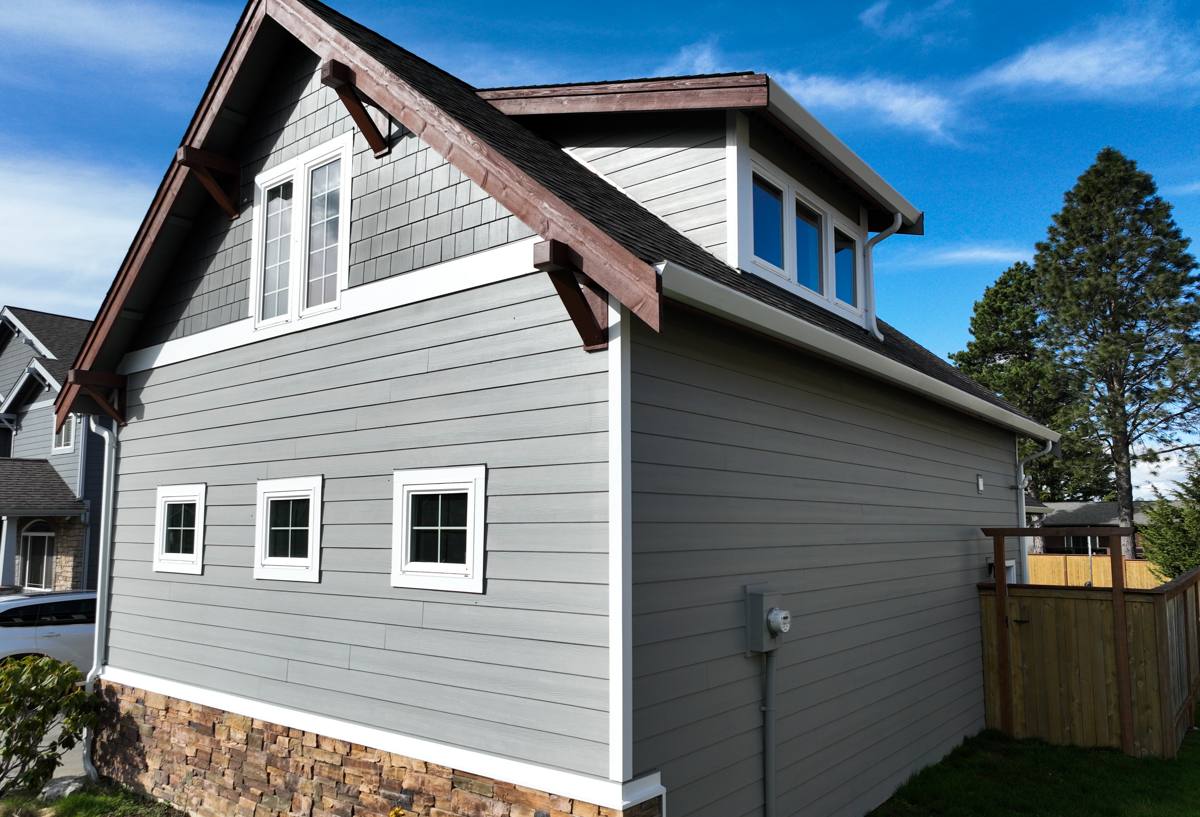
Why We Only Install James Hardie Fiber Cement
We get asked fairly often why we don't offer vinyl, LP SmartSide, cedar, or other fiber cement brands like Cemplank or Allura. It's a fair question, and the honest answer is that we made a standardization decision based on what holds up in this specific climate, not on what's cheapest to install or easiest to sell.
What We Ruled Out and Why
- Vinyl siding expands and contracts with temperature swings, can warp or crack in cold snaps, and tends to trap moisture behind it if not detailed carefully — a real risk in a climate where walls stay damp for extended stretches.
- LP SmartSide is an engineered wood product. Wood-based siding, even treated and engineered, is more vulnerable to moisture intrusion at cut edges and fastener points than fiber cement, and Whatcom County's wet season gives it a lot of opportunities to find weaknesses.
- Cedar and primed spruce look beautiful when new but require an ongoing maintenance commitment — refinishing, caulking, and vigilance against rot — that most homeowners underestimate until they're a few years in.
- Other fiber cement brands (Cemplank, Allura) are legitimate products, but we've standardized on one manufacturer so our crews install to one spec, one warranty structure, and one factory-finish system rather than juggling several.
What James Hardie Gets Right
James Hardie fiber cement is non-combustible, dimensionally stable across our temperature range, and resistant to moisture-driven swelling and rot in a way wood-based products aren't. The ColorPlus factory finish is baked on under controlled conditions rather than applied on-site, which means better UV and fade resistance and a cleaner line if a repair or repaint is ever needed. Hardie's HZ5 product line is engineered specifically for climates with extended damp, freeze-thaw conditions — which describes Whatcom County well. It's backed by a strong transferable warranty, which matters if you ever sell the home.
What a Local Crew Actually Changes
Siding installation is one of those trades where the difference between a good job and a problem-prone one usually isn't the material — it's the flashing, the gapping, the caulking details, and whether the crew understood the site conditions before the first board went up. A crew that works across Whatcom County regularly knows how to detail a wall for a moss-prone, tree-shaded lot differently than they'd detail one for an open, sunny site in a drier part of the state.
That local knowledge shows up in small decisions: where to leave extra clearance at grade, how aggressively to flash window and door openings, which wall orientations need the most attention to ventilation and drying. It also means a crew that's accountable locally — if a question comes up two years after installation, you're not chasing down a company that's moved on to a different region.
How Our Siding Installation Process Works
Every project starts with an on-site assessment, not a phone estimate. We look at the existing siding or sheathing, check for hidden moisture damage, evaluate trim and window details, and note anything specific to the lot — tree cover, drainage, wall orientation — that should factor into the plan.
General Sequence
- Tear-off and inspection: Remove existing siding and inspect the sheathing and framing underneath for rot or moisture damage before anything new goes up.
- Weather-resistive barrier: Install or repair the house wrap and flashing system that keeps bulk water out of the wall assembly — this step matters more than the siding itself for long-term performance.
- Furring and drainage plane: Where appropriate, build in a rainscreen gap so moisture that does get behind the siding has somewhere to drain and dry rather than sitting against the wall.
- Hardie installation: Install panels or plank siding to manufacturer spec — correct fastener placement, proper gapping at butt joints, and factory-finish touch-up rather than field-painted cuts.
- Trim and caulking: Detail all penetrations, corners, and openings, since these are the most common failure points on any siding job regardless of material.
- Final walkthrough: Review the completed exterior with the homeowner before calling the job done.
Beyond Siding: Roofing, Windows, and Decks
Siding rarely fails in isolation. A roof that's shedding water poorly, windows with failed flashing, or a deck ledger that's trapping moisture against the house can all undermine even a well-installed siding job. Because we handle roofing, windows, and decks as well as siding, we can look at a Yew Street home's exterior as one connected system rather than a series of unrelated projects.
Where These Systems Overlap
- Roofing: Roof edges, valleys, and eave details directly affect how much water runs down the wall siding has to shed.
- Windows: Poor window flashing is one of the most common causes of hidden wall damage discovered during a siding tear-off.
- Decks: Ledger board attachment and deck-to-house flashing are frequent sources of rot in homes with attached decks in wet climates.
When we're on-site for a siding estimate, we'll flag anything we notice in these other areas — not to upsell, but because catching a small roofing or window flashing issue before it damages new siding saves everyone money down the line.
Comparing Siding Options for a Whatcom County Home
| Material | Moisture Resistance | Maintenance | Typical Lifespan |
|---|---|---|---|
| James Hardie Fiber Cement | Strong — engineered for wet climates | Low; occasional wash-down | 30+ years with proper install |
| Vinyl | Moderate; can trap moisture behind panels | Low, but prone to warping/cracking | 20-30 years, variable |
| LP SmartSide / Engineered Wood | Moderate; vulnerable at cut edges | Moderate; requires sealed edges | 20-25 years typical |
| Cedar / Primed Spruce | Lower without diligent upkeep | High; refinishing and caulking cycles | Highly maintenance-dependent |
Moss, Algae, and Exterior Maintenance
Even the best siding benefits from a little seasonal attention in a climate like this one. Moss and algae growth on north-facing or shaded walls is cosmetic more often than structural, but left unaddressed it can hold moisture against the surface longer than it should.
A Simple Seasonal Checklist
- Rinse siding gently once or twice a year, focusing on shaded and tree-covered walls.
- Keep gutters clear so overflow isn't running down the siding face.
- Trim back branches and shrubs that keep wall sections perpetually damp.
- Check caulking at trim, window, and door edges annually for cracking or separation.
- Have any staining or soft spots inspected promptly rather than waiting for the next project.
What Drives Cost on a Project Like This
| Factor | Why It Matters |
|---|---|
| Home size and wall complexity | More corners, dormers, and trim details mean more labor and material |
| Existing wall condition | Hidden rot found during tear-off adds repair scope |
| Siding profile and color | Panel vs. lap siding and ColorPlus color selection affect material cost |
| Site access | Tree-covered or sloped lots common around Sudden Valley can affect staging and labor time |
| Scope bundling | Combining siding with roofing, window, or deck work can improve overall efficiency |
We don't quote broad numbers without seeing the home, because the variables above genuinely change the cost more than most homeowners expect. What we can promise is a written, itemized estimate with no pressure to sign on the spot.
Choosing a Contractor for a Yew Street Project
Whatcom County has no shortage of exterior contractors, and not all of them specialize in the same things. A few things worth asking any contractor before you hire them for siding, roofing, window, or deck work:
- Are they licensed and insured in Washington, and can they provide proof?
- Do they specialize in fiber cement installation specifically, or is it one of several materials they install without deep expertise in any?
- Will they put the manufacturer's installation spec in writing, including flashing and rainscreen details?
- Do they offer a workmanship warranty separate from the manufacturer's material warranty?
- Can they speak specifically to how they'd detail your home given its site conditions — shade, drainage, wall orientation?
A contractor who can answer these clearly, without vague reassurances, is generally one who's done the work enough times to know what actually matters.
If you're weighing a siding, roofing, window, or deck project for your Yew Street home, we're happy to take a look and walk you through what we see — no pressure, no obligation. Reach out for a free estimate using the form below.