 Sudden Valley Siding
 Homes in and around Alger sit in a stretch of the Pacific Northwest where the exterior of a house works hard for its living. Salt-laden air drifting in off the water, long stretches of driving rain through the fall and winter, and a moss season that seems to start earlier every year all put real, cumulative stress on siding, trim, roofing, and anything made of wood. Sudden Valley Siding Contractor works this region because we understand what that combination does to a house over ten, twenty, and thirty years — and we build our services around materials and methods that hold up to it.
This page covers what we see in Alger-area homes, how our siding, roofing, window, and deck work is approached for this climate, and why the product we standardize on — James Hardie fiber cement — is the one we're willing to put our name behind.
What the Climate Does to Homes Here
It's easy to underestimate moisture until you've pulled failed siding off a wall and seen what's underneath. In this part of Washington, exteriors deal with a few distinct pressures at once, not just "a lot of rain":
- Salt air corrosion and grime — proximity to marine air accelerates the breakdown of paint films, fasteners, and untreated wood trim, and leaves a fine residue that holds moisture against surfaces longer than inland homes experience.
- Driving, wind-blown rain — rain here doesn't just fall, it gets pushed sideways into wall assemblies, lap joints, and butt seams, which is exactly where inferior siding systems and poor flashing details fail first.
- Extended moss and algae season — shaded, north-facing, and tree-covered elevations stay damp for months at a stretch, which is ideal growing conditions for moss, mildew, and algae staining on roofs and siding alike.
- Temperature swings and freeze-thaw cycling — even modest winter cold snaps, combined with saturated materials, can crack and delaminate products that aren't engineered for repeated wet-dry, freeze-thaw stress.
None of this is unique to Alger, but it's persistent here in a way that shortens the lifespan of the wrong materials and rewards a correctly installed, climate-appropriate exterior.
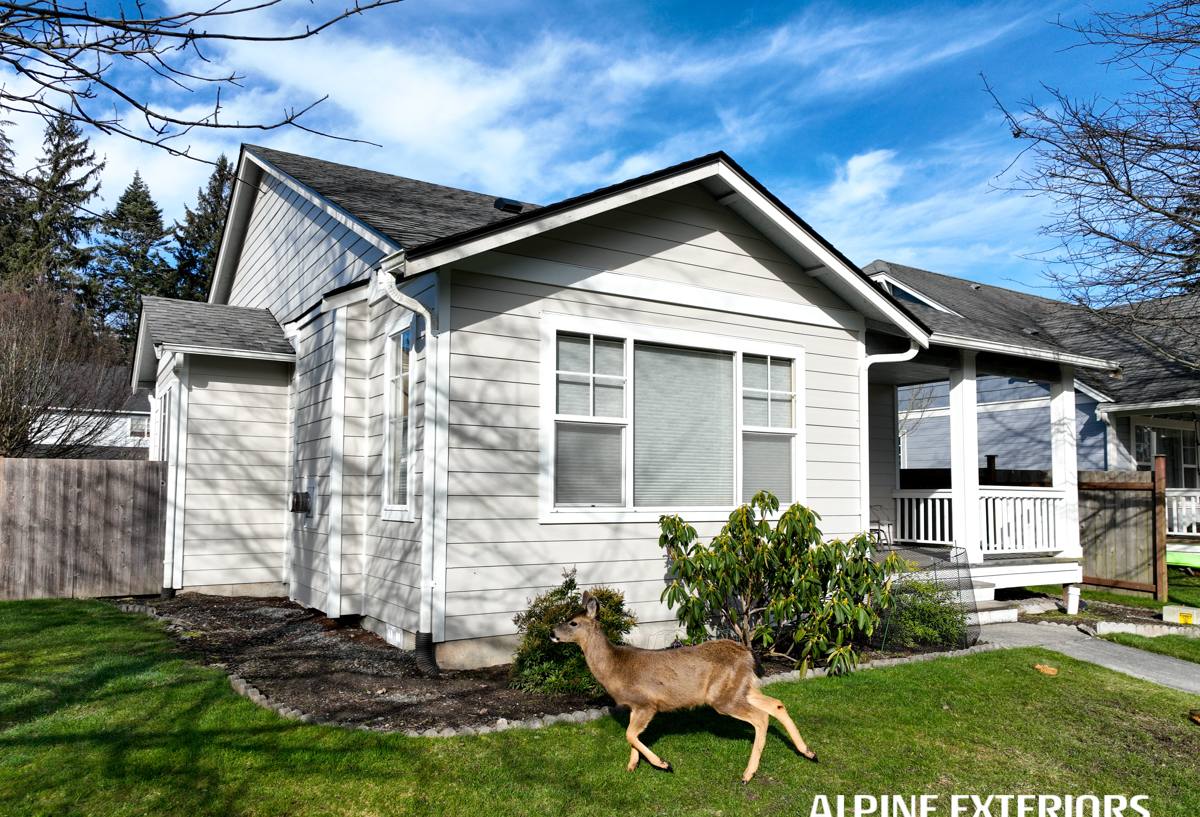
Siding: Why We Only Install James Hardie
We get asked regularly why we don't offer vinyl, LP SmartSide, cedar, primed spruce, or other fiber cement brands like Allura or Cemplank. The honest answer is that we looked at how each of those products actually performs over years of exposure to this specific climate, and we decided we didn't want to stand behind the trade-offs.
The short version, by product
| Product | What it does well | Why we don't install it here |
|---|---|---|
| Vinyl siding | Low upfront cost, quick install | Can warp or crack in wide temperature swings, seams allow water intrusion, thin material shows impact damage |
| LP SmartSide | Engineered wood, easier to cut than fiber cement | Wood-based core is more moisture-sensitive at cut edges and seams; failures often trace back to installation and caulking upkeep |
| Cedar / primed spruce | Natural look, renewable material | Requires ongoing refinishing, is highly susceptible to rot and moss growth in constant damp conditions |
| Other fiber cement brands | Similar core material to Hardie | Different factory finish warranties and regional engineering; we standardized on one system we can install and warranty consistently |
| James Hardie | Non-combustible, climate-engineered, factory-baked ColorPlus finish | This is what we install |
James Hardie fiber cement is engineered specifically for different regional climates through its HZ5 product line, which is built for the wetter, harsher conditions the Pacific Northwest sees. It doesn't rot, it resists moss and mildew far better than wood-based products, and the ColorPlus factory finish is baked on rather than field-painted, which means better fade resistance and fewer touch-ups over the life of the siding. It's also non-combustible, which matters more each year as wildfire smoke and ember exposure become a bigger part of the conversation in Washington.
We're not going to tell you vinyl or wood siding is garbage — they have real uses and real advantages elsewhere. But for the specific combination of salt air, driving rain, and extended damp seasons that Alger-area homes deal with, we've made a professional decision to install one product system we trust completely rather than offer several and let price alone decide.
Roofing That Matches the Siding Standard
A siding job is only as good as the roof above it — water that gets past bad flashing or a failing roof edge ends up running down the wall assembly regardless of how good the siding is. Our roofing work focuses on the details that matter most in a wet climate: proper underlayment, correctly lapped flashing at every wall and roof transition, and attention to the valleys and eaves where moss buildup and ice damming cause the most damage over time. On a home with heavy tree cover, we also talk through gutter and drip-edge details that reduce how much standing moisture sits against the roofline through the winter.
Windows: Sealing the Building Envelope
Window replacement in this region isn't just about energy efficiency, though that matters too. It's about closing off one of the most common points of water intrusion in an older home. Original or aging window flashing is a frequent culprit when we open up a wall during a siding job and find rot around an opening. When we replace windows, we treat the flashing and integration with the new siding as one continuous water-management system, not two separate trades working past each other.
Common signs a window is contributing to moisture problems
- Soft or discolored trim immediately around the frame
- Fogging between panes on double-glazed units, indicating a failed seal
- Visible gaps or cracked caulk lines at the exterior perimeter
- Drafts or a noticeable temperature difference near the window in winter
- Peeling paint or bubbling on interior sills below the window
Decks Built for Wet-Dry Cycling
Decks in this area take a beating from the same moisture cycle that stresses siding — constant wet-dry swings, moss buildup on horizontal surfaces, and UV exposure during the drier months. We build and repair decks with attention to proper drainage, ledger flashing, and fastener selection that resists corrosion from salt-influenced air. A deck that's designed to shed water quickly, rather than hold it against structural members, is the difference between a deck that lasts and one that needs structural repair within a decade.
What a Project Timeline Looks Like
Every home is different, but most exterior projects in this area follow a similar general sequence:
- Walkthrough and assessment — we look at the current siding, roofline, window condition, and any visible moisture damage before quoting anything.
- Scope and estimate — a written estimate that spells out materials, prep work, and what's included, with no vague allowances.
- Prep and moisture check — removing old material reveals the true condition of the sheathing and framing underneath; this is where hidden rot, if any, gets addressed before new siding goes on.
- Installation to manufacturer spec — correct fastening, clearances, and flashing details, not just "getting the boards up."
- Final walkthrough — checking finish quality, trim details, and cleanup before we consider the job done.
Cost Factors Worth Understanding Up Front
| Factor | Why it moves the price |
|---|---|
| Existing wall condition | Rot or damaged sheathing found during tear-off adds material and labor to repair before new siding can go on |
| Home size and complexity | More corners, gables, and trim details mean more cutting, flashing, and labor time |
| Siding profile and finish | Lap width, texture, and ColorPlus color selections carry different material costs |
| Access and site conditions | Steep lots, tree cover, or limited equipment access can add time and scaffolding costs |
| Scope bundling | Combining siding with roofing, window, or deck work in one project can reduce duplicated setup and mobilization costs |
Why a Local Crew Matters
A homeowner in Alger doesn't need a crew that's guessing at what this climate does to a house — they need one that's already seen it, repeatedly, on homes with the same exposure to salt air, wind-driven rain, and moss. That local familiarity shows up in small but important decisions: how flashing gets detailed around a window on a wall that takes the brunt of the weather, which elevations need extra attention to moss and moisture, and how a roofline should be finished to keep water moving off the house instead of sitting against it. We service the surrounding Whatcom County area regularly, which means we're not learning the region's quirks on your project — we already know them.
Getting Started
If your home in the Alger area is showing signs of siding wear, roof moss buildup, drafty windows, or a deck that's starting to feel soft in places, it's worth having someone take a real look before small problems turn into structural ones. We offer free, no-pressure estimates — fill out the form below and we'll walk through what we see and what your options actually are.