 Sudden Valley Siding
 Siding, Roofing, Windows & Decks for Acme Homes
Acme sits at the edge of the Sudden Valley community in Whatcom County, tucked against the timber and foothill country that rises east of Lake Whatcom. It's a different kind of exposure than the lakefront lots closer to the water — more tree cover, more shade, more standing moisture on siding and roofs that don't get a full afternoon of sun to dry out. We work on homes throughout this stretch of Whatcom County, and Acme properties tend to show a specific pattern of wear: green and black staining on north-facing walls, soft trim boards under gutters that clog with needle debris, and roofing that ages faster in the shaded valleys of the roofline than on the open slopes.
Our crews handle siding, roofing, windows, and decks — the full exterior envelope. That matters in a spot like Acme because these systems don't fail independently. A gutter that overflows because of pine debris soaks the siding beneath it. A roof valley that traps moisture pushes water back under flashing and into wall assemblies. When one contractor is looking at the whole envelope instead of just one product, problems get caught before they compound.
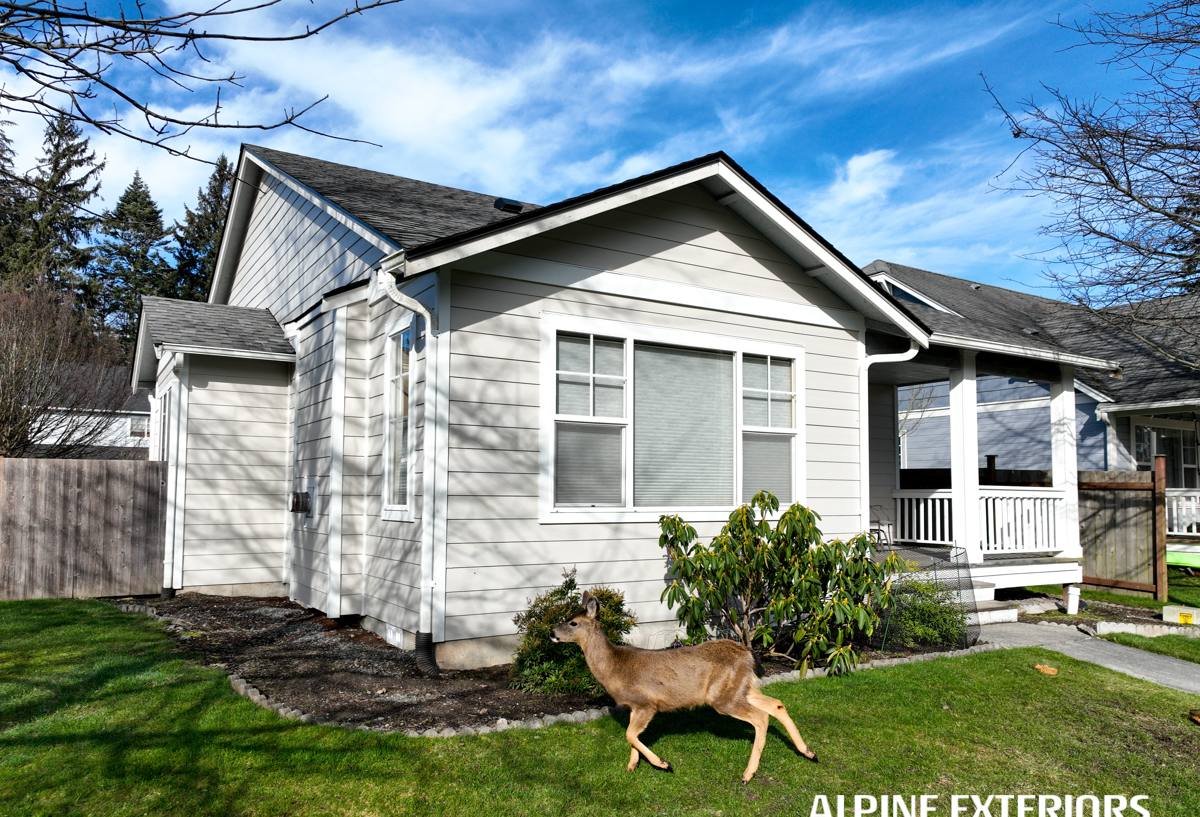
What the Sudden Valley / Acme Climate Does to a House
Whatcom County's marine climate brings persistent damp, and Acme's position among the trees adds its own wrinkle on top of that.
Salt Air and Driving Rain
Even set back from open water, this part of Washington gets moisture-laden air off the Salish Sea, carried inland on the prevailing weather patterns. Combined with wind-driven rain during fall and winter storms, exterior materials here face near-constant cycles of wetting and drying. Materials that swell, absorb, or delaminate under repeated moisture exposure show it within a handful of years — bubbling paint, soft spots at butt joints, and warping at the bottom courses where splash-back keeps wood-based products wet longest.
Moss and Shade
Acme's tree canopy means many homes get partial or heavy shade for large parts of the day, especially on north and east-facing walls. That shade keeps surfaces cooler and slower to dry, which is exactly what moss and algae need to take hold. On siding, that shows up as green-black streaking and a slick surface texture. On roofs, moss works its way under shingle tabs and lifts them, creating entry points for water. A long moss season isn't cosmetic — it's an ongoing moisture-management problem that never fully lets up between October and June.
Freeze-Thaw Swings
Whatcom County doesn't get brutal winters, but it does get enough freeze-thaw cycling — cold snaps followed by rain and thaw — to stress any material that's already saturated. Water that's soaked into a porous or compromised siding surface and then freezes expands, and repeated cycles accelerate cracking and joint failure.
Why We Install James Hardie — and Nothing Else
We made a deliberate decision to install only James Hardie fiber cement siding. Not vinyl, not LP SmartSide, not Cemplank or Allura, not primed spruce or cedar. That's a narrower lineup than most contractors offer, and we think it's worth explaining why, especially for a climate like this one.
Wood-Based and Engineered Wood Products
Products like LP SmartSide use engineered wood strand technology with a resin binder and factory coating. It's a legitimate product line and performs reasonably well in many climates. But wood-based siding, even engineered wood, remains an organic material at its core — it can absorb moisture at cut edges, fastener penetrations, and joints if those details aren't sealed and maintained exactly to spec, and that's a real risk in a shaded, damp environment like Acme where surfaces don't get much drying time between rain events. Cedar and primed spruce carry that risk further: they're beautiful, traditional materials, but they demand a maintenance schedule — recoating, caulking, moisture monitoring — that most homeowners underestimate when they're comparing upfront costs.
Vinyl Siding
Vinyl is affordable and low-maintenance in the sense that it doesn't need painting, but it has real limitations here. It's a thin material that can crack in cold snaps, warp under direct heat reflection from nearby windows, and it doesn't hold up structurally the way fiber cement does. It also traps moisture behind it more readily if the water-resistive barrier and flashing details aren't done correctly — a problem in a climate defined by driving rain.
Other Fiber Cement Brands
Cemplank and Allura are also fiber cement, and fiber cement as a category is the right call for this climate — non-combustible, dimensionally stable, and resistant to moss and moisture damage in a way wood-based products aren't. But we standardized on James Hardie specifically for its ColorPlus factory-baked finish (which resists the fading and touch-up mismatch that field-painted siding shows over time), its HZ5 product engineering for wet Pacific Northwest climates, and a warranty structure that's transferable and well-documented. When we're the ones putting our name behind an installation, we want the material backing it to be the one we trust most.
How James Hardie Performs Against Local Conditions
| Condition in Acme | How James Hardie Fiber Cement Responds |
|---|---|
| Prolonged shade and moss growth | Non-organic composition doesn't feed moss or algae growth the way wood fiber does; factory finish resists staining |
| Driving rain, salt-laden air | Dimensionally stable — doesn't swell, cup, or delaminate from repeated wetting cycles when installed with proper flashing and clearances |
| Freeze-thaw cycling | Low water absorption limits the saturation that drives freeze-crack damage |
| Wildfire ember exposure (regional concern) | Non-combustible material, unlike wood-based or vinyl siding |
| UV and color fade over years | ColorPlus factory finish is baked on and warrantied against fading, unlike field-applied paint |
Roofing, Windows, and Decks in a Shaded, Wet Environment
Roofing
Roofs in tree-covered parts of Sudden Valley take a beating from needle and leaf litter that collects in valleys and behind chimneys, holding moisture against shingles long after a storm passes. Moss intrusion under shingle tabs is one of the most common roof problems we see out this way. Regular gutter and valley clearing, plus proper ventilation to keep the underside of the roof deck dry, go a long way toward extending roof life here.
Windows
Older windows in homes throughout this area often show fogging between panes (a sign the seal has failed) or drafts from settled, deteriorated flashing. In a climate this wet, a failed window seal isn't just an efficiency issue — it's a path for moisture into the wall cavity.
Decks
Decks in shaded lots stay damp longer between rains, which accelerates rot at ledger boards, joists, and any spot where two pieces of wood meet without a drainage gap. We look closely at ledger flashing and joist protection on every deck project, since that's where the majority of structural deck failures start.
What Our Process Looks Like
- On-site walkthrough to assess current siding, roofing, window, and deck condition, including moisture and moss patterns specific to your lot's sun exposure
- Honest discussion of what needs attention now versus what can be monitored
- Written estimate with material and labor broken out clearly, no vague allowances
- Proper prep work — old material removal, sheathing inspection, repair of any hidden moisture damage before new material goes on
- Installation to manufacturer spec, including correct fastening, clearances, and flashing details that matter most in this climate
- Final walkthrough so you understand what was done and how to maintain it
Why a Local Crew Matters
A contractor who works Whatcom County regularly understands that a house in Acme's tree cover needs different attention than one on an open, sun-exposed lot ten minutes away. That's not something you get from a general checklist — it comes from having seen the same moss patterns, the same shaded-wall staining, and the same roof valley buildup on enough local homes to know where to look first. We're not guessing at what this climate does to a house; we're accounting for it in how we plan and execute every job.
Questions Homeowners in Acme Ask Before Starting
- Is my current siding failing, or is the staining just cosmetic?
- Does my roof's moss problem mean I need a full replacement or just a cleaning and maintenance plan?
- How do window and deck issues connect to what's happening with my siding?
- What's the realistic cost range for a full exterior versus tackling one system at a time?
- How long will a James Hardie installation actually last in this specific microclimate?
If you're noticing staining, soft trim, moss buildup, or just want an honest read on where your home's exterior stands, we're happy to come take a look. The estimate is free, there's no pressure, and you'll get a straight answer about what actually needs attention.