 Sudden Valley Siding
 One Product, One Standard
Most siding contractors keep a catalog of options and let the homeowner pick based on price. We don't work that way. Sudden Valley Siding Contractor installs James Hardie fiber cement siding and nothing else. Not vinyl, not LP SmartSide, not Cemplank or Allura fiber cement, not primed spruce or cedar. This isn't a sales gimmick or a manufacturer kickback arrangement — it's a standard we set after years of watching which products actually hold up on homes around Lake Whatcom and the surrounding county, and which ones create callbacks, moisture problems, and repaint cycles that homeowners weren't warned about.
When a contractor installs everything, they have no reason to tell you the truth about any of it. Every product looks fine in the sales pitch. The differences show up five, ten, fifteen years later — after the crew that installed it has moved on to other jobs. We'd rather narrow our offering and stand behind it than sell you something we wouldn't put on our own house.
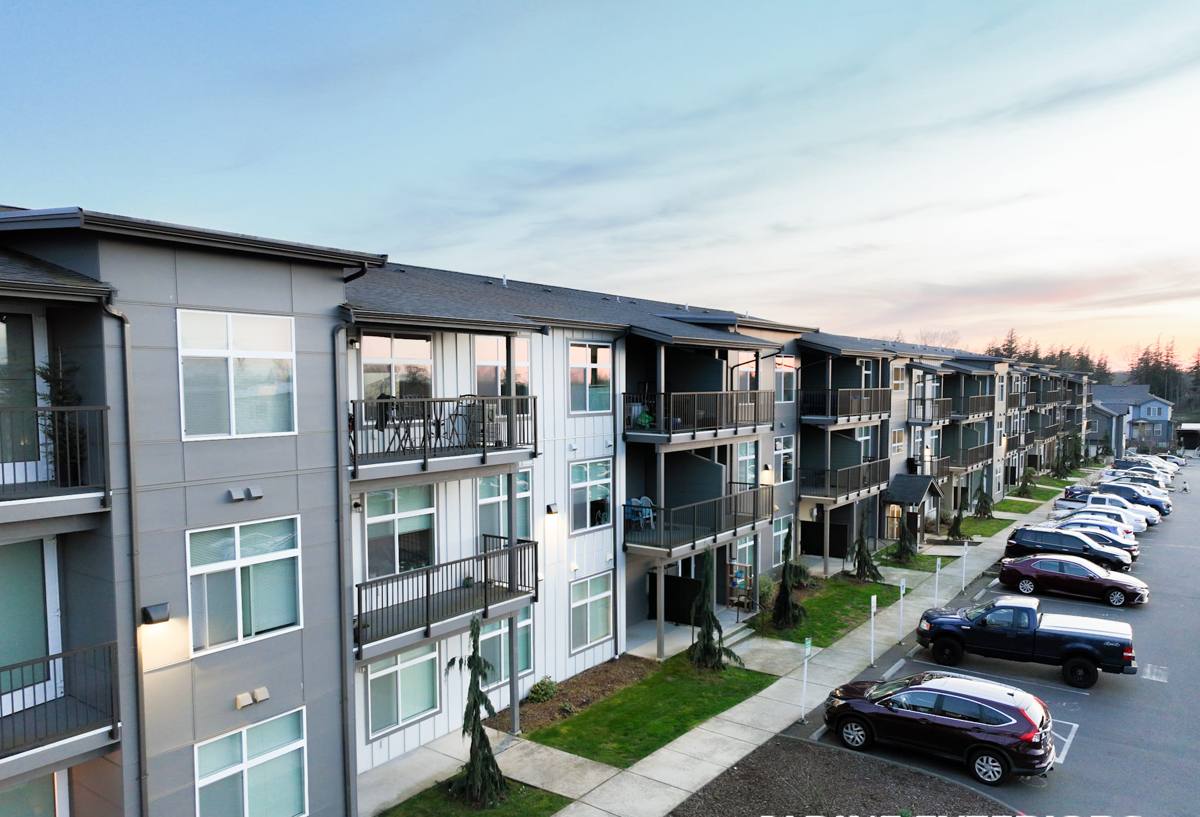
What Sudden Valley's Climate Actually Does to Siding
Sudden Valley sits against Lake Whatcom, which means homes here deal with a specific combination of stressors that inland Whatcom County properties don't see in the same intensity. Moisture off the lake keeps humidity elevated for long stretches. Salt-tinged marine air drifts in from the Puget Sound side of the county and slowly attacks anything with a weak finish or exposed fastener. Driving rain off winter storms hits siding sideways, not just straight down, which pushes water into laps and seams that a fair-weather installation might get away with elsewhere. And the long, wet shoulder seasons here create what we just call moss season — months where north-facing walls and anything under tree cover stay damp long enough for moss and algae to take hold.
None of that is exotic. It's normal Pacific Northwest weather. But it's exactly the combination that separates a siding product that looks good on a spec sheet from one that actually performs on a house for thirty-plus years without swelling, delaminating, or feeding mold behind the surface.
Why This Rules Out Some Common Choices
Wood-based siding — whether that's primed spruce, cedar, or an engineered wood product like LP SmartSide — relies on an intact factory or field-applied coating to keep moisture out of the wood fiber. In a climate with this much sustained dampness, any gap in that coating, any cut edge left unsealed, any nail driven slightly wrong, becomes a place where water gets in and doesn't leave quickly. Once wood-based siding starts absorbing moisture, it swells, and swelling is what leads to edge flare, delamination, and eventually rot. Vinyl siding avoids the moisture-absorption problem but has its own weak point here: it's a plastic product that expands and contracts with temperature, and in driving rain it relies entirely on lap geometry and correct clearances to keep water out — installation error is much less forgiving than most homeowners realize, and hairline cracking becomes more common as the material ages and cold-weather flexibility drops.
Why Fiber Cement Is Built for This
James Hardie siding is fiber cement — a mix of Portland cement, sand, and cellulose fiber, cured under controlled factory conditions. It doesn't absorb water the way wood does, and it doesn't expand and contract with temperature swings the way vinyl does. That combination matters directly in a climate where siding spends a large fraction of the year at some level of dampness. Fiber cement is also non-combustible, which is a real consideration anywhere near wildland-urban interface areas in Whatcom County, even though the immediate wildfire exposure risk around Sudden Valley is lower than in drier parts of the state.
Fiber cement isn't magic, though, and we're not going to pretend it's maintenance-free or install-proof. It's heavy, it has to be cut and fastened correctly, and it still needs proper flashing, clearances, and joint treatment to perform the way it's engineered to. The difference is that when it's installed to Hardie's published specifications, the material itself isn't the weak link — the workmanship is the only variable left, and that's something we control directly.
HZ5 Engineering: Built for This Specific Weather
James Hardie makes climate-specific versions of its products, sold under HZ (HardieZone) designations. HZ5 is engineered for the wetter, colder regions of the country, including western Washington. The formulation and factory finish process for HZ5 products account for freeze-thaw cycling and sustained moisture exposure in a way that a generic, one-size-fits-all siding product doesn't. For a Sudden Valley home taking on lake moisture, marine salt air, and months of gray, damp weather, that's not a marketing detail — it's the difference between a product designed for this exact set of conditions and one designed for the national average.
ColorPlus: The Finish Is Half the Product
A siding board is only as good as its finish, and this is where a lot of fiber cement competitors cut corners. James Hardie's ColorPlus Technology is a factory-applied, baked-on finish, applied in a controlled environment rather than sprayed or brushed on-site after installation. That matters for two reasons. First, factory application produces a more even, durable coating than anything achievable in the field, where wind, temperature, and humidity all affect how paint cures. Second, ColorPlus finishes carry their own separate finish warranty against fading and peeling, which is a meaningfully stronger position for a homeowner than relying on a field-applied primer coat that needs a full paint job within a few years.
In a climate with this much UV-filtered but persistent moisture exposure and algae-friendly dampness, a finish that resists fading, chalking, and moss adhesion for longer between maintenance cycles is worth the premium over a product that ships primed and expects the installer or homeowner to finish the job correctly on-site.
The Hardie Product Lines We Work With
Not every Hardie product fits every part of a house. Part of doing this correctly is matching the right line to the right application.
| Product Line | Typical Use | What It Offers |
|---|---|---|
| HardiePlank Lap Siding | Primary wall cladding | The most common choice; several profiles and textures, the workhorse of a full re-side |
| HardieShingle | Accent gables, dormers | Staggered or straight-edge shingle look without the moisture issues of real wood shingle |
| HardiePanel | Modern vertical siding, porch ceilings | Large-format panels for a cleaner, more contemporary look |
| HardieTrim | Corners, window and door trim, fascia | Matches the siding's durability so trim doesn't become the weak point in the system |
Using Hardie trim alongside Hardie siding isn't optional in our book — mixing in a softer trim material at the corners and openings just relocates the moisture problem to the joints, which is usually where leaks start anyway.
Installation Is Where It's Won or Lost
Fiber cement's reputation problems almost never trace back to the material. They trace back to installation that ignored the manufacturer's published specifications — wrong nail placement, missing or undersized clearances, caulked joints where a proper flashing detail was needed, panels butted tight with no room to move. James Hardie publishes detailed installation instructions for a reason, and following them isn't optional if you want the warranty to mean anything.
- Minimum clearance maintained between siding and roofing, decks, and grade (typically 6" from grade, 2" from roofline, 1/4" from horizontal flashing)
- Correct fastener type, spacing, and penetration depth per the HZ5 installation guide
- Properly lapped and sealed weather-resistive barrier behind the siding, not just tucked under
- Flashing at every horizontal joint, window head, and any penetration through the field
- Butt joints back-primed or factory-sealed and positioned over a stud, not floating
- No caulk used as a substitute for proper flashing at critical junctions
- Manufacturer-specified gapping left for expansion, even though fiber cement moves far less than vinyl
This is the checklist we hold ourselves to on every job, and it's the same list a homeowner can ask any contractor about — the answers tell you a lot about whether a crew is installing to spec or just getting boards up fast.
The Warranty Difference
James Hardie backs its siding products with a non-prorated limited warranty that's transferable to a subsequent homeowner, and ColorPlus finishes carry a separate finish warranty. Warranty terms and length vary by product and region, so we walk through the specific coverage for your project rather than quoting numbers that don't apply everywhere. What matters for the buying decision is the structure: a warranty from a large, established manufacturer with a long track record, backed up by installation done to their specification, rather than a shorter or prorated warranty that loses most of its value a few years in — which is common with lower-cost siding categories.
What This Means for Your Home
Standardizing on one product means we know it thoroughly — every clearance requirement, every flashing detail, every common mistake to avoid. It also means our recommendation to you isn't influenced by which product happens to have the best margin on a given week. If Hardie weren't the right fit for a project, we'd say so. For homes taking on Lake Whatcom moisture, coastal-influenced salt air, driving rain, and a long moss season, we haven't found a product that outperforms correctly installed James Hardie fiber cement, and that's the entire reason it's the only thing on our truck.
If you're weighing a re-side or new siding project in Sudden Valley or elsewhere in Whatcom County, we're happy to walk your home, look at what's driving the decision, and put together a free, no-pressure estimate — no obligation, no pressure to sign anything on the spot.