 Sudden Valley Siding
 Siding Built for Barkley's Corner of Whatcom County
Barkley sits close enough to Bellingham Bay and the Lake Whatcom watershed that homes here deal with a specific mix of weather: salt-tinged air drifting in off the water, long stretches of driving rain through the fall and winter, and a moss season that seems to start earlier and last longer every year. None of that is unusual for Whatcom County, but it adds up differently depending on what your siding is made of. We install James Hardie fiber cement exclusively, and on a property like yours in the Barkley area, that choice comes down to how the material actually performs against these exact conditions, not just how it looks the day it goes up.
This page walks through what we see on homes in and around Barkley, how our siding, roofing, window, and deck work fits together for this area, and why a crew that actually works this part of Washington week in and week out makes a difference.
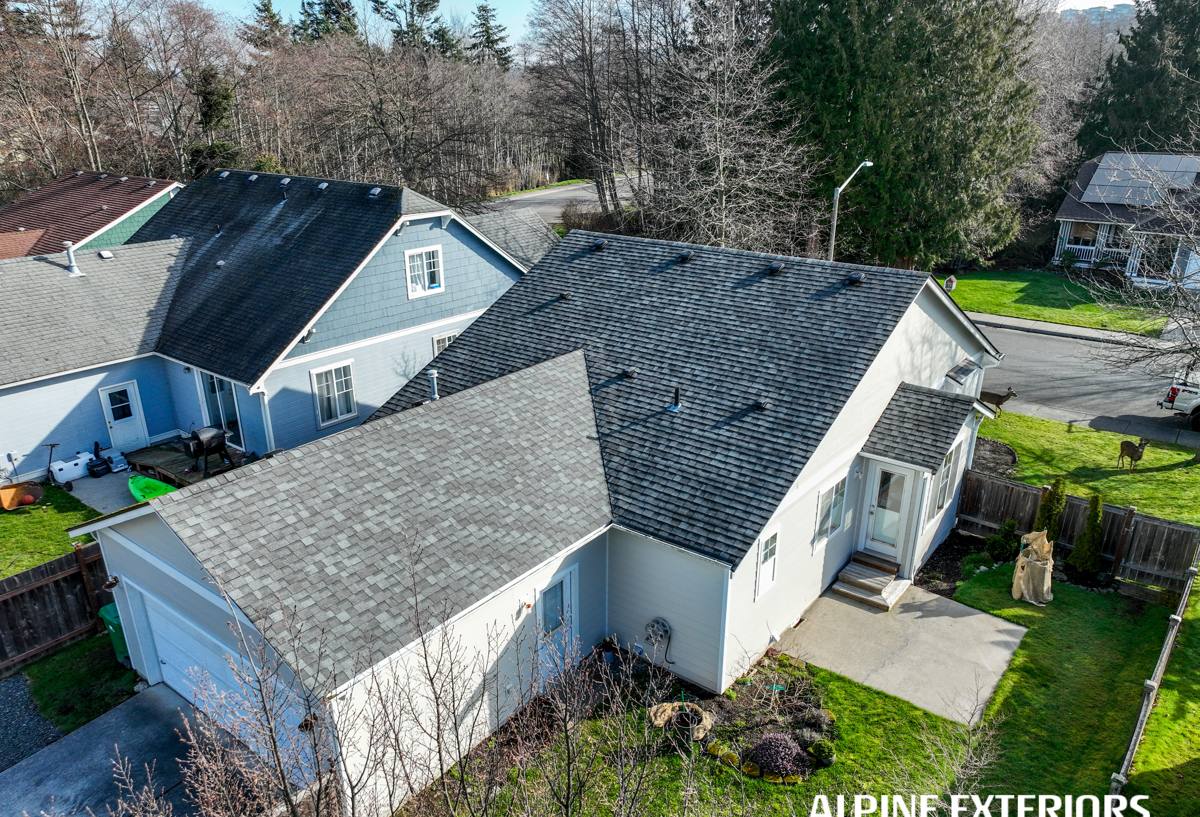
What the Local Climate Does to Exterior Materials
Salt Air and Coastal Moisture
You don't have to be right on the water for salt air to matter. Prevailing weather off Bellingham Bay carries fine salt particles inland, and over years that exposure accelerates corrosion on fasteners, trim, and any material with a metal or paper-faced core. It also interacts with wood-based siding by keeping surfaces slightly damp longer than they would be further inland, which is exactly the environment mold and rot organisms want.
Driving Rain
Whatcom County doesn't just get a lot of rain — a good portion of it arrives sideways, pushed by wind off the Sound and the Strait. Driving rain finds every gap, lap, and fastener penetration a siding system has. Products that rely on caulking or paint film to stay water-resistant are only as good as that seal, and seals fail well before most homeowners expect them to.
Moss and Shade
Between the tree cover common in Barkley's neighborhoods and the long wet season, north-facing walls and shaded elevations stay damp for extended stretches. That's prime moss and algae territory. On absorbent siding materials, that surface moisture doesn't stay on the surface — it works its way in, and moss roots can physically hold water against the substrate.
Why We Only Install James Hardie Fiber Cement
We get asked fairly often why we don't offer vinyl, LP SmartSide, cedar, or other fiber cement brands like Cemplank or Allura. It's not that these products have no merit — some of them are reasonable choices in the right application. It's that after years of installing and repairing siding in this exact climate, we standardized on one product because it holds up the most consistently, and we'd rather stand behind one system we trust completely than offer several and hope the cheaper ones hold up as well.
What Sets Hardie Apart Here
- Non-combustible core: fiber cement doesn't feed a fire the way wood-based or engineered wood products can, which matters as wildfire smoke and dry-season risk have become more common even west of the Cascades.
- Moisture behavior: fiber cement doesn't swell, delaminate, or wick water the way engineered wood siding can when a seam or fastener seal fails under driving rain.
- Factory-applied ColorPlus finish: baked-on color resists fading and chipping far longer than field-applied paint, and it means fewer repaint cycles over the life of the siding.
- Climate-engineered HZ product lines: Hardie's HZ5 formulation is built specifically for the wetter, colder Pacific Northwest climate zone rather than a one-size-fits-all national spec.
- Transferable warranty: a strong, transferable warranty backing the product adds real value if you sell the home, which matters in a market where buyers are asking more questions about exterior condition.
None of this means other products are junk. It means that when we weigh installation sensitivity, long-term moisture performance, and maintenance burden against what Barkley's climate actually does to a house, fiber cement from Hardie is the product we're willing to put our name behind.
How We Approach a Siding Job in Barkley
Assessment First
Before we talk product selection, we look at the house: which elevations take the worst weather, where moss and staining already show up, what condition the water-resistive barrier and flashing are in, and whether there's any existing rot or moisture damage hiding under the current siding. On older homes in this area, that inspection often turns up more than the homeowner expected — usually around window heads, deck ledgers, and lower wall sections near grade.
Installation to Spec, Not Just to Code
James Hardie's performance numbers assume the product is installed to their specification — correct fastener type and spacing, proper clearances from grade and roof lines, and correctly lapped and sealed joints. A lot of siding problems we get called out to fix aren't product failures at all; they're installation shortcuts. We follow Hardie's install spec because that's what the warranty depends on, and because it's what actually keeps water out.
Working Around the Whole Exterior
Siding doesn't work in isolation. We also handle roofing, windows, and decks, which matters because these systems all interact at flashing points, transitions, and penetrations. A new siding job with a roof that's shedding water into the wrong place, or windows with failed flashing, will show problems again within a few seasons no matter how good the siding installation was.
Comparing Siding Options for This Climate
| Material | Moisture Resistance in Driving Rain | Maintenance | Fire Rating |
|---|---|---|---|
| James Hardie Fiber Cement | Strong when installed to spec | Low — factory finish, no repainting cycle for years | Non-combustible |
| Vinyl Siding | Moderate — relies on lap/seam integrity, can warp | Low but limited repair options if damaged | Combustible, can melt/deform |
| LP SmartSide / Engineered Wood | Vulnerable if seals or paint film fail | Moderate — repainting and edge sealing over time | Combustible |
| Cedar / Primed Spruce | Vulnerable — absorbent, prone to rot without upkeep | High — regular refinishing required | Combustible |
This isn't meant to declare every alternative unusable — it's meant to show the trade-offs plainly. In a climate where wall assemblies stay wet for days at a time, the categories that matter most are moisture tolerance and how much upkeep a homeowner is realistically willing to do over 20-plus years.
Roofing, Windows, and Decks: The Rest of the Envelope
A siding job is only as good as the systems it ties into. We handle the full exterior for that reason:
- Roofing: proper roof-to-wall flashing and adequate overhangs reduce how much wind-driven rain ever reaches your siding in the first place.
- Windows: correctly flashed window openings are one of the most common failure points we find during siding tear-off — old caulk-only details don't hold up.
- Decks: ledger board connections and deck-to-wall transitions are a frequent source of hidden rot, especially on homes with decks built before current flashing standards.
Signs Your Barkley Home May Need Attention
- Persistent moss or dark streaking on north-facing or shaded walls that returns shortly after cleaning
- Soft or spongy siding near the ground, around window sills, or below deck ledgers
- Paint that's peeling, bubbling, or chalking faster than expected
- Visible gaps at seams, corners, or trim that have opened up over time
- Rusting or corroded fasteners showing through the siding surface
- Warping, cupping, or delamination on wood-based or engineered siding panels
Why a Local Crew Matters
Companies that install siding all over the state, or across state lines, don't always account for the specific way Whatcom County weather behaves — the salt exposure near the bay, the shade patterns from mature tree cover common in Barkley, and how long moss season actually runs here. A crew based in and familiar with this region knows which elevations of a house need the most attention, understands local permitting and inspection expectations, and is around long after the job is done if a warranty question or a follow-up comes up. That local accountability is worth as much as the material itself.
What to Expect From an Estimate
When we come out to a Barkley property, we walk the full exterior, note problem areas, and talk through what's actually driving any damage we find — most of the time it's a moisture or installation issue rather than the siding simply wearing out. We'll give you a straightforward assessment of what Hardie siding would involve for your home, including surface prep, trim details, and how it ties into your roofing, windows, or deck if those need attention too.
If you're noticing moss buildup, soft spots, or aging siding on your Barkley home, we're happy to take a look. Reach out for a free, no-pressure estimate — the form below gets you started.