 Sudden Valley Siding
 Exterior Work Built for Life on Lake Whatcom
Homes around Lake Whatcom live a different life than homes in town. The lake moderates temperature swings, the surrounding tree cover holds moisture close to every wall, and the marine air that moves inland off Bellingham Bay and the greater Puget Sound region keeps humidity levels high for most of the year. Add in Whatcom County's long, gray rainy season and a moss season that can stretch from fall through spring, and you have a climate that is genuinely tough on exterior building materials. We work on homes throughout Sudden Valley and the Lake Whatcom shoreline area regularly enough to know exactly what that combination does to siding, roofing, trim, and decking over ten and twenty year timelines — not just what a spec sheet says it should do.
This page covers how we approach siding, roofing, windows, and decks for Lake Whatcom properties, why we install James Hardie fiber cement siding exclusively, and what local homeowners should know before hiring anyone to work on their exterior.
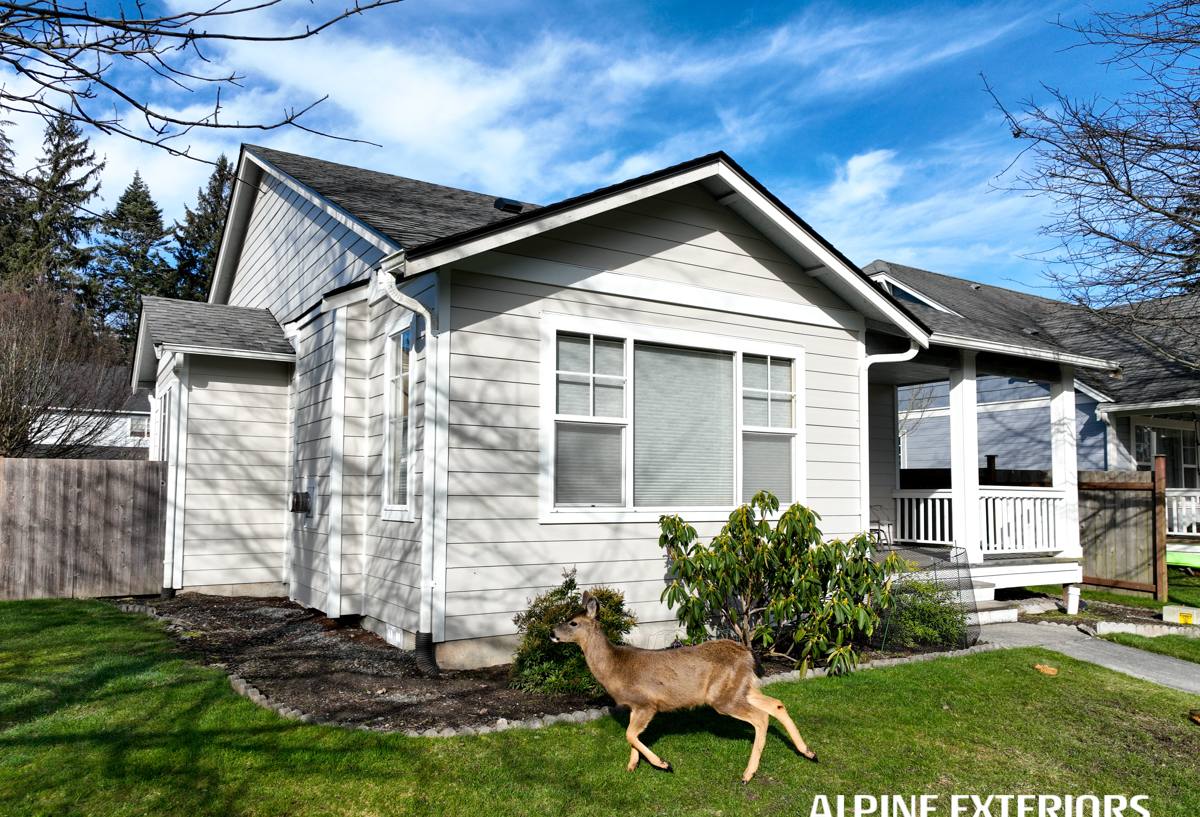
What the Lake Whatcom Climate Does to a House
Moisture That Doesn't Leave
Many Sudden Valley lots sit close to tree lines or on north-facing slopes that get less direct sun than a comparable lot in an open subdivision. That shade is part of what makes the area beautiful, but it also means siding and trim stay damp longer after every rain. Materials that are sensitive to sustained moisture exposure — wood-based products in particular — are working against the site conditions from day one.
Moss and Organic Growth
Moss, algae, and lichen need shade and moisture to establish, and Lake Whatcom's tree cover and lake-effect humidity provide both in abundance. Moss on a roof isn't just cosmetic — it holds water against shingles and underlayment and can work its way under lapped edges over time. On siding, persistent moss and mildew staining usually points to a surface that isn't drying out fully between weather events.
Wind-Driven Rain
Storms crossing the lake and funneling through the surrounding valleys can drive rain sideways into wall assemblies, particularly on west- and southwest-facing elevations. Siding systems and flashing details that aren't installed with real attention to water management will eventually show it — usually first at butt joints, window and door openings, and any spot where two materials meet.
Salt-Influenced Marine Air
Whatcom County sits close enough to Puget Sound and Bellingham Bay that marine air carries inland on a regular basis, and Sudden Valley is not immune to it. That moist, mineral-laden air accelerates corrosion of exposed fasteners and metal flashing and adds another layer of stress to any exterior material that isn't dimensionally stable.
Why We Install Only James Hardie Fiber Cement Siding
We get asked regularly why we don't offer vinyl, LP SmartSide, or other engineered wood siding products for Lake Whatcom homes. The honest answer is that we've made a standard for our own crews, and James Hardie fiber cement is the only product that consistently holds up to this specific climate without becoming a maintenance project for the homeowner.
Fiber Cement vs. the Alternatives
| Material | How it handles sustained moisture | Maintenance in this climate |
|---|---|---|
| James Hardie fiber cement | Non-combustible, dimensionally stable; won't swell or rot from moisture exposure | Occasional wash; factory finish holds color for years |
| Engineered wood (e.g. LP SmartSide) | Wood-strand core; edges and cut ends are vulnerable if not sealed and maintained | Regular caulk/paint upkeep, prompt attention to any exposed edges |
| Vinyl siding | Doesn't rot, but can warp, fade, or crack; seams and laps can trap moisture behind panels | Low upkeep but limited repair options if damaged |
| Cedar / primed spruce | Natural wood; attractive but genuinely moisture-sensitive without diligent upkeep | Frequent refinishing, high long-term labor cost |
None of these are bad products in the abstract — engineered wood and cedar both have real appeal, and plenty of homes wear them well in drier climates. But in an environment where a wall can stay damp for days after a storm, wood-based products ask a lot of the homeowner in ongoing upkeep, and any lapse in maintenance shows up as rot, delamination, or paint failure faster than it would somewhere drier. Vinyl avoids the rot problem but has its own weaknesses: it can distort in temperature swings, and repairs are often a full-panel replacement rather than a spot fix.
What Fiber Cement Gets Right
James Hardie siding is made from cement, sand, and cellulose fibers, which makes it non-combustible and dimensionally stable — it doesn't expand and contract with moisture the way wood does, and it doesn't feed the kind of organic growth that thrives on damp wood surfaces. Hardie's ColorPlus factory-applied finish is baked on under controlled conditions, which gives it better adhesion and UV resistance than field-applied paint, and it comes with a real transferable warranty backing the material and the finish. For a lake-adjacent, shaded, high-humidity property like most of Sudden Valley, that combination of moisture indifference and finish durability is what actually keeps a house looking good ten or fifteen years out, not just at installation.
HardiePlank, HardiePanel, and Climate-Engineered Lines
Hardie makes several profiles suited to different architectural styles — lap siding (HardiePlank) for traditional and craftsman looks, panel siding (HardiePanel) for board-and-batten or modern styles, and shingle-style products for accent areas. Hardie also engineers products in regional formulations (their HZ5 line, for example) intended for colder, wetter climates like ours in the Pacific Northwest. We'll walk through which profile and color line fits your home's style and exposure when we come out for an estimate.
How Correct Installation Protects the Investment
Fiber cement siding performs well because of the material — but only if it's installed correctly. A few details matter more here than they would in a drier climate:
- Proper starter strip and flashing at the base of walls so water sheds away from the foundation
- Correct nail placement and fastening pattern so panels can move slightly without cracking
- Sealed and flashed window and door openings, since these are the most common entry points for wind-driven rain
- Adequate clearance between siding and grade, decks, and roof lines to avoid trapped moisture
- Rain screen or drainage plane detailing where the wall assembly calls for it
A house that gets Hardie siding installed to spec, with real attention to these details, is a very different long-term proposition than one where the same material was rushed onto the wall. This is where a local crew that has worked on Lake Whatcom-area homes before earns its keep — we've seen which details actually matter on this side of the county.
Roofing for a High-Moss Environment
Roofing takes the brunt of Lake Whatcom's shade and moisture. Moss removal and prevention treatments help, but the longer-term fix is a roof system installed with attention to ventilation and moisture escape, not just shingle selection. We assess ventilation, flashing condition around penetrations and valleys, and overall drainage as part of any roofing estimate — a new roof installed without addressing an underlying ventilation problem will grow moss again just as fast as the old one did.
Windows: Sealing Out Wind-Driven Rain
Older windows on Sudden Valley homes are a common source of slow water intrusion, especially on the wall faces that take the most wind-driven rain off the lake. Modern window units with proper flashing integration into the wall assembly do a much better job keeping that moisture out than older units resealed in place. When we replace windows as part of a siding project, we integrate the flashing with the new siding's water management details rather than treating the two as separate jobs — that continuity is where a lot of water problems either get solved or get missed.
Decks: Built to Handle Shade and Rain
Decks around Lake Whatcom deal with the same shade-and-moisture combination as siding, plus direct foot traffic and standing water risk if drainage isn't right. Whether you're looking at a wood deck or a composite system, the details that matter most are joist and ledger flashing, proper board spacing for drainage and airflow, and hardware rated for a damp environment. We handle deck construction and repair as part of the same exterior scope as siding, roofing, and windows, so drainage at the house-to-deck connection gets treated as one system rather than two contractors' separate problems.
What to Expect When You Hire a Local Crew
A few things distinguish a contractor who actually knows this area from one working off a generic estimate:
- They can talk specifically about how shade, moss, and moisture patterns affect your particular lot and orientation
- They inspect for existing moisture damage before quoting, not just measure square footage
- They explain flashing and water management details, not just material brand names
- They're licensed and insured to work in Washington State and can show proof without hesitation
- They give you a written scope that specifies product lines, not vague "siding replacement" language
A Realistic Look at Cost Factors
Every home is different, but the factors that most affect the cost of a siding project on a Lake Whatcom property tend to be the same:
| Factor | Why it affects cost |
|---|---|
| Extent of existing moisture damage | Rotted sheathing or framing found during tear-off has to be repaired before new siding goes on |
| Home size and wall complexity | More corners, dormers, and roof lines mean more flashing detail and labor time |
| Siding profile and color line selected | Lap vs. panel vs. shingle-style, and standard vs. premium ColorPlus finishes, price differently |
| Access and site conditions | Slopes, tree cover, and limited driveway access around many Sudden Valley lots can affect staging and labor |
| Scope bundling | Combining siding with window replacement or roofing can reduce redundant setup costs versus separate projects |
We don't publish blanket pricing because these variables genuinely change the number, but we'll give you a clear, itemized estimate after seeing the property in person.
Getting Started
If you're dealing with moss buildup, siding that won't stay clean, a roof that never quite dries out, or windows that let in more than light, we're happy to come take a look. We offer free, no-pressure estimates for siding, roofing, window, and deck work throughout Sudden Valley and the Lake Whatcom area — use the form below to get one scheduled.