 Sudden Valley Siding
 Every siding problem eventually raises the same question: patch it, or replace it? For homeowners in Sudden Valley, that question carries a little more weight than it does in drier parts of the country. Between the moisture off Lake Whatcom, the salt-tinged air that drifts inland from the Sound, driving rain that comes in sideways during winter storms, and a moss season that can stretch nearly eight months, this region asks a lot of exterior siding. Knowing how to tell the difference between a fixable problem and a system that's past its useful life can save you real money — or keep you from throwing good money after bad.
The Real Question: Is It the Siding, or What's Behind It?
Before deciding whether to repair or replace, you need to know what you're actually dealing with. A cracked board or a few missing pieces of trim can look alarming, but the siding itself is often the least of the problem. The bigger question is whether water has gotten behind it, and if so, for how long.
Siding is a system, not a single layer. Behind the visible boards or panels sits a water-resistive barrier, flashing at every window, door, and penetration, and in older installations sometimes nothing more than building paper. Once water finds a way behind that barrier — through a failed caulk joint, a missing kick-out flashing, or siding installed too close to the ground — it can sit against the sheathing and framing for months before anyone notices a problem on the surface. That's the scenario that turns a repair into a replacement.
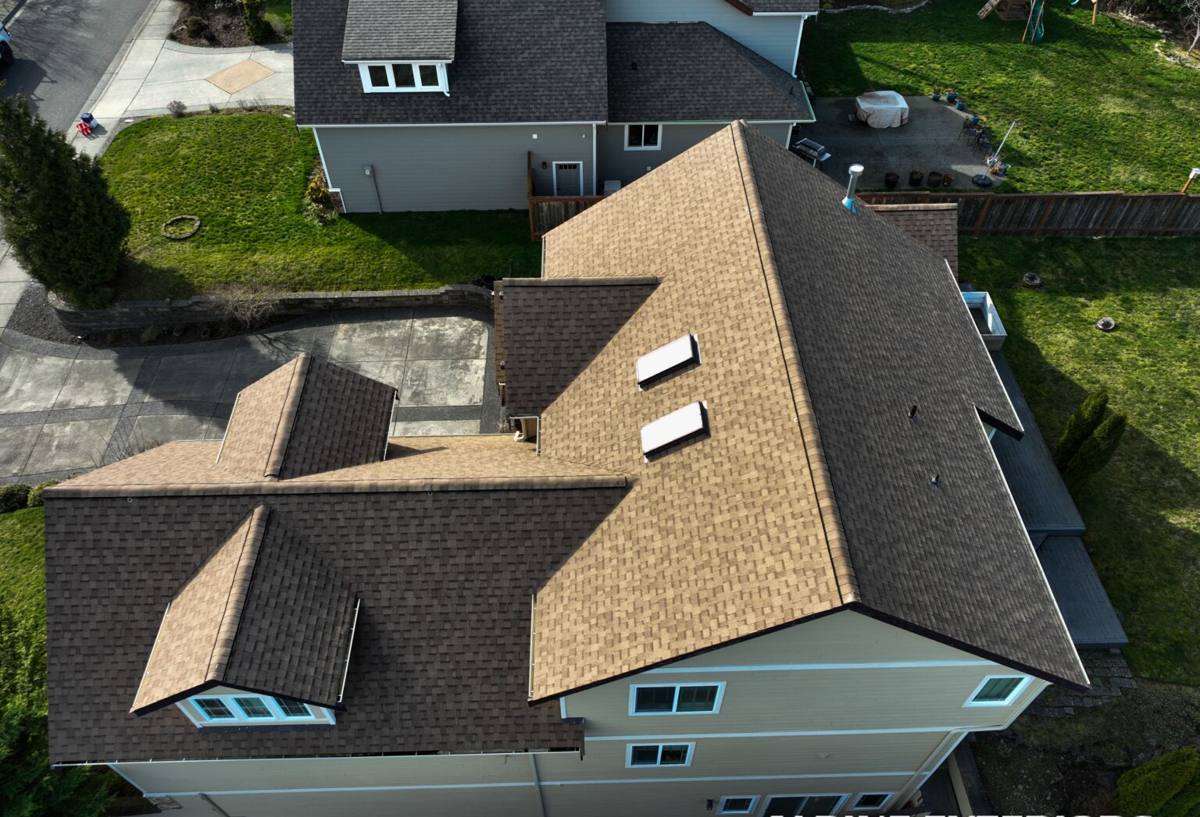
Signs a Repair Is Still a Reasonable Option
Not every siding problem means the whole house needs to be redone. Repair is a legitimate answer when the damage is isolated, the siding material underneath is sound, and the underlying wall assembly hasn't been compromised. Reasonable candidates for repair include:
- A single board cracked by impact — a ladder, a falling branch, a stray baseball — with no surrounding rot
- Isolated caulk failure around a few windows, caught before water has tracked behind the wall
- Minor moss and algae staining on an otherwise structurally sound wall
- Loose or missing trim pieces on a home where the field siding itself is in good condition
- Localized woodpecker or pest damage limited to a small section
If your siding is less than 10-15 years old, was installed correctly, and the damage is confined to a small area, a targeted repair is often the right call — assuming a contractor can actually match the existing material and finish, which is its own challenge with older products that have faded or been discontinued.
Signs That Point to Full Replacement
Replacement becomes the more honest recommendation when the damage is no longer isolated, or when it points to a problem with the whole wall system rather than one bad spot. Watch for:
- Soft, spongy, or crumbling wood siding in multiple locations, not just one board
- Persistent moss or algae growth that returns within a season or two of cleaning, suggesting the wall stays damp longer than it should
- Paint that won't hold — bubbling, peeling, or alligatoring across large sections even after repainting
- Visible warping, buckling, or gaps between boards, especially on north- and west-facing walls that take the brunt of Whatcom County's weather
- Interior signs — musty smells, staining on interior drywall near exterior walls, or soft spots in trim — that suggest moisture has already worked its way inside
- A siding material (LP SmartSide, primed spruce, older cedar) that has a known history of moisture-related edge swelling or delamination, even if damage looks minor today
The pattern that matters most is repetition. One repair is normal home maintenance. If you've called someone out three times in five years for the same wall, that's not a repair problem anymore — it's a sign the wall assembly or the material itself isn't holding up, and continuing to patch it is just delaying a bigger bill.
What "Just a Little Rot" Usually Means
Wood-based siding products rarely rot in one clean, contained spot. Because these materials absorb moisture along their edges and at fastener penetrations, visible rot at one board joint is often a sign that moisture has been wicking sideways through adjacent boards for a while. What looks like a two-board repair frequently turns into a much larger tear-off once a contractor pulls the damaged section and finds soft sheathing underneath. This is the single biggest reason repair estimates on wood-based siding often balloon once work actually starts.
Why the Siding Material Itself Changes This Calculation
Repair versus replacement isn't only about the extent of the damage — it's also about what the siding is made of. Some materials age gracefully and take repair well. Others don't.
Vinyl siding can crack in cold snaps and fade unevenly over time, and exact color matches for a repair become difficult once a run is more than a few years old, since dye lots and product lines change. LP SmartSide and similar engineered wood products are strand-based, and once moisture gets into a cut edge or a fastener hole, the material can swell and never fully return to its original shape — a cosmetically repaired board often looks slightly different from its neighbors within a season. Primed spruce and cedar are natural wood products that depend entirely on paint film integrity; once that film fails in more than a few places, repainting buys time but doesn't reset the clock on the wood underneath.
This is a big part of why we standardized on James Hardie fiber cement for every installation and repair we do. Hardie's HZ5 product line is engineered specifically for the Pacific Northwest's wet climate, it's non-combustible, it holds ColorPlus factory finish far longer than field-applied paint, and it doesn't absorb and swell the way wood-based products do. When repair work is genuinely warranted, fiber cement takes it cleanly. When it isn't, replacing with fiber cement means you're not having this same conversation again in five years.
What Sudden Valley's Climate Does to Siding Over Time
Local conditions aren't a minor factor in this decision — they're often the deciding one. Sudden Valley sits in a pocket of Whatcom County that gets a genuine mix of lake-effect moisture and salt-influenced marine air, and the tree cover that makes the area attractive also means many homes stay shaded and damp for long stretches of the year. Moss doesn't just grow on roofs here; it establishes on north-facing siding walls and in butt joints where boards meet, holding moisture against the surface long after a storm has passed.
Driving rain is the other factor homeowners tend to underestimate. Wind-driven rain doesn't just fall on siding, it pushes into every lap joint, seam, and fastener penetration that isn't properly flashed or caulked. Over a 15- to 20-year span, a wall that faces prevailing weather takes measurably more water exposure than a sheltered wall on the same house, which is why damage is so often uneven from one side of a home to another. Any repair-versus-replace decision should account for which walls actually take the weather, not just where the visible damage happens to be.
Cost Factors: Repair vs. Replacement
There's no fixed dollar figure that applies to every home, but the factors that drive cost in each direction are consistent. Use this as a framework for the conversation with your contractor, not a price list.
| Factor | Favors Repair | Favors Replacement |
|---|---|---|
| Extent of damage | Isolated to one or two areas | Present on multiple walls or elevations |
| Age of existing siding | Under 10-15 years, installed correctly | Approaching or past expected service life |
| Underlying sheathing | Dry and solid where tested | Soft, stained, or unknown condition |
| Material match | Product still available, close color match possible | Discontinued line, visible mismatch likely |
| Repair history | First repair on this wall | Repeat repairs on the same section |
| Long-term plan | Selling soon, budget-limited fix acceptable | Staying long-term, want to stop recurring maintenance |
A useful rule of thumb: if a contractor's repair estimate is already running past a third of what full replacement of that elevation would cost, it's worth seriously comparing the two rather than defaulting to the smaller number.
What Happens If You Keep Patching an Aging System
Deferred replacement isn't free — it just moves the cost around. Repeated patch jobs on failing siding tend to accelerate three things: moisture intrusion into framing (which is far more expensive to fix than siding alone), energy loss as gaps and failed seals let conditioned air escape, and curb appeal, which matters if you ever plan to sell. None of these show up on the repair invoice, but they show up eventually, usually at a worse moment and a higher price than if the wall had been addressed proactively.
There's also a practical scheduling reality worth knowing: siding work in this region is weather-dependent, and contractors get booked up well ahead of the wet season. Homeowners who wait until a wall is visibly failing often end up choosing between rushing a decision or living with exposed sheathing through a Whatcom County winter.
A Practical Checklist Before You Decide
- Walk the exterior in good light and note every affected area, not just the most visible one
- Press on siding near the ground, at corners, and below windows — sponginess anywhere is a red flag
- Check for interior signs: musty odor, soft baseboards, or staining on exterior-facing walls
- Ask how old the current siding is and what it's made of
- Get a straight answer on whether sheathing will be inspected once siding is opened up, not just patched over
- Compare a real repair estimate against a real replacement estimate for the same wall before deciding
- Ask what warranty applies to a repair versus a full replacement — they're often very different
Why We Rebuild With James Hardie When Replacement Is the Right Call
When the evidence points to replacement rather than repair, what you put back matters as much as the decision itself. We install James Hardie fiber cement exclusively — not vinyl, not LP SmartSide, not Cemplank or Allura, not primed spruce or cedar — because it's engineered to hold up to exactly the conditions Sudden Valley sees: sustained moisture, salt-influenced air, and long stretches without direct sun to dry a wall out. It's non-combustible, the ColorPlus finish is baked on at the factory rather than applied on site, and Hardie's transferable warranty gives homeowners real protection if the home changes hands. For a decision this consequential, we'd rather put on a system built for this climate than one that's likely to bring us back for the same conversation in a few years.
If you're not sure which side of the repair-or-replace line your home falls on, we're happy to take a straightforward look and tell you honestly what we see — no pressure either way. Use the form below to request a free estimate.