 Sudden Valley Siding
 Columbia's Climate Puts Real Demands on a House
Homes in and around Columbia, part of the greater Sudden Valley area in Whatcom County, sit in one of the wettest, dampest corners of Washington State. That's not a knock on the area — it's part of why people live here — but it means the exterior of a house is working harder than it would almost anywhere else in the country. Salt-laden air moving in off the Salish Sea, long stretches of driving rain through fall and winter, and a moss season that can stretch from October well into spring all put steady, cumulative stress on siding, trim, and roofing. A product or installation that would hold up fine in a drier climate can fail years early here.
We work exterior remodeling jobs throughout Whatcom County, and the pattern in Columbia is consistent: the houses that age well are the ones where the siding, roofing, windows, and decking were chosen and installed with this specific climate in mind, not just whatever was cheapest or fastest to put up.
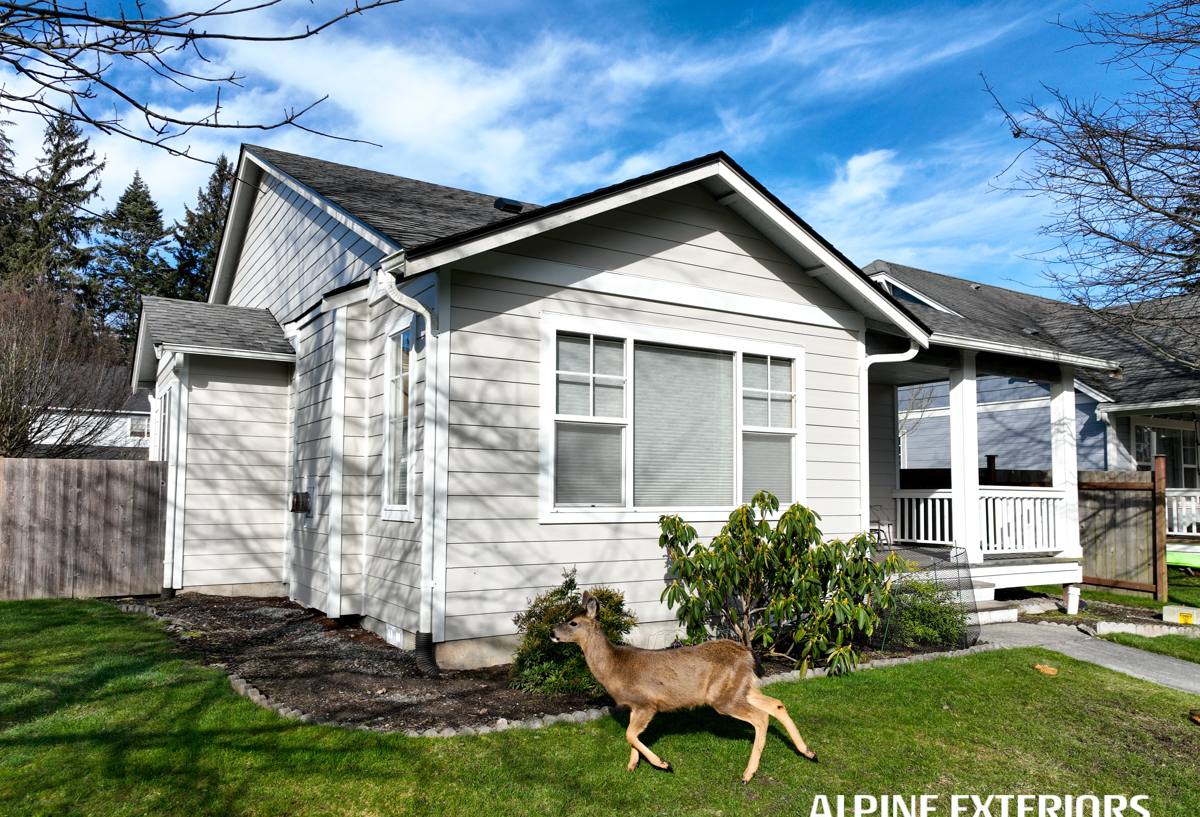
What the Weather Actually Does to a House Here
Salt Air and Moisture
Even at a distance from open saltwater, marine air carries moisture and fine salt content that accelerates corrosion on fasteners, staples, and metal flashing, and speeds up the breakdown of paint films and caulk joints. Over years, this shows up as rust streaking, failed caulk lines, and siding paint that chalks and peels faster than the label promised.
Driving Rain
Whatcom County doesn't just get rain — it gets wind-driven rain that hits siding at an angle instead of running straight down. That matters because it pushes water into laps, seams, and butt joints that a vertical-rain climate would never test. Any weakness in the water-management plan behind the siding — house wrap, flashing, gaps at penetrations — gets found out here, usually inside a wall cavity where you can't see it until there's a problem.
Moss and Prolonged Dampness
Shaded lots, tree cover, and long wet seasons mean moss and algae get a real foothold on north- and west-facing walls, roof surfaces, and anywhere airflow is limited. Wood-based siding products absorb moisture that feeds this growth and, over time, softens the substrate underneath. Non-organic siding doesn't feed the problem the same way, which is a big part of why material choice matters more here than in a drier region.
Why We Install Only James Hardie Fiber Cement Siding
We made a deliberate decision, years ago, to standardize on James Hardie fiber cement siding and stop installing vinyl, LP SmartSide, and other engineered-wood or lower-cost fiber cement products. That's not a marketing position — it's a reflection of what actually holds up on Whatcom County homes over a 20-, 30-, or 40-year timeframe.
Fiber cement is manufactured from cement, sand, and cellulose fibers. It doesn't have the organic wood content that gives moisture something to feed on, and it doesn't soften, delaminate, or swell at cut edges the way engineered-wood siding can if a seam isn't perfectly sealed and maintained. James Hardie's HZ5 product line is specifically engineered for cold, wet Pacific climate zones, which describes Whatcom County well. The ColorPlus factory finish is baked on under controlled conditions rather than field-applied, which matters directly for salt-air paint failure — factory finishes hold color and adhesion longer than site-applied paint, especially on a house catching driving rain from multiple directions.
We're not going to tell you every other product is junk — vinyl and engineered wood both have legitimate uses and loyal installers. What we will say plainly is that we've chosen not to put our name behind them on homes in this climate, because the maintenance burden and long-term risk don't match what a Columbia homeowner should expect from a full siding investment.
How the Common Options Compare in This Climate
| Material | Moisture Behavior | Salt Air / Fastener Corrosion | Typical Lifespan Here |
|---|---|---|---|
| Vinyl siding | Doesn't absorb water, but panels warp, oil-can, and gap under wind-driven rain and temperature swings | Fasteners and trim pieces still corrode; panels fade and become brittle | 15–25 years before visible failure |
| LP SmartSide / engineered wood | Wood-strand core can swell at cut edges and seams if sealant fails | Moderate; finish maintenance is critical | Highly dependent on caulk/paint upkeep |
| Cedar / primed spruce | Natural wood; absorbs moisture, feeds moss and rot without diligent upkeep | Moderate to high maintenance demand | Shortest without frequent repainting/sealing |
| James Hardie fiber cement (HZ5, ColorPlus) | Non-organic; engineered for wet climates; resists moisture-driven swelling | Correct fastener/flashing detailing minimizes corrosion risk | Manufacturer-rated for decades, backed by a transferable warranty |
What a Siding Project Looks Like for a Columbia Home
Every job starts with an actual look at the house, not a phone estimate. We're checking the condition of the existing siding, what's happening at the house wrap and flashing layer, whether there's any moss-driven softening at the base of walls or under eaves, and how the home is oriented relative to prevailing wind and rain. That last part matters more here than in most climates — a wall that takes rain broadside needs different detailing than a sheltered wall.
From there, installation follows manufacturer specifications closely: correct fastener type and spacing, proper flashing at every window, door, and penetration, and rain-screen or drainage-plane detailing where the site conditions call for it. In a climate that pushes rain sideways, the water-management layer behind the siding is just as important as the siding itself. This is where a lot of siding failures actually originate — not from the panel material, but from shortcuts taken underneath it.
Signs a Columbia Home May Need Siding Attention
- Visible moss or algae staining on north- or west-facing walls that returns quickly after cleaning
- Soft or spongy spots when you press on siding, especially near the ground or under windows
- Paint that's peeling, bubbling, or chalking well before the age of the siding would suggest
- Gaps opening at seams, corners, or trim boards
- Rust streaking below nail heads or metal trim
- Rising energy bills that hint at moisture or air infiltration behind the siding
Roofing, Windows, and Decks — The Whole Building Envelope
Siding doesn't work in isolation. A house is a system, and in a climate this wet, the roof, windows, siding, and decking all have to work together to keep water moving out and away from the structure. We handle all four, which means we're not just patching one piece and hoping it plays nicely with what's already there.
A roof with failing flashing will send water straight down behind good siding. Windows with degraded seals let moisture into the wall cavity no matter how well the siding around them is installed. Decks — especially ledger board connections and any area where a deck meets the house — are a classic point of hidden rot in the Pacific Northwest, precisely because they trap moisture against the structure. When we're on a property for siding work, we're looking at the whole envelope, and we'll tell you honestly if something else needs attention rather than staying narrowly focused on the one thing we were called for.
Why a Local Crew Matters in Whatcom County
Whatcom County's mix of marine exposure, elevation changes, tree cover, and long wet seasons doesn't behave like a generic Pacific Northwest climate on paper — it has its own local quirks depending on how exposed or sheltered a given lot is. A crew that works this county regularly recognizes those patterns on sight: which wall orientations take the worst of the weather, which older homes were built with water-management shortcuts common to a particular era, and how moss establishes itself differently on a shaded Lake Whatcom-area lot than on an open one. That local knowledge shapes real decisions on the job — where to add extra flashing, how to detail a rain-screen gap, which trim details actually hold up here.
What Affects the Cost of a Siding Project
| Factor | Why It Matters |
|---|---|
| Home size and wall complexity | More corners, gables, and dormers mean more cutting, flashing, and labor time |
| Condition of the substrate underneath | Rot or moisture damage found during removal has to be repaired before new siding goes on |
| Siding profile and finish selected | Lap width, texture, and ColorPlus color options carry different material costs |
| Trim and detail work | Window and door surrounds, corner boards, and fascia detailing add labor |
| Site access | Sloped lots, tree cover, and limited staging area near Lake Whatcom can affect scheduling and equipment needs |
We don't quote a job over the phone, because none of these factors can be judged accurately without seeing the house. What we can tell you upfront is that we price fiber cement work honestly against its real, long-term cost of ownership — factoring in the maintenance a homeowner would otherwise pay for over 15–20 years with a lower-cost material.
Maintaining Fiber Cement Siding in This Climate
James Hardie siding is low-maintenance, not no-maintenance. In a climate like Columbia's, a little seasonal attention goes a long way toward getting the full lifespan out of the investment.
- Rinse siding annually to remove salt residue, pollen, and early moss growth, especially on shaded or north-facing walls
- Inspect caulk joints at trim, windows, and corners each spring for cracking or gaps
- Trim back vegetation and tree limbs that keep a wall surface shaded and damp
- Check gutters and downspouts before the fall rains to make sure water is actually leaving the roofline instead of sheeting down the siding
- Address any soft spots, staining, or paint failure promptly rather than waiting for it to spread
Ready to Talk About Your Home
If you're noticing moss buildup, paint failure, or general wear on your Columbia home's exterior, it's worth having someone look at it before small issues turn into structural ones. We'll walk the property, give you a straight assessment of what's going on, and explain your options — no pressure, no obligation. Use the form below to request a free estimate.