 Sudden Valley Siding
 Board & Batten Siding in Ferndale: A Style That Has to Earn Its Keep
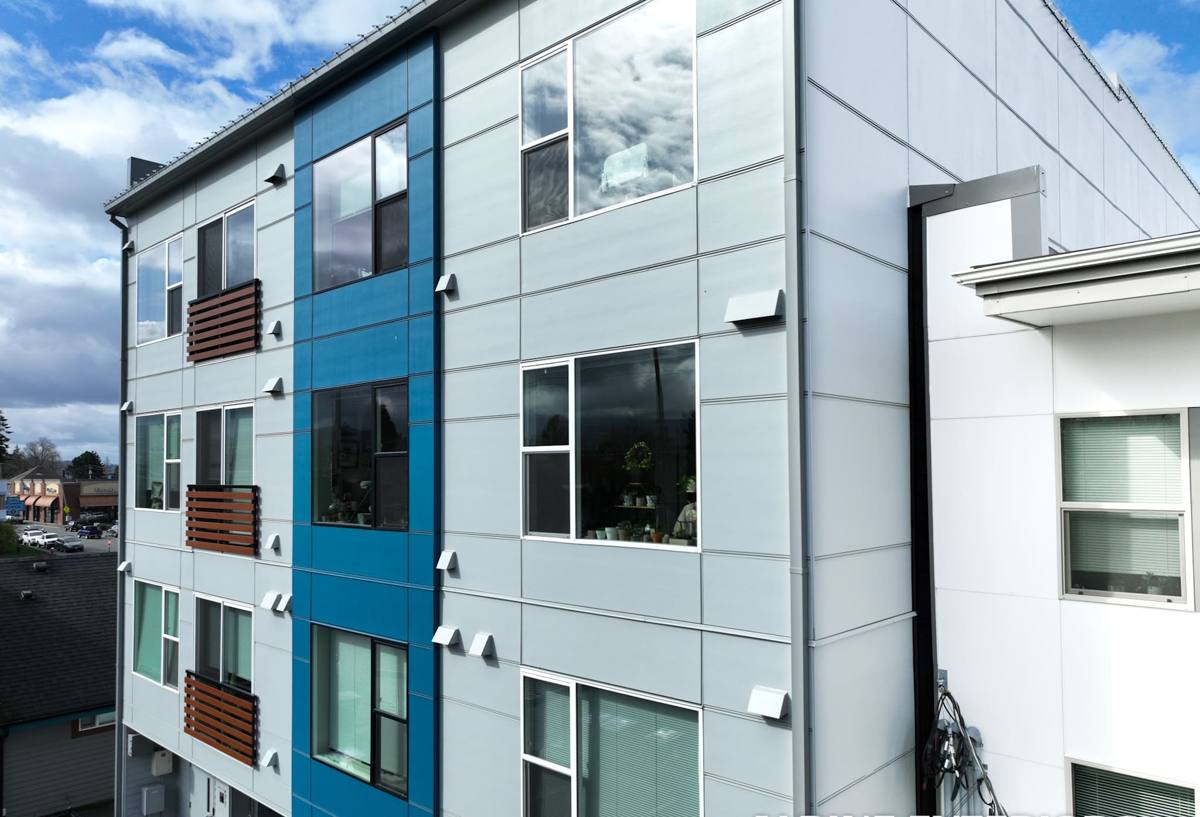
Board and batten has a strong, clean vertical look that fits a lot of Ferndale homes well, especially farmhouse-style builds, garages, gable accents, and full exteriors on newer construction around Whatcom County. But it's also a siding profile with more seams per square foot than lap siding, and in a climate that delivers salt-tinged marine air, wind-driven rain, and a moss season that can stretch most of the year, more seams means more places for water to find a way in if the system isn't built and installed correctly. This page is specifically about board and batten in Ferndale: what the style demands from a material and an installer here, and how we approach it so it holds up rather than becoming a maintenance problem five years in.
We install James Hardie fiber cement exclusively, including in board and batten profiles, and we don't offer this look in vinyl, engineered wood, or unfinished cedar. That's a deliberate standard, not a default, and it matters more for this particular siding style than almost any other.
Why Board & Batten Is Less Forgiving in This Climate
More Vertical Seams, More Entry Points
A board and batten wall is built from wide vertical panels with narrower battens covering the seams between them. Every one of those seams is a joint, and every joint is a place where wind-driven rain can push water sideways into the wall assembly if the batten spacing, fastening, and flashing aren't done right. Lap siding sheds water downward by design; board and batten relies much more heavily on correct installation detail to keep water out, because the vertical orientation doesn't have the same natural overlap doing the work for it.
Salt Air and Fastener Corrosion
Ferndale sits close enough to the water that homes here get a steady dose of salt-laden air, and that air is hard on exposed metal. Board and batten uses a lot of fasteners along both the boards and the battens, and corroding fasteners in a vertical siding system don't just look bad, they loosen the very joints that are supposed to be keeping water out. Fastener quality and placement matter more here than on a lap-siding job with fewer connection points.
Moss and Trapped Moisture Behind Battens
Whatcom County's mild, damp climate supports a long moss and mildew season, and board and batten's raised battens create small shadowed ledges and gaps that hold moisture and organic debris longer than a flat lap profile does. If the batten spacing doesn't allow the wall to dry properly between rain events, that moisture sits against the substrate instead of evaporating off, and that's exactly the condition that leads to hidden rot behind an otherwise good-looking wall.
Why We Use James Hardie for Board & Batten
Board and batten is available in several materials, and we've made a specific call about which one we'll put on a Ferndale home in this profile.
- Dimensional stability: Fiber cement doesn't swell, cup, or telegraph seam movement the way engineered wood panels can after repeated wet-season cycling, which matters more in a vertical profile with this many joints.
- Non-combustible core: Board and batten is common on garages and accent walls close to property lines in Ferndale, and a non-combustible material is a real advantage there, not just a marketing point.
- Factory-applied ColorPlus finish: The color and sealant are baked on in a controlled factory process, which holds up far better against salt air and UV exposure than field-painted panels, especially on battens that catch more direct weather.
- Climate-engineered HZ5 formulation: Built for regions with heavy moisture exposure and freeze-thaw cycling, which describes coastal Whatcom County accurately.
- Backed warranty when installed to spec: Hardie's transferable warranty only holds up if the installation follows their published fastening and clearance requirements, which is a big part of why installation quality matters as much as the material itself on this profile.
We won't install this look in LP SmartSide, vinyl, Cemplank, Allura, primed spruce, or cedar. Each has a place in the market and plenty of people are happy with them elsewhere. But board and batten's seam-heavy design is exactly the situation where a less moisture-stable material shows problems first, and we'd rather stand behind one system we trust fully than offer a cheaper option that quietly shifts risk onto the homeowner.
What a Correct Board & Batten Installation Involves
Board and batten looks simple from the street, but the installation has more places to get wrong than most homeowners expect. A correct job in this climate includes:
- Proper house wrap and a drainage plane behind the panels so any moisture that does get past the battens has somewhere to go besides the sheathing
- Correct batten spacing and fastening pattern per Hardie's specifications, not a builder's shortcut version
- Adequate clearance from grade, roof lines, and horizontal trim to keep splash-back and pooling water away from the base of the wall
- Corrosion-resistant fasteners suited to a coastal-exposure environment
- Careful flashing and sealant detail at every horizontal transition, window, and door opening, since a vertical profile has more of these than lap siding on the same wall
- Verified panel and batten alignment so the reveal is even and water doesn't pool behind uneven battens
Skipping any of these steps is how a board and batten job ends up looking fine at handoff and then showing staining, soft spots, or seam separation within a few wet seasons. We treat these details as non-negotiable, not optional upgrades.
Board & Batten vs. Other Siding Profiles: Cost and Maintenance Factors
| Factor | Board & Batten | Lap Siding |
|---|---|---|
| Relative material and labor cost | Generally higher, due to two-layer board-plus-batten installation | Generally lower, single-layer installation |
| Water shedding behavior | Relies more on correct joint and flashing detail | Natural overlap sheds water downward by design |
| Moss and moisture retention | Battens can trap moisture if spacing is wrong | Flatter profile dries more evenly |
| Fastener exposure | Higher fastener count in a vertical, salt-exposed orientation | Fewer exposed fasteners |
| Typical use on Ferndale homes | Farmhouse exteriors, gable accents, garages | Full exteriors, traditional styles |
Board and batten isn't automatically the wrong choice for a wetter climate, but it does demand more installation discipline to perform as well as lap siding does with less effort. We'll give you a straight read on whether it's the right call for your specific home during a walkthrough, rather than steering you toward whichever profile is easier to install.
Where Board & Batten Fits Well on a Ferndale Home
We see board and batten work best on accent applications, gable ends, entry features, and full-exterior farmhouse-style builds where the vertical lines suit the architecture. On a full exterior, it's a bigger commitment in both cost and installation detail than lap siding, so it's worth deciding upfront whether the look is worth that added complexity for your specific home, or whether a mixed approach, board and batten on an accent wall or gable with lap siding on the main body, gets you the visual effect with less exposed seam area overall.
Repair vs. Full Replacement
If you already have board and batten siding on a Ferndale home and you're seeing isolated problems, a section that's taken storm damage, or staining concentrated around a few battens, that can sometimes be repaired and matched into existing Hardie siding without a full re-side. But if moisture has been tracking behind the wall for a while, or the existing material is an older, non-fiber-cement product that's reached the end of its service life, patching usually just delays a larger job. We'll tell you plainly which situation you're in.
Signs Your Ferndale Board & Batten Siding Needs Attention
- Dark staining or moss that returns quickly along or behind battens, especially on shaded walls
- Soft or spongy panels, particularly near the base of the wall or below window sills
- Battens that appear to be lifting, gapping, or separating from the wall
- Peeling or bubbling paint concentrated at seams rather than across the whole wall
- Visible fastener corrosion or rust streaking below batten lines
- Musty odors or rising energy bills that may point to moisture behind the wall assembly
Roofing, Windows, and Decks Alongside Your Board & Batten Siding
A leaking roof valley, a poorly flashed window head, or a deck ledger trapping moisture against the house can all surface as siding problems on a board and batten wall even when the siding itself isn't the source. Because we also handle roofing, windows, and decks, we look at a Ferndale home as one connected exterior system when we're diagnosing an issue, instead of treating the siding in isolation and missing where the water is actually getting in.
Why a Local Crew Matters for This Profile
Board and batten rewards installers who've actually built and serviced it in this specific climate, not just read the spec sheet. A crew that works across Whatcom County sees firsthand how salt air, wind-driven rain, and a long moss season behave on real board and batten walls over multiple wet seasons, which shapes decisions like batten spacing, flashing sequence at transitions, and which wall orientations need the most attention. Ferndale's coastal exposure and open terrain mean those decisions aren't always identical to what works further inland, and a crew with local, hands-on experience with this profile accounts for that instead of applying a generic national installation guide.
Get a Free, No-Pressure Estimate
If you're considering board and batten siding for a Ferndale home, or you have an existing board and batten wall that needs repair or a second opinion, we're glad to take a look and give you a straight answer. Reach out using the form below to schedule a free estimate, no pressure and no upsell script.