 Sudden Valley Siding
 Storm Damage Roof Repair for South Hill Homes
South Hill sits up in the terrain around Lake Whatcom, which means homes here catch weather a little differently than houses closer to the water or down in Bellingham proper. Elevation change, tree cover, and exposure to wind funneling off the lake all factor into how a roof ages and how it fails. When a windstorm rips through Whatcom County or a heavy winter system dumps rain for days on end, South Hill roofs take a real beating — and the damage isn't always obvious from the driveway.
We repair storm-damaged roofs for South Hill homeowners: wind-lifted shingles, impact damage from falling branches, flashing torn loose in a gust, and the slow water intrusion that shows up weeks after a storm has already passed. This page covers what that work actually involves, what to expect from us, and why a crew that already works this specific area matters more than it might seem.
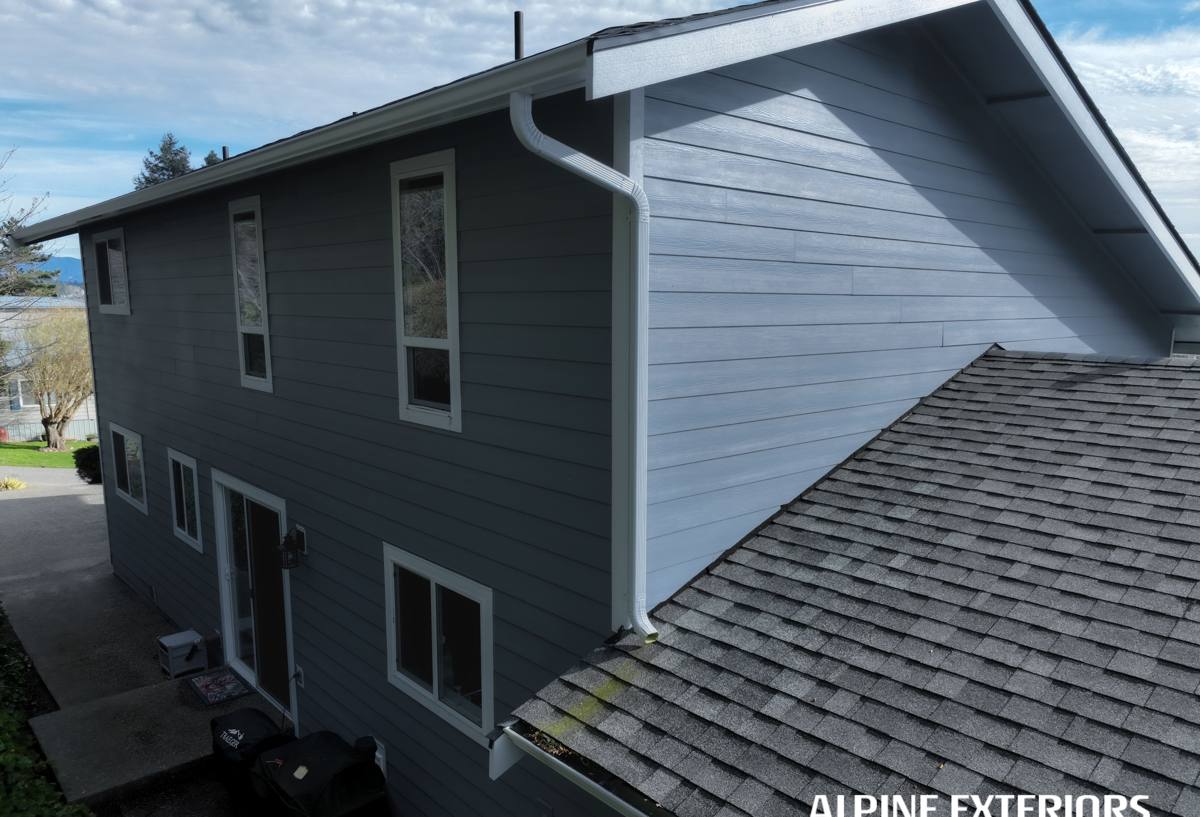
Why South Hill's Climate Is Hard on Roofs
Whatcom County doesn't get the dramatic hailstorms or hurricane-force winds some regions deal with, but it makes up for that with persistence. The combination that wears down a South Hill roof is less about any single violent event and more about cumulative exposure:
- Salt-tinged air: Proximity to Bellingham Bay and the Puget Sound corridor means airborne salt and moisture reach fasteners, flashing, and metal roof components even well inland, accelerating corrosion on anything not properly rated or coated.
- Driving rain: Wind-driven rain doesn't just fall on a roof — it pushes sideways under shingle tabs, around poorly sealed flashing, and into any gap that a calm-weather roof wouldn't notice.
- A long moss season: Western Washington's damp, mild winters give moss and algae months to establish themselves. Moss holds moisture against roofing material, lifts shingle edges as it grows, and turns minor granule loss into a much bigger problem over a couple of seasons.
- Tree cover: Many South Hill lots have mature trees close to the roofline. That's part of the area's appeal, but it also means branch strikes during wind events and near-constant debris and needle buildup in valleys and gutters.
None of these factors are dramatic on their own. Together, over a Whatcom County winter, they're exactly what turns a small storm hit into a leak.
What Storm Damage Actually Looks Like
Storm damage rarely announces itself with a hole in the ceiling. More often it's subtle enough that homeowners don't catch it until the next heavy rain — which, in this part of Washington, isn't far off. Here's what we look for.
Wind Damage
Wind doesn't need to be extreme to do damage — it needs to be sustained and gusty, which describes a lot of South Hill weather. Shingles get lifted at the tab, the sealant bond breaks, and the shingle looks fine until the next gust catches the loosened edge and tears it further or peels it off entirely. Ridge caps and hip shingles, being more exposed, usually show wind stress first.
Impact Damage
Falling branches and wind-blown debris cause the impact damage we see most often in tree-heavy South Hill neighborhoods. This can range from a cracked shingle to a puncture that goes straight through to the decking. Impact damage from smaller debris can look cosmetic and still compromise the shingle's water resistance.
Flashing and Penetration Failures
Flashing around chimneys, skylights, vents, and roof-to-wall transitions is where most storm-related leaks actually originate, even when the shingles themselves look intact. Wind can work flashing loose at the fasteners; driving rain finds the gap.
Gutter and Edge Damage
Wind-loaded gutters, especially ones already carrying debris from nearby trees, can pull away from the fascia during a storm. Once that happens, water sheets down the siding and foundation instead of draining properly — turning a roof problem into a whole-exterior problem.
Our Storm Damage Repair Process
We keep this process straightforward because storm repair isn't the time for surprises or upsells.
- Inspection. We walk the roof (or use a ladder assessment where pitch or safety calls for it) and check flashing, penetrations, ridge lines, valleys, and the areas most exposed to prevailing wind. We also check the attic side when accessible, since interior staining tells us more about an active leak than the exterior often does.
- Documentation. We note exactly what's damaged, what's simply weathered, and what's still sound. This matters both for your own records and for insurance, if you're filing a claim.
- Honest scope. We tell you what actually needs repair versus what's cosmetic wear that can wait. We're not going to recommend a full re-roof when a section repair solves the problem, and we're not going to patch something that's genuinely at the end of its service life.
- Repair. Matching shingles as closely as possible, resealing or replacing flashing, addressing decking if it's been compromised, and making sure water has a clear path off the roof and away from the structure.
- Follow-up check. Especially after a major system moves through, we recommend a follow-up look once the repair has been through a real rain event, just to confirm everything is sealing the way it should.
Repair vs. Replacement: How We Decide
Not every storm-damaged roof needs to come off. The right call depends on the roof's age, how widespread the damage is, and what condition the rest of the roofing system is in.
| Factor | Leans Toward Repair | Leans Toward Replacement |
|---|---|---|
| Roof age | Under 12-15 years, otherwise in good shape | Approaching or past typical shingle lifespan |
| Damage extent | Isolated to one slope or a handful of shingles | Spread across multiple slopes or recurring in the same spots |
| Moss/algae condition | Light coverage, granules mostly intact | Heavy moss with granule loss and lifted shingle edges |
| Decking condition | Solid, no soft spots | Soft, spongy, or previously water-damaged decking |
| Flashing condition | Sound, just needs resealing | Corroded, undersized, or improperly installed originally |
We'll walk you through where your roof falls on that spectrum before recommending anything. A repair that buys you several more years is often the right economic call; a repair that just delays an inevitable replacement isn't a favor to anyone.
Insurance and Storm Claims
If a specific storm event caused the damage, homeowners insurance often covers repair or replacement, minus your deductible. A few things help this go smoothly:
- Document damage as soon as it's safe to do so, ideally before any temporary repairs.
- Get an inspection promptly — insurers sometimes question damage reported long after a storm, even when the damage is legitimate.
- Keep a written scope of work and photos from your contractor as part of the claim file.
- Understand your policy's distinction between wind/impact damage (often covered) and gradual wear like moss damage or age-related deterioration (often not covered).
We're not an insurance adjuster and won't pretend to be one, but we can give you an honest, documented assessment of what's storm-caused versus what's ordinary wear — which is usually what the claims process actually needs from a contractor.
Preventing the Next Round of Damage
South Hill's storm season isn't a one-time event — it's a recurring part of living in this part of Whatcom County. A few maintenance habits meaningfully reduce how much damage the next storm does:
- Trim back branches that overhang or brush against the roofline before they become a wind-driven hazard.
- Clear moss buildup before it establishes deeply — early moss treatment is far less invasive than dealing with lifted shingles later.
- Keep gutters and downspouts clear so water has somewhere to go during heavy rain, instead of backing up under roof edges.
- Have flashing and penetrations checked periodically, since these fail quietly and are the most common source of leaks that don't show up until months later.
- Address minor storm damage promptly rather than waiting — a lifted shingle left through one more Whatcom County winter usually turns into a bigger repair.
Why a Crew That Knows South Hill Matters
Roofing work in South Hill isn't identical to roofing work on flat ground in town. Steeper driveways and lot access, tree-crowded roof lines, and the specific wind patterns that come off Lake Whatcom all change how a job gets planned and executed safely. A crew that's already worked this neighborhood knows what to expect before the ladder goes up — which slopes tend to take the worst of prevailing wind, where moss builds up fastest given the tree cover, and how access on a given street typically works.
That familiarity also means a faster, more accurate inspection. We're not guessing at what "normal wear for this area" looks like versus genuine storm damage — we've seen enough South Hill roofs to tell the difference quickly, which keeps your inspection honest and your repair scope accurate.
What to Expect From Us
We show up, inspect thoroughly, and tell you plainly what we find — no scare tactics, no pushing a full replacement when a targeted repair will do the job. Straight talk about what your roof needs, a clear scope before any work starts, and materials matched as closely as possible to what's already on your roof. If we think a section of your roof is fine for now, we'll say so.
If a recent storm has you wondering about your roof, or you've noticed a stain on a ceiling that wasn't there before, reach out for a free, no-pressure estimate. There's a form below — tell us what you're seeing and we'll take it from there.