 Sudden Valley Siding
 Roofing Built for Happy Valley's Weather, Not Just Any Roof
Happy Valley sits inside the Sudden Valley community along Lake Whatcom, which means homes here deal with a specific combination of conditions: moisture off the lake, salt-laden air moving up from the Puget Sound corridor, driving rain that comes in sideways during fall and winter storms, and a moss season that can run eight months or longer under tree cover. A roof that's rated fine for a dry-climate spec sheet is not automatically the right roof for this address. When we install a new roof in Happy Valley, we're building for this specific set of stresses, not just checking a box that says "new roof."
That distinction matters more than most homeowners realize until their first roof fails early. A roof system is only as good as its weakest component — flashing, underlayment, ventilation, fasteners — and in a high-moisture, moss-prone area like Whatcom County, the weak points that get skipped on a rushed install are exactly the ones that cause problems in year three or four, not year one.
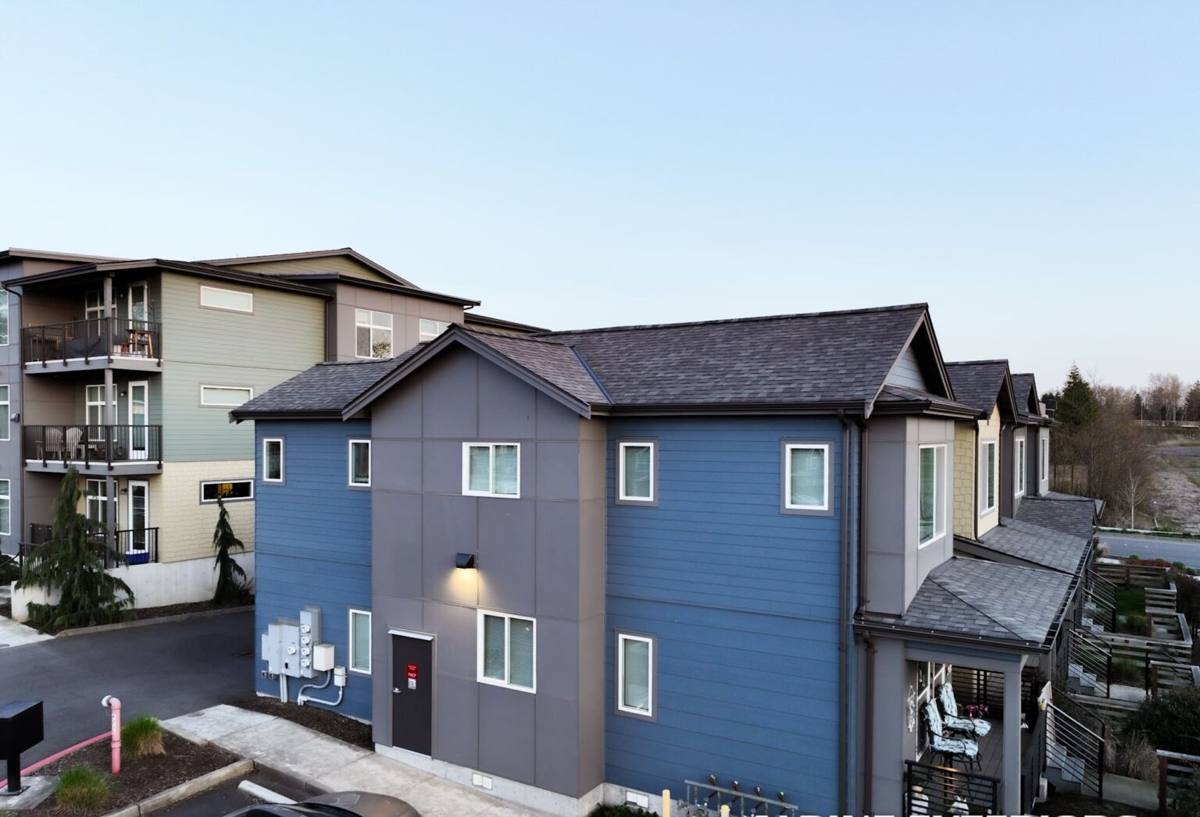
What Happy Valley's Climate Actually Does to a Roof
Salt Air and Metal Fatigue
Proximity to the Sound means airborne salt reaches roofing hardware, flashing, and any exposed fasteners. Standard galvanized fasteners and lower-grade flashing can start corroding years before a comparable roof inland would show the same wear. This is why fastener and flashing material selection isn't a cosmetic choice here — it's a durability decision.
Driving Rain and Wind-Driven Water
Storms coming off the water don't just drop rain straight down — wind pushes it sideways and up under laps, ridge caps, and flashing edges that would stay dry in a calmer climate. A roof detailed for vertical rain only will leak here. Every lap, seal, and flashing transition has to be built assuming water will be pushed at it from an angle.
Moss and Sustained Moisture
Tree cover and a long damp season give moss a real foothold on north-facing slopes and shaded valleys of the roof. Moss isn't just unsightly — it holds moisture against the shingle or shake surface, works its way under tabs and edges, and accelerates granule loss and rot in the decking underneath. A roof design that ignores airflow and moss-resistant detailing will show accelerated aging in exactly the areas moss likes best.
What a Correctly Installed Roof Includes
A new roof is a system, not a single product. Skipping or downgrading any one of these layers is where premature failures start.
- Deck inspection and repair — every sheet of decking is checked for rot, delamination, or soft spots before anything goes on top of it. Covering up bad decking is the single most common shortcut that causes future leaks.
- Ice-and-water shield at vulnerable points — valleys, eaves, and roof-to-wall transitions get self-adhering waterproof membrane, not just felt, because these are the spots wind-driven rain finds first.
- Synthetic underlayment across the full deck for a consistent secondary water barrier that also holds up better than old-style felt in a wet climate.
- Proper flashing at every chimney, skylight, sidewall, and valley — formed and lapped correctly, not just caulked and hoped for.
- Balanced ventilation — intake at the eaves and exhaust at the ridge, sized to the attic, so moisture doesn't get trapped under the roof deck and accelerate rot or moss growth from underneath.
- Corrosion-resistant fasteners and hardware suited to a salt-air environment.
- Correct nailing pattern and exposure for the specific product, per manufacturer spec — this is what actually holds warranty coverage together.
Comparing Common Roofing Options for This Area
There's no single "best" roofing material for every home — it depends on your roof's pitch, sun/shade exposure, budget, and how long you plan to stay in the home. Here's an honest comparison of what we most often install in Sudden Valley and Happy Valley specifically.
| Material | Typical Lifespan | Moss Resistance | Best For |
|---|---|---|---|
| Architectural asphalt shingle | 25–30 years | Moderate — improves with algae-resistant granules | Most homes; best balance of cost and performance |
| Standing seam metal | 40–50+ years | Strong — moss struggles to hold on smooth metal | Steep or heavily shaded roofs, long-term owners |
| Synthetic composite (shake-look) | 30–40 years | Good, product-dependent | Homeowners wanting a wood-shake look without the moisture upkeep |
| Cedar shake | 20–25 years with upkeep | Weak without regular maintenance | Owners committed to ongoing cleaning and treatment |
We'll walk through these trade-offs honestly during your estimate rather than steering everyone toward one product. Cedar shake, for example, can look great, but in a shaded, moisture-heavy spot in Happy Valley it demands a maintenance commitment that architectural shingle or metal doesn't — that's a fair trade-off to lay out up front, not a reason to avoid the conversation.
Our Installation Process
1. On-Site Assessment
We walk the roof and attic, check pitch, shading, existing ventilation, and any current moisture or moss damage, and take measurements. This is also when we flag deck condition concerns before they become surprises mid-job.
2. Written Estimate and Material Selection
You get a clear, itemized estimate — material, labor, flashing and ventilation work, tear-off and disposal — with the trade-offs of each material option explained in plain terms.
3. Tear-Off and Deck Repair
Old roofing comes off down to the deck, decking is inspected board by board, and any rot or soft spots are repaired or replaced before underlayment goes down.
4. Waterproofing and Ventilation Install
Ice-and-water membrane at vulnerable areas, full synthetic underlayment, and a balanced intake/exhaust ventilation system are installed before the finish roofing material.
5. Roofing Install and Flashing
Shingles, metal panels, or composite material go on per manufacturer spec, with all flashing formed and integrated correctly at every penetration and transition.
6. Final Walkthrough
We walk the finished roof and the property with you, confirm cleanup, and go over care and warranty documentation.
Why Hiring a Crew That Already Works in Happy Valley Matters
Roofing companies that mostly work drier, inland areas sometimes bring specs and habits that don't hold up here. A crew that regularly works Sudden Valley and Happy Valley already knows which slopes on this terrain tend to hold moss, how much ventilation this style of home actually needs given the tree cover, and which flashing details fail first when driving rain comes off the lake or the Sound. That local pattern recognition shows up in fewer callbacks and fewer surprises three winters down the road — not because of any secret technique, but because the crew has already seen what does and doesn't hold up on roofs like yours, in this exact microclimate.
It also matters for permitting and code familiarity in Whatcom County, and for knowing realistic scheduling around the wetter months, so your tear-off day isn't gambling against the forecast any more than necessary.
What to Ask Before You Hire Anyone for a Roof in This Area
- Do you inspect and repair decking as a standard part of the job, not an upsell surprise?
- What underlayment and ice-and-water shield do you use, and where specifically does it go?
- How do you handle ventilation — is it calculated for this attic, or a generic install?
- What fastener and flashing materials do you use given the salt-air exposure here?
- Is your crew licensed and insured to work in Washington, and can you provide proof?
- What does your workmanship warranty cover, separate from the manufacturer's material warranty?
Signs Your Happy Valley Roof May Be Due for Replacement
Not every roof problem means a full replacement, but these are worth a professional look rather than waiting:
- Granule loss showing up in gutters in noticeable amounts
- Curling, cracking, or missing shingles, especially on sun- or wind-exposed slopes
- Heavy, persistent moss growth that keeps returning after cleaning
- Soft spots or sagging visible from the ground or in the attic decking
- Daylight visible through the roof deck from inside the attic
- Water stains on interior ceilings, particularly after wind-driven storms
- A roof already past 20–25 years old, regardless of visible damage
Cost Factors Worth Understanding
Every roof is priced individually based on size, pitch, material, and current condition, so we won't quote a number without seeing the roof — but these are the real factors that move the price:
| Factor | Why It Affects Cost |
|---|---|
| Roof pitch and complexity | Steeper roofs and more valleys/dormers mean more labor and material waste |
| Deck condition | Rot or soft decking found during tear-off requires repair before install can continue |
| Material choice | Metal and composite cost more upfront than shingle but last longer |
| Ventilation upgrades | Adding or correcting intake/exhaust venting is an investment that protects the whole system |
| Access and tear-off scope | Layers of old roofing, steep access, or landscaping constraints add labor time |
If your roof in Happy Valley is showing its age, or you'd rather get ahead of the moss and rain season than react to a leak, we're glad to come take a look. The estimate is free, there's no pressure, and you'll get a straight answer about what your roof actually needs — use the form below to get started.