 Sudden Valley Siding
 Building a Deck That Actually Holds Up in Sehome
A deck in Sehome doesn't fail because of one bad storm. It fails slowly, from years of moisture sitting where it shouldn't, fasteners that were never rated for wet coastal air, and framing that looked fine on installation day but had no way to dry out afterward. We build decks for this specific part of Whatcom County, which means every material choice and every framing detail is made with our actual weather in mind, not generic construction defaults pulled from a drier climate.
This page covers what a deck built for Sehome conditions needs to include, how we approach the work, and what to expect if you're planning a new deck or replacing one that's showing its age.
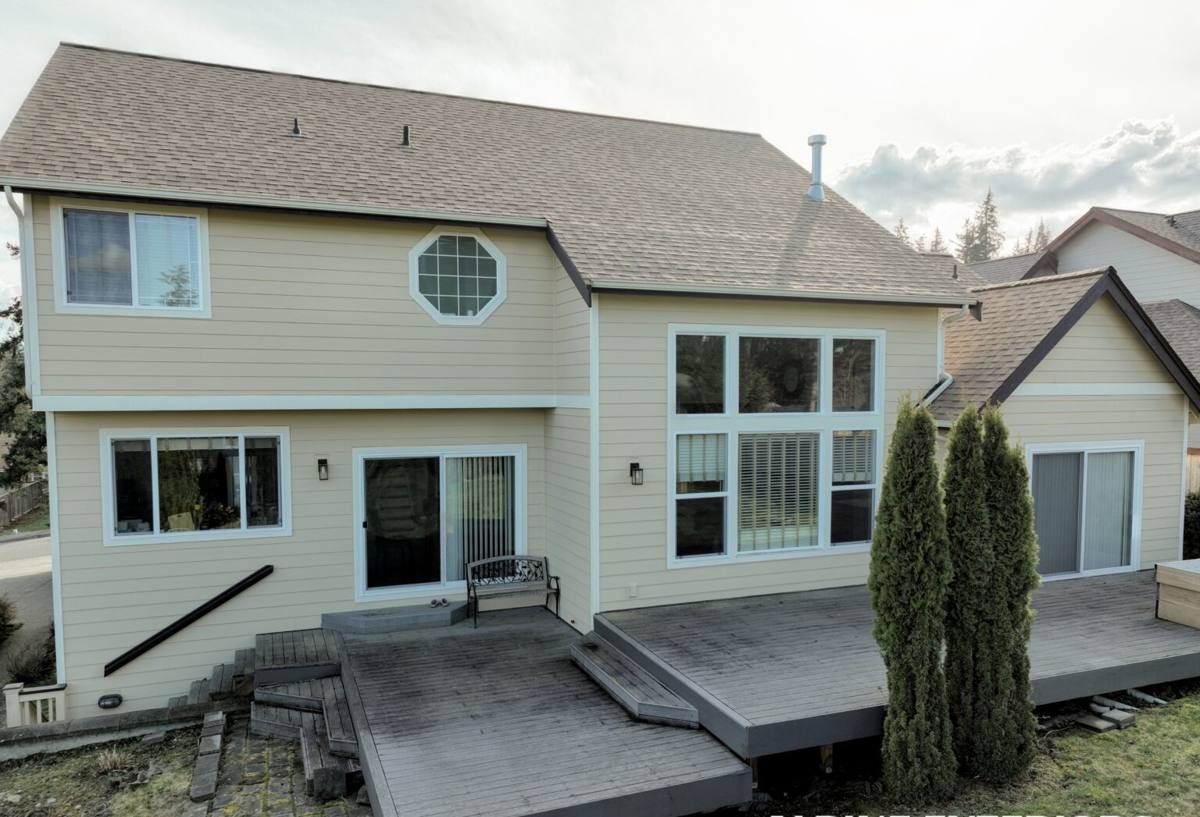
What Sehome's Weather Does to a Deck Over Time
Whatcom County's marine climate is generous with moisture almost year-round, and Sehome gets the full package: salt-laden air off the Sound, long stretches of driving rain, and a moss season that can run from fall through spring. None of these are dramatic on their own, but stacked together over a decade they're what separates a deck that's still solid from one that's spongy underfoot.
Salt Air and Metal Fasteners
Salt air accelerates corrosion in any fastener, bracket, or connector that isn't rated for it. Standard hot-dip galvanized hardware can hold up for years, but in a coastal-influenced climate like ours, stainless steel or high-grade coated fasteners are worth the modest upcharge — especially at structural connection points like ledger boards and post bases, where a failed fastener isn't just cosmetic.
Driving Rain and Water Intrusion
Rain that comes in sideways finds every gap in flashing, every unsealed screw hole, and every spot where a ledger board meets the house without proper waterproofing. Most of the rot we find in older decks starts at the ledger connection, where water has been quietly working its way behind the board for years before anyone notices a soft spot.
Moss and Trapped Moisture
A long moss season means anything that stays damp for extended periods — decking boards with poor drainage gaps, joists without ventilation underneath, stair treads in shaded corners — will grow moss and algae, which then holds even more moisture against the wood or composite surface. Moss isn't just a slip hazard; it's a sign that a surface isn't drying out the way it should.
Choosing the Right Decking Material for This Climate
There's no single "best" decking material — there's a best material for your budget, your maintenance appetite, and how much shade and moisture your specific site gets. We walk every homeowner through the honest trade-offs rather than pushing whatever has the best margin.
| Material | Upfront Cost | Maintenance | How It Handles Our Climate |
|---|---|---|---|
| Pressure-treated lumber | Lowest | Annual cleaning, periodic sealing | Affordable and repairable, but needs consistent upkeep to resist moss and rot in wet, shaded areas |
| Cedar | Moderate | Regular sealing/staining | Naturally rot-resistant and handles moisture well, but loses that resistance once the finish wears thin |
| Composite decking | Higher | Occasional washing, no sealing | Doesn't rot or splinter, but can still grow surface algae in shaded, poorly ventilated spots if not cleaned |
| PVC/cellular decking | Highest | Minimal | Most resistant to moisture and staining, best fit for consistently damp or shaded yards |
Composite and PVC products have improved a lot over the years, but we're honest that "low maintenance" doesn't mean "no maintenance" — even the best synthetic decking needs airflow underneath and periodic cleaning to stay moss-free in a climate like ours. Wood decks aren't a bad choice; they just require an owner who's willing to keep up with sealing on a schedule, not just when it starts looking rough.
Structural Basics: What's Underneath Matters Most
The decking surface is what you see, but the framing underneath is what determines whether the deck is safe and how long it lasts. A few things we treat as non-negotiable on every build:
Ledger Board Flashing
Where the deck attaches to the house, proper flashing — installed correctly, not just caulked and hoped for — is what keeps water from tracking behind the ledger and into the house's rim joist. This single detail is responsible for more deck and structural rot than almost anything else we see.
Post Bases and Footings
Posts that sit directly on or in concrete without a proper standoff base wick moisture straight up the grain. We use elevated post bases that keep wood off wet concrete, paired with footings sized for our soil conditions and frost depth.
Joist Spacing and Ventilation
Tighter joist spacing than code minimum makes for a stiffer deck with less bounce, and it matters more with composite decking, which can flex differently than wood. Equally important is making sure there's enough clearance underneath the deck for air to actually move — a deck built low to the ground with no airflow underneath is set up for the exact trapped-moisture problems that create moss and rot.
Our Deck Building Process
The process is straightforward, but we don't skip steps to save a day or two, because the steps we'd skip are the ones that protect the deck for the next twenty years.
- On-site assessment — we look at drainage, sun exposure, shade patterns, and how water currently moves around the area where the deck will sit.
- Design and material selection — sized to how you'll actually use the space, with material recommendations based on shade, budget, and maintenance preference.
- Permit and engineering as needed — handled before framing begins, not worked around after the fact.
- Framing and structural connections — ledger flashing, post bases, joist layout, all built to hold up under our rainfall and, where relevant, seasonal wind.
- Decking installation — proper board spacing for drainage and expansion, correct fastening for the material chosen.
- Railings, stairs, and finish details — built to code and matched to the rest of the structure.
- Final walkthrough — we go over care and maintenance specific to the material installed, so you know what upkeep actually looks like.
Permits and Code Requirements in Whatcom County
Most new decks and significant deck replacements in Whatcom County require a permit, and there are real reasons for that beyond paperwork — proper permitting means the ledger attachment, footing depth, and railing height all get checked against current code, which matters most for structural safety and for avoiding problems when you eventually sell the home. We handle the permit process as part of the job rather than leaving it for the homeowner to navigate, and we build to code as a baseline, not a ceiling.
Maintenance That Actually Extends Deck Life Here
The single biggest factor in how long a deck lasts in this climate isn't the material — it's whether basic maintenance happens on a schedule instead of reactively. A short checklist we give every homeowner:
- Sweep debris off the decking surface regularly, especially in fall when leaves trap moisture against boards
- Wash the deck surface at least once or twice a year to remove algae and moss buildup before it takes hold
- Check and clear the gaps between boards so water keeps draining through instead of pooling
- Inspect the ledger board area annually for any soft spots, staining, or gaps in flashing
- Reseal wood decking on the schedule appropriate to the product — don't wait until it looks gray and dry
- Keep vegetation trimmed back from the deck edges to reduce shade and improve airflow underneath
- Check railing and stair connections for looseness, which often shows up before any visible wood damage does
None of these take long individually, but skipped for a few years in a row, they're exactly how a well-built deck starts needing repairs well before it should.
Why a Crew That Already Works Sehome Matters
A deck built to a generic national spec sheet isn't necessarily built for a Whatcom County winter. We've seen what happens to decks in this specific climate over years, not just at installation — which framing details actually prevent rot here, which fastener grades hold up against the salt air, and which parts of a yard tend to stay damp long enough to grow moss no matter what decking material is used. That local pattern recognition is what shapes our recommendations, and it's the difference between a deck that needs real repairs in eight years and one that's still solid in twenty-five.
We also know the practical side of building here: permitting through Whatcom County, working around our wetter build season, and sequencing a project so framing isn't sitting exposed to weeks of rain before it's dried in.
Signs an Existing Deck Needs Attention
If you already have a deck in Sehome, a few warning signs are worth acting on before they become bigger repairs:
- Soft or spongy spots in the decking, especially near the house or in shaded corners
- Persistent moss or algae that comes back quickly after cleaning
- Visible gaps, staining, or rust at the ledger board connection
- Railings or stair stringers that feel loose or move under weight
- Fasteners showing rust streaks down the decking boards
Some of these are simple fixes — a resealed board, a re-flashed section, a hardware swap. Others point to a framing issue that's worth catching early rather than after it's led to a full rebuild.
If you're planning a new deck in Sehome or want an honest look at whether an existing one needs repair or replacement, we offer free, no-pressure estimates — use the form below to get started.