 Sudden Valley Siding
 Why Edgemoor Windows Take More Punishment Than Most
Homes in and around Edgemoor sit in a spot where two climate factors stack on top of each other. Proximity to open water means salt-laden air moves through the area more than it does a few miles inland, and that air reaches window hardware, screen frames, and exposed fasteners in ways drywall and siding never see. At the same time, Whatcom County's long wet season means these same windows spend months facing driving, wind-pushed rain rather than straight-down rain — the kind that tests horizontal joints, not just vertical ones. Add a shaded, moisture-heavy lot with mature trees, and you've got the third factor: a moss and algae season that can run eight months of the year on north- and west-facing exposures.
None of that means a window is doomed. It means a window job here has to be evaluated against those three stresses specifically, not against a generic "average Pacific Northwest home" standard. A window that performs fine in a dry inland subdivision can fail early in Edgemoor if the install skipped a step or the material wasn't suited to the exposure.
What Custom Windows Actually Means Here
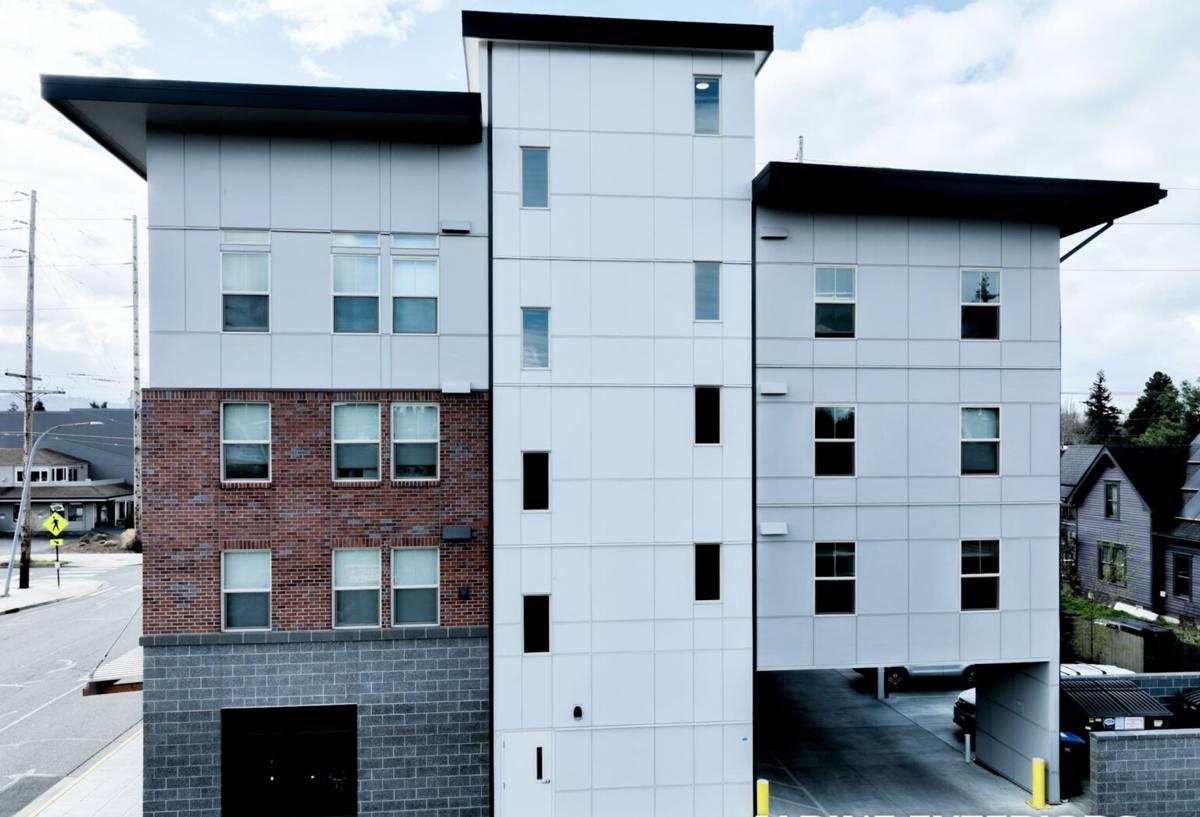
"Custom" doesn't mean expensive or ornate — it means built to the exact opening, in a size, configuration, and frame profile that a stock big-box window won't match. Most homes in this area were built or last had windows replaced decades ago, and openings have settled, shifted slightly, or were never standard sizes to begin with. Custom windows are manufactured to fit those actual openings rather than forcing the opening to fit a stock size, which cuts down on the gaps, shims, and filler trim that create long-term leak paths.
Replacement vs. New Construction Windows
There are two different approaches, and picking the wrong one for a given wall is a common source of problems:
- Insert (retrofit) replacement — the new window fits inside the existing frame. Faster, less disruptive to siding and trim, and often the right call when the existing frame is square and sound.
- Full-frame (new construction) replacement — the old frame comes out entirely, exposing the rough opening down to the framing and building paper. This is the only correct option when there's already water damage, rot, or a frame that's out of square, and it's the better long-term choice on exposures that take the worst of the driving rain.
A contractor who defaults to insert replacement on every job because it's faster and cheaper is setting up the next owner for a bigger repair later. Part of our job is telling you honestly which category your opening falls into before we quote anything.
Frame Material: What Holds Up in This Exposure
Material choice matters more here than in a dry climate, because salt air accelerates corrosion on hardware and fasteners, and constant moisture is unforgiving of any material that can absorb water or trap it against wood framing.
| Frame Material | Behavior in Salt Air / Wet Climate | Maintenance Burden |
|---|---|---|
| Vinyl | Doesn't corrode or rot; performs well against moisture. Quality varies a lot between manufacturers. | Low — occasional cleaning, no painting |
| Fiberglass | Very stable dimensionally, resists moisture and salt exposure well, holds paint if color changes later | Low |
| Wood-clad | Interior wood look with an exterior cladding shell; cladding must stay intact — any breach lets moisture into the wood core | Moderate — cladding seams need periodic inspection |
| Aluminum | Strong but a poor thermal performer and prone to hardware corrosion in salt air unless marine-grade fasteners are used | Moderate to high |
We don't push one material on every home. A vinyl or fiberglass window is often the more sensible, lower-maintenance choice on an exposed elevation, while wood-clad can still make sense on a sheltered side where the interior look matters and the cladding is properly detailed. What we won't do is install a frame material poorly suited to an exposure just because it's what was quoted cheapest.
Hardware and Fasteners
Salt air is hardest on the small stuff — hinges, cranks, locks, and screws. Standard-grade hardware can start showing surface corrosion within a few years on an exposed elevation. We spec corrosion-resistant hardware on jobs facing open exposure, which costs a little more up front and saves a service call in five years.
Glass and Weatherproofing Choices
Beyond frame material, the glass package affects both comfort and how the window handles this climate's moisture and light conditions.
- Dual-pane vs. triple-pane — dual-pane with a quality low-E coating is adequate for most of this region; triple-pane adds real value on north-facing rooms or homes right against the wind, at added cost and weight.
- Low-E coatings — reduce heat loss in winter and control glare and UV fading, which matters on rooms with long exposure to low-angle winter sun off the water.
- Argon or krypton gas fill — improves insulating performance; argon is the standard, cost-effective choice for most homes here.
- Condensation resistance — a poorly sealed unit will fog between the panes within a few years in a climate this wet; this is a warranty and installation-quality issue as much as a glass-spec issue.
The Installation Details That Actually Determine Longevity
More window failures in this area trace back to installation shortcuts than to a bad product. The window itself is usually the smaller variable.
Flashing Sequence
Flashing has to be layered correctly — sill pan first, then side flashing, then head flashing — so that any water that does get past the exterior finish sheds outward and down, not into the wall cavity. Skipping or reversing this order is invisible from the outside and can take years to show up as rot.
Sealant, Not Just Caulk
A quality window installed with the wrong sealant, or sealant applied in the wrong place, fails the same way a cheap window does. We use sealants rated for this climate's temperature swings and UV exposure, and we don't rely on sealant alone to do a flashing detail's job.
Shimming and Squaring
An out-of-square window stresses its own seals and hardware from day one, which shows up as harder-to-operate cranks or locks and premature seal wear. Proper shimming at the right load points keeps the frame square under the home's own settling.
How We Approach an Edgemoor Window Job
- On-site assessment — we look at each opening individually: exposure direction, existing frame condition, evidence of past water intrusion, and how much moss or organic buildup is already present on sills and trim.
- Honest scope decision — insert or full-frame, recommended based on what we actually find, not on what's fastest to install.
- Measurement and ordering — precise, opening-specific measurements so the custom unit fits without excessive shimming or filler.
- Removal and prep — old units come out carefully; any hidden rot or damage gets flagged and discussed before we proceed, not discovered after the new window is already in.
- Flashing and install — sill pan, flashing layers, sealant, and squared installation per the sequence above.
- Interior and exterior finish — trim, sealant lines, and cleanup so the finished opening looks correct from both sides.
Living With Windows in a Salt Air, Moss-Prone Climate
Even a well-installed, well-chosen window benefits from a little seasonal attention in this environment. This isn't a heavy maintenance list — just the handful of things worth checking once or twice a year.
- Rinse sills and lower sashes to clear salt residue, especially after storms with wind off the water
- Clear moss and algae from sills, tracks, and exterior trim before it holds moisture against the frame
- Check that weep holes on vinyl and fiberglass frames are clear and draining
- Lubricate hardware annually if it's exposed to salt air
- Inspect exterior sealant lines yearly for cracking or separation, particularly on south- and west-facing units
- Watch for fogging between panes, which signals a failed seal rather than something a homeowner can fix
Why Local Experience With This Exposure Matters
A crew that hasn't worked this specific kind of exposure will often spec the same window and installation approach they'd use on a dry inland home. That's how you end up with corroding hardware in year three or a flashing detail that wasn't built for wind-driven rain. Working regularly in Sudden Valley and the surrounding Whatcom County communities means we've seen which frame materials, hardware grades, and flashing details actually hold up here over time — and which ones look fine on install day and cause problems five years later.
If you're weighing custom windows for a home in Edgemoor, we're glad to take a look at your specific openings, walk through the honest options for your exposure, and give you a straightforward, no-pressure estimate. There's a form below — reach out and we'll get a look scheduled.