 Sudden Valley Siding
 Building New in Barkley? Your Windows Need to Match the Climate, Not Just the Blueprint
Barkley sits close enough to Lake Whatcom and the Puget Sound corridor that new construction here deals with a specific mix of weather: salt-laden air moving in off the water, wind-driven rain that hits walls sideways instead of straight down, and a moss season that can stretch from late fall through spring. None of that shows up on a set of architectural plans, but it shows up on a house within a few years if the windows and their flashing weren't installed with this climate in mind. New-construction window work is a one-shot job — the siding, house wrap, and trim all get built around the opening, so getting it right the first time matters more here than almost anywhere else in the build.
We install new-construction windows in Barkley and the rest of the Sudden Valley area regularly, working alongside builders, GCs, and owner-builders. This page covers what a correct install actually involves, what we watch for in this specific climate, and how our process fits into a new-build timeline.
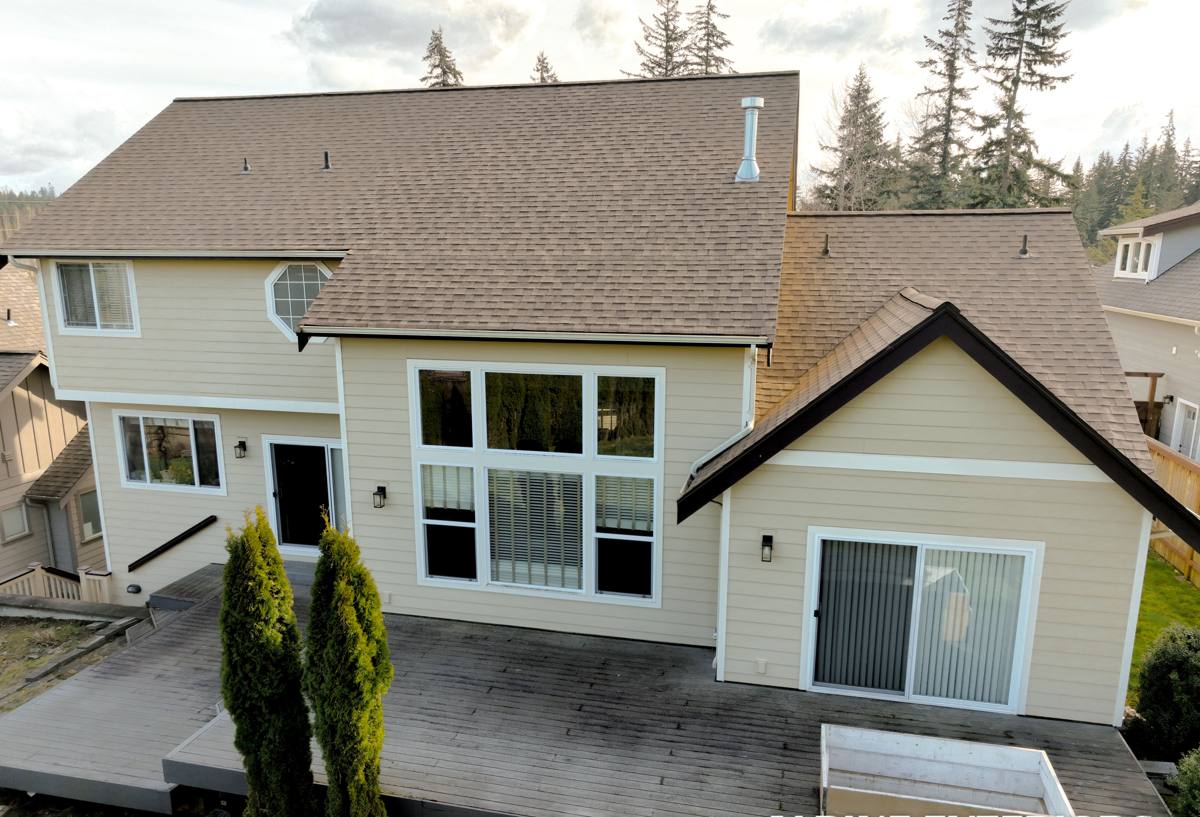
Why Whatcom County Weather Changes the Job
Salt Air and Corrosion
Proximity to Puget Sound means airborne salt reaches inland further than most people expect, especially on elevated or exposed lots. Salt air accelerates corrosion on fasteners, flashing, and certain window hardware finishes. It doesn't mean you need marine-grade everything, but it does mean fastener selection and flashing material matter more here than in a dry inland build.
Driving Rain
Whatcom County storms frequently come with real wind behind the rain, which pushes water sideways and upward under laps that would shed water fine in a calm downpour. New-construction windows depend entirely on their flashing and water-management details to handle that — the window unit itself is only part of the system.
Long Moss Season
Extended damp, shaded stretches of the year mean moss and algae get a real foothold on any surface that stays wet, including window sills, trim boards, and the siding immediately around an opening. Detailing that sheds water quickly, rather than letting it sit, keeps that growth from establishing in the first place.
New-Construction Windows vs. Replacement Windows: Why the Distinction Matters
New-construction windows have a nailing flange (fin) that gets fastened directly to the sheathing before house wrap and siding go on. That's different from a replacement or pocket window, which gets installed into an existing frame after the fact. Because a new-construction window is installed before the weather barrier is complete, the flashing sequence around it is what actually keeps water out — the window is only as good as the assembly built around it.
This matters for Barkley specifically because it's the flashing and integration details, not the window brand, that determine whether the opening stays dry through years of driving rain. We treat every new-construction install as a system: sheathing, weather-resistive barrier, flashing tape or metal flashing, the window itself, and the sill pan underneath.
What a Correct Install Sequence Looks Like
- Sill pan installed first, sloped to drain any water that gets past the window back out, not into the wall cavity
- Weather-resistive barrier lapped correctly above and below the opening before the window goes in
- Window set square, plumb, and level, with shims at load-bearing points, not just at the corners
- Flanges fastened per the manufacturer's pattern and spacing — skipping fasteners to save time is a common shortcut that shows up later as air and water infiltration
- Flashing tape or head flashing installed over the top flange, integrated correctly with the house wrap above it
- Jamb flashing lapped over the sill pan and under the head flashing, so water always drains down and out, never gets trapped
- Interior and exterior sealant applied at the correct points — sealing everything solid, including weep paths, traps water instead of releasing it
Choosing Window Frame Materials for This Climate
There's no single "right" window brand — the right choice depends on your budget, the home's design, and how much long-term maintenance you want to take on. What we do steer clients away from is any material or configuration that performs poorly against sustained damp and salt air, and we'll explain why rather than just saying no.
| Frame Material | Performance in Barkley's Climate | Maintenance |
|---|---|---|
| Vinyl | Good moisture resistance, doesn't corrode from salt air, stable cost | Low — occasional cleaning |
| Fiberglass | Excellent dimensional stability, handles temperature swings and moisture well | Low |
| Aluminum-clad wood | Strong look, but clad exteriors need careful sealant detailing at joints to keep moisture from reaching the wood core | Moderate — watch cladding seams over time |
| Bare wood | Attractive but the most exposed to this climate's rot and moss risk without disciplined upkeep | High — requires regular painting/sealing |
For most new builds in this area, we recommend vinyl or fiberglass for anything exposed to weather, and reserve wood or clad-wood accents for protected elevations with real roof overhang. That's a maintenance-burden and moisture-behavior call, not a knock on any manufacturer — some homeowners are happy to keep up with wood trim, and that's a legitimate choice too.
Our Process on a New-Construction Job in Barkley
1. Plan Review and Coordination
We review the window schedule and rough opening sizes against the plans before framing is finalized, so there are no surprises when units arrive. On new builds we coordinate directly with your GC or framer on timing.
2. Rough Opening Check
Every rough opening gets checked for square, plumb, and correct dimensions before we install anything. Catching a framing error here is far cheaper than catching it after siding is on.
3. Sill Pan and Flashing
This is the step that determines long-term performance in a climate like ours. We build a sloped, sealed sill pan and integrate flashing with the house wrap in the correct shingle-lap order, top layer always over the one below.
4. Window Set and Fastening
Windows are set square and level, shimmed at structural points, and fastened per manufacturer spec — not just at the corners for speed.
5. Final Flashing and Sealant
Head flashing goes in last, sealant gets applied only where it belongs (never over weep holes or drainage paths), and we confirm the assembly ties in cleanly with the siding plan that follows.
6. Documentation
We keep track of what was installed where, which matters for warranty registration and for any future work on the home.
Mistakes We See on New-Construction Window Jobs
- House wrap taped over the flange instead of properly lapped, which traps water against the window instead of shedding it
- No sill pan, or a flat sill pan with no slope to drain
- Fasteners skipped along the flange to save time, leaving gaps that flex and open under wind pressure
- Sealant applied everywhere, including over weep holes, which stops the window from draining the small amount of water every window is designed to let in
- Trim installed tight against the siding with no gap, giving moss and algae a shaded, damp ledge to take hold on
Most of these aren't visible once the siding goes on, which is exactly why they cause problems years later instead of on move-in day.
Timeline and Working with Your Builder
Window installation on a new build has to land at the right moment — after sheathing and house wrap, before siding starts. We work directly with GCs and framers on scheduling so we're not the bottleneck, and we flag any rough-opening or sequencing issues before they become expensive to fix. If you're an owner-builder managing your own trades, we can also work directly with you and coordinate around your other subs' timelines.
Why a Crew That Already Works Barkley Matters
A crew that installs windows across Whatcom County knows what actually happens to a new-construction opening here after a few wet seasons — not in theory, but from seeing it on real houses. That means we don't have to guess at flashing details or frame material trade-offs for this climate; we already know which shortcuts cause problems on homes exposed to salt air, driving rain, and a long moss season, and we build accordingly from day one.
Questions Worth Asking Any Contractor Before You Sign
- Will you install a sloped, sealed sill pan on every opening, or just where it's easy?
- How do you sequence flashing with the house wrap — what laps over what?
- Are fasteners installed at full manufacturer spacing, or reduced to save labor time?
- What's your plan for the trim-to-siding gap around each window?
- Can you walk me through your process on a job you've done in this area?
If you're building new in Barkley and want windows installed to handle this area's weather rather than just meet code minimums, we're happy to walk the plans with you and put together a free, no-pressure estimate. Use the form below to get started.