 Sudden Valley Siding
 Window Replacement Built for South Hill's Weather, Not Just Its Homes
South Hill sits close enough to open water and thick tree cover that its homes take a specific kind of weathering — one that's a little different from what you'd deal with further inland. Salt-laden air off the water, driving horizontal rain that pushes past standard window seals, and a moss season that can stretch from late fall into spring all put steady pressure on window frames, sills, and the seals around them. A window replacement here isn't just a cosmetic upgrade. It's a chance to correct the specific weak points that Whatcom County weather finds first.
We've done enough window work in and around Sudden Valley to know which failure patterns show up on South Hill homes specifically — where water tends to collect, which orientations take the worst of the wind-driven rain, and which older window installations were never properly flashed to begin with. That local pattern recognition is worth more than a generic install crew that's never worked this stretch of Whatcom County before.
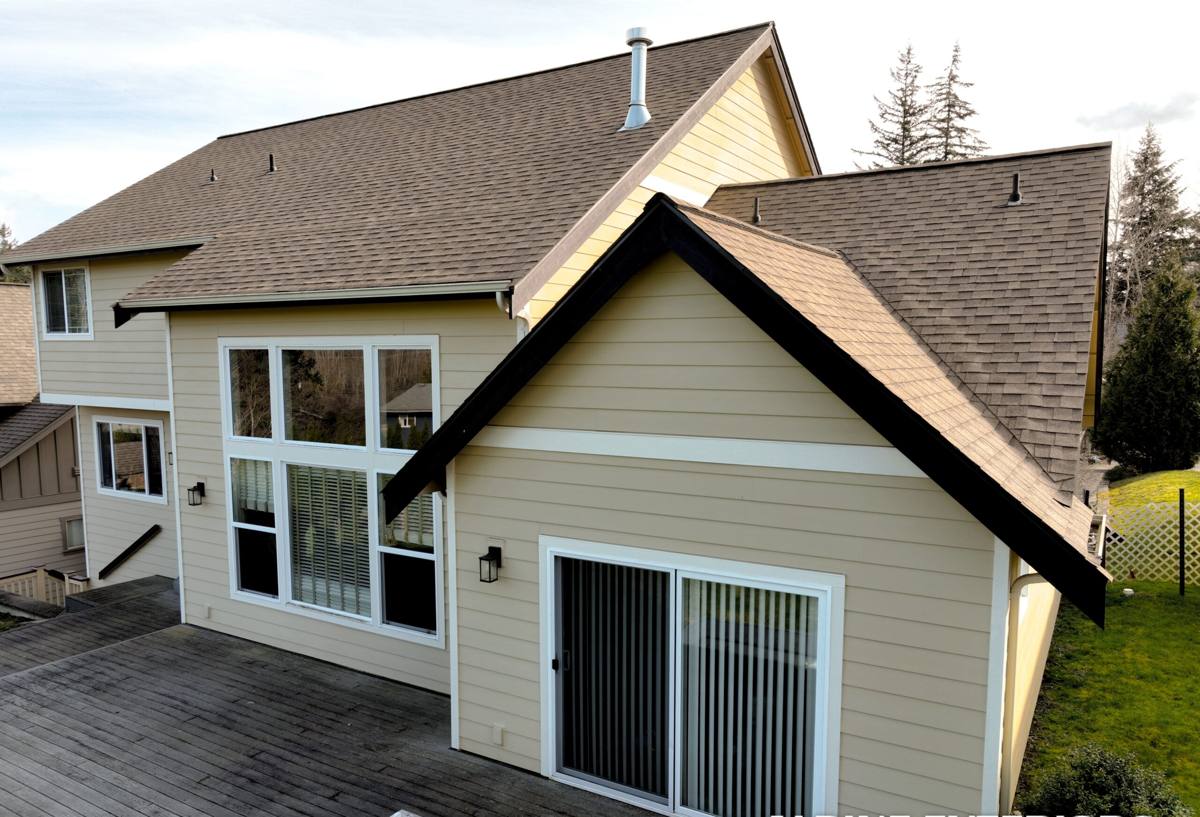
What This Climate Does to Windows Over Time
Every region's weather leaves its own fingerprint on a house. In South Hill, the combination of moisture, moss, and marine air tends to show up in a few predictable ways:
- Seal and gasket breakdown: Constant damp-dry cycling causes weatherstripping and glazing seals to harden and shrink years before their rated lifespan, letting in drafts and moisture.
- Sill and frame rot: Wood-framed windows without proper flashing or sloped sills trap water at the bottom corners — the single most common rot location we find on older homes here.
- Moss and organic buildup: Moss doesn't just grow on roofs. It collects in window tracks, sills, and trim details that stay shaded and damp for months, holding moisture against the frame.
- Fogging between panes: Older insulated glass units lose their seal under sustained humidity, leaving a permanent haze between the panes that no amount of cleaning fixes.
- Corroded hardware: Salt-influenced air accelerates corrosion on cranks, locks, and balance mechanisms, especially on windows facing prevailing weather.
None of these are dramatic failures on their own. They're slow ones — which is exactly why they get ignored until a homeowner notices a draft, a soft spot in the sill, or a spike in the heating bill.
Signs Your South Hill Home Is Due for Window Replacement
Not every window problem calls for full replacement, but these signs usually mean patching won't hold much longer:
- Visible fogging or condensation trapped between the panes of a double-pane window
- Wood that feels soft, spongy, or discolored at the sill or lower frame corners
- Windows that are difficult to open, close, or lock — often a sign the frame has shifted or swollen
- Noticeable drafts even with the window fully closed and latched
- Visible daylight or gaps around the frame where it meets the siding or trim
- A musty smell near the window that suggests trapped moisture in the wall cavity below the sill
If you're only seeing one of these on a single window, a repair or resealing job might be the right call. If you're seeing several of these across multiple windows, that's usually a sign the whole window line has reached the end of its useful service life — and it's worth having someone look at the full house rather than fixing windows one at a time as they fail.
What a Correct Window Replacement Job Actually Involves
The window unit itself is only part of the job. Most window failures we see in this area trace back to installation shortcuts, not a bad product. A correct replacement includes:
Removing the Old Window the Right Way
This means fully exposing the rough opening, checking the framing and sheathing underneath for hidden rot or moisture damage, and addressing anything we find before a new window ever goes in. Installing a new window over a compromised opening just hides the problem for a few more years.
Flashing and Water Management
This is the step that matters most in a climate like ours. Proper flashing directs any water that gets past the exterior cladding down and out and away from the framing — sill pan flashing, house wrap integration, and correctly lapped flashing tape at the head and jambs. Skipping or rushing this step is the single biggest cause of window-related rot we find during other repair work.
Air Sealing and Insulation
The gap between the window frame and the rough opening needs to be sealed with the right materials — not just filled with whatever's on the truck. Over-expanding foam can bow a frame out of square; under-sealing leaves gaps that draft and let moisture track in.
Sealant and Trim Work
Exterior sealant needs to be applied at the right joints, with the right product for the substrate, and left to cure properly. Trim gets reinstalled or replaced so water sheds away from the window rather than pooling against it.
Choosing the Right Window for South Hill Conditions
Frame material matters more here than in drier climates, because it determines how the window handles years of damp exposure. Here's how the common options compare for a home like yours:
| Frame Material | Moisture Performance | Maintenance | Typical Fit For This Area |
|---|---|---|---|
| Vinyl | Doesn't rot or corrode; performs well in damp, salt-influenced air | Low — occasional cleaning | Strong all-around choice for most South Hill homes |
| Fiberglass | Excellent — very stable, resists warping and moisture intrusion | Low | Good for homes wanting long-term durability with minimal upkeep |
| Wood-clad | Good if the cladding and flashing details are done correctly; interior wood still needs protection | Moderate — exterior clad, interior finish upkeep | Best when matching an existing wood-window aesthetic |
| Solid Wood | Most vulnerable to sustained moisture and moss without regular maintenance | High — regular painting/sealing required | Only recommended with a real maintenance commitment |
| Aluminum | Prone to condensation and corrosion in marine air unless thermally broken | Moderate | Situational — usually not our first recommendation here |
We don't push one material on every home. What we do is walk through how much upkeep you actually want to take on, and match that honestly against how each material behaves once it's been through a few of our wet seasons. A window that looks great on day one but demands yearly maintenance you don't have time for isn't the right fit, no matter how good it looks in a showroom.
Glass Package Considerations
Beyond frame material, the glass package affects comfort and moisture control too:
- Double-pane, argon-filled: The standard baseline for this climate — solid insulation value without a big cost jump.
- Low-E coatings: Help manage heat loss through our long gray-sky stretches and reduce interior condensation on cold mornings.
- Triple-pane: Worth considering on north-facing walls or rooms that run noticeably colder, though the added cost doesn't pencil out for every window on the house.
Our Window Replacement Process
We keep this straightforward, because window replacement shouldn't feel complicated for the homeowner even when the work itself is detailed:
- On-site assessment: We look at each window individually — frame condition, sill condition, evidence of past water intrusion — not just a quick count-and-quote.
- Honest recommendation: We tell you which windows genuinely need replacement, which could be repaired, and why — no upselling every window on the house if it isn't warranted.
- Material and glass selection: We walk through frame and glass options against your budget, maintenance preference, and how that side of the house takes weather.
- Removal and opening inspection: Old windows come out carefully, and we check the framing underneath before anything new goes in.
- Correct flashing and installation: Sill pan flashing, proper house wrap integration, and squared, shimmed, and sealed installation.
- Interior and exterior finish work: Trim, caulking, and touch-up so the finished window looks right from both sides.
- Final walkthrough: We test operation, check seals, and make sure you're clear on any care instructions before we consider the job done.
Cost Factors Worth Understanding
Window replacement pricing varies a lot based on specifics, and we'd rather explain the variables than throw out a number that doesn't mean much until we've seen your windows in person.
| Factor | Why It Moves the Price |
|---|---|
| Frame material | Vinyl is typically the most budget-friendly; fiberglass and wood-clad run higher |
| Window size and style | Larger units, bay windows, and custom shapes cost more than standard double-hung or slider sizes |
| Number of windows | Whole-house replacements often come with better per-unit pricing than doing one or two at a time |
| Hidden framing repair | If we find rot or moisture damage once the old window is out, that repair adds cost — but it's cost you'd pay eventually anyway |
| Glass package | Low-E coatings and triple-pane glass add cost but also add long-term comfort and efficiency |
| Access and site conditions | Second-story windows, tight landscaping, or limited access can add labor time |
As a broad range, straightforward single-window replacements on an accessible ground-floor opening tend to run toward the lower end of the market, while larger units, custom sizes, or jobs that uncover framing repair run higher. We'll always give you real numbers once we've actually looked at your windows — not a phone estimate that changes once we're on site.
Why a Crew That Already Works South Hill Matters
Window replacement is one of those jobs where local experience shows up in the details a homeowner won't see until years later. A crew that's worked this specific area knows which window orientations in Sudden Valley take the worst of the driving rain, understands how moss and moisture behave against different siding and trim combinations, and has already seen what happens when flashing gets rushed on a Whatcom County home. That's not something you get from a crew that mostly works drier, less exposed neighborhoods and treats every job the same way.
It also means we're not learning on your house. We've already worked out which materials and installation details hold up here, so you're not the test case.
Aftercare Checklist for New Windows
Once your new windows are in, a little seasonal attention keeps them performing the way they should:
- Clear debris and moss buildup from window tracks and sills, especially after fall leaf-drop
- Check exterior caulking annually for cracking or separation and have it touched up before it fails
- Operate each window a few times through the year so hardware and weatherstripping don't seize up
- Watch for condensation between panes — it's an early sign a seal has failed, even years down the road
- Keep gutters and downspouts clear so water isn't sheeting down past upper-floor windows
If you're noticing drafts, fogged glass, soft sills, or windows that just don't operate the way they used to, it's worth having a straightforward look before another wet season adds to the damage. We're happy to come out, walk the house with you, and give you a free, no-pressure estimate on what your South Hill home actually needs.