 Sudden Valley Siding
 Homes around Lake Whatcom live under a different set of conditions than a house a few miles away in downtown Bellingham. Between the tree canopy that rings the lake, the moisture that sits in low-lying shaded lots, and the driving rain that comes through Whatcom County for much of the year, siding here works harder than siding almost anywhere else in the region. Add in the salt-tinged marine air that moves inland off Bellingham Bay and the Puget Sound during wet weather systems, and you have a climate that punishes the wrong siding choice and rewards the right one for decades.
This page is about one job in one place: installing siding correctly on a home in the Lake Whatcom / Sudden Valley area. Not a general overview of siding materials, not a countywide pitch — the specific realities of building an exterior that holds up on a lake lot, and what it takes to install it right the first time.
What Lake Whatcom Homes Actually Deal With
Sudden Valley and the neighborhoods around Lake Whatcom sit in a microclimate shaped by the water and the surrounding forest. A few things stack up against exterior siding here more than in open, sunnier parts of Whatcom County:
Shade and Moisture Retention
Mature trees are part of what makes this area desirable, but they also mean many homes have siding that stays damp longer after a storm than it would on an open lot. Shaded walls dry slower, and slow-drying siding is exactly what moss, algae, and mildew need to establish. Over years, that constant damp-dry cycling is harder on some siding materials than direct sun ever is.
Driving Rain and Wind-Driven Moisture
Storms off the lake and out of the Pacific don't just fall straight down — wind pushes rain sideways into walls, especially on lake-facing and west-facing elevations. That means water is hitting siding at seams, laps, and penetrations, not just the flat field of the wall. Flashing detail and lap coverage matter more here than in a calmer climate.
A Long Moss Season
Between fall and spring, Whatcom County stays wet and mild — ideal growing conditions for moss and algae. On a shaded Lake Whatcom lot, that season runs longer than it does on an open, south-facing property. Siding that absorbs and holds moisture gives moss a foothold; siding engineered to resist moisture doesn't.
Marine-Influenced Air
The broader Whatcom County climate carries salt-tinged marine air in from Bellingham Bay and the Sound, especially during onshore weather. It's a slower, subtler factor than direct rain exposure, but over the life of a house it adds to the moisture and corrosion load on fasteners, trim, and any siding material that isn't built to shrug it off.
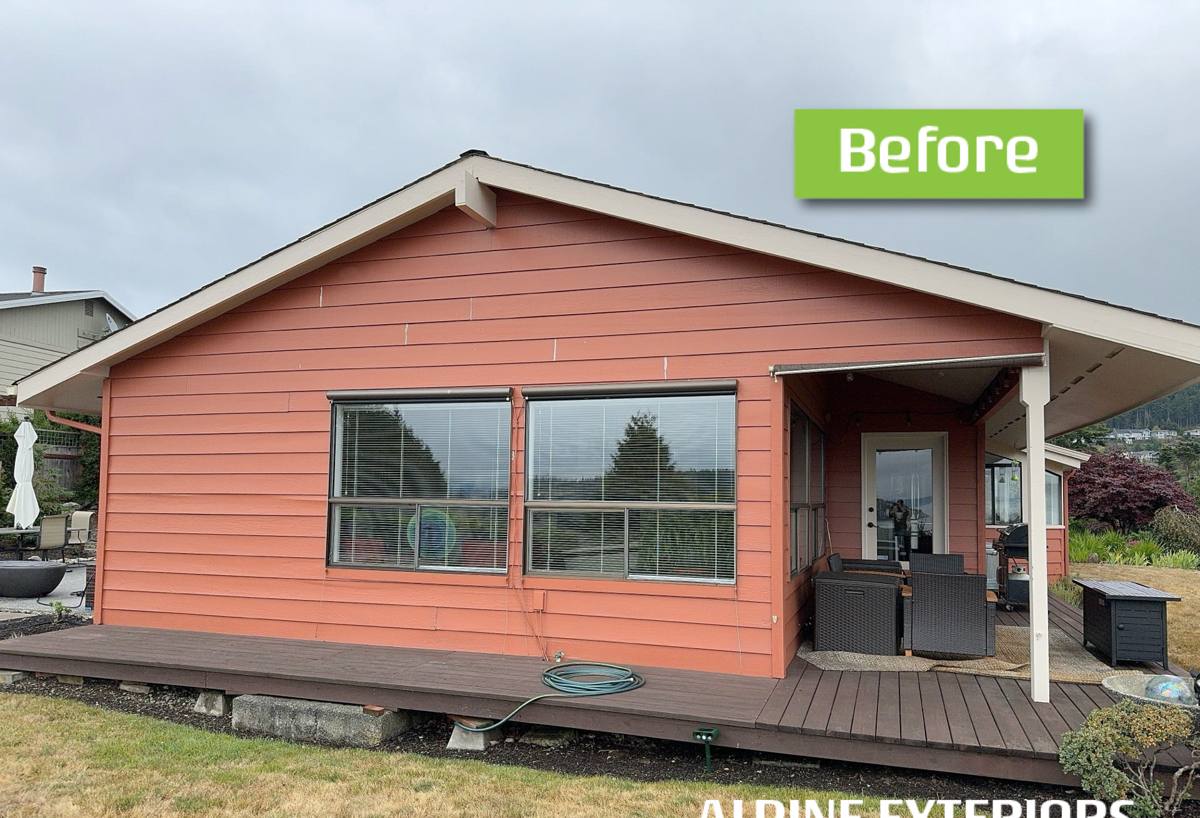
What This Means for a Siding Job Done Right
None of this is exotic — it's just cumulative. A siding job that looks fine the day it's installed can fail early on a Lake Whatcom lot if it wasn't built for these conditions. A correct installation here accounts for:
- Proper drainage plane and water-resistive barrier behind the siding, not just siding nailed over sheathing
- Flashing at every window, door, and roof-to-wall intersection — the places wind-driven rain actually gets in
- Correct lap exposure and fastening so seams shed water instead of wicking it
- Material that resists moisture absorption rather than material that has to be kept dry to perform
- Attention to ventilation and clearance in shaded, tree-covered areas where airflow is already limited
- Trim and caulking details built for repeated wet-dry cycling, not a one-time install-and-forget approach
Why We Install Only James Hardie Fiber Cement Here
We don't install vinyl, LP SmartSide, cedar, primed spruce, or other fiber cement brands. That's a deliberate standard, and on a lake lot like this it matters more than it would somewhere drier.
Non-Combustible and Moisture-Stable
James Hardie fiber cement is cement-based, not wood-based, which means it doesn't absorb water the way wood siding or wood-based composite products can. In a climate where siding stays damp for extended stretches, that difference shows up over years, not days — less swelling, less warping, less of the wood rot and delamination that wood and engineered-wood products can be prone to when moisture sits against them season after season.
Built for Moss and Algae Exposure
Hardie's ColorPlus factory finish is baked on rather than field-applied, giving a more consistent, durable surface than most site-painted siding. That consistency matters directly for a shaded, moss-prone lot: a tighter, more uniform finish gives moss and algae less to grip onto and holds up to the washing and maintenance a lake-area home periodically needs.
Climate-Engineered Product Lines
Hardie makes HZ5 product formulated for the kind of wet, temperate Pacific Northwest climate Whatcom County sits in. That's not a marketing label — it's a different engineering target than a product built for a dry southern climate, and it's the version we install here.
Transferable Warranty That Matters on a Long-Hold Property
Lake Whatcom properties tend to be long-term homes, not quick flips. A strong, transferable manufacturer warranty is worth more on a house you or a future buyer will own for decades than on a property that turns over every few years.
Our Installation Process for This Area
The steps below aren't unique to Hardie, but they're the ones we don't skip on a Lake Whatcom job, because skipping any of them is where lake-climate siding failures actually start.
1. Assess the Wall and the Site
Before tear-off, we look at sun exposure, tree cover, drainage around the foundation, and which elevations take the worst of the wind-driven rain. That shapes flashing priorities and where we pay extra attention during install.
2. Confirm the Water-Resistive Barrier
On a shaded, high-moisture lot, the barrier behind the siding is doing real work. We verify it's continuous and properly lapped before a single piece of siding goes up — this layer is invisible once the job is done, which is exactly why it can't be an afterthought.
3. Flash Every Penetration
Windows, doors, vents, and roof-to-wall transitions get flashed to shed water outward and downward, not just caulked and covered. This is the detail that separates siding that lasts from siding that looks fine until the first hard windstorm off the lake.
4. Install to Hardie Spec
Correct lap exposure, fastener type and spacing, and clearances at grade and roofline — installed to manufacturer specification, which is also what keeps the warranty intact.
5. Detail for Long-Term Moisture Management
Trim, caulking, and ventilation clearances get set up for a climate where the siding rarely gets a long stretch to fully dry out. That's a different set of judgment calls than an installer used to drier parts of the state would default to.
Why a Crew That Already Works Sudden Valley and Lake Whatcom Matters
A siding crew that mostly works flatter, more open sites doesn't necessarily think about tree-shaded drainage, lake-facing wind exposure, or a moss season that runs longer than the regional average. A crew that already works this specific area knows which elevations on a typical Lake Whatcom lot take the worst weather, has already seen how moisture behaves on shaded siding here, and installs with those specifics in mind rather than a generic approach. That local pattern recognition doesn't replace following the manufacturer's install spec — it's what makes sure the spec gets applied correctly to this site's actual conditions.
Cost Factors for a Lake Whatcom Siding Job
Every home is different, but the factors that move the price on a lot like this tend to be consistent. We won't quote a number without seeing the house, but here's what typically drives it:
| Factor | Why It Matters Here |
|---|---|
| Tree cover and access | Shaded, wooded lots can complicate staging, scaffolding, and cleanup around landscaping |
| Existing siding removal | Tear-off scope depends on what's currently on the house and its condition underneath |
| Wall complexity | Dormers, multiple stories, and lake-facing elevations with more window and door penetrations add flashing time |
| Moisture damage found during tear-off | Shaded, damp-prone walls sometimes reveal sheathing or framing repair needs once old siding comes off |
| Trim and detail level | Corner treatments, trim profiles, and color selections affect material and labor |
| Site access | Sudden Valley's terrain and driveway/lot layouts can affect staging and material delivery |
Signs Your Lake Whatcom Home's Siding Needs Attention
- Persistent moss or dark streaking on shaded walls that comes back soon after cleaning
- Soft spots, bubbling, or visible warping, especially on wood or wood-composite siding
- Paint that's peeling or failing faster than the repaint cycle should require
- Gaps or separation at seams, corners, or trim where wind-driven rain can get behind the siding
- Visible staining or damage concentrated on the elevation that faces the lake or prevailing wind
- Any sign of moisture inside on an exterior wall — a sign water has already gotten past the siding
If your home is in Sudden Valley or elsewhere around Lake Whatcom and you're weighing a siding replacement, we're glad to take a look and walk you through what your specific walls need — no pressure, no upsell, just an honest assessment. Request a free estimate through the form below and we'll schedule a time to come out.