 Sudden Valley Siding
 Why Bellingham Homes Wear Out Siding Faster Than the Brochure Says
Homes in and around Bellingham don't fail siding the way homes in drier climates do. There's no single dramatic event — no hailstorm, no wind that peels a wall bare in an afternoon. Instead it's attrition: months of driving rain off the Sound, salt-laden air moving inland, and a moss season that can run from October through May depending on the year. Siding that's marginal on day one doesn't get a slow, forgiving decline here. It gets a fast one, because Whatcom County simply doesn't give a wall system time to dry out between soakings.
That combination — persistent moisture plus salt exposure plus shade from mature tree cover in a lot of Bellingham neighborhoods — is exactly the environment that separates siding products that are engineered for coastal Pacific Northwest conditions from products that are merely rated to survive them on paper. This page is about doing a siding replacement on a Bellingham home correctly, for this specific climate, not a generic re-side.
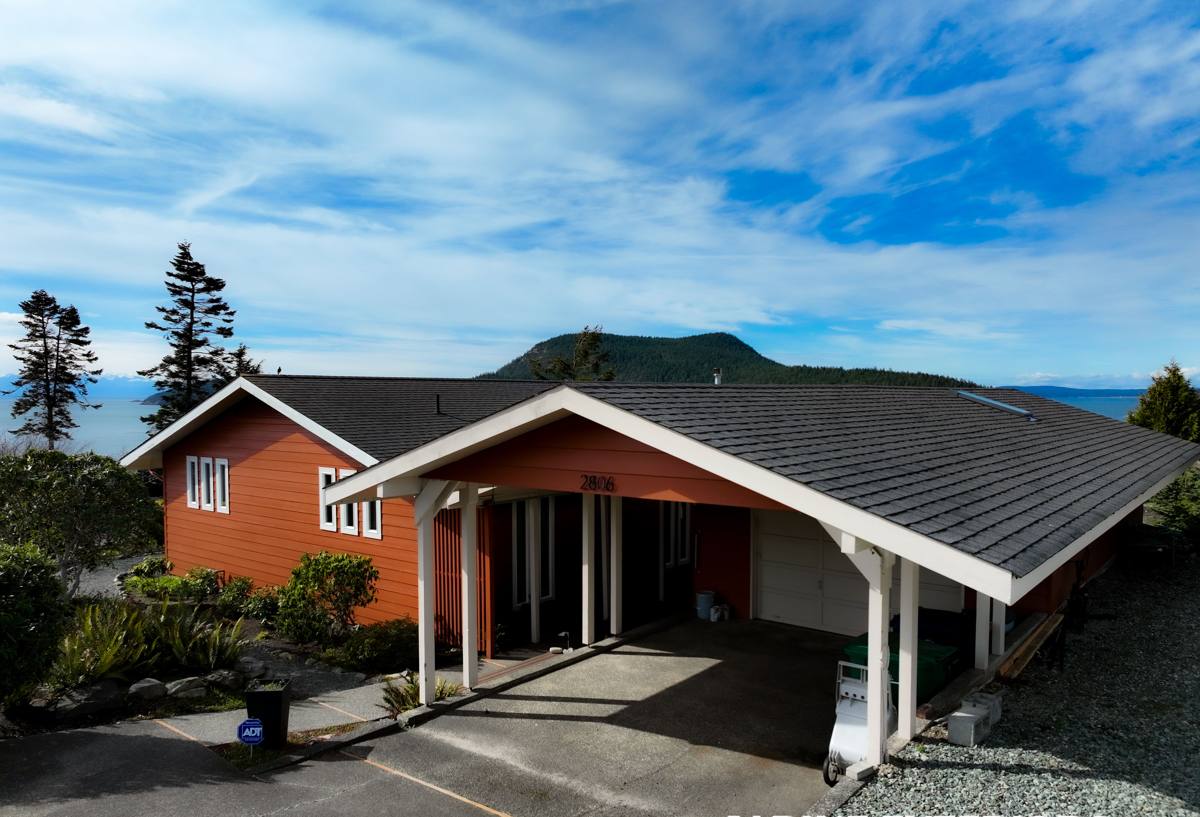
What "Correct" Looks Like for a Bellingham Siding Replacement
It starts underneath the siding, not with it
A siding replacement is not a cosmetic swap. The siding itself is the last layer installed and the least important one for keeping water out of your wall assembly. What actually protects a Bellingham home is the water-resistive barrier, the flashing details around every window, door, and penetration, and the drainage plane behind the cladding that lets any moisture that does get in find its way back out. Skip or rush any of that, and the prettiest siding in the world will trap water against your sheathing.
It accounts for how the house actually gets wet
Wind-driven rain off the Sound doesn't fall straight down — it hits walls at an angle, especially on west- and south-facing exposures. That means lap siding needs proper overlap and caulk joints have to be treated as maintenance items, not permanent seals. It also means ground-level and lower-wall siding, which stays damp longer from splash-back and shaded, slow-drying conditions, needs a product that tolerates repeated wetting without swelling, delaminating, or feeding mold and moss growth.
Bellingham Siding Replacement Checklist
- Full inspection of existing sheathing for rot before any new siding goes up — covering damaged sheathing is the single most common corner cut in re-sides
- Water-resistive barrier installed or repaired, lapped correctly top-to-bottom
- Flashing at every window, door, deck ledger, and roof-to-wall intersection — not just caulk
- Rainscreen or drainage gap behind the siding on exposures that see the most weather
- Correct fastener type and spacing for the specific siding product, per manufacturer spec
- Factory-finished color where available, to avoid field-painted joints as the first failure point
- Trim and joint details sealed with a sealant rated for the product and our climate
Why We Only Install James Hardie Fiber Cement Here
We stopped installing several common siding products years ago, and for Bellingham homes specifically, the reasoning comes down to how each material handles sustained moisture and salt air over decades, not just years.
Vinyl
Vinyl is inexpensive and low-maintenance in the sense that it doesn't need painting, but it's a poor match for this climate on two fronts. It expands and contracts significantly with temperature swings, which opens gaps at seams and trim over time — gaps that driving rain finds. And it's combustible plastic, which matters more every year as wildfire smoke and ember exposure become a real Pacific Northwest concern even outside the immediate fire zone.
LP SmartSide and other engineered wood
Engineered wood siding is wood-based at its core, treated to resist moisture — but treated is not the same as immune. In a climate where walls stay damp for extended stretches, any breach in the factory coating (a fastener hole, a cut edge, a scuff during installation) gives moisture a path into a substrate that's still fundamentally organic. It can perform fine for years and then fail at the edges and seams first, often before it's visually obvious.
Primed spruce, cedar, and other raw wood siding
Real wood siding can look excellent, and cedar in particular has genuine rot resistance in its heartwood. But raw or primed wood puts the maintenance burden entirely on the homeowner — recoating on a strict schedule, chasing caulk failures, watching for moss and mildew that thrive in exactly the shaded, damp conditions common around Bellingham. Miss a maintenance cycle in this climate and the clock on repairs starts running fast.
Cemplank and Allura
These are also fiber cement products and share fiber cement's core advantages over vinyl and wood — non-combustible, dimensionally stable, moisture-tolerant. We standardized on James Hardie specifically for its ColorPlus factory finish process, its HZ product lines engineered for specific climate zones including ours, and the depth of installer network and warranty support behind it. It's a manufacturing and support decision, not a claim that the base material category is different.
How James Hardie Fiber Cement Handles This Climate
Fiber cement is a mix of cement, sand, and cellulose fibers, and it doesn't behave like either vinyl or wood when it's wet. It doesn't expand and contract the way vinyl does, so seams stay tighter over time. It doesn't rot, and it doesn't feed mold or fungal growth the way organic materials can, which matters directly in a region where moss and mildew are a year-round consideration on shaded walls.
James Hardie's HZ5 product line is engineered specifically for climates with more freeze-thaw cycling and moisture exposure, which is the relevant category for Whatcom County. The ColorPlus finish is baked on at the factory under controlled conditions, which gives a harder, more UV- and weather-stable finish than field-applied paint, and it comes with its own finish warranty separate from the substrate warranty. For a home taking on salt air and near-constant rain exposure for months at a stretch, that factory-cured finish is doing real work.
Cost Factors in a Bellingham Siding Replacement
| Factor | Why It Moves the Price |
|---|---|
| Sheathing condition | Hidden rot from prior water intrusion adds repair scope before new siding can go up |
| House complexity | Dormers, multiple gables, and cut-up wall planes add labor and trim detail |
| Siding profile | Lap, shingle-style, and panel systems differ in material and install time |
| Trim and accessory scope | Fascia, soffit, and trim board replacement alongside siding changes total cost |
| Access and site conditions | Sloped lots, tree cover, and tight setbacks common around Sudden Valley affect staging and labor |
Our Process for a Bellingham Re-Side
Assessment first, quote second
We look at the whole wall system before we price anything — sheathing, existing flashing, trouble spots you may already know about like a window that's leaked or a wall that stays green with moss longer than the rest of the house. A quote based only on square footage without that inspection is a quote that's likely to change once the old siding comes off.
Tear-off and substrate repair
Old siding comes off in sections so we can evaluate sheathing as we go rather than guessing. Any soft or damaged sheathing gets replaced before anything else happens — this is the step that's easiest to shortcut and most expensive to have skipped later.
Water management installed correctly
Water-resistive barrier, flashing at every penetration, and a drainage gap where the exposure calls for it. This is the part of the job that doesn't show once the siding is up, which is exactly why it has to be done right the first time.
Hardie installation to manufacturer spec
Correct fastener schedule, correct clearances at grade and roof lines, correct joint treatment. Installed off-spec, even a good product can underperform — Hardie's warranty coverage assumes correct installation, which is part of why we train to it closely.
Final walkthrough
We walk the finished job with you, checking trim lines, joints, and paint-grade areas before we consider it done.
Why Local Installation Experience Matters for This Job
A siding replacement done by a crew that hasn't worked this specific climate tends to make the same handful of mistakes: underestimating how much flashing detail a Bellingham roofline actually needs, treating caulk as a primary seal instead of a maintenance item, or not accounting for how long lower-wall sections stay wet in shaded, tree-covered lots common around Sudden Valley. None of those mistakes show up on day one. They show up in year three or four, as staining, soft spots, or moss creeping up from the base of the wall.
Crews that work Whatcom County regularly have already seen what fails here and what holds up, and they price and detail the job accordingly rather than applying a generic install method to a climate that doesn't forgive shortcuts.
If your Bellingham home's siding is showing its age — moss buildup that won't quit, soft spots, paint that won't hold, or gaps opening at trim and seams — we'll come take a look and give you a straightforward, no-pressure estimate on what a correct James Hardie replacement would involve for your specific house.