 Sudden Valley Siding
 Building Decks for Sunnyland's Wet, Mossy Climate
A deck in Sunnyland has to earn its keep. Whatcom County doesn't get brutal winters, but it makes up for that with months of steady, low-intensity rain, heavy morning dew, and a moss season that can run from late fall through spring. Add in the moisture-laden marine air that moves through this part of Washington and you get a climate that's hard on any exterior structure that isn't built and finished correctly. Decks are especially exposed because they sit horizontally, catch standing water on flat surfaces, and often live in the shade of the mature trees common to this part of Sudden Valley.
None of that means a deck can't last decades here — it just means shortcuts show up faster than they would in a drier climate. A deck that's framed loosely, flashed poorly, or built from the wrong material will telegraph problems within a year or two: soft spots, black streaking, slick moss on the walking surface, and rot starting where the deck meets the house. A deck built correctly for this climate, on the other hand, sheds water instead of holding it and stays sound for a very long time.
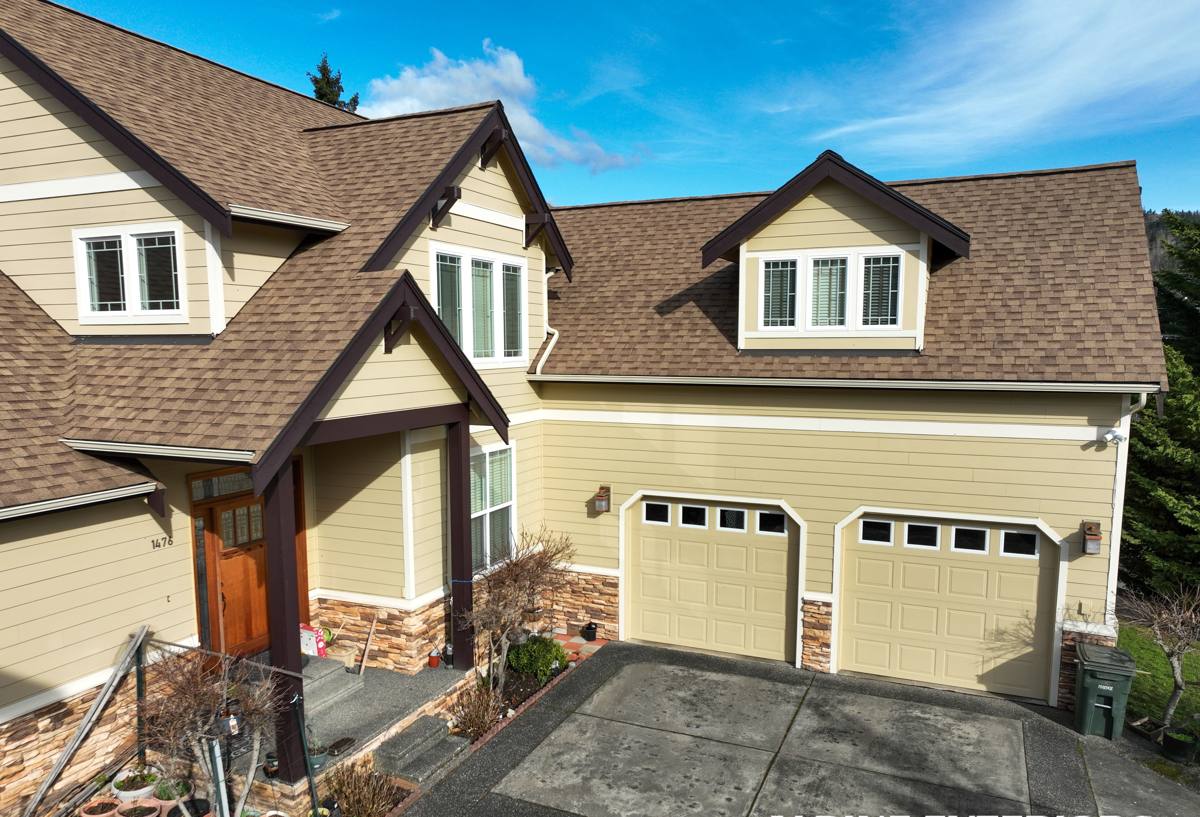
What Sunnyland Homes Need From a Deck
Shade, Tree Cover, and Moss Growth
Many lots in this area sit under a fair amount of tree canopy, which is great for privacy and cooling but terrible for drying time. A deck that stays damp and shaded most of the day is a deck where moss, algae, and mildew take hold fastest. That doesn't rule out any particular material, but it does change how the deck should be built — board spacing, ventilation underneath, and surface texture all matter more on a shaded lot than on one that gets full sun.
Slope, Drainage, and Footings
A lot of properties around Sudden Valley have some grade to them, whether that's a gentle slope toward the lake or a steeper drop-off at the back of the lot. Sloped sites need footings sized and placed correctly, and they need a plan for where deck runoff goes so it doesn't pool against the foundation or wash out soil under the structure. This is one of the areas where a generic deck plan pulled off the internet falls short — it doesn't account for the specific drainage pattern of your lot.
Decking Material Options for This Climate
There's no single "best" decking material — there's a best material for your budget, your maintenance appetite, and how much shade and moisture your specific lot deals with. Here's how the common options compare for a property like yours:
| Material | Moisture/Moss Resistance | Maintenance | Typical Lifespan Here |
|---|---|---|---|
| Cedar | Naturally rot-resistant but still needs finish; moss can grow on unfinished or worn surfaces | Annual cleaning, periodic re-staining or sealing | 15-20 years with upkeep |
| Pressure-treated pine/fir | Resists rot when properly maintained; more prone to surface checking and moss in shade | Cleaning and re-sealing every 1-2 years | 15-25 years with upkeep |
| Capped composite | Very good; the cap layer resists moisture absorption and staining | Periodic washing to clear pollen, moss film, and debris | 25-30+ years |
| PVC decking | Excellent; doesn't absorb moisture at all | Occasional washing | 25-30+ years |
Wood decking isn't a bad choice — plenty of homeowners prefer the look and cost, and cedar in particular holds up well when it's finished and re-sealed on schedule. The trade-off is honest: wood asks more of the homeowner over time. Composite and PVC cost more upfront but ask less of you every year, which matters if the deck sits in shade where drying time is slow. We'll walk through the real trade-offs for your specific lot rather than pushing one product line.
What a Correctly Built Deck Involves
Ledger Board and Flashing
The single most common failure point on any deck — anywhere, but especially in a wet climate — is where the deck attaches to the house. If that ledger board isn't properly flashed, water works its way behind it and starts rotting the house's rim joist and sheathing, often invisibly for years. Correct flashing means a proper metal flashing cap, self-adhering membrane behind and under it, and a gap or flashing detail that keeps water from ever reaching the house framing. This is not an area to save money on.
Framing, Fasteners, and Footings
Footings need to go below the frost line and bear on solid, undisturbed soil — on a sloped lot that sometimes means deeper or differently placed footings than a flat-lot plan would call for. Framing lumber should be rated for ground contact where it's close to grade, and fasteners should be corrosion-resistant hardware matched to whatever chemical treatment is in the lumber — mismatched metals corrode fast in a damp climate like this one. Joist tape over the tops of joists adds another layer of protection against standing water working into end grain.
Guardrails, Stairs, and Board Spacing
Guardrail height, baluster spacing, and stair geometry are governed by building code, not preference, and they're one of the first things an inspector checks. Board spacing on the decking itself should allow water to drain through rather than pool on the surface — too tight and you get standing water and moss; too wide and you get an uncomfortable walking surface and debris buildup between boards.
Framing and Build Checklist
- Footings below frost line, on solid soil, sized for the actual load and span
- Ledger board properly flashed and separated from house sheathing
- Joist tape on all joist tops and beam tops
- Corrosion-resistant fasteners and hardware matched to the lumber treatment
- Proper board spacing for drainage and airflow
- Code-compliant guardrail height and baluster spacing
- Positive drainage away from the house at grade level
Our Process for a Sunnyland Deck Build
We start with a site visit, not a phone quote. A deck plan that works needs to account for your lot's slope, sun exposure, soil, and how the deck will tie into the house. From there we talk through material options honestly, including what each one will actually cost you in upkeep over the years, not just at closing. Once a design and material are settled, we handle permitting, then build with the flashing, footing, and fastener details described above — no skipped steps because they're hidden once the decking goes down. We walk the finished deck with you before we consider the job done.
Maintenance in a Long Moss Season
Even a well-built deck needs a bit of seasonal attention in this climate. The good news is that the maintenance is simple and doesn't take much time if it's done on a regular schedule instead of skipped for a few years and then tackled all at once.
- Sweep debris and standing leaves off the deck surface regularly through fall
- Wash the deck surface at least once a year to clear moss film and algae before it takes hold
- Check and clear gaps between boards so water keeps draining properly
- Inspect ledger flashing and the house connection point annually for any signs of moisture
- Re-seal or re-stain wood decking on the schedule the finish manufacturer recommends
- Check guardrail posts and stair stringers for movement or soft spots each spring
What Affects the Cost of a Deck Build Here
Every deck is priced around a handful of real variables, and most quotes vary for honest reasons rather than padding. The main drivers we see on jobs in this area:
| Factor | Why It Matters Locally |
|---|---|
| Decking material | Wood costs less upfront; composite and PVC cost more but need far less annual upkeep in a shaded, damp lot |
| Site slope and access | Sloped lots common around Sudden Valley often need deeper or additional footings and more complex framing |
| Ledger and flashing detail | Doing this correctly takes more time and material than a shortcut version, but it's what prevents hidden rot |
| Size and layout | Multi-level decks, built-in stairs, and railings add labor beyond simple square footage |
| Permit and inspection requirements | Structural decks generally require a permit; factoring that in upfront avoids delays |
Why a Crew That Already Works Sudden Valley Matters
A crew that regularly works in Sudden Valley and the surrounding Whatcom County area already knows the things that catch outside contractors off guard: how much shade and moisture a given lot typically deals with, how sloped sites in this area usually drain, and how to build a ledger connection that will actually hold up through a full wet season, not just look finished on the day it's built. Many properties in Sudden Valley also fall under community association guidelines that touch on exterior structures like decks, so it's worth confirming what applies to your property before design work goes too far. Local familiarity isn't a marketing line — it's fewer surprises during the build and a deck that's built for the climate it actually has to survive.
If you're planning a new deck or need an honest look at whether an existing one is holding up the way it should, we're glad to come take a look. Reach out for a free, no-pressure estimate using the form below.