 Sudden Valley Siding
 Custom Decks in Sehome: Built for the Weather, Not Just the View
A deck in Sehome has to earn its keep more than a deck almost anywhere inland. This part of Whatcom County sits close enough to the water and the Sound's weather patterns that decks take on salt-laden air, long stretches of driving rain, and a moss season that can stretch from fall well into spring. A deck that looks great the day it's finished but wasn't built with that reality in mind will start showing problems — soft spots, green film, loose fasteners, cupped boards — inside a few winters. We build decks in Sehome the way the climate here actually demands, not the way a generic build guide would tell you to.
This page covers what a custom deck project for a Sehome home should include, the material and structural decisions that actually matter here, and how we run the job from first call to final walk-through.
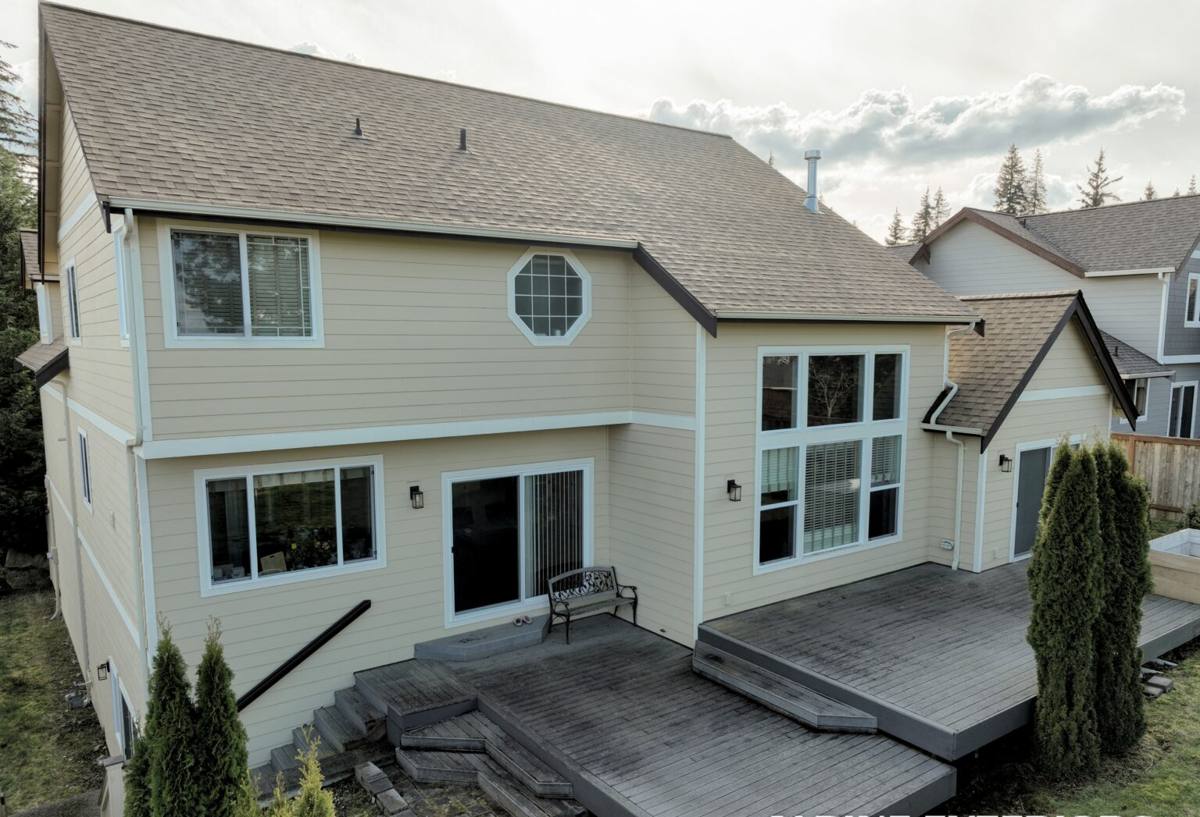
What Whatcom County Weather Does to a Deck Over Time
Three things drive most of the deck damage we see in this area, and they compound each other:
Salt Air and Moisture-Laden Wind
Homes closer to the water pick up airborne salt that accelerates corrosion on any fastener, bracket, or connector that isn't rated for it. Standard hardware-store screws and joist hangers can start rusting and staining the wood around them well before the deck itself is due for replacement. This is one of the most common corner-cutting mistakes we find on older Sehome decks during inspections.
Driving Rain
Whatcom County doesn't just get a lot of rain — a good share of it comes in sideways, which means water gets driven up under ledger boards, into end-grain cuts, and behind poorly flashed connections rather than simply running off the surface. A deck built without real attention to flashing and drainage details will trap water in exactly the places it's hardest to see, which is usually where the structure fails first.
Moss and Organic Growth
Shaded decks, north-facing decks, and decks under tree cover in Sehome can stay damp for days after a storm passes. That constant dampness is exactly what moss and algae need, and once they take hold on a deck surface they hold moisture against the wood or composite even longer, turning a cosmetic issue into a slip hazard and, eventually, a wood-rot issue.
Choosing the Right Decking Material for a Sehome Property
There's no single "best" decking material — there's a best material for your budget, your yard's sun and shade pattern, and how much upkeep you actually want to do. Here's how the common options stack up against this climate specifically.
| Material | How it handles our climate | Maintenance | Typical lifespan |
|---|---|---|---|
| Pressure-treated wood | Affordable and strong, but needs sealing to resist moss and moisture staining; end cuts are a weak point near salt air | Annual cleaning and re-sealing recommended | 10–15 years with upkeep |
| Cedar | Naturally rot- and insect-resistant, ages to a silver-gray if left unfinished, but still needs cleaning to keep moss off | Periodic cleaning; staining optional | 15–20 years with care |
| Composite (capped) | Resists moisture absorption and moss gets a much weaker foothold on the capped surface; performs well in driving rain | Occasional washing, no sealing or staining | 25–30+ years |
| PVC decking | Fully synthetic, doesn't absorb water at all, handles salt air and damp shade the best of any option | Low — occasional washing | 25–30+ years |
For a shaded or north-facing deck in Sehome — the kind that stays damp longest — we usually steer homeowners toward capped composite or PVC, not because wood is a bad material, but because it demands more attention in exactly the conditions this neighborhood produces. If you want a wood deck, we build it, and we'll tell you honestly what the maintenance schedule looks like so there are no surprises.
What a Correctly Built Deck Actually Involves
Decking boards are the part everyone sees, but the parts that determine whether a deck lasts are underneath and behind them.
Ledger Board Flashing
Where the deck attaches to the house is the single most common failure point we see in this region, because driving rain pushes water uphill and behind poorly flashed ledgers. A correct install uses proper flashing that sheds water away from the house structure, not just a ledger bolted flush to the siding.
Footings and Framing
Footings need to be sized and set below frost depth per local code, with posts and beams sized for the actual load and span — not just "what looks about right." Joist spacing should match the decking manufacturer's specification, which is tighter for some composites than for standard framing lumber.
Fasteners and Hardware
In an area with salt air exposure, we use corrosion-resistant fasteners and hardware rated for the environment, not the cheapest box on the shelf. This is a small cost difference at build time and a large difference in how the structure holds up over a decade of coastal weather.
Drainage and Airflow Underneath
A deck built low to the ground with poor airflow underneath stays damp longer after every rain event, which feeds moss and accelerates rot in ground-contact framing. Where grading allows, we build in enough clearance and drainage path to let the structure actually dry out between storms.
Our Process for a Sehome Deck Project
- On-site assessment. We look at sun/shade exposure, drainage, existing structure (if replacing a deck), and how the space will actually be used.
- Design and material selection. We walk through material options honestly, including what each one will actually cost you in upkeep over time, not just up front.
- Written estimate. Clear scope, materials, and timeline before any work starts — no vague allowances.
- Permitting. We handle the permit process where required so the structure is inspected and code-compliant.
- Build. Footings, framing, flashing, and decking, in that order, with each stage checked before moving to the next.
- Final walk-through. We go over the finished deck with you, including basic care guidance for whatever material you chose.
Keeping a New Deck Ahead of Moss and Moisture
Good building practice gets a deck most of the way there. The rest is a modest maintenance routine that fits the moss season here rather than fighting it after the fact.
- Sweep leaves and debris off the deck surface regularly, especially in fall — trapped organic matter is what moss feeds on first
- Clean the deck surface at least once a year, more often on shaded sections, to remove early moss and algae growth before it spreads
- Check and clear any gaps between boards so water can drain through rather than pooling
- Inspect ledger board flashing and fastener heads yearly for early signs of corrosion or water staining
- Re-seal wood decking on the manufacturer's recommended schedule — don't wait until it's visibly gray and dry
- Keep nearby shrubs and tree branches trimmed back to let air and light reach damp corners of the deck
Cost Factors for a Custom Deck in Sehome
Every deck project is priced around its own specifics, but the factors below are what actually move the number, and they're worth thinking through before you request an estimate.
| Factor | Why it matters here |
|---|---|
| Decking material | Wood costs less up front; composite and PVC cost more up front but less in upkeep given our moss and rain exposure |
| Size and shape | Multi-level decks, curves, and built-in features add labor and framing complexity |
| Height and footing depth | Taller decks and deeper frost-depth footings require more structural work |
| Site access and grading | Sloped or hard-to-access yards, common around Sudden Valley and the Lake Whatcom side of the county, add setup and equipment time |
| Railing and hardware | Corrosion-resistant hardware and quality railing systems cost more than bargain hardware but last far longer in salt air |
| Permitting | Permit and inspection requirements vary by scope and jurisdiction |
As a broad range, homeowners in this area typically see wood decks land toward the lower end of the market and composite or PVC decks land higher up front — the honest way to compare them is against their expected lifespan and maintenance cost, not just the initial number. Your estimate will break these factors down specifically for your project.
Why Hire a Crew That Already Works in Sehome
A contractor who builds decks all over the map, in every climate, doesn't automatically know how Whatcom County weather behaves against a specific lot's sun exposure, tree cover, and wind direction. We work this area — Sehome, Sudden Valley, and the surrounding Whatcom County neighborhoods — regularly enough to know which sides of a house tend to stay damp longest, where moss takes hold first, and which detailing corners get cut on decks that fail early. That local pattern recognition is what separates a deck that's still solid in fifteen years from one that needs major repair in five.
We also stand behind the work with a crew you can actually reach afterward — for questions, adjustments, or maintenance guidance — rather than a one-time install and a phone number that changes.
Ready to Talk About Your Deck?
If you're planning a new custom deck or replacing one that's showing its age, we're happy to take a look and talk through honest options for your property. Reach out for a free, no-pressure estimate using the form below — there's no obligation, and you'll get a clear picture of materials, timeline, and cost factors before you decide anything.