 Sudden Valley Siding
 Why Geneva Siding Wears Out Faster Than You'd Expect
Geneva sits close enough to Lake Whatcom and the Puget Sound air mass that homes here take a different kind of beating than siding fifty miles inland. It's not one dramatic event that wrecks a wall — it's the accumulation. Salt-laden air moves through the trees, driving rain comes in sideways off the water during fall and winter storms, and then a long stretch of grey, damp months lets moss and algae get comfortable on anything that stays wet. Whatcom County's climate is mild in temperature but relentless in moisture, and that's the combination that actually damages siding.
Most siding materials aren't built to handle that combination indefinitely. Wood-based products swell and dry out season after season. Seams open. Paint fails. Moisture finds a way behind the cladding, and by the time it shows on the surface, the sheathing underneath has often been wet for a while.
The Lake and the Wind Direction
Homes on the sides of the neighborhood that face open water or take the prevailing wind get hit harder — more direct rain contact, more standing moisture after a storm, and slower drying between wet spells. That's true anywhere near Lake Whatcom, and it's a big part of why we look at wall orientation, not just wall material, when we walk a Geneva property.
Moss Season Is Longer Than People Think
In this part of Whatcom County, moss and algae growth isn't limited to a couple of winter months — shaded, north-facing walls under tree cover can stay damp enough to support growth for most of the year. Siding that holds moisture, or that has surface texture and seams that trap it, gives moss a place to root. Once it's established, it holds even more water against the wall, which accelerates whatever decay process is already underway underneath.
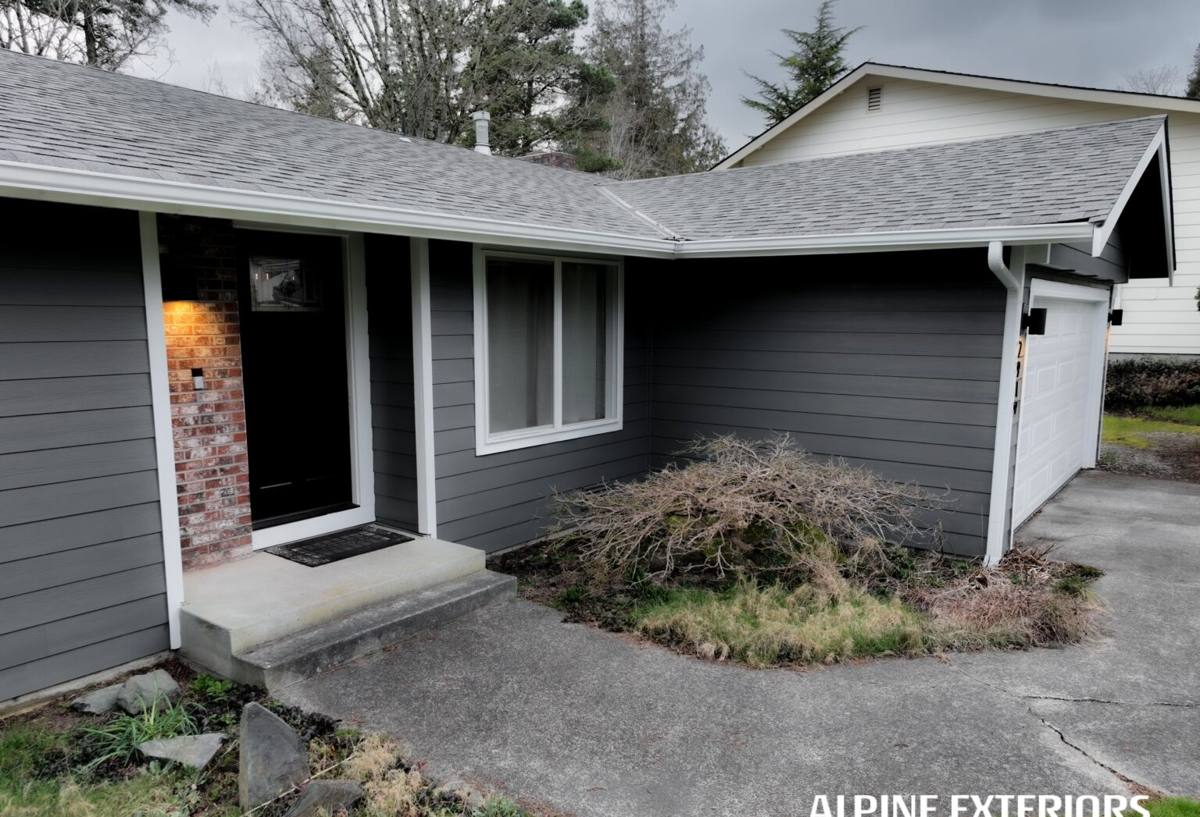
Signs a Geneva Home Needs Replacement, Not Another Repair
Repair makes sense when the damage is contained and the substrate underneath is still solid. Replacement makes sense once the underlying problem is widespread or the water has already gotten behind the cladding. Here's what we look for during an inspection:
- Soft or spongy spots when you press on the siding, especially near the bottom courses and around windows
- Paint that's bubbling, peeling, or that needs repainting every few years instead of holding a finish
- Persistent moss or algae staining that comes back within a season of cleaning
- Visible cupping, warping, or separated seams on horizontal boards
- Gaps that have opened at butt joints, corners, or around trim and window casings
- Musty smell or visible staining on interior walls that share an exterior wall
- Siding that's original to a home more than 20-25 years old and has never been fully replaced
If you're only seeing one or two of these on a single wall section, a repair or partial re-side might still be the honest answer. If it's spread across multiple elevations, or you're finding soft sheathing once a board comes off, that's a replacement conversation.
What Correct Siding Replacement Actually Involves
Siding replacement done right is not a cosmetic swap. The visible cladding is the last layer installed, not the first thing that matters. A rushed job on a Geneva home — where the wall is going to see real rain and real humidity for a lot of the year — tends to fail from the inside out within a few years.
Tear-Off and What's Underneath
Once old siding comes off, we inspect the sheathing before anything new goes up. Any wood that's soft, delaminated, or water-stained gets identified and addressed — that's often the actual reason a house was showing symptoms on the surface. Skipping this step and siding directly over compromised sheathing just seals the problem in.
Weather-Resistive Barrier and Flashing
A correctly installed weather-resistive barrier, properly lapped and taped, is what actually keeps incidental moisture from reaching the sheathing — the siding itself is the first defense, not the only one. Flashing at windows, doors, and any roof-to-wall intersections matters just as much; these are the spots where driving rain finds its way in if details are skipped. This is also where a lot of budget installs cut corners, because it's invisible once the siding goes up.
Why We Install Only James Hardie Fiber Cement
We standardized on James Hardie fiber cement siding and don't install vinyl, LP SmartSide, Cemplank, Allura, or wood products like primed spruce or cedar. That's a deliberate call, not a default. Fiber cement doesn't absorb and swell the way wood-based sidings can, it's non-combustible, and Hardie's ColorPlus factory finish is engineered to hold color and resist the kind of moss and mildew growth that shorter-life products struggle with in a wet climate like this one. Hardie also builds region-specific HZ product lines suited to areas that see heavy moisture, which lines up directly with what a Geneva wall actually experiences. We'd rather install one product we trust completely to spec than offer several we'd have reservations about.
Material Comparison for a Wet, Wind-Exposed Climate
Every siding material has real advantages. The differences that matter most in Geneva show up over years, not on install day.
| Material | Moisture Behavior | Maintenance | Typical Lifespan Here |
|---|---|---|---|
| James Hardie fiber cement | Doesn't swell or rot; engineered for wet climates | Occasional wash; factory finish holds color | 30+ years to warranty period |
| Vinyl | Doesn't absorb water, but seams and gaps let moisture behind panels | Low, but cracks/fades and can't be repainted easily | 15-25 years |
| LP SmartSide (engineered wood) | Treated to resist moisture, but wood-based and edge-sensitive | Repaint/caulk maintenance on a schedule | 20-30 years with upkeep |
| Cedar / primed spruce | Natural wood; absorbs and releases moisture with the seasons | Regular staining or painting, sealing cut edges | 15-25 years with diligent upkeep |
None of these numbers are guarantees — they depend heavily on installation quality, sun/shade exposure, and how consistently a homeowner keeps up with maintenance. But the pattern holds: the products that require the most upkeep to reach their potential lifespan are also the ones most punished by a long, damp Whatcom County winter.
Cost Factors Specific to Geneva and Sudden Valley Homes
We won't quote a number without seeing the house, but a few things consistently move the price up or down on jobs in this area:
| Factor | Why It Matters Here |
|---|---|
| Sheathing condition | Hidden rot from years of moisture exposure adds repair scope once walls are opened up |
| Wall exposure to wind and rain | Lake-facing or prevailing-wind walls often need extra flashing attention |
| Home access and lot slope | Sudden Valley's terrain can mean more setup time for scaffolding or lifts |
| Trim, window, and corner detail count | More transitions mean more flashing and cutting labor |
| Existing siding removal | Multiple layers or asbestos-era siding require careful, sometimes specialized removal |
Our Process, Start to Finish
- Walkthrough and assessment — we look at every elevation, check for soft spots, and talk through what we're seeing before any number gets discussed
- Written estimate — scope, product, and pricing laid out plainly, with the reasoning behind any repair work called out separately
- Tear-off and sheathing check — old material comes off, damaged sheathing gets flagged and repaired before covering it up
- Weather barrier and flashing install — the invisible layer that actually keeps a Geneva wall dry over time
- James Hardie installation to manufacturer spec — correct fastening, clearances, and joint treatment, not shortcuts
- Final walkthrough — we go over the finished work with you before calling the job done
Why Hiring a Crew That Already Works Geneva Matters
A crew that's worked this specific stretch of Whatcom County already knows which walls tend to hold moisture, how far the driving rain typically pushes water up under trim, and how long moss actually takes to re-establish on a north-facing elevation here versus somewhere drier. That's not something you get from a general contractor working a job in Sudden Valley for the first time. It shows up in small decisions — where extra flashing goes, how much clearance is left at grade, which corners get extra attention — that don't show up on a quote but absolutely show up in how the siding performs five and ten years out.
If your Geneva home is showing any of the signs above, or you're just trying to plan ahead before it gets worse, we're happy to take a look and give you a straightforward, no-pressure estimate. Use the form below to get started.