 Sudden Valley Siding
 Deck Building for Cordata Homes
Cordata sits inland from Bellingham Bay but still gets the full weather package that defines this corner of Whatcom County: long stretches of driving rain, a marine-influenced air that carries salt inland on windy days, and a moss season that can run from October clear through April. A deck built here has to shed water fast, resist rot at every joint, and stay slip-safe under a green film that wants to grow on any shaded, damp surface. Decks designed and installed without that in mind tend to show soft spots, stains, and squeaks within a few seasons — long before they should.
This page covers what a properly built deck looks like for a Cordata property, the parts of the job that actually determine how long it lasts, and how we approach the work from first estimate to final walkthrough.
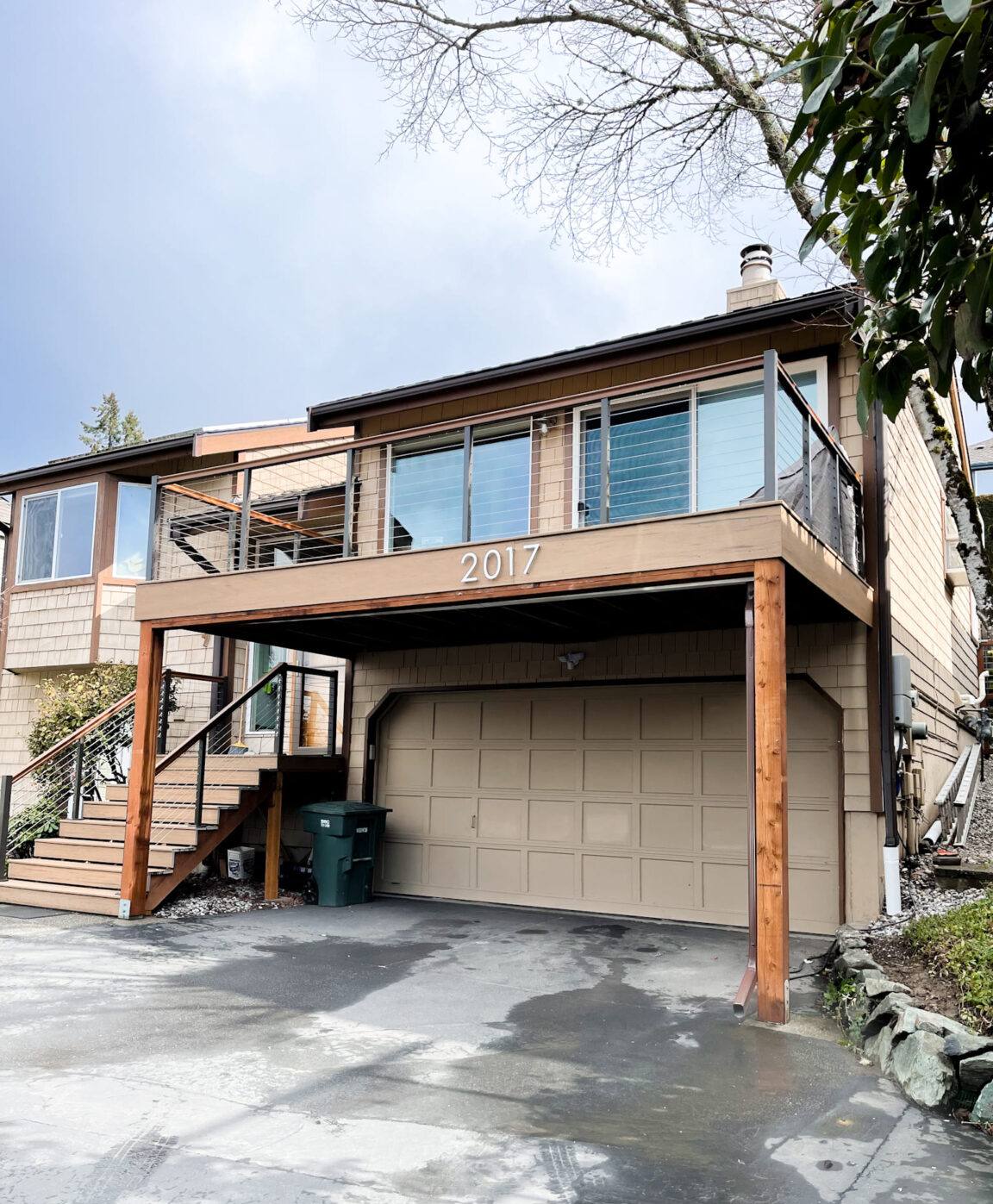
What Whatcom County Weather Does to a Deck
Three conditions drive almost every deck problem we see in this area:
Sustained, Driving Rain
It's not the occasional downpour that causes trouble — it's weeks of steady, wind-driven rain that finds its way into any gap, fastener hole, or unsealed cut end. Water that can't drain or dry out is what starts rot, not water exposure by itself.
Salt-Bearing Marine Air
Being a few miles from Bellingham Bay means fasteners, brackets, and any exposed metal are dealing with a corrosive element that inland decks elsewhere in the state don't face. Standard electro-galvanized hardware corrodes faster here, and corroded hardware is a structural problem, not a cosmetic one.
Extended Moss and Algae Season
Shaded decks under mature trees — common throughout Cordata — stay damp long after open areas have dried. Moss and algae aren't just unattractive; they hold moisture against the decking surface and turn boards slippery, which is a real fall hazard on stairs and landings.
Choosing the Right Decking Material
There's no single "best" decking material — the right choice depends on how much sun the deck gets, how much upkeep you want to do, and your budget. Here's how the common options actually perform under Whatcom County conditions.
| Material | Moisture & Moss Resistance | Maintenance | Typical Lifespan Here |
|---|---|---|---|
| Pressure-treated wood | Good if sealed and re-sealed on schedule; moss grows readily on shaded, unsealed boards | Annual cleaning and re-sealing recommended | 10–15 years with upkeep |
| Cedar | Naturally rot-resistant but still needs sealing against constant rain exposure | Periodic sealing and cleaning | 15–20 years with upkeep |
| Capped composite | Excellent — the cap sheds water and resists moss staining much better than wood | Occasional washing, no sealing or staining | 25+ years, backed by manufacturer warranty |
| Uncapped composite | Better than wood but the exposed core can still absorb moisture over time | Low, but more prone to mildew staining than capped versions | 15–20 years |
For a shaded, damp lot — which describes a good number of Cordata yards — we usually steer homeowners toward capped composite or a well-sealed cedar, simply because both handle sustained moisture and moss pressure with less ongoing work. Pressure-treated wood is still a sound, budget-friendly choice; it just needs a homeowner willing to keep up with sealing on a real schedule, not "whenever I get to it."
Framing and Structure: Where Deck Failures Actually Start
A deck rarely fails because the decking boards wore out. It fails because something underneath was done wrong. This is the part of the job that doesn't show in a walkthrough but determines whether the deck is safe in ten years.
Ledger Board Flashing
The ledger board — where the deck attaches to the house — is the single most common failure point on decks in wet climates. Without proper flashing that directs water away from the house band board, moisture gets trapped behind the ledger and rots both the deck attachment and the house framing behind it. We flash every ledger connection correctly, every time, regardless of whether it's visible once the siding is patched back around it.
Joist Hangers and Fasteners
Given the corrosive salt-bearing air in this area, we use hot-dip galvanized or stainless connectors and fasteners rated for ground contact and coastal exposure — not the cheaper electro-galvanized hardware that can start corroding within a few years here.
Post Footings and Ground Contact
Whatcom County's clay-heavy, frequently saturated soils mean footings need to be sized and set below frost depth with real drainage consideration, not just poured to code minimum. Posts that sit in standing water after a heavy rain will rot from the base up no matter what species or treatment they are.
Designing for Drainage and Moss Control
Good deck design fights moss before it starts, rather than relying on the homeowner to scrub it off every spring. That means:
- Proper board spacing so water drains through instead of pooling on the surface
- Grading and joist layout that lets air move underneath the deck rather than trapping damp, still air
- Picking a decking profile with grip texture appropriate for shaded, frequently wet conditions
- Keeping decking a few inches clear of siding and structures to avoid trapping moisture against the house
- Trimming back overhanging branches where possible to cut down on the shade and debris that feed moss growth
None of this eliminates the need for occasional cleaning — nothing does in this climate — but it dramatically cuts down how often and how aggressively you need to do it.
Our Deck Building Process
We walk every Cordata deck project through the same steps, because skipping any one of them is exactly how the problems above get built in from day one.
- On-site assessment: we look at drainage patterns, sun/shade exposure, existing structure attachment points, and soil conditions before we design anything.
- Design and material selection: we walk through material trade-offs honestly based on your budget, maintenance appetite, and how much moisture and shade the specific spot gets.
- Permitting: we handle the permit application and inspections required by the local building department for the project scope.
- Framing and flashing: ledger flashing, corrosion-resistant hardware, and properly sized footings go in first — this is the part that determines longevity.
- Decking, railing, and stairs: installed to manufacturer spec (for composite) or with correct fastening and spacing (for wood), with attention to drainage and grip.
- Final walkthrough: we go over care and maintenance specific to the material you chose, so you know what upkeep actually looks like going forward.
Permits and Local Code Considerations
Most decks attached to a house, or built above a certain height, require a permit and inspection in Whatcom County — the exact threshold depends on the jurisdiction covering your specific property. Ledger attachment, guardrail height, stair geometry, and footing depth are all inspected items, not optional details. We handle the permitting process as part of the job rather than leaving it to the homeowner to sort out, and we build to pass inspection the first time, not to squeak by.
Maintaining a Deck in This Climate
Even the best-built deck needs some seasonal attention here. A simple annual routine keeps a deck looking good and catches small issues before they become structural ones.
- Sweep debris off the surface regularly, especially in fall when leaves and needles accumulate
- Wash down the deck at least once a year to remove moss, algae, and mildew buildup before it stains or gets slick
- Check and re-seal wood decking on the manufacturer or product-recommended schedule — don't wait until it looks gray and dry
- Inspect railings, stair connections, and ledger flashing for movement, gaps, or corrosion once a year
- Keep planters and rugs from sitting in one spot for weeks at a time, which traps moisture underneath
- Trim back vegetation that's shading the deck and keeping it damp longer than the rest of the yard
What Drives the Cost of a Deck Project
Every deck is priced around its own specifics, but the same handful of factors move the number up or down on nearly every project we quote.
| Factor | Cost Impact | Why |
|---|---|---|
| Decking material | Low to High | Pressure-treated wood costs less upfront than cedar or composite; capped composite costs more upfront but less in long-term maintenance |
| Deck size and shape | Medium to High | More square footage and multiple levels or angles mean more framing, more labor, more material |
| Height off grade | Medium | Taller decks need more substantial footings, stairs, and often additional railing and structural bracing |
| Railing style | Low to Medium | Standard wood or composite rail costs less than glass panel or metal cable systems |
| Site access | Low to Medium | Difficult access for equipment and material delivery on a sloped or tight lot adds labor time |
| Hardware and fasteners | Low | Marine-grade corrosion-resistant hardware costs modestly more than standard hardware but matters a lot for longevity here |
We give a straight, itemized estimate up front, and we'll explain exactly which of these factors are driving your number — no vague lump-sum guessing.
Why a Crew That Already Works in Cordata Matters
A contractor who works this specific area regularly already knows how the local soil drains, how much shade the typical lot gets, and which corrosion-resistant hardware actually holds up to the marine-influenced air here — none of which is something you can fully account for from a generic regional spec sheet. That familiarity shows up in fewer surprises during the build, permitting that goes smoothly because the process is already understood, and a finished deck that's designed for the conditions it actually has to survive, not a national-average climate.
If you're planning a new deck or replacing one that's showing its age, we're happy to walk the site with you and give you a straightforward, no-pressure estimate — just fill out the form below to get started.