 Sudden Valley Siding
 Why Edgemoor Decks Wear Out Faster Than the Rest of the House
If you own a home near Sudden Valley in Whatcom County, you already know your deck takes more abuse than almost anything else attached to your house. It's flat, it's outside, and it's the one structure that gets soaked by driving rain, shaded by trees for months at a time, and left to dry slowly in cool, damp air. Add in the salt-tinged moisture that drifts through this part of Washington and you've got a recipe for hardware corrosion, wood decay, and a moss layer that can turn boards slick within a season or two.
A deck that looked fine five years ago can be structurally questionable today, especially if it wasn't built with this climate in mind. That's the gap we see most often on replacement calls: the surface looks tired, but the real problem is underneath — soft framing, rusted fasteners, or a ledger connection that was never properly flashed.
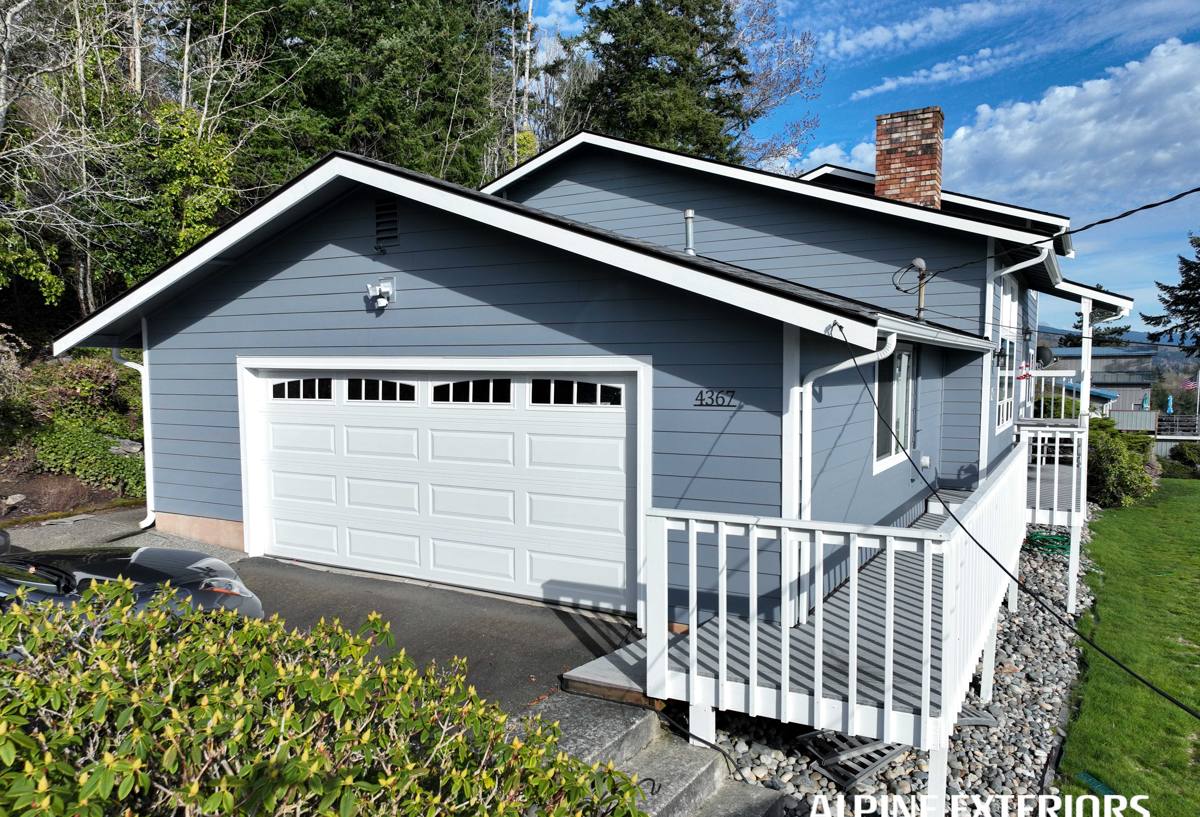
What "Deck Replacement" Should Actually Include
A lot of homeowners assume replacement just means new boards on the same frame. Sometimes that's true. More often, especially on a deck that's ten-plus years old in this climate, the boards are the least of the problem. A proper replacement means evaluating and, where needed, rebuilding:
- The ledger board connection to the house — the single most common source of hidden rot and, in worst cases, deck failure
- Joists, beams, and posts for soft spots, checking, or fastener corrosion
- Footings — whether they meet current frost depth and bearing requirements
- Flashing at the house connection and around any posts that penetrate the decking
- Fasteners and hardware — matched to the lumber treatment being used
- Guardrails and stair stringers for current code compliance, not just how they were originally built
Skipping any of these and just laying new decking over old framing is a cosmetic fix, not a replacement. It'll look good for a year or two and then show the same problems the old deck had.
Signs an Edgemoor Deck Needs Replacing, Not Just Patching
Repair makes sense when the framing is sound and the issue is isolated. Replacement makes sense once the problems are systemic. Here's what tells us which situation we're looking at:
- A screwdriver sinks into joists or the ledger board with light pressure — that's decay, not just surface weathering
- Persistent moss or algae film that returns within weeks of cleaning, even in drier months
- Fasteners with visible rust bleed staining the wood around them
- Noticeable bounce or give when walking across the deck, especially mid-span
- Gaps or movement where the deck meets the house — a sign the ledger connection has failed or was never flashed correctly
- Posts that feel loose at the base, which often points to a failing or undersized footing
- Boards cupping, splitting, or delaminating faster than expected for their age
One or two of these in isolation might be repairable. Several at once, especially anything involving the ledger or footings, usually means it's time to rebuild.
Why Moss Season Matters More Than People Think
Whatcom County's long, wet, low-sun stretch of the year isn't just an appearance issue. Moss and algae hold moisture against the deck surface far longer than bare wood or composite would dry on its own, which accelerates rot in wood decking and can make any decking material dangerously slick on stairs and ramps. Spacing, airflow underneath the deck, and surface material all affect how bad this gets year to year — and it's something we design around, not just something we tell you to pressure-wash.
Decking Material Options for This Climate
There's no single "best" decking material — it depends on how much maintenance you want to do, your budget, and how much shade and moisture the deck actually sits in. Here's how the common options hold up specifically in a wet, moss-prone, salt-air environment:
| Material | Moisture & Moss Behavior | Maintenance | Typical Lifespan Here |
|---|---|---|---|
| Pressure-treated lumber | Resists rot with proper sealing; still needs airflow underneath to avoid trapped moisture | Annual cleaning and resealing recommended | 15-20 years with upkeep |
| Cedar | Naturally moisture- and insect-resistant, but greys and can stay damp longer in shaded, low-airflow spots | Periodic cleaning, sealing every 2-3 years | 15-25 years with upkeep |
| Composite decking | Doesn't rot, but can still grow surface algae/moss film if shaded and not cleaned | Occasional washing, no sealing | 25-30+ years, manufacturer-dependent |
| PVC decking | Fully moisture-resistant, least prone to holding surface growth | Lowest maintenance of the group | 25-30+ years, manufacturer-dependent |
We install all of these. What matters more than the brand name on the board is whether the framing underneath is built to let it dry out between rain events — a composite deck over a poorly ventilated frame will still trap moisture at the substructure, even if the decking itself never rots.
The Parts Everyone Skips: Flashing, Hardware, and Fasteners
Most deck failures we get called out to look at don't start with the decking boards — they start with details that are invisible once the deck is finished. In this climate, three things matter more than they do in drier parts of the country:
Ledger Flashing
Where the deck attaches to the house is the single highest-risk moisture point on the whole structure. Without proper flashing — installed so water sheds away from the house rather than behind the siding — you get slow, hidden rot in both the ledger and the house's rim joist. This is often invisible from the deck side until the connection is already compromised.
Hardware Corrosion
Modern pressure-treated lumber uses chemicals that accelerate corrosion in standard galvanized fasteners and hardware. Combined with the moisture load and salt air here, using the wrong-grade hardware can mean rusted, weakened joist hangers within a handful of years — long before the wood itself would have failed. Fasteners and connectors need to be rated for contact with the specific treated lumber being used.
Footings and Post Bases
Post bases that sit directly on or in standing water accelerate decay at the one point holding the whole structure up. Correct footing depth and drainage, plus post bases that keep wood off the concrete, are basic but frequently shortcut details.
Permits, Codes, and Footings in Whatcom County
Deck replacement projects of meaningful size typically require a permit, and inspectors will look specifically at footing depth, ledger attachment, guardrail height, and stair geometry. This isn't paperwork for its own sake — these are the exact points that fail first in our climate if they're not done to code. We handle the permitting process as part of the job, not as an extra step you have to chase down yourself.
| Code Item | Why It Matters Here |
|---|---|
| Footing depth & bearing | Ensures the structure doesn't shift with seasonal ground moisture changes |
| Ledger attachment & flashing | Prevents the most common source of hidden structural rot |
| Guardrail height & baluster spacing | Safety-driven, and commonly out of date on older decks |
| Stair rise/run consistency | Becomes a real hazard when treads are wet or moss-covered |
Our Deck Replacement Process
We approach every deck replacement in Edgemoor the same structured way, whether it ends up being a full tear-out or a partial rebuild once we've assessed the framing:
- On-site evaluation of decking, framing, ledger connection, and footings — including probing suspect wood, not just a visual walk-around
- Honest recommendation on repair versus full replacement, with the reasoning explained
- Material selection conversation based on your budget, sun/shade exposure, and maintenance appetite
- Permit handling with Whatcom County where the scope requires it
- Demolition and disposal of the old structure
- Rebuild of framing, ledger flashing, footings, and posts to current code
- Decking, stair, and guardrail installation with corrosion-rated fasteners throughout
- Final walkthrough covering care and cleaning specific to the material you chose
Why a Crew That Already Works Edgemoor Matters
A deck built to a generic national spec often underperforms here. Contractors who don't regularly work in this part of Whatcom County can miss how much airflow and drainage detail actually matters under tree cover, or under-spec hardware because it "should" be fine in a drier climate. A crew that's already replacing decks around Sudden Valley and the surrounding area knows which details get skipped elsewhere and cost homeowners a redo five years later — ledger flashing, hardware grade, and footing drainage chief among them. We also know what Whatcom County inspectors are actually checking for, which keeps the permit process moving instead of stalling on avoidable corrections.
Getting an Honest Estimate
Every deck is different — size, framing condition, material choice, and how much of the structure is actually salvageable all move the price. Rather than quote a number without seeing the deck, we walk the site, check the framing where it matters, and give you a clear picture of what needs full replacement versus what can reasonably stay.
If your deck is showing soft spots, persistent moss, rusted hardware, or just feels past its prime, we're happy to take a look and give you a straight answer — no pressure, no upsell. Use the form below to request a free estimate for your Edgemoor deck replacement.