 Sudden Valley Siding
 Siding Installation for Sehome Homes
Sehome sits close enough to open water and low-lying, tree-shaded terrain that its houses take a different kind of beating than homes further inland. Between salt-laden air moving in off the water, driving rain that comes sideways more often than straight down, and a moss season that can run most of the year in the shade of mature conifers, the siding on a Sehome home is doing real work every single day. Installing siding here isn't just a matter of nailing up panels — it's a matter of choosing a system and an installation method that actually holds up to this specific climate.
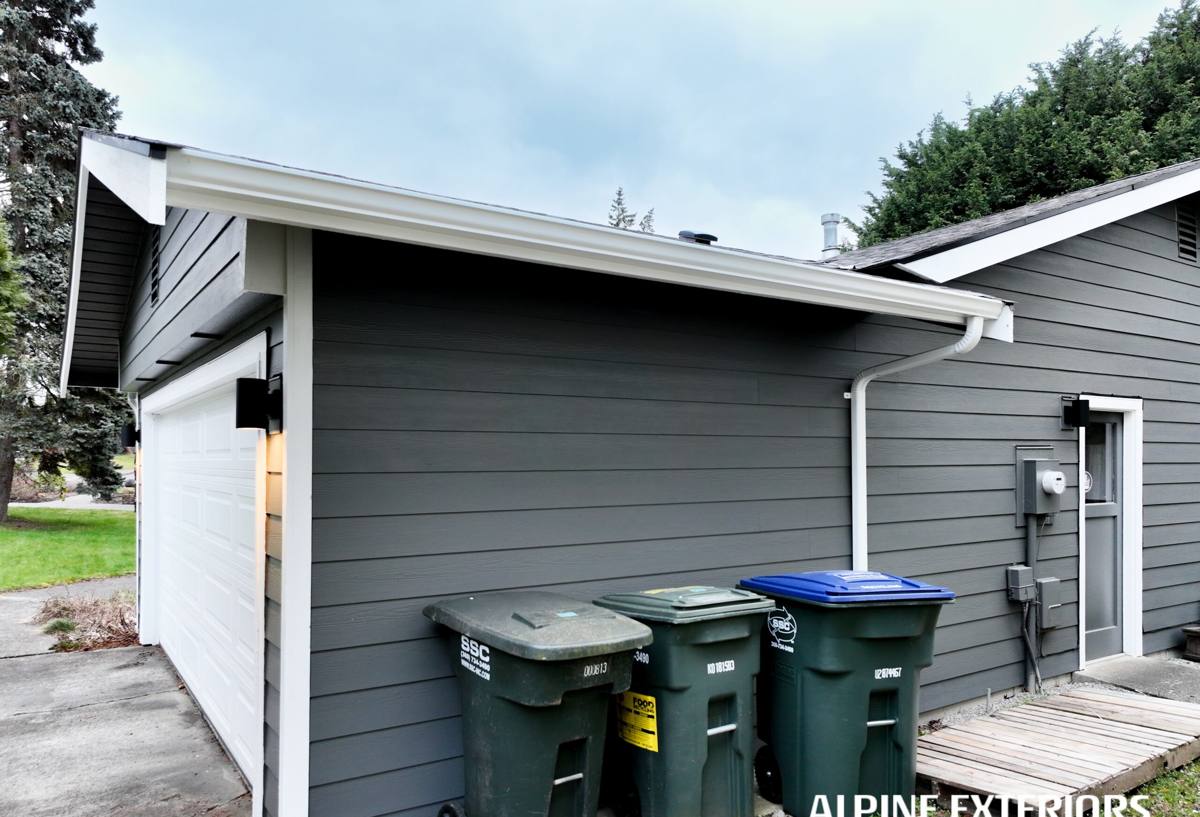
This page covers what Sehome homes need from their siding, what a correct installation looks like, and why we install James Hardie fiber cement exclusively rather than the wider menu of products other contractors offer.
What This Climate Actually Does to Siding
Salt Air and Coastal Exposure
Salt-carrying air doesn't just affect homes sitting directly on the waterfront. In Whatcom County, salt-laden moisture travels well inland on prevailing winds, and it's corrosive to the wrong fasteners and finishes long before it's visible as damage. Steel trim, cheap fasteners, and unsealed cut edges are where this shows up first — rust streaks, swelling, and finish failure at the exact points where a product was cut or nailed on site.
Driving Rain and Wind-Driven Moisture
Sehome gets plenty of rain that arrives at an angle, not straight down, which means water gets pushed up under laps, into butt joints, and behind trim if those details weren't built correctly the first time. A siding product's raw water resistance matters less here than how the installation handles wind-driven rain at every seam, corner, and penetration.
The Long Moss and Mildew Season
Shade, moisture, and mild temperatures are a perfect combination for moss and mildew, and that combination holds for much of the year in this part of Whatcom County. Siding that stays damp — because of poor drainage behind the panel, tight clearances to grade or landscaping, or a finish that holds moisture at the surface — will grow moss and mildew faster than siding that's engineered to shed water and dry out.
What Correct Siding Installation Actually Involves
A siding job is judged by what's underneath it as much as by what you see from the curb. The visible panel is the last five percent of the work; the water management underneath it is the part that determines whether the job lasts.
Weather-Resistive Barrier and Flashing
Every siding installation starts with a continuous weather-resistive barrier and correctly lapped flashing at windows, doors, and any place two building materials meet. In a climate with this much wind-driven rain, gaps or shortcuts here are exactly where water gets behind the siding and into the wall assembly — often for years before anyone notices.
Fastening and Clearances
Fiber cement siding has specific fastening requirements: correct nail type, placement, and depth, and clearance from grade, roof lines, and decks so the bottom edge of the siding never sits in standing water or constant splash-back. Skipping these clearances is one of the most common shortcuts we see on older installs, and it's a direct cause of moss growth and premature rot at the base of a wall.
Joints, Caulking, and Field Cuts
Butt joints need to be staggered, backed, and sealed with a caulk rated for the product and the climate — not just any tube from the hardware store. Every field cut on fiber cement should be sealed on the cut edge before installation, since a raw, unsealed edge is a direct path for moisture into the substrate.
Why We Install Only James Hardie Fiber Cement
We don't install vinyl, LP SmartSide, Cemplank, Allura, primed spruce, or cedar. That's a deliberate standard, not a lack of options. James Hardie fiber cement is non-combustible, which matters in a state where wildfire smoke and ember exposure are a growing concern even west of the mountains. It carries a factory-applied ColorPlus finish that's baked on and warranted against fading, rather than a field-applied paint job that will need repainting on its own schedule. And Hardie engineers specific HZ product formulations for different climate zones, which means the product going on a Sehome home is formulated for a wet, temperate coastal climate rather than a one-size-fits-all national spec.
We back that up with Hardie's transferable warranty coverage, which matters to homeowners who may sell within the warranty period — a real consideration in a market where turnover happens.
Our Process for Sehome Projects
Assessment and Scope
We start with a walk-around assessment that looks past the siding itself — checking trim, flashing, window details, and any moss or moisture staining that points to a problem underneath. We write a scope that spells out flashing details and clearances, not just "install siding," so there's no ambiguity about what correct looks like on your house.
Removal and Substrate Check
Old siding comes off in a way that lets us actually see the sheathing underneath. If there's hidden rot or a weather-resistive barrier that's failed, we address it before anything new goes on — covering a known problem is how a wall assembly fails quietly for years.
Installation to Manufacturer Spec
Installation follows James Hardie's published specifications for fastening, clearance, and joint treatment, adjusted for the specific exposure of your home — a wall facing prevailing wind and rain gets treated differently than a sheltered wall.
Cleanup and Walkthrough
We finish with a walkthrough so you know exactly what was done, what the maintenance expectations are, and how the warranty works.
Comparing Siding Options in a Marine Climate
Homeowners often ask why we don't offer alternatives, so here's an honest comparison of how common siding materials actually perform under the conditions Sehome deals with.
| Material | Moisture Behavior | Maintenance | Fire Performance |
|---|---|---|---|
| James Hardie fiber cement | Dimensionally stable, engineered HZ formulation for wet climates | Low — factory finish, no repainting cycle | Non-combustible |
| Vinyl siding | Can warp, buckle, or trap moisture behind panels in wind-driven rain | Low, but finish can't be fully restored once faded | Combustible, can melt/deform near heat |
| LP SmartSide (engineered wood) | Wood-based core is more sensitive to sustained moisture exposure | Moderate — cut edges and seams need diligent sealing | Combustible |
| Cedar or primed spruce | Natural wood movement, absorbs moisture, prone to moss/mildew | High — regular refinishing and moss treatment required | Combustible |
This isn't a claim that other products fail outright — it's why, given this specific climate and our own standards for what we're willing to warranty and stand behind, fiber cement is the only product we install.
Cost Factors for a Sehome Siding Installation
Every home is different, but the main drivers of project cost are consistent enough to plan around:
- Home size and complexity: more square footage, more corners, and more window/door openings all add labor.
- Condition of the substrate: hidden rot or moisture damage found during tear-off adds repair work before new siding goes on.
- Existing siding removal: multiple layers of old siding or difficult removal (staples, heavy mastic) takes more time than a single clean layer.
- Trim and detail work: more corner boards, window trim, and architectural detail means more precision cutting and sealing.
- Access and site conditions: steep grades, mature landscaping, or tight setbacks common in this area can affect staging and scaffolding needs.
We give a firm, itemized quote after the initial walk-around, not a rough phone estimate — that's the only way to price the tear-off and repair work accurately.
Signs Your Sehome Home May Need New Siding
- Moss or dark streaking that keeps returning within a season or two of cleaning
- Soft or spongy spots when you press on the siding near the base of walls
- Visible warping, buckling, or panels that have pulled away from the wall
- Peeling or bubbling paint that keeps recurring in the same spots
- Rust staining running down from fasteners or metal trim
- Rising energy bills that point to a failing weather-resistive barrier behind the siding
Why a Crew That Already Works Sehome Matters
Siding installation isn't just a spec sheet — it's judgment calls about how a specific wall, on a specific lot, in a specific microclimate, needs to be flashed and detailed. A crew that already works this part of Whatcom County has already made those calls dozens of times on homes with the same exposure, the same moss pressure, and the same wind-driven rain patterns your house deals with. That local experience shows up in fewer surprises during tear-off, better judgment about clearances and drainage, and a finished job that's built for the conditions it actually has to survive, not a generic national spec.
If you're weighing siding replacement on a Sehome home, we're happy to walk the property, look at what's actually going on underneath the current siding, and give you a straightforward, no-pressure estimate — use the form below to get started.