 Sudden Valley Siding
 Why Happy Valley Roofs Take a Different Kind of Beating
Happy Valley sits close enough to Lake Whatcom and the surrounding Sudden Valley tree cover that its roofs deal with a specific combination of stress most homeowners don't think about until something leaks. It isn't just wind. It's wind-driven rain that gets pushed sideways under shingle tabs and flashing laps, moisture that sits in shaded, tree-covered sections of roof for days after a storm passes, and a moss season that runs long here compared to drier parts of Washington. Add periodic salt-tinged air moving inland off Bellingham Bay and you've got a roof environment that ages differently than a roof forty miles east.
None of that means Happy Valley roofs fail faster than average. It means storm damage here tends to show up in specific, predictable places — valleys, north-facing slopes, anywhere moss has been allowed to mat down over a season or two — and a repair that doesn't account for that will fail again at the next storm.
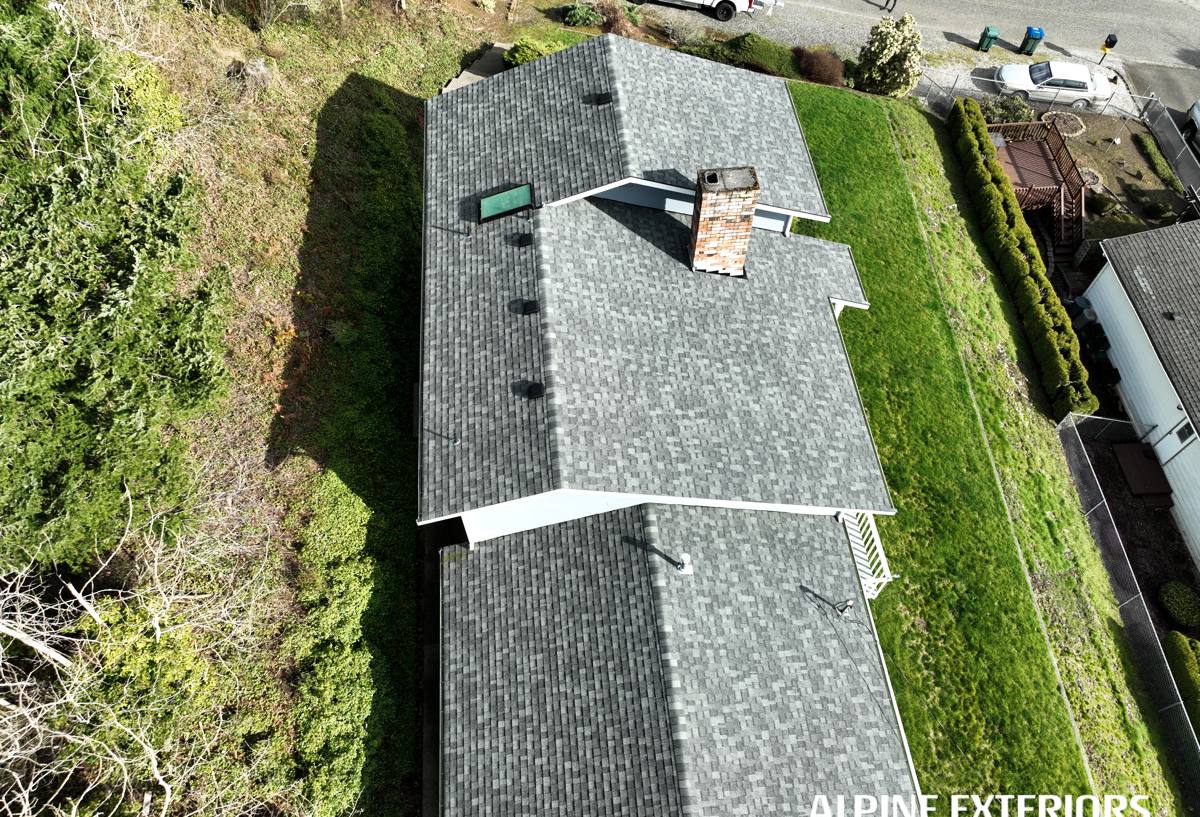
What Counts as Storm Damage (and What Doesn't)
Not every roof problem that shows up after a Whatcom County storm is actually storm-caused, and it matters which one you're dealing with — for your budget and for any insurance claim.
Storm-caused damage typically looks like:
- Shingles lifted, cracked, or torn loose by wind gusts, often on one exposed slope
- Flashing bent or pulled away around chimneys, vents, and roof-to-wall transitions
- Granule loss and bruising from hail or wind-driven debris
- Fresh leaks that appear during or right after a specific storm event, not gradually
- Broken or displaced ridge caps
Pre-existing wear that a storm just exposed:
- Moss and moisture damage that's been building under shingles for one or more seasons
- Nail pops and worn sealant strips from age, not wind
- Flashing that was undersized or poorly installed to begin with
- Gutter and downspout failures from years of needle and leaf buildup
Both categories need attention, but they get handled differently. Storm damage often qualifies for an insurance claim. Long-term wear is a maintenance and repair conversation. Part of our job on the first visit is telling you honestly which one you're looking at, not just handing you a bid.
How We Inspect a Storm-Damaged Roof
A rushed inspection is how homeowners end up paying twice — once for a patch that misses the real source of the leak, and again a few months later for the repair that should have happened the first time. Our process is straightforward:
- Exterior walk of the whole roof, not just the area you reported — wind damage on one slope is often a sign to check the others, especially any slope facing the prevailing storm direction.
- Close inspection of valleys, flashing, and penetrations — these are where the vast majority of leaks in this area actually originate, even when the visible damage is elsewhere.
- Attic or interior check when accessible — water staining, damp insulation, and daylight through the decking tell us things the surface can't.
- Moss and moisture assessment — if moss has been established for a while, we'll flag it separately, because moss retention is an ongoing risk factor, not a one-time fix.
- Written findings with photos — what's storm-related, what's pre-existing wear, and what we'd recommend, in plain language, before any work starts.
Repair vs. Full Re-Roof: How We Decide
Most storm damage calls in Happy Valley end up being a repair, not a re-roof. But there are honest limits to what a repair can fix well, and we'll tell you when you're at that point instead of stretching a patch past its useful life.
| Situation | Repair usually makes sense | Re-roof usually makes sense |
|---|---|---|
| Roof age | Under 15-18 years, asphalt in generally sound condition | Nearing or past expected lifespan, widespread granule loss |
| Extent of damage | Isolated to one slope, valley, or penetration | Multiple slopes affected, or damage plus significant moss/moisture history |
| Underlying decking | Solid, no soft spots when checked | Soft, delaminated, or water-stained decking found during inspection |
| Insurance scope | Claim covers targeted slope or section repair | Adjuster scope includes full roof replacement |
The honest answer is that a well-executed repair, done with matching materials and proper flashing detail, can add years of reliable service to a roof that isn't ready for full replacement. We won't push a re-roof on a roof that doesn't need one — but we also won't quietly patch over decking damage that's going to keep causing problems.
What a Correct Storm Repair Actually Involves
A quick shingle swap without addressing the surrounding flashing and underlayment is the most common shortcut we see undone. For a repair to actually hold through the next Whatcom County storm season, it needs to include:
- Matching shingle profile and color where possible, so the repair doesn't stand out or create a mismatched water-shedding pattern
- Full flashing inspection at the repair site — reused flashing that's already bent or corroded is a callback waiting to happen
- Underlayment check beneath the damaged area — if wind got under the shingles, it likely got under the underlayment too
- Proper nail pattern and sealant on every replaced shingle, not just the ones visible from the ground
- Debris and moss clearing around the repair so water sheds away from the fixed section instead of pooling against it
A note on moss
Because moss retention is a real factor on shaded, tree-lined roofs around Sudden Valley, we treat moss removal as part of a thorough storm repair when it's present near the damage, not as a separate upsell. Moss holding moisture against shingles right next to a repair undermines the work you just paid for.
Insurance Claims: What to Expect
Wind and storm damage is one of the more common categories homeowners' insurance actually covers, but the process goes smoother when you understand your role in it.
- Document before you touch anything. Photos of visible damage, from the ground, before any tarping or repair work begins.
- Get a professional inspection promptly. Insurers want to see damage addressed and mitigated in a reasonable timeframe, not left to worsen.
- Temporary protection if needed. Tarping an active leak is standard practice and typically expected by adjusters — it prevents secondary interior damage.
- We can walk your roof with your adjuster or provide our own written scope and photos if a joint visit isn't scheduled, so there's a clear, independent record of what's storm-related.
- Compare scopes. If the adjuster's scope misses damage we documented, that's worth raising before the claim is finalized — we'll point out what we found either way.
We're not a public adjuster and don't negotiate your claim for you, but we'll give you an honest, detailed written assessment you can use in that conversation.
Signs You Need a Storm Roof Inspection
- Missing, curled, or visibly lifted shingles anywhere on the roof
- Granules collecting in gutters or at downspout outlets after a storm
- A new water stain on a ceiling or wall following high wind or heavy rain
- Daylight visible through the roof deck from inside an attic
- Flashing that looks bent, separated, or missing around a chimney or vent
- A noticeable increase in moss or dark streaking on shaded slopes
- Debris — branches, needles, or shingle fragments — pooled in a valley or against a wall
If you're seeing more than one of these, it's worth a call before the next storm system moves through, not after.
Why a Crew That Already Works Happy Valley Matters
Storm repair work isn't just about ladders and shingles — it's about recognizing the difference between fresh wind damage and moss-driven decay you'll find all over roofs in this part of Whatcom County, because both can look similar from the ground. A crew that's spent time on roofs around Sudden Valley knows which slopes tend to take the worst of a southwesterly storm, how long moss typically has to sit before it starts compromising a shingle seal in this climate, and what flashing details hold up against salt-tinged, moisture-heavy air versus what fails in a season or two.
That local pattern recognition is what keeps a repair from becoming a repeat visit. It's also why we'd rather tell you a repair will hold for years than sell you a re-roof you don't need yet — or the other way around, when the decking underneath tells a different story than the shingles on top.
What Reliable Storm Repair Looks Like Long-Term
A properly done storm repair should get you through several more Pacific Northwest storm seasons without needing to think about that section of roof again. That depends on matched materials, correct flashing work, and addressing moss or moisture issues in the same visit rather than leaving them for later. It also depends on realistic advice about whether a repair is still the right call or whether the roof has reached the point where patching keeps costing more than it saves.
If a recent storm left you with lifted shingles, a new leak, or damage you're not sure how to categorize, we're happy to take a look and give you a straight answer — no pressure, no upsell, just what we actually find. Fill out the form below for a free estimate and we'll get a local crew out to your Happy Valley property.