 Sudden Valley Siding
 Windows Built for the South Hill Stretch of Sudden Valley
Homes in the South Hill area deal with a specific combination of weather that a lot of window products and installers simply aren't set up to handle well: salt-laden air off the water, wind-driven rain that hits window assemblies from angles a standard install doesn't plan for, and a long stretch of the year where moss, algae, and constant damp sit against every exterior surface that doesn't drain and dry properly. Windows are one of the most failure-prone parts of a house in this kind of climate, because they combine a lot of seams, sealant, and moving parts in one assembly. Get the product or the install wrong and you're not just looking at drafts — you're looking at rot in the framing around the window, fogged glass units, and trim that stays soft and green half the year.
This page is about what a correct custom window job looks like specifically for South Hill homes in Whatcom County, not a generic rundown of window styles. If you're comparing quotes or just trying to understand what you're paying for, this should help.
What "Custom" Actually Means Here
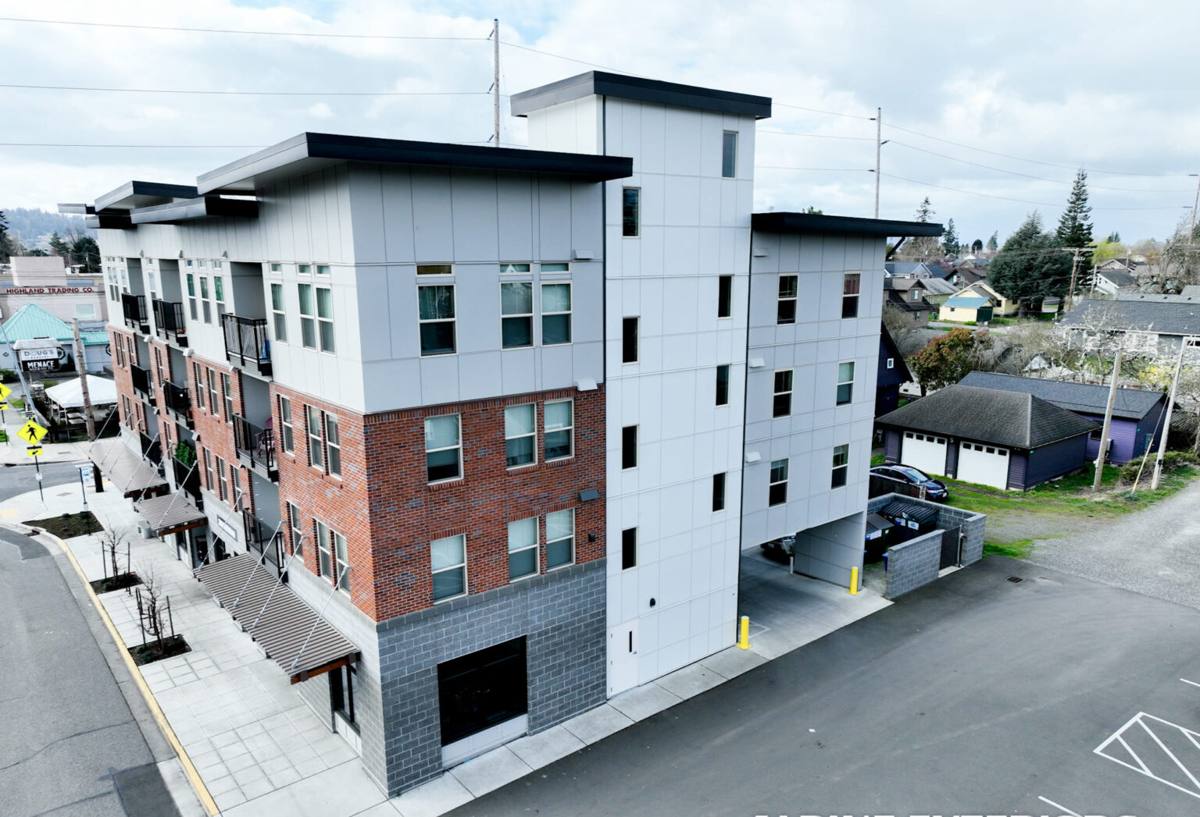
"Custom windows" doesn't mean fancy shapes or unusual glass — most of the time it means windows built to the exact rough opening of an older home rather than forcing a stock size to fit. Whatcom County has a lot of housing stock from different decades, and rough openings are rarely standard. A custom window order means:
- Exact measurements taken from the actual opening, not assumed from a catalog size
- Frame material and glass package chosen for the specific exposure of that wall (south/west walls facing weather need different consideration than sheltered north-facing walls)
- Trim and cladding details matched to the home instead of a one-size flashing kit
- Correct allowance for expansion, settling, and the flashing/sealant sequence around the new unit
Custom-built windows cost more upfront than stock replacements. The reason to spend the money in a climate like this is that a properly sized unit seals correctly the first time and doesn't rely on gap-filling caulk to make up for a poor fit — caulk is a maintenance item, not a structural seal, and in this climate it fails faster than people expect.
Why Fit Matters More Here Than in Drier Climates
In a dry climate, a slightly imperfect window fit is mostly an energy-efficiency problem. Here, it's a moisture-intrusion problem. Wind-driven rain will find any gap and push water into it under pressure, not just let it sit and evaporate. A window that's slightly undersized for its opening and shimmed with extra sealant is a slow leak waiting for the right storm.
What South Hill's Climate Does to Windows Over Time
| Climate Factor | Effect on Windows | What It Requires |
|---|---|---|
| Salt air | Corrodes exposed hardware, pits and dulls untreated metal frames and fasteners | Corrosion-resistant hardware and fasteners; frame materials suited to coastal exposure |
| Driving/wind-driven rain | Pushes water past standard sealant lines and under trim if flashing is incomplete | Full flashing system (not just caulk) with proper water-shedding laps |
| Long moss/damp season | Keeps wood trim and sills wet for extended periods, feeding rot and organic growth | Sloped sills, drainage gaps, and moisture-tolerant trim materials or coatings |
| Temperature swings | Causes expansion/contraction that can open small gaps in poorly sealed units over years | Correct sealant type and joint design that flexes instead of cracking |
What a Correct Installation Involves
Before the Window Ever Goes In
Most window failures we get called out to fix aren't the window's fault — they're the opening's fault. Before a new custom window goes in, the opening needs to be checked for existing rot or moisture damage, and any compromised framing needs to be dealt with first. Installing a good window into a bad opening just hides the problem behind new trim for a while.
Flashing and Sealing
This is the part that separates a window that lasts from one that leaks in five years. A correct install uses a layered flashing approach — sill pan, side flashing, and head flashing installed in the right sequence so water is directed out and down, not trapped behind the window. Sealant plays a supporting role, not the main one. In a climate with this much wind-driven rain, we don't consider a job finished until the water-management layer is right, not just the visible trim.
After Installation
Once the window is set, sealed, and trimmed, we check operation (smooth open/close, tight seal when latched) and confirm sightlines and reveals are even. A rushed install often shows up first as a window that's slightly out of square — hard to notice from across the room, but it stresses the seal over time.
Choosing Frame Materials for This Climate
There's no single "best" frame material for every home — the right choice depends on exposure, maintenance appetite, and the look of the house. Here's how the common options actually perform in a salt-air, high-rain environment:
| Frame Material | Coastal/Moisture Performance | Maintenance | Trade-offs |
|---|---|---|---|
| Vinyl | Doesn't corrode or rot; handles moisture well | Low — occasional cleaning | Fewer color options; can look less traditional on older homes |
| Fiberglass | Very stable in temperature swings and moisture; strong | Low | Higher upfront cost |
| Wood (clad or unclad) | Classic look, but exposed wood is vulnerable to the long damp season here | High if unclad; moderate if clad | We generally recommend clad wood or an alternative for direct-weather exposures in this area — bare wood sills and trim need real upkeep to avoid rot |
| Aluminum | Strong but conducts cold and can be prone to condensation; hardware needs corrosion resistance near salt air | Moderate | Best reserved for specific architectural needs rather than general replacement |
Our standard practice is to steer homeowners away from unclad wood on exposed, weather-facing walls in this area — not because wood windows are a bad product, but because the maintenance burden of keeping bare wood sealed against this much sustained moisture is more than most homeowners want to keep up with. If the look of wood matters to you, a clad option gives you that appearance with a lot less upkeep.
Glass Packages: What's Worth Paying For
South Hill homes benefit from double- or triple-pane glass with a low-E coating, mainly for two reasons: it cuts down on condensation on the interior side of the glass during cold, damp stretches, and it reduces heat loss during the shoulder seasons when the marine layer keeps things cool and wet. Argon or krypton gas fill between panes adds a little more insulating value but matters less than getting the frame and installation right — a great glass package in a poorly sealed frame still lets in air and water at the edges.
Our Process for South Hill Jobs
- On-site assessment: We look at existing window condition, framing, and any signs of past moisture intrusion before quoting anything.
- Measurement and product selection: Exact rough-opening measurements and a frame/glass recommendation based on that wall's actual sun and weather exposure.
- Written estimate: Clear line items — no vague "materials and labor" lump sum with no breakdown.
- Removal and opening inspection: Old window comes out, and we check the framing underneath before anything new goes in.
- Flashing, install, and seal: Full water-management sequence, not just caulk-and-trim.
- Final check and walkthrough: Operation, seal, and appearance confirmed with you before we consider the job done.
Signs South Hill Homeowners Should Watch For
- Fogging or moisture between panes (failed seal on an insulated glass unit)
- Soft or discolored trim/sill wood around a window frame
- Visible gaps or daylight around the frame edges
- Drafts near the window even when it's fully latched
- Difficulty opening, closing, or latching a window that used to operate smoothly
- Moss or persistent green growth on sills or exterior trim
- Peeling paint or bubbling finish near the window perimeter
Any one of these on its own might be minor. Two or more on the same window usually means water is getting past the seal, and it's worth having someone look at it before the next storm season rather than after.
Why Local Experience Matters for This Job
A window installer who mostly works inland or in drier parts of Washington may do fine work by the book and still under-build the flashing detail for what South Hill actually gets thrown at it. Crews who work Whatcom County's water-adjacent neighborhoods regularly get a feel for which walls take the worst of the wind-driven rain, how fast moss establishes on north-facing trim, and where salt air does the most damage to hardware over time. That's not something you can fully substitute with a product spec sheet — it comes from doing the work in this specific environment repeatedly.
Get a Straight Answer on What Your Home Needs
If you're not sure whether your windows need full replacement, targeted repair, or just better sealing and maintenance, we're happy to take a look and give you an honest read — including telling you if replacement isn't necessary yet. Request a free, no-pressure estimate using the form below and we'll walk through your options for your specific home and exposure.