 Sudden Valley Siding
 Why Silver Beach Needs Siding Built for This Specific Climate
Silver Beach sits in one of the wetter, greener pockets of Whatcom County, and the siding on these homes works harder than siding in drier parts of the state. Between salt-laden air moving in off the water, driving rain that comes in sideways during fall and winter storms, and a moss season that can stretch for months, exterior materials here are under near-constant moisture pressure. Add the tree cover and shade that keep siding damp longer after a storm passes, and you have a climate that punishes anything that isn't dimensionally stable or properly finished.
This isn't a generic "Pacific Northwest is wet" observation — it's specific to how siding actually fails around here. Wood-based products swell and cup where moisture sits against them. Vinyl gets brittle in prolonged UV exposure between storms and can warp near dark colors. Paint film on site-finished products chalks and peels faster where algae and moss spores have a constant foothold. A siding system for a Silver Beach home needs to shed water fast, resist moss and mildew growth on its surface, and hold its finish without repainting every few years.
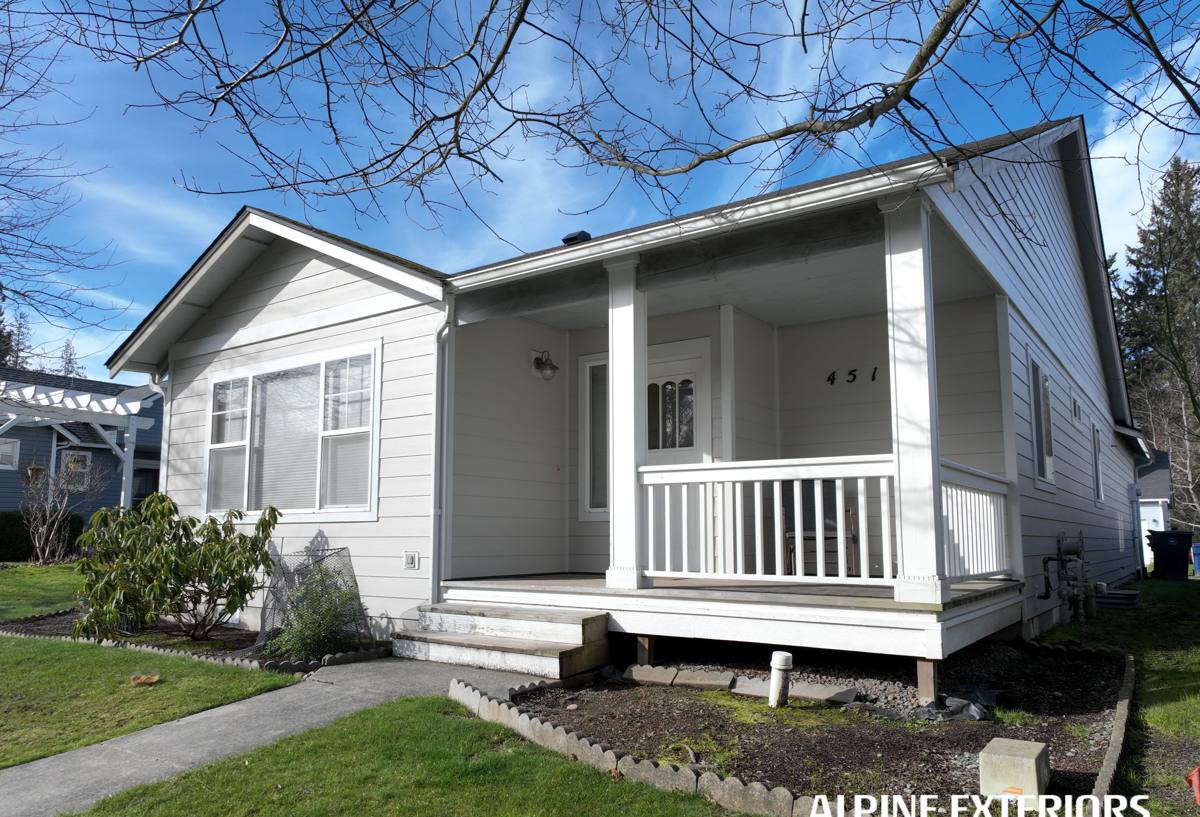
What a Correct Fiber Cement Job Has to Get Right Here
Fiber cement siding is not a set-it-and-forget-it product just because it's cement-based. It performs well in this climate specifically because of how it's engineered and how it's installed — get either wrong and you inherit moisture problems the material was supposed to prevent.
Moisture Management Behind the Siding
The siding itself is only half the system. Behind every board there needs to be a proper weather-resistive barrier, correctly lapped and taped, with flashing at every window, door, and horizontal transition. In a location that sees sustained wind-driven rain, any gap in that drainage plane becomes a place for water to work its way into the wall assembly, where it can sit against sheathing for weeks in a Whatcom County winter.
Clearances and Ventilation
Fiber cement siding needs consistent clearance from grade, roof lines, decks, and hardscaping — typically a minimum gap that lets water drain and air circulate instead of wicking moisture straight into the bottom edge of the boards. Homes near mature landscaping or heavy shade, which describes a lot of Silver Beach lots, need this even more than homes in open sun, because the siding simply doesn't dry out as fast between storms.
Moss and Algae Resistance at the Surface
This is where the factory finish matters as much as the substrate. A baked-on factory finish resists the kind of surface staining that shows up first as green-black streaking on north-facing walls and under eaves — exactly the areas that stay damp longest through a Whatcom moss season.
Why We Install Only James Hardie Fiber Cement
We don't install LP SmartSide, vinyl, primed wood, cedar, or other fiber cement brands like Allura or Cemplank. That's a deliberate standard, not a sales pitch. James Hardie's fiber cement is non-combustible, dimensionally stable in wet-dry cycling, and available in climate-engineered HZ formulations built for exactly the moisture exposure a place like Silver Beach deals with every year. The factory-applied ColorPlus finish is baked on under controlled conditions, which gives it far better fade and moss resistance than a field-painted product, and it carries a real, transferable warranty backing both the substrate and the finish.
We'd rather turn down a job than install a product we don't believe will hold up on a home in this climate for the long term. That's the whole reason we standardized on one manufacturer instead of offering a menu of siding brands.
What Correct Installation Looks Like, Step by Step
Tear-Off and Substrate Inspection
Old siding comes off down to the sheathing so we can actually see what's underneath. In older Silver Beach homes this step regularly turns up soft sheathing, rotted trim, or evidence of past water intrusion around windows — problems that get fixed before a single new board goes up, not covered over.
Weather Barrier and Flashing
A new weather-resistive barrier goes on with proper overlaps, and flashing is installed or replaced at every penetration: windows, doors, hose bibs, light fixtures, and any horizontal trim transitions. This is the step that determines whether the wall stays dry through the next twenty winters of driving rain.
Fastening and Fit
James Hardie siding has specific fastening patterns, nail spacing, and clearance requirements that vary by product line and exposure. Installing it like standard lap siding — nailing too tight, skipping clearances, butting boards directly to trim — voids the warranty and creates the exact moisture traps the product was designed to avoid.
Caulking, Painting Touch-Up, and Trim
Factory-finished boards need minimal field painting, but cut edges and any touch-up areas get sealed and color-matched properly. Caulk joints are placed only where they belong — over-caulking a fiber cement installation can trap moisture instead of shedding it.
Our Process for Silver Beach Projects
- On-site inspection and estimate — we look at existing siding condition, trim, flashing, and any moisture damage before quoting anything.
- Product and color selection — choosing the right Hardie product line and ColorPlus color for the home's exposure and style.
- Prep and scheduling — timed around Whatcom County's weather windows to avoid installing during extended wet stretches when possible.
- Tear-off, repair, and installation — following manufacturer fastening and clearance specs at every step.
- Final walkthrough — checking trim, caulk lines, and clearances before calling the job done.
Choosing the Right Hardie Product for This Neighborhood
Not every Hardie product line fits every home. Here's how the common options compare for a Silver Beach property dealing with rain and shade exposure:
| Product Line | Typical Use | Why It Fits Here |
|---|---|---|
| HardiePlank Lap Siding | Full wall replacement, most common choice | Traditional lap profile sheds water well; available in HZ5 climate formulation for this region |
| HardiePanel Vertical Siding | Accent walls, gables, modern styling | Fewer horizontal joints where water can collect on shaded elevations |
| HardieShingle | Accent areas, dormers | Matches a Northwest craftsman look while keeping the same moisture performance |
| HardieTrim | Corners, window and door trim | Pairs with the siding for consistent finish and moisture detailing at transitions |
We help you match product line and color to the specific exposure of your walls — a north-facing, shaded elevation near tree cover may warrant different detailing than a wall that gets more direct sun and wind.
Cost Factors for a Silver Beach Siding Project
Every home is different, but the same handful of factors drive cost up or down on most projects in this area:
| Factor | Why It Matters |
|---|---|
| Existing siding removal | Multiple layers or damaged sheathing add labor and repair costs |
| Home size and wall complexity | More corners, gables, and trim details mean more cutting and detail work |
| Product line and profile | Panel vs. lap vs. shingle accents affect material and labor |
| Trim and flashing scope | Full trim replacement costs more than reusing sound existing trim |
| Access and site conditions | Sloped lots, mature landscaping, and limited access near the water can add time |
We give a firm, itemized number after seeing the home in person — not a phone estimate — because these factors vary too much house to house for a rough number to mean anything.
Why a Crew That Already Works Silver Beach Matters
A contractor who works this specific area regularly knows what shows up on these homes before they even start tearing off siding: where moisture tends to collect on shaded walls, how the moss season affects scheduling, and what permitting and inspection expectations look like in Whatcom County. That familiarity shows up in fewer surprises mid-project and fewer callbacks after. It's a different level of preparation than a crew driving in from out of the area for a one-off job.
After Installation: What Keeps Fiber Cement Siding Performing Here
- Rinse siding annually to clear pollen, dust, and early moss growth before it takes hold
- Keep gutters clean so overflow doesn't run down wall surfaces
- Trim back landscaping that keeps siding shaded and damp longer than necessary
- Inspect caulk lines around windows and trim yearly and re-seal if cracked
- Watch for any staining or streaking under eaves — an early sign of moisture sitting against the surface
- Address any impact damage or chips promptly to keep the factory finish's protection intact
If you're weighing siding options for a Silver Beach home, we're happy to take a look and walk you through what we'd actually recommend for your walls, your exposure, and your budget — no pressure, no obligation. Use the form below to request a free estimate.