 Sudden Valley Siding
 Why Siding Wears Differently Around Lake Whatcom
Homes on and near Lake Whatcom deal with a moisture load that a lot of siding was never engineered for. The lake itself keeps humidity higher through the shoulder seasons, the surrounding tree canopy holds shade and damp air against north- and east-facing walls, and Whatcom County's marine climate — the same weather system that pushes damp air in off Bellingham Bay — means long stretches where siding simply doesn't get a chance to dry out between rain events. Add wind-driven rain funneling across open water during fall and winter storms, and you get siding that's under near-constant moisture pressure for months at a time.
The result is predictable: moss and algae establish on shaded walls and under eaves faster here than in drier parts of the county, caulk joints and seams take on water sooner than the manufacturer's spec sheet assumes, and wood-based or wood-fiber siding products start to swell, delaminate, or soften years ahead of their rated lifespan. None of this means siding is a lost cause around the lake — it means the material and the installation both have to be matched to the actual conditions, not to a generic climate zone.
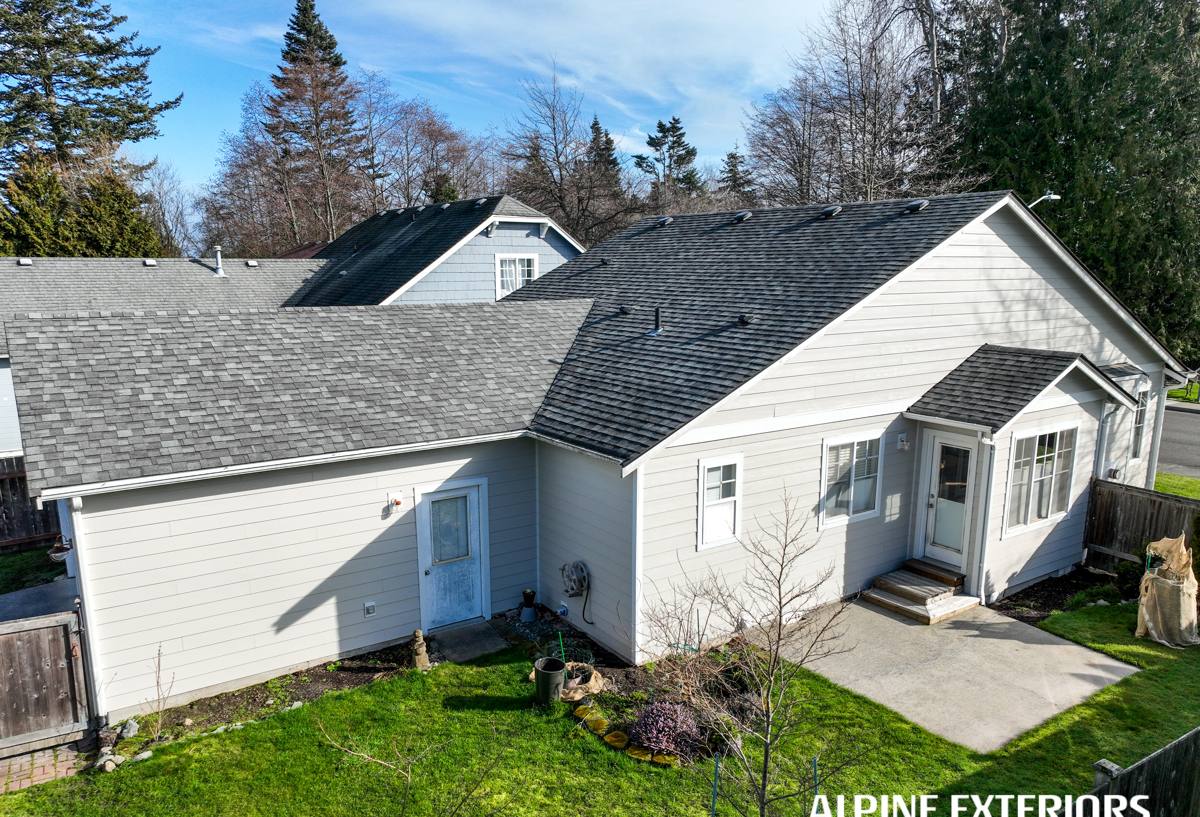
Signs a Lake Whatcom Home Needs Replacement, Not Repair
Repair makes sense when the damage is isolated — a cracked board, a failed piece of trim, a spot where a downspout has been dumping water in one place. Replacement is the honest answer when the problems are systemic:
- Soft or spongy spots in more than one or two boards, especially on shaded or lake-facing walls
- Moss or dark streaking that returns within a season or two of cleaning
- Paint that's failing uniformly across the house rather than in one weathered section
- Visible gaps at seams and butt joints where caulk has pulled away and not been maintained
- Siding installed directly against wet-prone areas — under heavy tree cover, near sprinkler overspray, or on the lake-facing elevation — showing wear well ahead of the rest of the house
If two or more of these show up at once, patchwork repair is usually just deferring the cost, not avoiding it. A full replacement lets you fix the moisture path, not just the symptom.
What a Correct Siding Replacement Involves
It Starts Under the Siding, Not At It
The siding itself is the least interesting part of the job from a durability standpoint. What actually determines whether a Lake Whatcom home stays dry for the next 30-plus years is what's behind it: a properly lapped weather-resistive barrier, correctly flashed window and door openings, and a drainage plane that gives incidental moisture somewhere to go instead of trapping it against the sheathing. On a home that's been sitting under lake-effect humidity and tree shade for years, we routinely find sheathing damage that the old siding was hiding — that has to be addressed before a single new board goes up.
Then the Material Choice
Once the substrate is right, the material has to be able to handle sustained damp exposure without becoming the next generation's moisture problem. That's the whole reason we standardized on one product line rather than offering a menu of options — more on that below.
Why We Only Install James Hardie Fiber Cement
We get asked fairly often why we don't offer vinyl, LP SmartSide, cedar, or other fiber cement brands like Cemplank or Allura. The honest answer is that around a shaded, humid lake environment, those products each carry a trade-off we're not willing to put our name behind.
Vinyl is inexpensive and low-maintenance in dry climates, but it expands and contracts with temperature swings, and in prolonged wet-shade conditions moss and mildew take hold in its seams and J-channels in ways that are hard to clean without damaging the panel. Cedar is genuinely beautiful and has real fans, but it's a wood product — it needs ongoing sealing and refinishing, and in a high-humidity, low-sun-exposure spot like a lake shoreline, that maintenance schedule gets demanding fast. LP SmartSide and primed spruce products are engineered wood — better than raw lumber, but still wood at the core, and wood-fiber cores are exactly the thing that degrades fastest when moisture sits against a wall for weeks at a time. Other fiber cement brands aren't bad products, but we don't have the same track record, factory finish system, or warranty structure with them that we have with Hardie.
James Hardie fiber cement is non-combustible, engineered specifically for Pacific Northwest-style wet climates through its HZ5 product line, and finished at the factory with ColorPlus — a baked-on finish that holds color and resists the fading and chalking that field-applied paint goes through faster in shaded, damp conditions. It doesn't have a wood core to swell or rot, moss and algae have far less to grip onto than on wood grain textures, and the warranty is transferable if you sell the house. For a lake-shore climate, it's the product we're comfortable standing behind long-term — which is why it's the only one we install.
| Factor | Vinyl | Cedar | LP SmartSide | James Hardie Fiber Cement |
|---|---|---|---|---|
| Moisture/rot resistance in shaded, damp conditions | Moderate — seams trap moisture | Low — wood core needs upkeep | Moderate — engineered wood core | High — cement core, no organic material to rot |
| Moss/algae resistance | Moderate | Low | Moderate | High |
| Finish longevity | Can fade/chalk | Needs periodic refinishing | Needs periodic repainting | Factory ColorPlus finish, long fade resistance |
| Fire resistance | Combustible | Combustible | Combustible | Non-combustible |
| Typical maintenance | Occasional washing | Sealing/staining every few years | Repainting on a cycle | Occasional washing, minimal repainting |
Our Process for a Lake Whatcom Replacement
Assessment
We start by walking the exterior with you, checking moisture readings on suspect walls, and identifying which elevations are taking the worst of the lake-driven wind and shade. This tells us where the substrate is likely compromised before we ever open a wall.
Tear-Off and Inspection
Old siding comes off in sections so we can inspect sheathing and framing as we go, rather than discovering rot after the new siding is already up. Anything soft or water-damaged gets repaired or replaced — this is not an optional add-on, it's the part of the job that actually protects the house.
Weather Barrier and Flashing
We install a continuous weather-resistive barrier with proper shingle-lap sequencing, and flash every window, door, and penetration so water is directed out and down, never behind the cladding. This step matters more here than almost anywhere else in the county, given how much of the year this area spends wet.
Installation
James Hardie panels or lap siding go up to manufacturer spec — correct fastener pattern, proper clearances at grade and roofline, and factory-mitered or properly caulked joints. Installation quality is what determines whether a fiber cement product lives up to its 30-plus-year potential or falls short of it.
Final Walkthrough
We walk the finished job with you, check every elevation, and make sure trim, caulking, and paint lines meet the standard we'd want on our own house.
Questions to Ask Any Contractor Before You Sign
- Will you inspect and repair sheathing, not just the siding itself?
- What weather-resistive barrier and flashing details do you use, and can you explain why?
- Are you a manufacturer-certified installer, and does that affect the warranty coverage?
- Do you have experience with lake-shore or heavily shaded properties specifically, not just general siding work?
- Is the warranty transferable if the home sells?
- What's the manufacturer, and why did they choose it over the alternatives?
Why a Crew That Already Works Lake Whatcom Matters
A contractor who's replaced siding across Whatcom County knows the difference between a job in an open, sunny part of town and one on a shaded lake-facing wall that barely dries out from October through April. That experience shows up in small decisions — where extra flashing gets added, which walls get inspected more carefully for hidden rot, how installation is sequenced around wet weather — that a crew unfamiliar with this specific microclimate might not think to make. It's also worth knowing your contractor when the job's done: warranty service, follow-up questions, and future maintenance are all easier with a local crew that's still around and still working in the neighborhood.
What to Expect Cost-Wise
Siding replacement costs vary based on square footage, how much of the substrate needs repair once the old siding comes off, the amount of trim and detail work, and how many elevations are affected. Homes near the lake with significant hidden moisture damage will run higher than a straightforward re-side on a well-maintained house — which is exactly why an accurate estimate has to start with an in-person look, not a phone quote.
If your siding is showing moss, soft spots, or failing paint, we're glad to come take a look and give you a straight, no-pressure estimate — including an honest read on whether repair is still an option or replacement is the smarter move.