 Sudden Valley Siding
 Siding Repair Built for Sudden Valley's Lake Whatcom Microclimate
Homes around Lake Whatcom in Sudden Valley face a combination of conditions that most siding was never designed for. You've got moisture coming off the lake itself, driving rain funneled through the surrounding hills, and a moss season that can stretch from October well into May. Add in the marine-influenced air moving inland from Bellingham Bay and the rest of Whatcom County, and you end up with siding that stays damp longer, dries out slower, and takes on organic growth faster than siding installed thirty miles inland. Repair work here isn't just patching a hole — it's understanding why that hole showed up in the first place.
We work Sudden Valley regularly, and Lake Whatcom siding repair calls tend to follow a pattern: north- and east-facing walls that never see direct sun, lower courses near grade or landscaping that stay wet after every rain, and trim details around windows and eaves where water has been finding its way behind the cladding for years before anyone noticed. A repair that doesn't address the underlying moisture path just buys you a year or two before the same spot fails again.
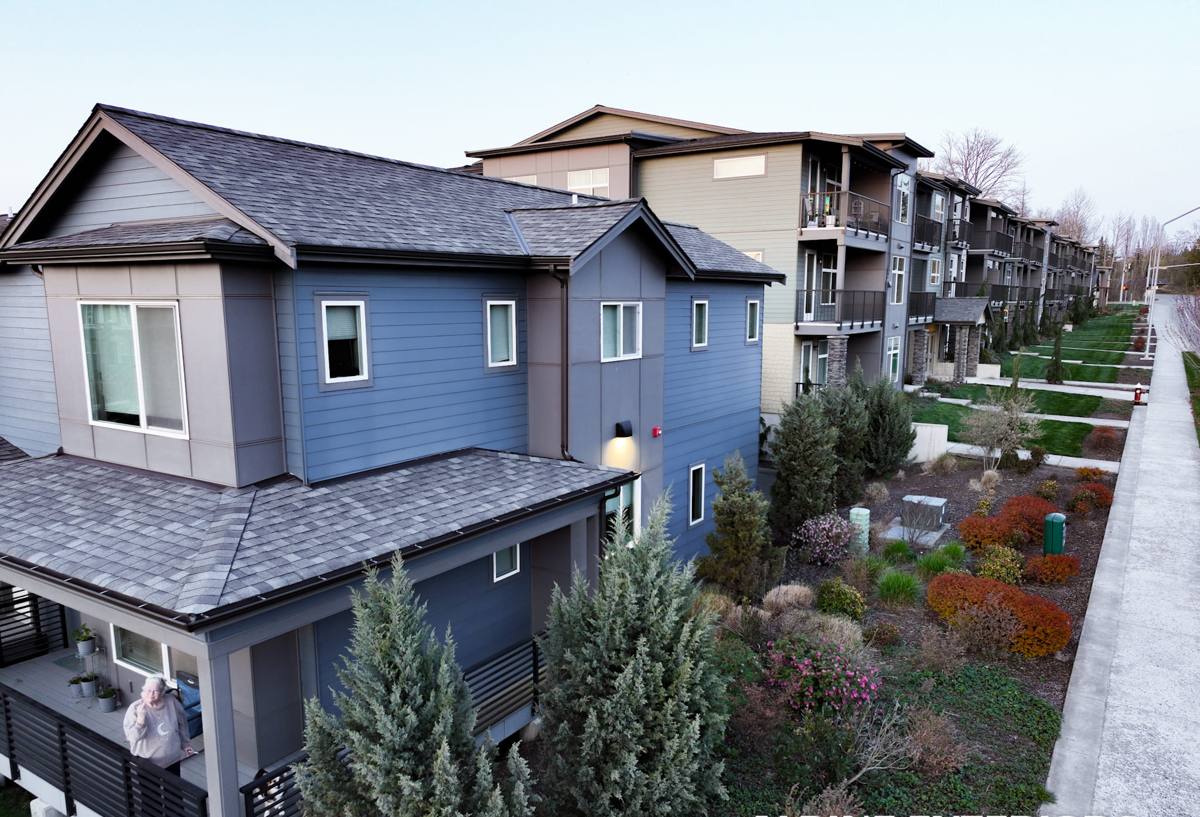
What the Lake Whatcom Climate Does to Siding Over Time
It helps to understand the specific stresses at play, because they determine what a correct repair actually looks like.
Salt Air and Moisture Load
While Sudden Valley isn't coastal in the way a beachfront property is, the broader Whatcom County air carries enough marine moisture that it accelerates corrosion of exposed fasteners, degrades caulk and sealants faster than a dry-climate spec would predict, and keeps wood-based products at a higher moisture content for more of the year. That constant low-grade dampness is the real enemy — it's rarely one big storm that causes failure, it's months of siding that never fully dries.
Driving Rain
Wind off the lake and through the surrounding topography pushes rain sideways into wall assemblies, not just straight down. That means water testing at seams, laps, and butt joints — the places a lot of budget repairs skip — matters more here than in a calmer inland location.
Moss and Organic Growth
Long, wet, shaded seasons are ideal for moss and algae. Beyond the cosmetic issue, moss holds moisture directly against the siding surface, which is exactly the condition that leads to rot in wood-based products and coating failure on lower-quality cement boards.
Where We See the Most Damage
- Bottom courses near grade, decks, and planting beds where splash-back keeps material wet
- Butt joints and seams that weren't properly caulked or flashed at installation
- Window and door trim where caulk has failed and water has tracked behind the cladding
- North- and east-facing walls with limited sun exposure and heavier moss buildup
- Areas around old fastener penetrations (satellite mounts, light fixtures, hose bibs) that were never properly sealed
What a Correct Siding Repair Actually Involves
A good repair is not just swapping a damaged board for a new one. It starts with figuring out why that board failed. In most Lake Whatcom-area repairs, we're looking at three things: the condition of the water-resistive barrier and flashing behind the siding, the moisture content of adjacent boards (a board can look fine and still be saturated), and whether the original installation left gaps, wrong fastener patterns, or missing caulk that let water in over time.
Skipping that diagnostic step is how homeowners end up paying for the same repair twice. If the underlying sheathing or house wrap is compromised, patching the visible board without addressing what's behind it just hides the problem for another season or two.
Our Repair Process
- On-site assessment — we inspect the damaged area and the surrounding field, checking for hidden moisture with a meter where warranted, not just visual damage
- Root cause identification — flashing, caulking, grading, sprinkler overspray, or original installation error
- Removal of affected material — cutting back to sound substrate, not just the visibly damaged section
- Barrier and flashing repair — correcting the water-resistive barrier and flashing detail before any new siding goes on
- Matched replacement — installing James Hardie fiber cement board matched to your existing profile and ColorPlus finish where possible
- Sealing and finish work — proper caulk joints at seams and trim, fastener pattern to manufacturer spec
Why We Repair With James Hardie Fiber Cement Only
We install and repair exclusively with James Hardie fiber cement siding. We don't carry vinyl, LP SmartSide, primed spruce, cedar, or other fiber cement brands, and that's a deliberate standard, not an oversight.
For a climate like Lake Whatcom's — sustained dampness, moss, driving rain — the material matters as much as the workmanship. Fiber cement is non-combustible and dimensionally stable in a way wood-based composites aren't, meaning it doesn't swell, wick moisture, or delaminate the way engineered wood siding can when it stays wet for extended periods. Hardie's ColorPlus factory finish is baked on under controlled conditions, which holds up better against the area's UV and moisture cycling than field-applied paint, and it comes with a stronger warranty structure precisely because the manufacturer trusts the finish process. Hardie also produces climate-engineered HZ product lines built for exactly this kind of wet, marine-influenced Pacific Northwest exposure.
None of that means other products are without merit — vinyl is inexpensive and low-maintenance in mild conditions, and engineered wood has a warmer appearance some homeowners prefer. But given what we see fail in this specific area — moisture intrusion, moss-driven surface degradation, and coating breakdown — we standardized on the one product line that consistently holds up to spec over decades here, and we'd rather turn down a repair job with mismatched material than install something we don't believe will last through another Whatcom County winter.
Repair vs. Replace: How We Help You Decide
| Factor | Repair Likely Makes Sense | Replacement Worth Considering |
|---|---|---|
| Extent of damage | Isolated boards or a single wall section | Damage spread across multiple elevations |
| Age of existing siding | Under 10-15 years, otherwise sound | Original siding nearing or past expected lifespan |
| Underlying moisture barrier | Intact aside from the local failure point | Widespread barrier or sheathing damage found during inspection |
| Material match | Existing profile/color still available or close enough | Discontinued profile makes patch repairs visually obvious |
| Root cause | Isolated flashing/caulk failure, fixable at the source | Systemic issue (grading, drainage, original install quality) |
We'll always tell you honestly which side of that table your home falls on. A lot of the time, a well-executed repair on an otherwise sound wall is the right call. Other times, patching one section of failing siding just delays a fuller project you're going to need anyway — and we'd rather say that upfront than have you pay for repair work twice.
Why a Crew That Knows Lake Whatcom Matters
Siding repair technique doesn't change much from town to town, but judgment does. Knowing which walls in Sudden Valley take the worst of the lake wind, how long moss has typically had to work on a north-facing section before it's reported, and what the local grading and drainage patterns tend to do to bottom courses — that comes from working the area repeatedly, not from a general repair checklist. It affects where we look first, what we test for, and how conservative we are about cutting back damaged material before we're confident we've found the full extent of the problem.
It also matters for logistics. A crew that already works Sudden Valley and the surrounding Lake Whatcom communities can typically get to your property faster, sources the right Hardie profile and color match without guesswork, and understands the access and staging realities of lakeside and hillside properties in this area.
Signs Your Siding Needs a Closer Look
- Visible cracking, chipping, or bubbling paint on any wall section
- Soft spots or give when you press on the siding near grade
- Moss or dark staining that keeps returning after cleaning
- Gaps opening up at seams, corners, or trim boards
- Water stains on interior walls near exterior corners
- A musty smell near an exterior wall, especially after rain
If you're seeing any of these, it's worth having someone look at it before the next wet season, not after. Early repair on a small section is a fraction of the cost of addressing rot that's had a full winter to spread.
Get a Free, No-Pressure Estimate
If you're dealing with damaged, aging, or moss-covered siding anywhere around Sudden Valley or Lake Whatcom, we're happy to come take a look, explain exactly what we're seeing, and give you an honest read on repair versus replacement — no pressure, no obligation. Use the form below to request a free estimate.