 Sudden Valley Siding
 Roof Repair Built for Yew Street's Conditions
Homes along Yew Street in Sudden Valley take a specific kind of beating year-round. Salt-laden air off the water, driving rain that comes in sideways during winter storms, and a moss season that seems to stretch longer every year all work against a roof at the same time. None of these on their own is unusual for Whatcom County. Together, on the same roof, year after year, they add up to the kind of wear that a generic repair — patch a shingle, caulk a vent, call it done — doesn't actually fix.
This page is about roof repair specifically for that combination of conditions, on the roofs we already work on in this neighborhood. We're not going to sell you a full tear-off you don't need, and we're not going to hand you a quick patch that fails again by next winter. The goal is a repair that holds up to what this street actually gets thrown at it.
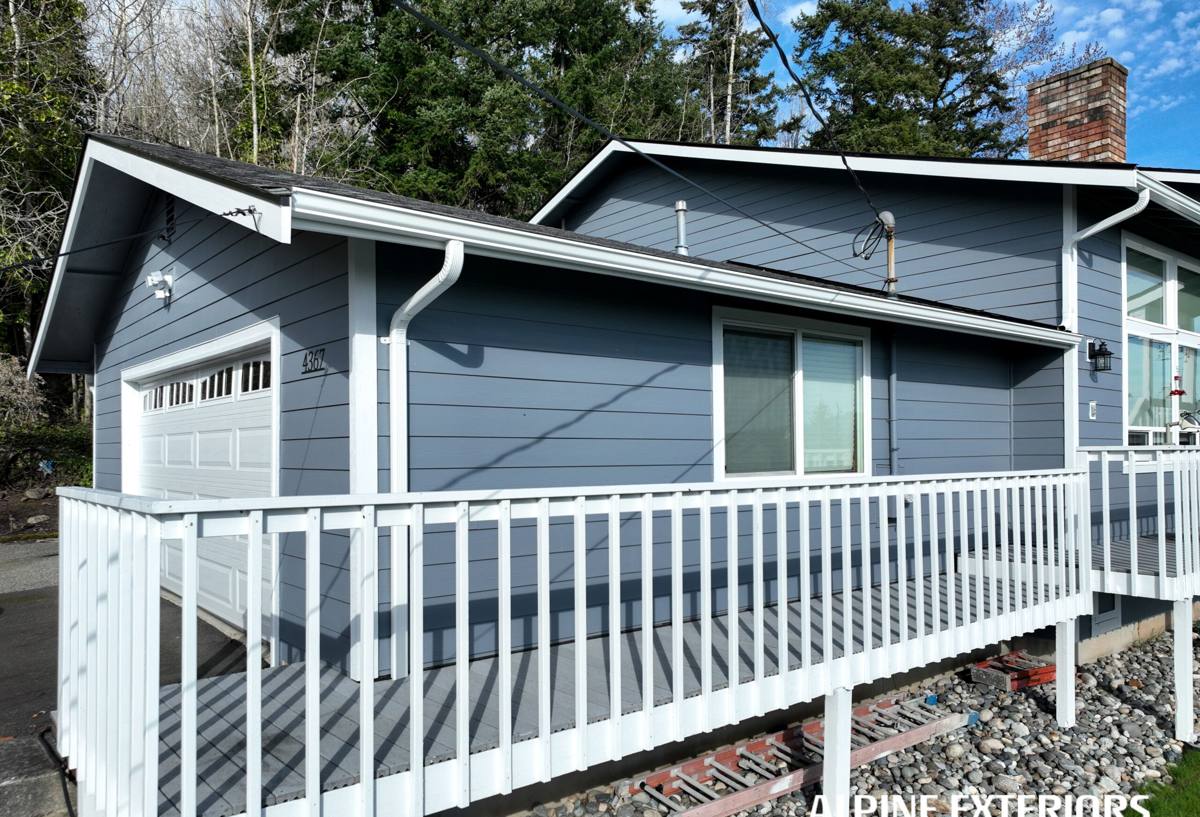
What Sudden Valley's Climate Does to a Roof
Moss and Moisture
Whatcom County's long wet season keeps roof surfaces damp for extended stretches, especially on north-facing slopes and anywhere tree cover blocks direct sun. Moss doesn't just look bad — it holds moisture against the roofing material, works its way under shingle edges, and lifts tabs as it grows. Left alone, a moss mat can shorten the life of an otherwise sound roof by years.
Wind-Driven Rain
Storms coming off the water don't just drop rain straight down — they push it sideways and up under laps, flashing, and fascia that would stay dry in a calm rain. This is where a lot of "mystery leaks" start: water finding its way in through a seam that's fine in normal weather but fails the moment wind gets behind it.
Salt Air and Metal Components
Fasteners, flashing, vents, and gutter hardware near the water corrode faster than the same materials would inland. A repair that ignores this and reuses old or undersized fasteners is a repair that's going to need doing again sooner than it should.
Any honest repair plan for a Yew Street roof has to account for all three of these at once, not treat them as separate problems.
What a Correct Repair Actually Involves
A repair that's done right isn't just about covering the spot where water is currently getting in. It starts with figuring out why it's getting in there in the first place.
- Confirm the actual entry point — leaks often show up on a ceiling or wall well away from where the water is actually entering the roof
- Check the decking underneath for soft spots, rot, or delamination before any new material goes down
- Inspect and, where needed, replace flashing at valleys, chimneys, vents, and wall intersections — flashing failure is behind more leaks than worn shingles are
- Clear moss and organic buildup from the repair area and the surrounding field so the fix isn't undermined by what's growing next to it
- Match shingle or roofing material as closely as possible so the repair doesn't stand out or create a new weak seam
- Re-seal and re-fasten with corrosion-resistant hardware appropriate for a marine-influenced climate
Skip any one of those steps and you've got a patch, not a repair. Patches buy a season or two. A correct repair is meant to last.
Common Issues We See on This Street
Moss-Lifted Shingle Tabs
Moss growing under the butt edge of a shingle physically lifts it, breaking the shingle's seal and giving wind-driven rain a place to get under. This shows up most on shaded, north- or east-facing sections of roof.
Valley and Flashing Leaks
Valleys collect more water than any other part of the roof, and they're where flashing failures do the most damage the fastest. Corroded or improperly lapped valley flashing is one of the more common repair calls in this neighborhood.
Fascia and Edge Rot
Where gutters overflow or moss debris backs up water at the roof edge, the fascia board and the roof deck behind it can start to soften. Caught early, this is a repair. Caught late, it's a structural fix.
Vent Boot Failure
Rubber vent boots dry out and crack faster in this climate than most homeowners expect. A cracked boot is a small, cheap fix — until it's ignored long enough to soak the decking underneath.
Repair vs. Replacement: How We Decide
Not every roof problem on Yew Street needs a full replacement, and not every leak should be treated with a patch. Here's the honest breakdown of how we make that call.
| Factor | Points Toward Repair | Points Toward Replacement |
|---|---|---|
| Age of roof | Under roughly 15–18 years, materials still flexible | Near or past manufacturer-rated lifespan |
| Extent of damage | Isolated to one section or feature | Widespread across multiple slopes |
| Decking condition | Solid, dry, no soft spots | Soft, delaminated, or rotted in several areas |
| Moss/moisture history | First occurrence, addressed early | Repeated moss damage over multiple seasons |
| Shingle granule loss | Localized, surrounding material intact | Widespread, roof looking uniformly worn |
When a roof lands in the "repair" column, we repair it — there's no reason to sell a homeowner a new roof they don't need yet. When the damage or age says otherwise, we'll tell you that plainly and explain why, rather than stack patches on a roof that's past the point where patching makes financial sense.
Our Process for a Yew Street Repair Call
- Inspection. We walk the roof and the attic where accessible, tracing the leak or damage back to its actual source rather than just the visible symptom.
- Assessment and estimate. You get a clear explanation of what's failing, what caused it, and what it takes to fix it correctly — no pressure toward a bigger job than the roof needs.
- Repair. We clear moss and debris from the work area, replace or repair the failed material and flashing, and match it to the surrounding roof as closely as the existing materials allow.
- Weatherproofing check. Before we call it done, we check that the repair holds up against wind-driven rain, not just a straight-down test.
- Follow-up. If anything about the repair doesn't perform the way it should once the next storm hits, we come back and make it right.
Materials We Use and Why
For a repair to blend in and hold up in this climate, material choice matters as much as workmanship. We match existing shingle type and profile wherever possible rather than mixing incompatible products on one roof. For flashing and fasteners, we use corrosion-resistant materials rated for coastal and marine-influenced exposure — standard galvanized hardware corrodes faster here than it does further inland, and we'd rather install the right fastener once than the cheap one twice. Where a roof has a documented moss problem, we'll talk through zinc or copper strip options as a preventive measure, explained honestly: they reduce future moss growth, they don't eliminate the need for periodic cleaning, and they're a maintenance decision, not a magic fix.
Why a Crew That Already Works This Neighborhood Matters
There's a real difference between a contractor seeing a Yew Street roof for the first time and one who already knows what these roofs typically deal with — which slopes hold moss longest, which roof ages and styles are common on this street, and what wind-driven rain does to valleys and flashing in this specific location. That familiarity means fewer surprises during the inspection and a repair plan built around what actually causes problems here, not generic assumptions. It also means we're not guessing at how Whatcom County's weather patterns interact with a given roof design — we've seen it play out on roofs nearby.
Maintenance Checklist Between Repairs
A repair lasts longer when the roof around it is kept up. Between service visits, these are worth checking on your own:
- Clear moss buildup before it forms a thick mat, especially on shaded slopes
- Keep gutters and downspouts clear so water isn't backing up at the roof edge
- Trim back overhanging branches that keep sections of roof shaded and damp
- Look for granules collecting in gutters, a sign of shingle wear worth having checked
- After a major windstorm, do a visual check from the ground for lifted or missing shingles
- Note any new ceiling stains or musty smells in the attic promptly — early catches are cheaper fixes
Get a Straight Answer on Your Roof
If you're dealing with a leak, moss damage, or storm-related wear on a Yew Street roof, we're glad to take a look and give you an honest read on what it needs — repair, not replacement, if that's genuinely the right call. Reach out for a free, no-pressure estimate using the form below.