 Sudden Valley Siding
 Roofing Built for Yew Street's Conditions, Not a Generic Spec Sheet
Homes along Yew Street sit inside the broader Sudden Valley community in Whatcom County, where the roofing challenges are consistent from one house to the next: damp air off the water, long stretches of driving rain through fall and winter, and a moss season that seems to start earlier and last longer every year. A roof that gets installed here needs to be specified and built for those exact conditions, not treated as a one-size-fits-all product swap. When a homeowner on Yew Street calls us about a new roof, we're not guessing at what the roof will face over the next 20-30 years — we already know, because we work this neighborhood regularly.
This page focuses on one thing: full new roof installation for Yew Street homes. Not a repair, not a patch, not a general overview of every service we offer — the actual work of removing an old roof and putting on a new one correctly, in a way that holds up to Whatcom County's climate.
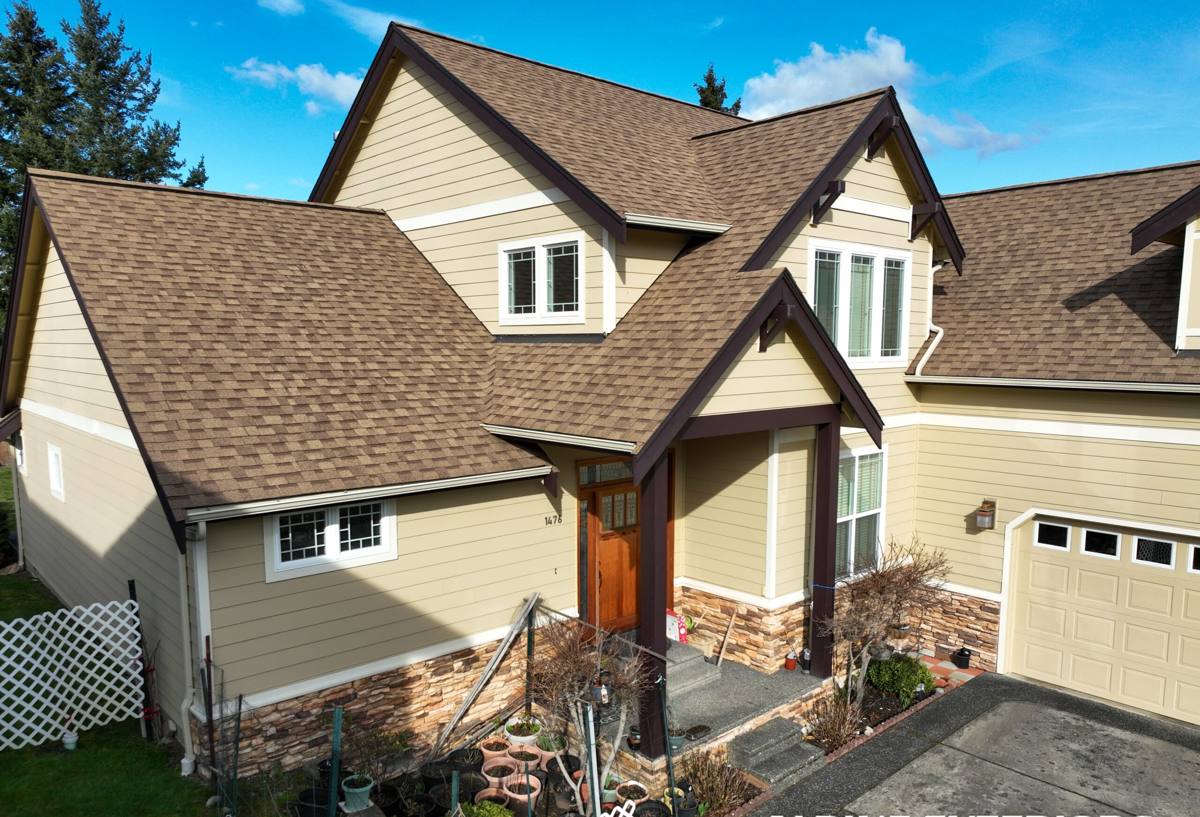
What Whatcom County's Climate Actually Does to a Roof
It's worth being specific about why roofing decisions here are different from roofing decisions in a dry inland climate. Three factors do most of the damage on Yew Street roofs over time:
- Salt air exposure: Airborne salt accelerates corrosion on exposed metal — nails, flashing, vent boots, and fasteners that aren't rated for it will rust and fail years before the shingles around them wear out.
- Driving rain: Wind-driven rain doesn't just fall straight down onto a roof; it gets pushed sideways and upward under shingle edges, around chimneys, and into valleys. A roof that only sheds water well in calm conditions isn't good enough here.
- Extended moss season: Shade, moisture, and moderate temperatures for much of the year create ideal moss conditions. Moss doesn't just look bad — it holds water against the roofing material, lifts shingle edges, and works its way under flashing over time.
None of these are exotic problems. They're the normal, predictable conditions any roof in this part of Sudden Valley has to handle. The difference between a roof that looks fine at year 5 but leaks at year 12, and one that's still tight at year 25, usually comes down to how well the installer accounted for these three things — not the shingle brand on the invoice.
Signs a Yew Street Roof Is Due for Replacement
Repairs make sense for isolated damage. A full replacement becomes the right call when the roof is failing broadly rather than in one spot. Before we recommend a full tear-off and new install, we look for a combination of these signs:
- Shingles that are cupping, curling, or losing granules across large sections of the roof, not just one slope
- Moss growth that has spread into mats rather than a few isolated patches, especially on north-facing or shaded slopes
- Soft spots or sagging when walked on, which usually means the decking underneath has taken on moisture
- Repeated leaks in different locations over successive winters, rather than one recurring spot
- Visible daylight through the roof deck from inside the attic, or damp insulation
- A roof that's already at or past its material's expected service life and showing multiple age-related issues at once
- Flashing around chimneys, skylights, or vents that's rusted, cracked, or was never properly step-flashed to begin with
If a roof is showing two or three of these at once, patch repairs tend to become a cycle of chasing new leaks every wet season rather than solving the underlying problem.
What a Correct New Roof Installation Actually Involves
"New roof" can mean very different levels of work depending on who's doing it. A correct installation on a Yew Street home involves more than laying new shingles over the old ones or matching what was there before. Here's what we consider non-negotiable:
Full Tear-Off, Not an Overlay
We remove the existing roofing down to the deck. This lets us actually inspect the decking, catch hidden rot or soft spots, and start the new roof on a clean, sound surface. Overlaying a new layer on top of failing material just buries the problem and adds weight the structure wasn't necessarily built to carry long-term.
Deck Inspection and Repair
Any decking that's soft, delaminated, or water-damaged gets replaced before anything new goes down. Installing new roofing over compromised decking is one of the most common shortcuts that leads to early failure — the surface can look fine while the material underneath it is already rotting.
Underlayment Suited to Wind-Driven Rain
Given how much of the damage here comes from rain being pushed sideways rather than falling straight, we use synthetic underlayment across the field and self-adhering, waterproof membrane at the eaves, valleys, and other vulnerable transitions — not just the bare minimum required by code.
Flashing Done Right, Every Time
Chimneys, skylights, sidewalls, and roof-to-wall transitions are where most leaks actually start, not in the middle of an open field of shingles. Proper step flashing, counter-flashing, and sealing at these points takes more time than a quick caulk-and-cover approach, but it's where a roof's real lifespan is decided.
Ventilation That Matches the Climate
A roof that can't breathe traps moisture underneath it, which speeds up decking rot and creates ideal conditions for mold and moss to take hold from below as well as above. Balanced intake and exhaust ventilation is part of a correct installation, not an optional upgrade.
Corrosion-Resistant Fasteners and Metal
Because of the salt air exposure common to this area, we use fasteners, flashing, and vent components rated for coastal or near-coastal conditions rather than standard-grade hardware that corrodes faster here than it would inland.
Material Options and What They Trade Off
There's no single "best" roofing material for every home — the right choice depends on budget, roof pitch, how much moss and moisture exposure the specific slopes get, and how long the homeowner plans to stay in the house. Here's an honest comparison of the options we most commonly install or discuss with Yew Street homeowners:
| Material | Typical Lifespan | Moss/Moisture Behavior | Relative Cost |
|---|---|---|---|
| Architectural asphalt shingles | 25-30 years | Good with proper ventilation and periodic cleaning; algae-resistant granules help but don't eliminate moss risk | Lower to mid |
| Standard 3-tab shingles | 15-20 years | More prone to curling and moss anchoring as they age | Lowest |
| Standing seam metal | 40-50+ years | Sheds water and moss very well due to smooth, sloped surface; minimal organic growth | Higher |
| Composite/synthetic shake | 30-50 years | Good moisture resistance; doesn't absorb water like real wood shake | Mid to higher |
We don't push one material as universally correct. For most Yew Street homes, a quality architectural shingle with proper underlayment and ventilation is a solid, cost-effective choice. For homes with heavier shade, steep valleys, or owners planning to stay long-term, metal roofing's resistance to moss and moisture can be worth the higher upfront cost. We'll walk through the real trade-offs for your specific roof rather than defaulting to whatever's easiest to sell.
Our Installation Process
Every new roof we install on Yew Street follows the same sequence, adjusted for the specific roof's pitch, size, and complexity:
- On-site assessment: We inspect the existing roof, attic ventilation, and any problem areas before quoting anything, so the estimate reflects the actual roof rather than a generic square-footage guess.
- Material and scope walkthrough: We go over material options, expected lifespan, and cost trade-offs in plain terms so the decision is yours, with full information.
- Scheduling around weather: Given how much rain this area gets, we plan installation windows carefully and stage materials to minimize the time your roof deck is exposed.
- Full tear-off and deck inspection: Old roofing comes off completely; any deck repairs are identified and addressed before new material goes on.
- Underlayment, flashing, and ventilation installation: The waterproofing and airflow systems go in first — this is the layer that determines how the roof performs in year 10, not just year one.
- Roofing material installation: Shingles, panels, or shakes go on to manufacturer specification, with attention to nailing patterns and exposure rates that affect wind and rain performance.
- Site cleanup: Nails, debris, and old material are cleared from the yard and driveway before we consider the job finished.
- Final walkthrough: We review the completed roof with you, point out anything worth knowing for future maintenance, and provide documentation for warranty coverage.
Moss Prevention Starts With the Installation, Not After It
A lot of moss treatment happens after the fact — power washing, chemical treatments, zinc strips added later. Those things help, but a properly installed roof reduces how much moss problem you have to manage in the first place. Correct ventilation keeps the deck and underside of the roofing material drier, which gives moss less to hold onto from below. Proper flashing and underlayment prevent the small pockets of trapped moisture where moss tends to establish first, especially in valleys and along shaded eaves. If moss control matters to you — and on a shaded Whatcom County lot, it usually should — it's worth discussing zinc or copper strip placement as part of the installation itself, not as an afterthought once the moss has already returned.
Why Hiring a Crew That Already Works Sudden Valley Matters
Roofing crews that don't regularly work this specific area sometimes default to installation practices suited to drier climates — lighter underlayment, standard hardware instead of corrosion-resistant fasteners, or ventilation calculations that don't account for the extra moisture load. Those shortcuts might not show up as problems for a year or two, which is exactly why they're easy to miss during a walkthrough right after installation.
A crew that already works Yew Street and the surrounding Sudden Valley community has already seen how roofs here actually age — which slopes accumulate moss fastest, which flashing details fail first under wind-driven rain, and which materials genuinely hold up versus which ones just look good on a spec sheet. That local track record shapes how we build every new roof, not just the ones we're asked to fix later.
Permits, Timeline, and What to Expect
New roof installations typically require a permit through the applicable Whatcom County building process, and we handle that as part of the job rather than leaving it to the homeowner to sort out. Most single-family home roof replacements can be completed in a matter of days once materials are on-site and weather cooperates, though steeper or more complex rooflines, multiple layers of tear-off, or unexpected deck repairs can extend that. We'll give you a realistic timeline before work starts, and we'll tell you promptly if anything changes once the old roofing comes off and we can see the deck underneath.
A few practical things worth planning around during a roof replacement:
- Vehicles should be moved away from the immediate work area during the project
- Pets are often more comfortable elsewhere during the noisiest days of tear-off
- Attic access may be needed briefly for ventilation work
- Landscaping near the foundation may need light protection from falling debris
- Weather can shift the schedule by a day or two — we'll communicate any changes as early as possible
Warranty and Long-Term Care
A new roof is a long-term investment, and warranty coverage should reflect both the material and the installation work — manufacturer warranties cover defects in the shingles or panels themselves, while our workmanship warranty covers the installation. We'll explain exactly what's covered under each before work begins, in writing, so there's no ambiguity later. After installation, periodic inspection — especially before and after the wettest months — helps catch small issues like a lifted shingle edge or early moss growth before they become bigger problems.
If your Yew Street home is showing signs it's time for a new roof, or you'd simply like an honest assessment of where things stand, we're happy to take a look. Reach out for a free, no-pressure estimate using the form below.