 Sudden Valley Siding
 New-Construction Windows in South Hill: Built for This Climate, Not a Generic One
When a home is being framed from the ground up in South Hill, the windows going into those rough openings only get one first chance to be installed correctly. Unlike a replacement job years later, new-construction windows are tied directly into the house's water and air barrier system — the flashing, the sheathing, the weather-resistive barrier, and the siding all have to work together around them. In this part of Whatcom County, that system has to hold up against driving, wind-driven rain, moisture-laden marine air pushing in off the Sound, and a moss and mildew season that can run most of the year. Get the sequencing wrong at framing stage and you're not fixing a window — you're fixing a wall.
We install new-construction windows as part of full siding and exterior packages on homes in and around Sudden Valley, and South Hill builds get the same attention: correct products for the exposure, correct flashing order, and a crew that isn't guessing at how this region's weather behaves.
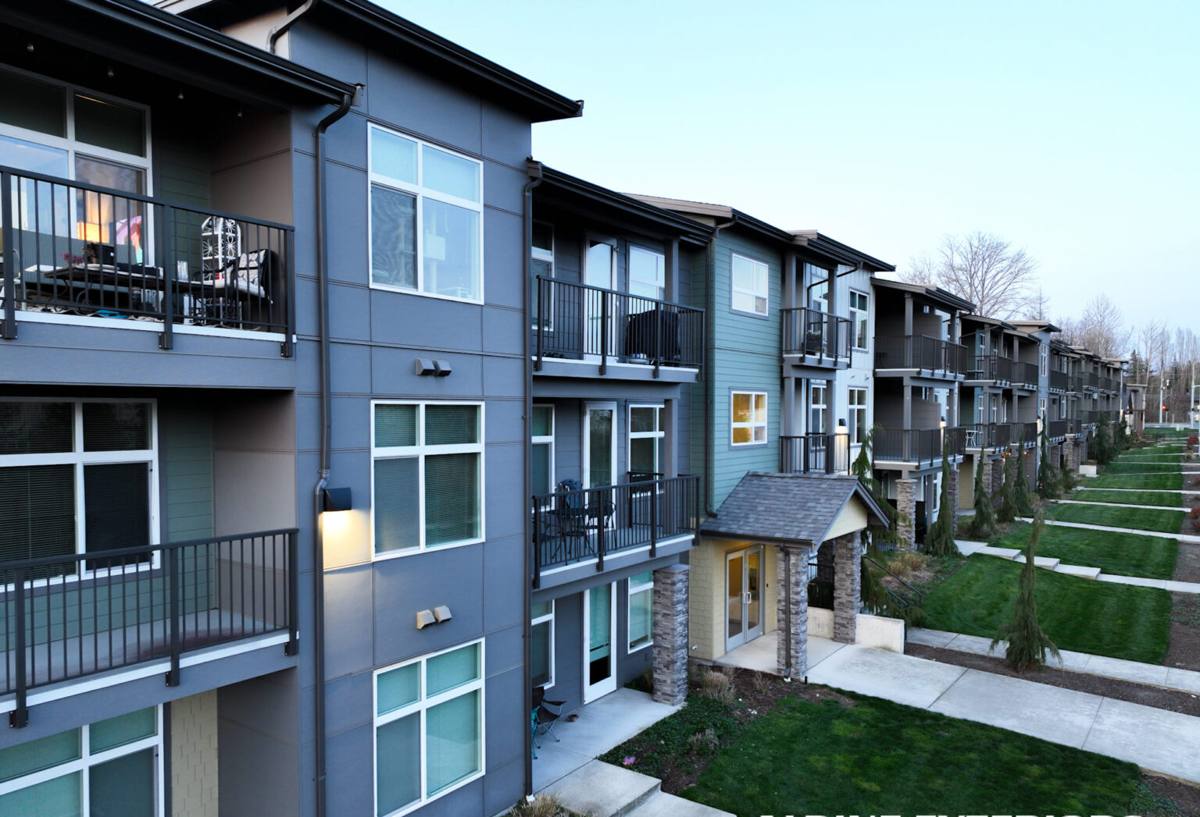
What South Hill's Climate Actually Demands From a Window Package
Driving rain, not just rain
Whatcom County doesn't just get rain — it gets rain pushed sideways by wind off the water, which means water is tested against vertical wall assemblies far more than in drier climates. A window that's simply "watertight" on a spec sheet isn't the same as one that's been flashed to shed wind-driven water at the sill, the head, and both jambs.
Persistent moisture and a long moss season
The extended damp season in this region keeps humidity around framing and siding for months at a time. Any gap in the water-resistive barrier around a window opening becomes an entry point for moisture that doesn't dry out quickly, which is how rot and mold problems start inside wall cavities long before they show up on paint or trim.
Salt-influenced marine air
Even away from the immediate shoreline, the marine air common to this part of the Pacific Northwest carries more moisture and mild salt content than inland climates. Over years, that accelerates corrosion on lower-grade hardware, fasteners, and metal flashing — which is why hardware and flashing material choice matters as much as the window unit itself.
New Construction vs. Replacement Windows: Why the Job Is Different
A lot of homeowners assume "installing a window" is the same task regardless of context. It isn't. New-construction windows have a nailing fin that gets integrated into the wall's water barrier before siding goes on; replacement windows go into an existing, already-sided opening with no fin. The sequencing, the flashing details, and the failure points are different for each.
| Factor | New-Construction Window | Replacement Window |
|---|---|---|
| Installation stage | During framing, before siding/house wrap is finished | After the fact, into an existing finished wall |
| Water management | Flashing integrated with house wrap and sheathing | Relies on existing wall flashing plus sealant at the frame |
| Fastening | Nailing fin fastened directly to sheathing | Frame fastened through existing jambs, no fin |
| Best suited for | New builds, additions, full wall re-sides | Existing homes not undergoing exterior work |
| Room for error if rushed | Higher — mistakes get buried under siding | Lower — issues are more visible and accessible later |
Because a new-construction install gets covered by siding almost immediately, there's no going back to "peek behind" the flashing later without tearing into finished exterior work. That's the core reason this stage of the job deserves a crew that's done it correctly, repeatedly, in this climate.
What a Correct New-Construction Window Installation Involves
Flashing sequence, in order
Water has to be directed down and out, never trapped behind the window. That means sill pan flashing installed first, house wrap or building paper lapped correctly at the jambs, the window set and fastened, then head flashing installed last so it laps over the house wrap above the opening — never tucked under it. Reversing that order is one of the most common causes of hidden leaks in new construction, and it's invisible once siding goes on.
Sill pan and back-dam
A sloped sill pan with a back-dam gives any water that gets past the window a path back out instead of pooling against the sheathing. In a climate with this much sustained rain, skipping the sill pan is a bet against the weather that doesn't need to be made.
Fastening and shimming
Windows need to be set plumb, level, and square, shimmed at the correct points so the frame doesn't rack or bow, and fastened per the manufacturer's schedule — not just "enough nails to hold it." An out-of-square window stresses the sash, wears weatherstripping faster, and can start leaking at the corners years before it should.
Sealant — where it belongs, and where it doesn't
Sealant is a backup to good flashing, not a substitute for it. Caulk applied in the wrong place (like under a sill pan) can trap water rather than let it drain. We seal where the manufacturer specifies and rely on flashing geometry to do the heavy lifting everywhere else.
Our Process for South Hill New-Construction Projects
- Plan review and product selection — we go over the build plans, framed openings, and exposure of each elevation to pick frame material, glazing, and hardware suited to that side of the house.
- Coordination with the builder's schedule — windows have to arrive and get set at the right point in framing, not too early or after sheathing is already closed up.
- Flashing and setting — sill pan, window set, jamb flashing, head flashing, in that order, on every opening, every time.
- Interior and exterior check — we confirm operation, square, and seal before the crew moves on to siding.
- Documentation for the builder or homeowner — a clear record of what was installed and how, useful for warranty and for future work on the home.
Choosing Window Materials That Hold Up in Whatcom County
Frame material matters more here than in a dry inland climate. We steer new-construction clients toward products with a track record in sustained wet, cool conditions rather than whatever is cheapest per unit.
Vinyl
Good value and low maintenance, but quality varies widely between manufacturers. We stick with vinyl lines that have solid weatherstripping and corner welds rated for this climate rather than budget-tier products where seals degrade faster under constant damp cycling.
Fiberglass
More dimensionally stable across temperature and moisture swings than vinyl, with strong long-term performance in wet climates. It costs more up front, which is a real trade-off for some new-construction budgets.
Wood and wood-clad
Attractive and traditional, but wood is the most maintenance-intensive option in a climate with this much sustained moisture and moss growth. If a homeowner wants the look, we're upfront that the exterior cladding and finish need to be genuinely weather-tight and that upkeep won't be optional.
Cost Factors for New-Construction Window Packages
We don't quote a whole-house window package without seeing the plans, but the factors that move the number are consistent from job to job:
| Factor | Why It Affects Cost |
|---|---|
| Number and size of openings | More or larger windows mean more units and more flashing labor |
| Frame material | Vinyl, fiberglass, and wood-clad carry different unit costs |
| Glazing package | Upgraded low-E coatings or gas fills add cost but improve comfort and efficiency |
| Elevation exposure | Walls facing prevailing wind and rain may warrant upgraded flashing details |
| Access and building stage | Coordinating install timing with the framing crew affects scheduling and labor |
For most new builds, window packages run from the low thousands for a small number of standard units up into the tens of thousands for larger homes with premium glazing — the only honest way to give a real number is a plan review.
Why Hire a Crew That Already Works in South Hill and Sudden Valley
New-construction window flashing is one of those jobs where correct and incorrect look identical the day it's finished — the difference only shows up years later, in a wall you can no longer see. A crew that already installs windows on homes around Sudden Valley has already made the adjustments this climate requires: which flashing tapes hold up to sustained damp, which sealants actually cure properly in cool, humid conditions, and how much lap and overlap is enough when the rain comes in sideways. That's not something you get from a national checklist — it's something you get from doing the work here, repeatedly, and having it hold up.
Questions worth asking any new-construction window contractor before you hire
- Do you install sill pan flashing with a back-dam on every opening, or only when asked?
- What's your flashing lap order — does head flashing go over or under the house wrap?
- Which frame materials and lines do you actually recommend for this climate, and why?
- How do you coordinate install timing with the framing and siding crews?
- Can you walk me through how you'd handle a wall elevation that faces prevailing wind and rain?
- What's covered under warranty — the window manufacturer's warranty, your installation warranty, or both?
Getting It Right the First Time
New-construction windows aren't a job you want to revisit after the siding's up. Getting the flashing sequence, product selection, and fastening right the first time is what keeps a South Hill home dry through decades of Whatcom County winters. If you're planning a new build or addition in the Sudden Valley area, we're happy to walk through your plans and talk through what your specific elevations and exposure actually need.
If you'd like a straightforward look at your project, request a free, no-pressure estimate using the form below — we'll walk the plans with you and tell you honestly what we'd recommend.