 Sudden Valley Siding
 Metal Roofing Built for Deming's Weather, Not Just the Catalog Photo
Deming sits in a part of Whatcom County where the roof over your head works harder than most manufacturers' brochures admit. You're close enough to the Nooksack River corridor and the surrounding tree cover to get long stretches of shade and standing moisture, and like the rest of the county, you get driving rain that comes in sideways off the water more often than straight down. Add a moss season that can run eight months of the year in a shaded lot, and you've got a roofing environment that's genuinely harder on materials than a lot of installers give it credit for. Metal roofing can handle all of that extremely well — but only when it's specified and installed with this specific climate in mind, not installed the same way it would be in a dry inland state.
This page is about one thing: metal roofing on homes in and around Deming. Not a general metal roofing pitch — what actually matters here, in this climate, on this terrain.
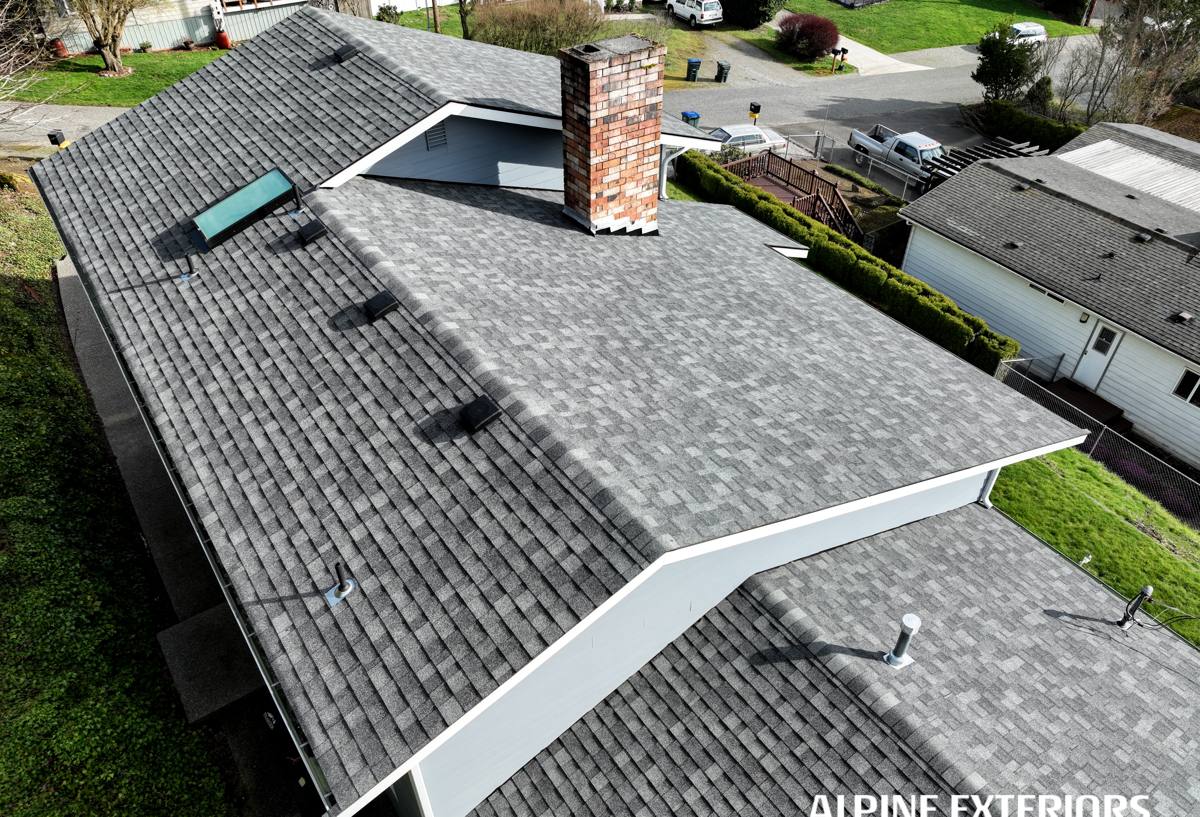
What Driving Rain and a Long Moss Season Actually Do to a Roof
Two things drive almost every roofing failure we see in this part of Whatcom County, and they're related.
Driving rain finds every shortcut
Wind-driven rain doesn't just fall on a roof — it gets pushed sideways under laps, around fasteners, and into any flashing detail that was installed to look right rather than shed water correctly. On a shingle roof that means slow leaks that show up as stains months later. On a metal roof, the risk shifts to the seams, the fastener penetrations, and the flashing at valleys, chimneys, and wall transitions. A metal panel itself is essentially waterproof; the vulnerable points are always the details around it.
Moss doesn't just sit there — it works
In shaded, damp lots near Deming, moss and algae growth is close to a given, not a possibility. On asphalt shingles moss lifts the mat and holds water against the granules. On metal roofing the concern is different: moss and organic debris that collects in valleys, at panel laps, or against snow guards and trim holds moisture directly against the panel finish and fasteners for weeks at a time. Left alone long enough, that moisture cycle is what eventually leads to fastener corrosion or finish breakdown — not the metal itself failing, but debris we could have kept off it.
Whatcom County's proximity to the water also means the air carries more salt and moisture than a lot of inland climates, which is one more reason we don't treat fastener and flashing material as an afterthought on any metal roof we install here, whether the home sits up near the Deming foothills or closer to Sudden Valley itself.
Metal Roofing Options That Make Sense for This Area
Not every metal roofing product is a good fit for a rainy, moss-prone, tree-covered lot. Here's how the common options actually compare for a Deming home:
| Panel Type | How Water Sheds | Fastener Exposure | Best Fit For |
|---|---|---|---|
| Standing seam (concealed fastener) | Excellent — raised seams keep water on the panel face | Fasteners hidden under the seam, not exposed to weather | Homes with lower slopes, heavy tree cover, or anywhere moss and debris tend to collect |
| Exposed-fastener panel | Good on steeper pitches; more seam laps to maintain | Fasteners penetrate the panel face directly, sealed with washers | Steeper roofs, outbuildings, budget-driven projects with a realistic maintenance plan |
| Stone-coated steel | Very good — interlocking profile sheds like tile or shake | Fasteners concealed under coursing | Homeowners who want a shake or tile look with metal's durability |
For most Deming properties, especially anything with tree cover or a lower-slope section, we lean toward concealed-fastener standing seam. It gives moss and debris fewer places to sit against a fastener, and it's the system we're most confident holding up over a full Whatcom County wet season without callbacks.
What a Correct Metal Roofing Installation Actually Involves
Metal roofing rewards good installation and punishes shortcuts more visibly than shingles do — a mistake under a metal panel doesn't get hidden by a second layer of granules. A correct install includes:
- Underlayment built for a wet climate. High-temp synthetic or self-adhered membrane at eaves, valleys, and penetrations — not a builder-grade felt that wasn't meant to sit under metal in a rainy region.
- Flashing detailed for driving rain, not just vertical rain. Extra attention at valleys, chimneys, skylights, and wall-to-roof transitions, where wind-driven water actually tests a roof.
- Fastener spacing and torque set to the manufacturer's spec. Overdriven or underdriven fasteners are one of the most common causes of leaks on exposed-fastener systems.
- Proper ventilation. Metal roofs still need balanced intake and exhaust ventilation underneath — trapping moisture in the attic causes its own problems regardless of what's on top.
- Ice-and-water protection where it counts. Even without heavy snow load, eaves and valleys benefit from the same protection used in colder climates because of how much rain volume moves through them here.
How We Approach a Metal Roofing Project in Deming
1. On-site assessment, not a phone estimate
We look at your roof's slope, tree exposure, existing ventilation, and the condition of the decking underneath before we recommend a panel type. A shaded, low-slope section of roof gets a different recommendation than a steep, open one, even on the same house.
2. A written scope that names the actual materials
You'll know the panel profile, gauge, finish, underlayment, and flashing approach before work starts — not a vague "metal roof installation" line item.
3. Tear-off and deck inspection
We don't install a 40-50 year roofing system over decking we haven't checked. Any soft or water-damaged sheathing gets addressed before panels go on, not discovered as a problem two years later.
4. Installation with attention to the details that actually leak
Panels, seams, and flashing are installed to shed water the way this climate demands — not just to meet a minimum code standard.
5. Walkthrough and cleanup
We walk the finished roof with you, cover care and maintenance specific to your property's tree cover and exposure, and make sure the site is cleared of debris and fasteners before we leave.
Maintenance a Metal Roof Actually Needs in This Climate
Metal roofing is genuinely low-maintenance compared to shingles, but "low-maintenance" doesn't mean "no maintenance" in a lot with moss pressure and heavy rain. A short seasonal checklist keeps a metal roof performing the way it's supposed to:
- Clear leaves, needles, and moss buildup from valleys and around any roof penetrations at least once a year, more often on heavily shaded lots.
- Check gutters and downspouts before the fall rains start — a clogged gutter backs water up under the drip edge regardless of what the roof surface is made of.
- Look at fastener heads on exposed-fastener systems every couple of years for any sign of a failed washer seal.
- Trim back overhanging branches that keep sections of the roof shaded and damp longer than the rest.
- Have flashing at chimneys, skylights, and walls checked after any major wind event.
What Affects the Cost of a Metal Roof in Deming
Metal roofing costs more up front than asphalt shingles, and the range depends on a handful of real factors rather than square footage alone:
| Factor | Why It Moves the Price |
|---|---|
| Panel type | Concealed-fastener standing seam typically costs more than exposed-fastener panels or stone-coated steel |
| Roof complexity | Valleys, dormers, skylights, and multiple roof planes all add flashing and labor time |
| Deck condition | Any rot or water damage found during tear-off adds repair work before panels can go on |
| Tree cover and access | Heavily wooded lots can mean more staging, cleanup, and care around landscaping |
| Underlayment and flashing spec | Upgraded underlayment and detailing for a wet climate costs more than minimum-code materials, and pays for itself in fewer callbacks |
We'd rather give you an honest range tied to your actual roof than a number that sounds good on the phone and changes once we're up there.
Why It Matters That We Already Work in Deming
A lot of roofing crews can install metal panels. Fewer have spent real time on roofs in this specific part of Whatcom County, where tree cover, rainfall volume, and moss pressure combine in a way that punishes generic installation habits. Knowing which slopes on a Deming property tend to hold moisture, which flashing details actually get tested by our driving rain, and how much moss buildup to expect in a given season isn't something you get from a install manual — it comes from doing the work here, repeatedly, and seeing what holds up.
That local experience shows up in small decisions: where we push for standing seam over exposed fasteners, how much underlayment upgrade we recommend on a shaded roof plane, and how we detail a valley that we know is going to see moss and needle buildup every fall. None of it is complicated, but it's the difference between a metal roof that performs for decades in this climate and one that needs attention sooner than it should.
Get a Straightforward Estimate
If you're weighing metal roofing for a home in or around Deming, we're glad to take a look and walk you through what your specific roof actually needs — no pressure, no inflated scope. Use the form below to request a free estimate.