 Sudden Valley Siding
 Why Siding Takes Extra Punishment in Geneva and Sudden Valley
Homes in the Geneva area, tucked along the north end of Lake Whatcom near Sudden Valley, deal with a specific combination of weather that's harder on exterior walls than most homeowners realize. Whatcom County sits in a marine climate zone, and that means salt-tinged air moving in off the Salish Sea mixes with the humidity that settles into the lake basin. Add driving rain that comes in sideways during fall and winter storms, dense tree cover that shades north- and east-facing walls for much of the day, and a moss season that can run eight months or longer, and you have an environment that is constantly testing whatever material is nailed to the wall.
None of that is unique to any one house. It's the baseline condition for the whole Geneva and Sudden Valley area, which is exactly why the siding choice and the installation details matter more here than they would in a drier inland climate.
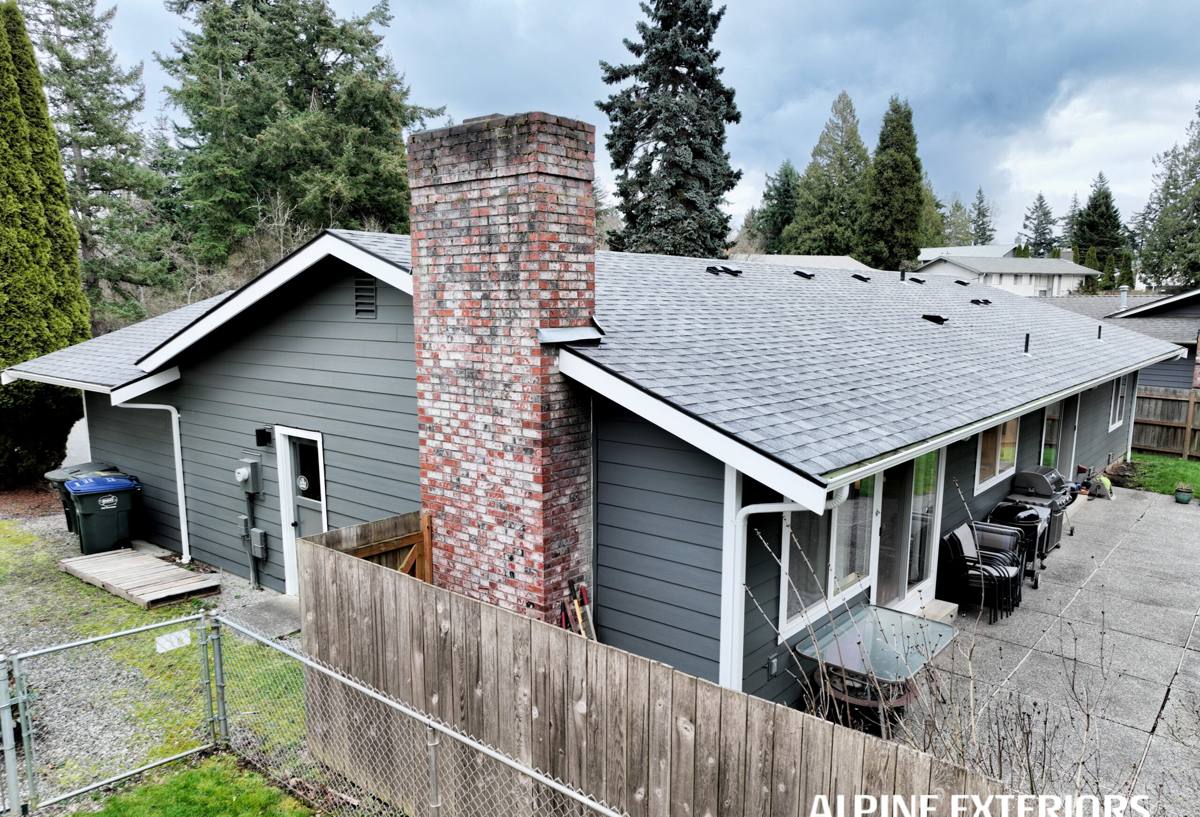
What Constant Moisture and Moss Do to the Wrong Siding
Most siding failures we get called out to inspect in this area aren't dramatic. They're slow. Water finds a seam, a fastener hole, or a cut edge that wasn't sealed, and it sits there because the wall doesn't get enough sun and wind to dry out between rain events. Over a few seasons, that shows up as:
- Soft or delaminating spots at the bottom edge of panels and at butt joints, where cut ends were left unsealed
- Moss and algae colonizing shaded walls, holding moisture directly against the siding surface
- Paint that blisters or peels years ahead of schedule on field-painted wood or engineered wood products
- Vinyl that warps, fades unevenly, or develops gaps at the laps as it expands and contracts
- Caulk joints that fail faster than the manufacturer's timeline because they're rarely fully dry when they're stressed
The material itself matters, but so does whether the person installing it treated every cut edge, flashing detail, and fastener as if the wall would be wet more often than dry — because in Geneva, it will be.
Why We Only Install James Hardie Siding Here
We standardized on James Hardie fiber cement across every job we take, and in a climate like this one, the reasoning is straightforward rather than a sales pitch.
HZ5 Engineered for This Climate
James Hardie makes region-specific formulations, and the HZ5 product line is engineered for climates with significant moisture exposure, including the Pacific Northwest. It's built to resist moisture-related damage better than a general-purpose formulation, which matters directly for a wall that spends much of the year damp. Fiber cement also doesn't feed mold and moss the way wood fiber can, so even when algae does form on the surface — which it can on any siding material in this climate — it's sitting on a substrate that isn't breaking down underneath it.
ColorPlus Factory Finish vs. Field-Painted Siding
A lot of siding failure in wet climates isn't really a siding problem, it's a paint problem. Field-applied paint on wood or engineered wood siding has to cure in whatever weather shows up that week, and in Geneva that's often damp air and short drying windows. James Hardie's ColorPlus finish is baked on in a factory under controlled conditions, which gives it better adhesion and a longer service life before it needs attention. That's less scaffolding, less repainting, and fewer chances for water to get behind a coating that failed early.
What a Correct Hardie Install Involves on a Geneva Home
Buying the right material only gets you halfway there. The installation details are where most of the long-term performance actually gets decided, and they're the same details that get skipped when a crew is moving fast or hasn't worked this specific climate before.
Flashing and Water Management
Every window, door, deck ledger, and roof-to-wall transition needs flashing that directs water out and away from the sheathing, not just caulk covering a gap. On a home exposed to the kind of driving rain that comes off the lake and surrounding hillsides, a house wrap or weather-resistant barrier installed with proper shingle-lap overlaps behind the siding is what actually keeps bulk water out of the wall assembly. Caulk is a secondary defense, not the primary one.
Fastening, Gaps, and Clearances
James Hardie specifies exact nailing patterns, gaps at butt joints and trim, and minimum clearances from grade, roof lines, and decks. Panels installed too tight against each other, fastened incorrectly, or run too close to the ground trap moisture and void the manufacturer's warranty in the process. A crew that only occasionally works with fiber cement is more likely to treat these specs as optional. A crew that installs Hardie exclusively treats them as non-negotiable, because we're the ones who get the callback if they're wrong.
Our Process for Geneva Homeowners
The process doesn't change dramatically from house to house, but the sequence matters:
- Walkthrough and assessment — we look at existing siding condition, moisture staining, trim, and any areas showing early moss growth or soft spots that point to hidden water intrusion
- Sheathing check during tear-off — once old siding comes off, we can see what the wall assembly actually looks like underneath, and any rot or damaged sheathing gets addressed before new siding goes up, not covered over
- House wrap and flashing installed to spec — this is the layer that does the real water management work
- Hardie panel or plank installation — correct fastening, gaps, and clearances at every transition
- Caulking, touch-up, and final walkthrough — sealing cut edges and confirming the finish is consistent before we call it done
Hardie vs. Other Siding Options in This Climate
| Factor | James Hardie Fiber Cement | Vinyl | LP SmartSide / Wood |
|---|---|---|---|
| Moisture resistance | Engineered for wet climates (HZ5) | Doesn't absorb water, but seams and warping let water behind it | Wood fiber core is vulnerable at cut edges and joints |
| Moss and algae impact | Surface growth doesn't degrade the material | Growth is cosmetic but hard to fully clean from textured panels | Trapped moisture under growth can accelerate rot |
| Finish longevity | Factory-cured ColorPlus finish | Color is through-body but can fade and chalk | Field-applied paint or stain, shorter recoat cycle |
| Performance in driving rain | Strong when flashed and installed to spec | Adequate, but lap joints can allow wind-driven water in | Weakest at exposed edges and fastener points |
| Fire resistance | Non-combustible | Combustible, can melt or deform | Combustible |
This isn't a claim that other products can't hold up anywhere. It's why, for this specific climate and for the standard we hold ourselves to, fiber cement installed correctly is the option we're willing to put our name on.
What Actually Drives Cost on a Geneva Siding Job
Every house is different, so we don't quote off square footage alone. The factors that move a project up or down are:
| Cost Factor | Why It Matters |
|---|---|
| Existing siding removal and disposal | Tear-off adds labor, especially with multiple layers or hidden damage |
| Sheathing repair | Rot found during tear-off has to be replaced before new siding goes up |
| Home height and access | Multi-story walls, steep grades, and limited equipment access add time |
| Panel vs. lap plank profile | Different Hardie profiles have different labor and material costs |
| Trim and detail complexity | Dormers, multiple gables, and window trim multiply flashing and cutting time |
Living With Hardie Siding Through a Whatcom County Wet Season
Even the right product benefits from basic upkeep in this climate. A soft wash once every year or two on shaded, moss-prone walls keeps growth from building up — pressure washing directly into siding can force water past caulk joints, so a gentler rinse and cleaner is the safer approach. Keeping gutters clear and downspouts directed away from the foundation reduces the amount of splash-back and runoff hitting the lower courses of siding, which is one of the more common ways moisture gets a foothold regardless of what material is on the wall. Trimming back vegetation that keeps a wall in constant shade also helps it dry out between the rain events that define most of the year here.
Choosing a Siding Contractor Who Actually Works This Area
Plenty of contractors will install James Hardie. Fewer of them have made the specific tradeoffs — turning down easier vinyl jobs, carrying the training and tooling for fiber cement, standing behind installation details that don't show up until years later — that come with doing it as their only siding product. Before hiring anyone for a job in Geneva or Sudden Valley, it's worth asking:
- Are they James Hardie certified or trained specifically on fiber cement installation, not just familiar with it?
- Will they check and document sheathing condition during tear-off, before covering it back up?
- Do they follow Hardie's published fastening, gapping, and clearance specifications, or their own shortcuts?
- What's covered under the manufacturer's warranty versus their own workmanship warranty, and for how long?
- Have they worked on homes in this specific climate, with this level of moisture and shade exposure?
If a contractor can't answer those clearly, that's worth knowing before the tear-off starts, not after.
If you're weighing a siding project on a Geneva or Sudden Valley home, we're happy to take a look and walk you through what your specific walls need. The estimate is free, there's no pressure attached to it, and you'll get a straight answer about what the job actually involves.