 Sudden Valley Siding
 Decks Take a Beating in Happy Valley
If you own a home in the Happy Valley area near Sudden Valley, you already know your deck doesn't have an easy life. Whatcom County's marine climate means salt-tinged air off the Sound, driving rain that comes in sideways for months at a time, and a moss and algae season that can stretch from October well into spring. Add in the tree cover and shade that many Sudden Valley lots have, and you get decks that stay damp longer than they should, day after day, year after year.
None of that is a design flaw in your home. It's just the environment. But it does mean a deck built without that environment in mind — or one that's simply reached the end of its service life — starts showing problems earlier than the same deck would in a drier climate. Understanding what actually fails, and why, is the first step to getting a replacement that holds up.
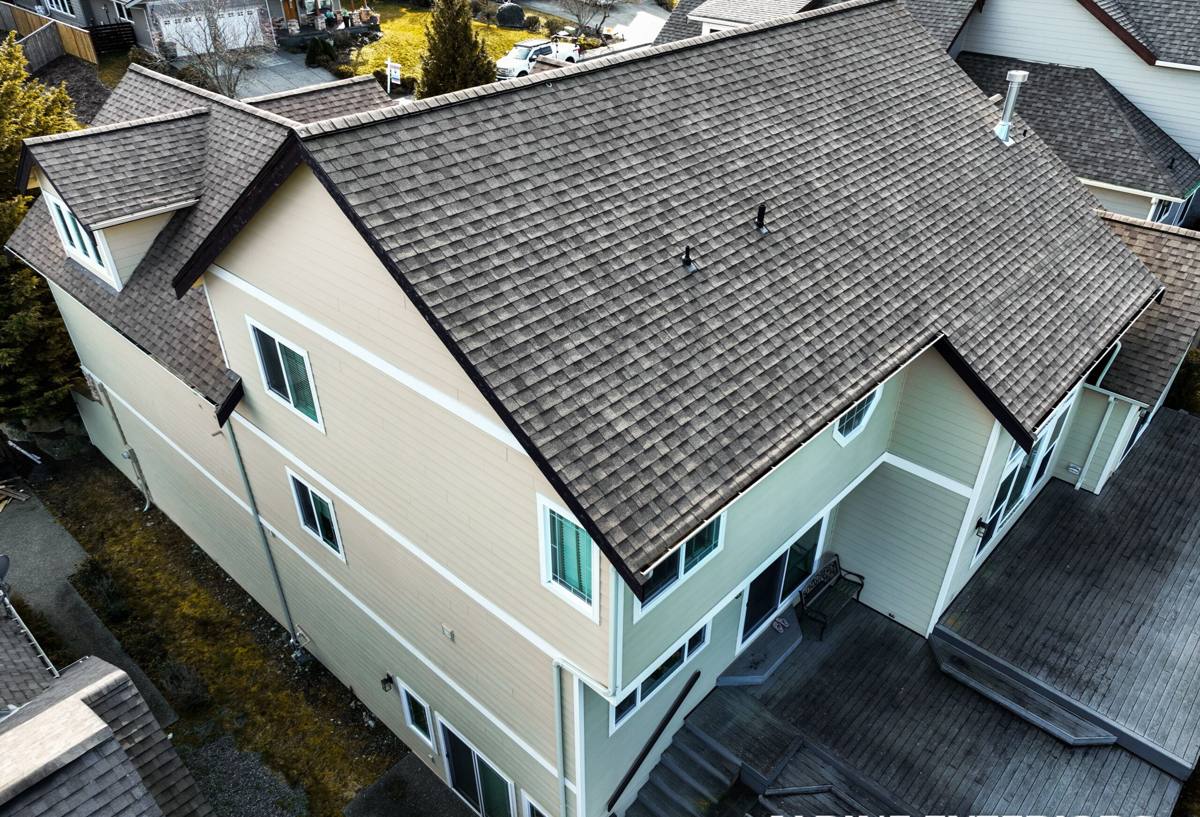
Signs You Need a Replacement, Not Another Repair
We get a lot of calls for "just fix this one board," and sometimes that's genuinely all that's needed. But there's a point where patching a deck stops making sense and a full replacement becomes the honest recommendation. Here's what tells us which side of that line a deck is on:
- Soft, spongy, or spring-back decking boards, especially near the house or in shaded corners
- Rot or dark staining at the ledger board — where the deck attaches to the house — which is the single most common structural failure point in this climate
- Rusted, popped, or corroded fasteners, particularly on older decks built before better-rated hardware was standard
- Persistent moss or black algae growth that comes right back within weeks of cleaning
- Visible gaps, cupping, or twisting in the boards from repeated wet-dry cycles
- Any wobble, give, or movement in the railing or posts when you lean on them
Any one of these on its own might be repairable. Several together, especially anything involving the ledger board or the framing underneath, usually means the structure has been compromised and a patch job would just be delaying the inevitable while covering up a safety issue.
What a Correct Deck Replacement Actually Involves
Tear-Off and Structural Inspection
A real replacement starts with removing the old decking, railings, and often the framing down to the posts and footings. This is the point where we find out what's really going on underneath — soft joists, undersized framing, footings that were never poured deep enough, or a ledger connection that was never flashed correctly in the first place. You can't know the true scope of a job until the old surface is off.
Ledger Board and Flashing
In a climate that sees this much rain, the ledger-to-house connection is the detail that matters most. Water that gets behind an unflashed or poorly flashed ledger board doesn't just rot the deck — it can work its way into the house framing and siding. Correct flashing, proper fasteners rated for ground contact or treated lumber, and a small air gap where called for are non-negotiable parts of the job, not upgrades.
Framing and Footings
Joist spacing, beam sizing, and footing depth all need to match the load the deck will actually carry and the soil conditions on the lot. Sloped or wooded properties, common around Sudden Valley, sometimes need extra footings or engineered support that a flat, open lot wouldn't require. This is decided during the inspection, not guessed at.
Decking, Railings, and Code Compliance
Once the structure is sound, we install the decking surface, railings, and stairs to current code — proper railing height, baluster spacing that meets code for child safety, and stair rise and run that's consistent and safe. An older deck built to a previous code cycle often needs these details corrected during replacement, even if the homeowner never asked for it.
Choosing a Decking Material for This Climate
There's no single "best" decking material — there's a best fit for your budget, your maintenance appetite, and how much shade and moisture your specific deck deals with. Here's how the common options compare for a place like Happy Valley:
| Material | Moisture Behavior Here | Maintenance | Typical Lifespan |
|---|---|---|---|
| Pressure-treated wood | Handles wet cycles well if sealed regularly; prone to moss in shaded spots | Annual cleaning and re-sealing recommended | 15–20 years with upkeep |
| Cedar | Naturally rot-resistant but still needs sealing in a wet climate | Sealing every 1–2 years, periodic cleaning | 15–25 years with upkeep |
| Capped composite | Doesn't absorb water or rot; can still grow surface algae if never cleaned | Occasional washing, no sealing | 25–30+ years, manufacturer warranty-backed |
| PVC | Fully synthetic, best resistance to moisture and staining | Lowest maintenance of the group | 25–30+ years, manufacturer warranty-backed |
Our default recommendation for shaded, damp lots is capped composite or PVC, simply because they take the moss-and-algae problem off the table almost entirely. That said, plenty of homeowners prefer the look and feel of real wood and are happy to keep up with sealing — that's a legitimate choice too, as long as it's made with eyes open about the upkeep involved.
What Affects the Cost of a Deck Replacement
Every deck is different, so we don't quote off a square-footage chart alone. The factors below are what actually move the number:
| Factor | Why It Matters |
|---|---|
| Deck size and shape | More square footage and complex angles mean more material and labor |
| Structural condition found at tear-off | Rotted framing, undersized joists, or bad footings add scope that can't be seen until demo |
| Decking material | Composite and PVC cost more up front than pressure-treated wood but save on maintenance |
| Railing style | Cable, glass, or composite railing systems cost more than standard wood or metal baluster railing |
| Height and stairs | Elevated decks with stairs require more framing, footings, and code detailing |
| Permit requirements | Larger or elevated decks typically require a Whatcom County building permit, which adds time and a fee |
As a broad range, a straightforward single-level deck replacement in this area often falls somewhere between $8,000 and $20,000+, with larger, elevated, or high-end material projects running higher. We won't know your real number until we've seen the deck and what's underneath it, which is why the estimate walk-through matters more than a phone quote.
Permits and HOA Considerations in Sudden Valley
Most deck replacements of any real size require a Whatcom County building permit, especially when framing, footings, or railings are being changed rather than just the surface boards. We handle the permit process as part of the job so you're not left figuring out county requirements on your own.
If your property is part of the Sudden Valley community association or another HOA, there's often a separate step: design or material approval before work begins. Requirements vary by community and can change over time, so we always recommend confirming with your HOA directly rather than assuming — and we're glad to work from whatever guidelines they give you.
Our Deck Replacement Process
- Free on-site inspection where we assess the existing deck, ledger connection, framing, and footings
- A written quote that spells out material choice, structural scope, and permit needs — no surprise change orders for things we could have caught up front
- Careful tear-off and disposal of the old deck
- Structural rebuild: footings, framing, and ledger flashing brought up to current code
- Decking, railing, and stair installation
- Final walkthrough so you know exactly what was done and how to maintain it
Keeping Moss and Algae From Coming Back
A properly built deck resists moisture damage, but nothing in this climate is maintenance-free forever. A little seasonal attention goes a long way toward protecting the investment:
- Sweep leaves and debris off the deck regularly, especially in fall — trapped organic matter holds moisture and feeds moss
- Rinse or wash the surface once or twice a year, more often in heavily shaded spots
- Keep nearby shrubs and tree limbs trimmed back to let air and light reach the deck surface
- Check and clear gaps between boards so water can drain instead of pooling
- On wood decks, re-seal on the schedule recommended for the product — don't wait until it's visibly gray or dry
- Inspect the ledger board area once a year for any staining or soft spots, since that's where hidden problems start
Why a Local Happy Valley Crew Makes a Difference
Deck failures around here have a pattern — they start at the ledger, in the shaded north-facing sections, or wherever water naturally collects on a given lot. A crew that works this specific area regularly recognizes that pattern immediately instead of treating every job as a first-time guess. We know how Whatcom County permitting works, we're used to the footing and drainage challenges that come with sloped, wooded lots, and we build with the assumption that the deck needs to survive a genuinely wet, mossy climate — not a mild one.
That local familiarity also means straightforward communication: realistic timelines around our wet season, honest answers about what a repair versus a full replacement actually needs, and a crew that's still reachable after the job is done if a question comes up.
If your deck in Happy Valley or Sudden Valley is showing soft spots, persistent moss, or just isn't holding up the way it used to, we're happy to take a look. Request a free, no-pressure estimate using the form below and we'll walk the deck with you and tell you honestly what it needs.