 Sudden Valley Siding
 Windows in Ferndale Take a Different Kind of Beating
Ferndale sits close enough to the water that salt-laden air is a real factor in how fast window components age, and it sits squarely in the path of the driving, wind-pushed rain that rolls off the Pacific through the winter and spring. Add in a moss season that stretches longer here than in drier parts of the state, and you've got three separate stresses working on the same window opening year-round: corrosion, water intrusion, and organic growth that traps moisture against wood and vinyl surfaces. A window that would perform fine in a dry inland climate can fail early here if it wasn't selected, flashed, and sealed with this specific environment in mind.
This page is about one job, done right, in one place: replacing or installing windows on homes in and around Ferndale. Not a general overview of window brands — the actual work of getting a window into a wall opening so it keeps water out and holds up under Whatcom County conditions for decades.
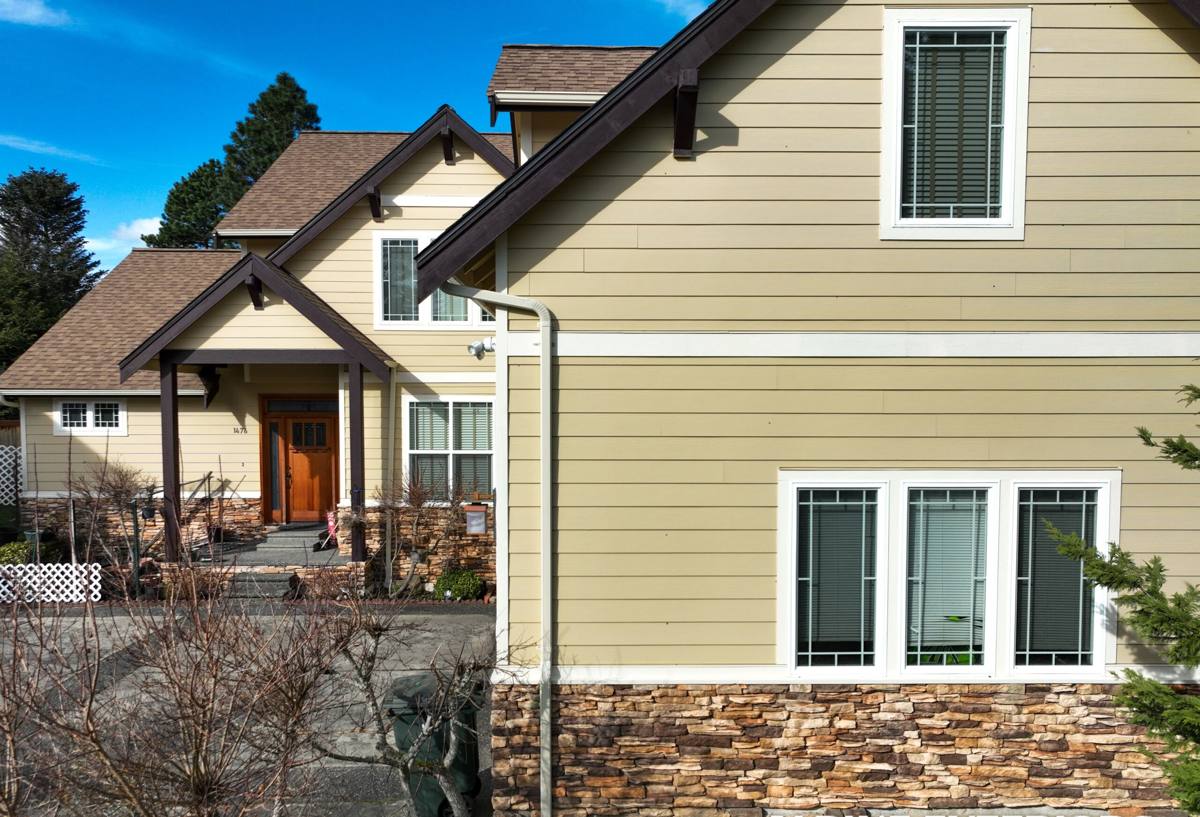
What Salt Air, Rain, and Moss Actually Do to a Window Over Time
Salt Air and Hardware Corrosion
Salt in the air accelerates corrosion on anything metal — hinges, balance systems, screws, and cranks. Cheaper hardware finishes pit and seize up years before the glass unit itself fails. This shows up first as a window that's suddenly hard to open, latch, or lock, long before there's any visible leak.
Driving Rain and Wind-Driven Water
Rain that falls straight down is relatively easy to manage. Rain that's being pushed sideways by wind — which is common in this region — gets forced up under trim, behind cladding, and into any gap in the flashing that a straight-down rain would never reach. Most window leaks we find in this area aren't glass failures; they're flashing and sealant failures at the edges of the opening.
Moss, Mildew, and Trapped Moisture
A long, damp moss season means anything that stays wet for extended stretches — a sill that doesn't shed water, a window track that collects debris, a wood surface without a good moisture barrier — becomes a growth site for moss, algae, and mildew. That growth holds moisture against the surface, which is exactly what accelerates wood rot and finish failure.
What a Correct Window Installation Actually Involves
A window installation is judged almost entirely on things you can't see once the trim goes back on. The window unit itself is usually fine — it's everything around it that determines whether the install lasts.
- Opening prep: the rough opening is inspected for rot, soft framing, or prior water damage before anything new goes in — installing a new window into a compromised opening just hides the problem.
- Weather-resistive barrier integration: the window's flashing has to tie into the house wrap or building paper in the correct shingle-lap order, so water is always directed outward and downward, never trapped behind the cladding.
- Sill pan flashing: a sloped, sealed sill pan under the window is the single biggest defense against the kind of wind-driven rain this area sees — it gives any water that gets past the exterior seal a way out instead of a place to sit.
- Proper shimming and squaring: a window that isn't shimmed level and square will bind, won't seal evenly, and puts uneven stress on the frame that shortens the life of the balance system and weatherstripping.
- Insulation without over-packing: the gap between the window frame and rough opening needs low-expansion foam or backer rod and sealant — packed too tight, it can bow the frame; left too loose, it's a thermal and air leak.
- Correct interior and exterior sealant: different joints call for different sealants; using the wrong one, or skipping backer rod on wide joints, is a common cause of early caulk failure in this climate.
Choosing Window Materials for a Marine Climate
Every window material has trade-offs. In a climate with salt air and sustained damp periods, some of those trade-offs matter more than they would elsewhere.
| Material | Moisture & Salt Air Behavior | Maintenance | Typical Lifespan |
|---|---|---|---|
| Vinyl | Won't rot or corrode; performs well near salt air; frame can expand/contract with temperature swings | Low — occasional cleaning | 20–30+ years |
| Fiberglass | Very stable dimensionally, strong resistance to moisture and corrosion, holds paint well if color changes are wanted later | Low | 30–40+ years |
| Wood (unclad) | Handsome, but bare wood is the most vulnerable material to sustained damp conditions and moss/mildew growth without diligent upkeep | High — regular painting/sealing | Varies widely with maintenance |
| Wood-clad (aluminum or vinyl exterior) | Wood interior warmth with a weather-resistant exterior shell; the cladding-to-wood seam is the point that needs careful installation | Moderate | 20–30+ years if the cladding stays intact |
We don't push one material on every home. What we won't do is install a bare-wood exterior window facing prevailing weather without a clear conversation about the maintenance commitment that comes with it — in this climate, that's an honest trade-off a homeowner should make eyes-open, not something we gloss over to close a sale.
Glass Packages Worth Considering Here
Beyond the frame material, the glass unit itself matters for comfort and condensation control. Homes in this area benefit from low-E coatings that manage heat loss through our long heating season, and from warm-edge spacer systems that resist condensation on the interior pane during cold, humid stretches — condensation on glass is common here and is more about spacer performance and interior humidity than a defect in the window.
Our Installation Process
- On-site assessment: we look at the existing openings, check for rot or prior water damage, and measure precisely rather than guessing off old dimensions.
- Product selection: we walk through material and glass options based on the wall's sun/wind exposure, not a one-size answer for the whole house.
- Written scope and timeline: before any work starts, you get a clear description of what's being removed, replaced, and how the opening will be flashed and sealed.
- Removal and opening inspection: old units come out carefully so we can actually see the condition of the framing and existing flashing before covering it back up.
- Flashing, install, and seal: sill pan, window, integration with the weather-resistive barrier, insulation, and sealant — done in that order, not skipped for speed.
- Interior and exterior trim finish: trim is reset or replaced so the finished look matches the rest of the home.
- Final walkthrough: we check operation, sealing, and cleanup with you before calling the job done.
Signs a Ferndale Home Needs New Windows
- Windows that are hard to open, close, or lock — often the first sign of hardware corrosion from salt air exposure
- Visible moss, algae, or dark staining building up on sills or lower frames
- Soft or spongy wood trim around the window opening
- Fogging or moisture between panes of a double- or triple-pane unit, which means the seal has failed
- Noticeable draft or cold spot near the window on windy days
- Peeling paint or bubbling finish on interior sills, which often points to moisture getting in from outside
- Visible daylight or gaps around the frame from outside
What Drives the Cost of a Window Installation
| Factor | Why It Matters |
|---|---|
| Number and size of openings | More or larger windows means more material and labor, straightforwardly |
| Frame material chosen | Vinyl, fiberglass, and clad-wood carry different material costs and installation labor |
| Condition of existing openings | Rot repair or reframing found once old windows come out adds time and material |
| Glass package | Low-E coatings, gas fills, and triple-pane glass all add cost but also add performance |
| Access and site conditions | Second-story work, tight clearances, or difficult siting can add labor time |
| Trim and finish work | Matching existing interior trim or exterior cladding profiles affects finish labor |
We'd rather give you a real number after seeing the actual openings than a rough figure that doesn't hold up once the old windows are out. Broadly, per-window installed costs in this region range from a modest few hundred dollars for a straightforward like-for-like vinyl replacement up into the low thousands for larger openings, premium materials, or jobs that uncover framing repairs — the estimate walkthrough is where that gets pinned down for your home specifically.
Why It Matters to Hire a Crew That Already Works This Area
Window installation done wrong doesn't usually show up as a problem on day one — it shows up two or three winters later, when a flashing detail that looked fine on a dry day fails during a sustained wind-driven rain event. A crew that installs windows across Whatcom County regularly has already seen how these openings behave through a full wet season, not just during a demo on a calm afternoon. That matters more here than in a lot of places, because the gap between "looks sealed" and "is actually sealed against driving rain" is exactly where salt air, moisture, and moss do their damage over time.
We're based out of Sudden Valley and work throughout the surrounding area, including Ferndale, so we're not learning this climate on your house — we're applying what already holds up on homes like yours.
Keeping New Windows Performing Long-Term
A correct installation is most of the battle, but a little upkeep extends it further in this climate:
- Rinse sills and tracks periodically to clear salt residue and organic debris before it holds moisture against the frame
- Check and refresh exterior caulking every few years, since UV and moisture cycling wear sealants faster here than in drier climates
- Keep gutters and downspouts clear so roof runoff isn't dumping extra water directly onto window heads
- Address any moss or algae growth on nearby siding or trim promptly, before it spreads onto window surfaces
If your windows are drafty, hard to operate, fogged between the panes, or just original to a home that's due for an upgrade, we're happy to take a look and walk you through honest options for your specific openings. Reach out for a free, no-pressure estimate — we'll assess what's there, explain what we find, and give you a straight answer on what it would take to get it right.