 Sudden Valley Siding
 Why Windows Take a Beating in Happy Valley
Homes in Happy Valley deal with a specific combination of weather that's harder on windows than most homeowners realize. Whatcom County sits under a near-constant flow of marine air, and by the time it reaches the hills around Sudden Valley it's carrying moisture, a faint edge of salt, and enough dampness to keep everything shaded green for most of the year. Add the tree cover that makes this area beautiful, and you get a moss season that can run eight months or longer, plus driving rain that doesn't fall straight down — it gets pushed sideways into window frames, trim, and siding joints by wind coming off the water and through the valley.
None of that is a problem for a window that was installed correctly with the right materials. It becomes a problem fast for a window that was caulked-and-forgotten, or one where the siding around it was never properly integrated with flashing in the first place. Custom windows in this area aren't a luxury upgrade — they're the difference between a house that sheds water and one that slowly absorbs it.
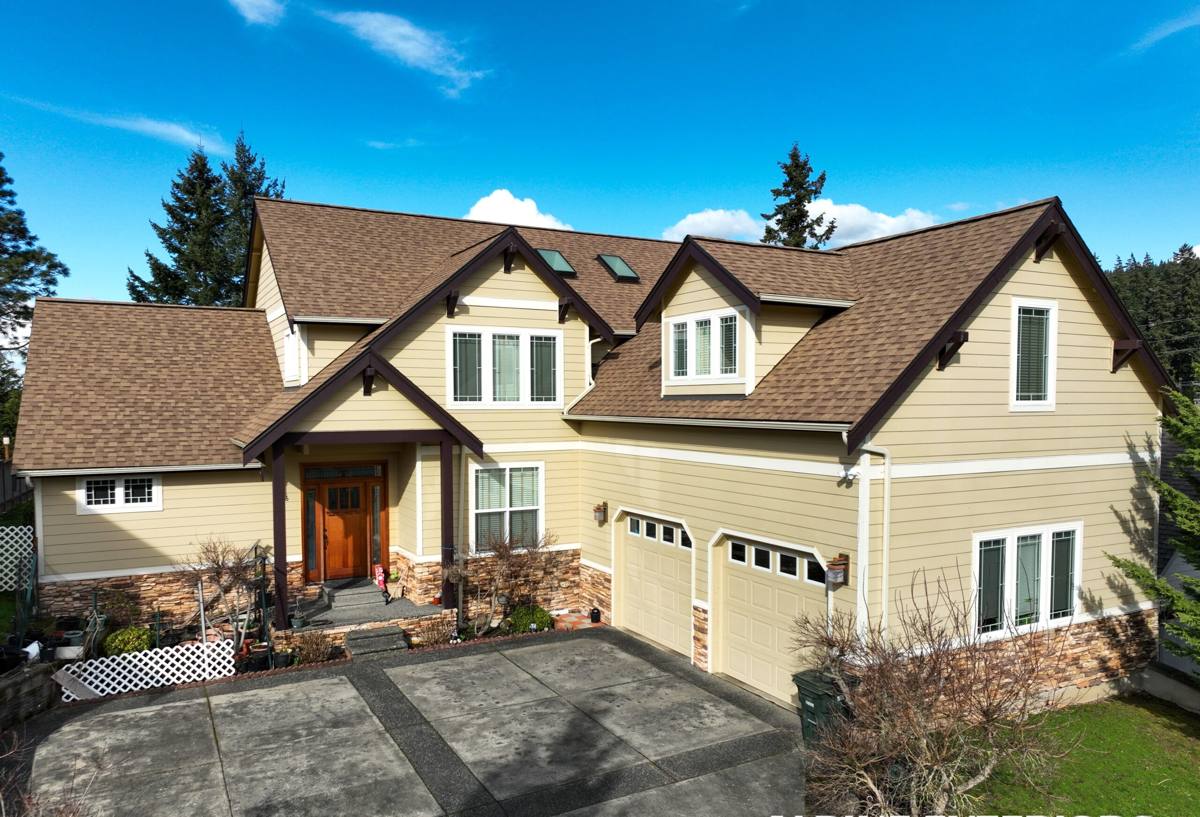
What We Look For Before Recommending Anything
We don't sell windows off a script. Before we talk product or price, we look at how the existing windows are actually performing and why. In Happy Valley that usually means checking the same handful of trouble spots.
Common Failure Points in Older Homes
- Wood sills and lower frame corners that stay damp long after a storm passes, especially on north- and west-facing walls
- Moss or algae building up in the frame track and weep holes, which blocks drainage and holds water against the window
- Condensation between the glass panes — a sign the seal has failed, not something a new coat of caulk will fix
- Gaps where old siding meets the window trim, often hidden until you pull the trim off
- Aluminum or steel hardware showing early corrosion from the salt-tinged air common to this part of Whatcom County
Some of these are cosmetic. Others mean water has already found its way into the wall assembly, and the window is just the symptom, not the source. Part of an honest assessment is telling you which is which before any work starts.
What a Correct Custom Window Job Actually Involves
"Custom" doesn't just mean a non-standard size — though plenty of homes in this area have openings that don't match anything off a factory shelf. It means the window is built and installed to match the specific wall it's going into, not forced to fit.
Flashing and Water Management
This is the part that matters most and shows the least. A correct installation ties the window's flashing into the house's water-resistive barrier in the right shingle-lap order — sill pan first, then jambs, then head flashing — so that any water reaching the opening is directed back out over the siding below, not into the wall cavity. Skipping or shortcutting this step is the single biggest reason windows in wet climates fail early, and it's invisible once the trim goes back on. If your siding is being replaced or repaired at the same time, this is also the ideal moment to correct it, since the wall is already open.
Fit, Insulation, and Air Sealing
A custom-fit window is shimmed square and plumb, insulated around the full perimeter with a low-expansion foam or backer rod (not packed solid, which can bow the frame), and sealed with an exterior sealant rated for the temperature swings and constant moisture this area sees. Loose gaps let in drafts and moisture-laden air; over-tight or improperly shimmed frames put stress on the sash and cause early operating problems.
Choosing Frame Materials for This Climate
There's no single "best" window material — there's a best fit for a given wall, budget, and how much upkeep you want to take on. Here's how the common options actually compare for a house exposed to the rain and moss conditions typical of Happy Valley.
| Material | How It Handles This Climate | Maintenance | Typical Lifespan |
|---|---|---|---|
| Vinyl | Won't rot or corrode; performs well in constant moisture | Low — occasional cleaning | 20–30 years |
| Fiberglass | Very stable in temperature swings; strong resistance to moisture-driven warping | Low | 30–40+ years |
| Wood | Excellent insulator but needs a sound exterior finish to keep rain and moss from taking hold | High — periodic repainting or resealing | Varies widely with upkeep |
| Wood-clad (wood interior, metal or vinyl exterior) | Good compromise — protected exterior face, warm interior look | Moderate | 25–35 years |
| Aluminum | Strong but a poor insulator here, and prone to corrosion in salt-influenced air over time | Moderate | Varies; hardware often fails before the frame |
For most Happy Valley homes, we steer people toward vinyl or fiberglass for exposed walls simply because they don't give moisture anything to work with. Wood and wood-clad still make sense on protected elevations or where the look matters more than minimizing upkeep — that's a homeowner's call, not ours, and we'll lay out the trade-offs honestly either way.
Glass and Performance Options
Frame material gets the attention, but the glass package affects comfort and condensation just as much. Double-pane, low-E glass is the standard baseline for this region and handles Whatcom County's temperature range well. Triple-pane adds another layer of insulation and can help on north-facing walls or rooms that run cold, though it adds cost and weight — worth discussing per window rather than defaulting to it across the whole house. Argon or krypton gas fill between panes is a minor upcharge that improves insulating performance and is generally worth it. Whatever glass package you choose, make sure weep holes and drainage paths in the frame stay clear — even the best glass can't compensate for a frame that's holding water.
Our Process, Start to Finish
We keep this straightforward because window work shouldn't feel like a mystery.
- On-site assessment — we look at the existing windows, the surrounding siding and trim, and check for hidden moisture before recommending anything
- Honest scoping — we tell you which windows need full replacement, which could be repaired, and why, in plain terms
- Custom measurement — every opening is measured individually; nothing is assumed to match a "standard" size
- Removal and inspection — old windows come out carefully so we can check the framing and sheathing underneath for rot before anything new goes in
- Flashing and installation — proper sill pan and flashing integration with your existing or new siding, then the window is set, shimmed, insulated, and sealed
- Final check — operation, seal, and weather-tightness are confirmed before we call the job done
If siding work is happening on the same wall, we coordinate the two so the flashing and water management are handled once, correctly, instead of patched around each other.
Typical Cost Factors
We don't quote sight-unseen prices, because the same "window" can cost very differently depending on what's behind it. What we can tell you is what actually drives the number up or down.
| Factor | Why It Matters |
|---|---|
| Frame material and glass package | Vinyl and standard double-pane sit at the lower end; fiberglass, wood, and triple-pane add cost |
| Number and size of openings | Larger or custom-shaped windows require more material and labor per unit |
| Condition of the existing wall | Hidden rot or water damage found during removal adds repair time before the new window can go in |
| Full-frame vs. insert replacement | Full-frame replacement (removing down to the studs) costs more than an insert but is often the right call when flashing needs correcting |
| Access and site conditions | Second-story or hard-to-reach windows take longer to work safely |
Maintaining Custom Windows in a Moss-Prone Climate
A well-installed window still needs a little seasonal attention here — mostly because of how much moss and organic debris this climate produces, not because anything is wrong with the window itself.
- Clear moss and debris from window tracks and weep holes at least twice a year, more often under heavy tree cover
- Check exterior caulking annually for cracking or gaps, especially after a hard winter
- Keep gutters and downspouts clear so water isn't sheeting down across window heads
- Wipe down interior sills if you notice condensation, and address it early rather than letting moisture sit in wood trim
- Trim back vegetation that keeps a window's exterior shaded and damp longer than the rest of the house
None of this is heavy work, but skipping it is how a good installation still ends up with moisture problems five or ten years down the road.
Why Work With a Crew That Already Knows Happy Valley
A lot of window problems in this area trace back to installers who do great work in a dry climate and apply the same approach here without adjusting for it. Flashing details that are optional in a drier region aren't optional in Whatcom County. We work on homes throughout Sudden Valley and the surrounding area regularly, so we already know how the local combination of rain, wind exposure, and moss affects window performance over time — and we build every installation around that, not around a generic checklist.
If your windows in Happy Valley are showing their age, feel drafty, or you're planning a siding project and want the windows handled correctly at the same time, we're happy to take a look. Reach out for a free, no-pressure estimate — use the form below to get started.