 Sudden Valley Siding
 Why Composite Decking Makes Sense in Happy Valley
Happy Valley sits inside the Sudden Valley area of Whatcom County, and like the rest of this corner of Washington, it deals with a long wet season, heavy tree cover in a lot of yards, and air that carries moisture almost year-round. Wood decks in this environment need constant upkeep — sanding, staining, and re-sealing every year or two just to keep water out of the boards. Composite decking was built to solve exactly that problem: it doesn't absorb water the way wood does, it doesn't need annual staining, and it holds its color and structure through the kind of driving rain and long moss season this area gets every fall through spring.
That said, composite isn't maintenance-free, and it isn't installed the same way everywhere. A composite deck built for a dry inland climate isn't automatically right for a deck sitting under fir trees a few miles from Lake Whatcom, catching salt-tinged coastal air and shade that never fully dries out. The details of the substructure, drainage, and board spacing matter more here than in most parts of the country, and that's really what separates a deck that looks good for two years from one that still looks good in fifteen.
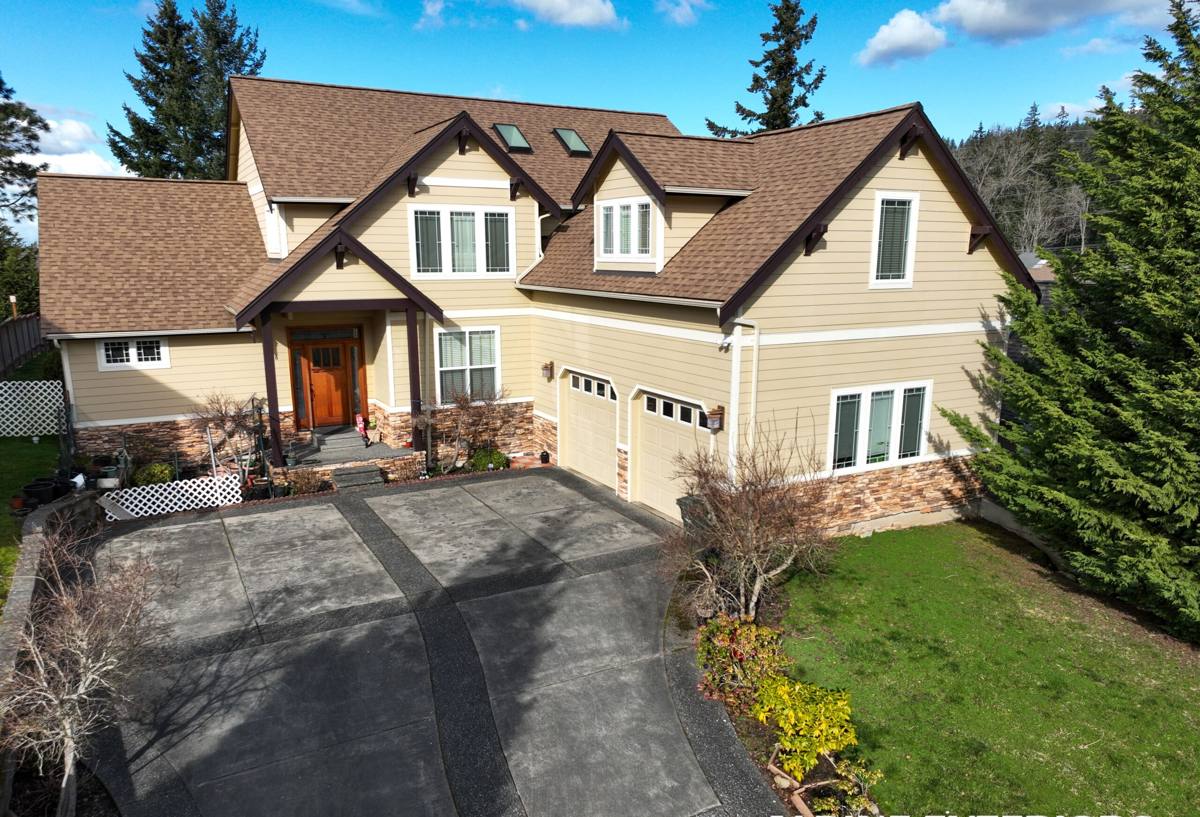
What This Climate Actually Does to a Deck
Before getting into products and process, it helps to understand what we're building against:
- Driving rain: wind-driven rain gets pushed sideways and underneath railings, fascia boards, and stair stringers — areas that a lot of installers treat as an afterthought.
- Moss and algae growth: shaded decks near trees or on the north side of a house stay damp longer, which is exactly what moss and algae need to take hold on any surface, composite included.
- Salt-influenced air: moisture in the air here accelerates corrosion on fasteners, brackets, and any exposed metal hardware that isn't rated for it.
- Freeze-thaw cycling: Whatcom County gets enough cold snaps mixed with wet weather that ground movement and minor frost heave can affect footings if they weren't set to the correct depth.
None of these are reasons to avoid composite decking — they're reasons to install it correctly. Every recommendation below comes back to managing water and airflow.
What a Correct Composite Deck Build Involves
The Substructure Comes First
The composite boards get the attention in the showroom, but the framing underneath is what determines how long the whole deck lasts. In this climate, that means pressure-treated joists rated for ground contact where relevant, joist tape or a moisture barrier on top of every joist to stop water from wicking into the wood through fastener holes, and hardware — hangers, screws, brackets — rated for the moisture and mild corrosive exposure this area sees. Footings need to be set below frost depth and sized for the load, not guessed at.
Airflow Underneath the Deck
A composite deck built low to the ground, or over a patio slab with no ventilation path, traps moisture underneath the boards. That trapped moisture is what causes mold, mildew staining on the underside of boards, and premature wear on fasteners. Proper builds leave clearance for air to move and water to drain away from the structure, not pool underneath it.
Board Spacing and Fastening
Composite boards expand and contract with temperature more than people expect. Gaps between boards need to be set correctly — too tight and the deck can buckle in warm weather; too wide and debris collects in the gaps, holding moisture against the board edges. Hidden fastener systems, when used, need to be installed to the manufacturer's spacing spec, not "close enough."
Flashing Where the Deck Meets the House
This is the single most common failure point on decks in wet climates. If the ledger board isn't properly flashed where it attaches to the house, water gets behind the siding and into the wall structure — a much more expensive problem than anything happening in the decking itself. Correct flashing detail here isn't optional.
Comparing Decking Materials for This Climate
Homeowners in Happy Valley usually narrow it down to three realistic options. Here's how they actually compare once you factor in the local weather, not just the showroom sample:
| Material | Upkeep in Wet Climate | Typical Lifespan | Upfront Cost |
|---|---|---|---|
| Pressure-treated wood | Annual cleaning, staining/sealing every 1-2 years | 10-15 years with consistent upkeep | Lowest |
| Capped composite | Periodic wash-down, no staining or sealing | 25-30+ years, manufacturer-warrantied | Mid to upper |
| PVC decking | Very low, similar wash-down routine | 25-30+ years | Highest |
Capped composite is where most Happy Valley homeowners land — it gets most of the low-maintenance benefit of PVC at a lower cost, and it performs noticeably better than uncapped composite or wood in a climate with this much sustained moisture. We'll talk through the honest trade-offs of each option for your specific deck rather than pushing whatever has the best margin.
How Our Process Works
- On-site assessment: we look at sun exposure, tree cover, drainage slope, and the condition of any existing structure before recommending anything.
- Design and material selection: board color, railing style, and layout, matched to your home and budget — with an honest rundown of what each material choice means for upkeep.
- Permitting: we handle the permit process where required so the structure is inspected and code-compliant, which also matters for resale and insurance down the road.
- Demo and structural build: removal of any old decking, footings and framing built to the depth and hardware spec this climate calls for.
- Decking, railing, and finish work: boards installed to the manufacturer's spacing and fastening requirements, railing and stair details finished cleanly.
- Final walkthrough: we go over care basics with you before we consider the job done.
Maintaining a Composite Deck in Sudden Valley
Composite decking cuts the workload dramatically compared to wood, but "low maintenance" isn't "no maintenance," especially with the moss season this area gets. A twice-a-year wash-down — a simple deck cleaner and a soft-bristle brush, or a low-pressure rinse — keeps organic buildup from taking hold in shaded areas. Keeping gutters clear so water isn't dumping directly onto the deck, and keeping planters and furniture from sitting in one spot too long, also goes a long way. If moss does establish itself, catching it early with a proper cleaner is far easier than dealing with a slick, discolored surface a year later.
Mistakes We See on Decks Built the Wrong Way
- Ledger boards attached to the house without proper flashing, leading to hidden water intrusion into the wall.
- Joists installed without protective tape, so fastener holes become entry points for rot over time.
- Deck framing built too close to grade with no drainage path, trapping moisture underneath.
- Board gaps set incorrectly, causing buckling or debris and moisture buildup between boards.
- Standard fasteners used instead of hardware rated for this region's moisture exposure, leading to early corrosion.
- Footings poured too shallow, leaving the structure vulnerable to frost movement over multiple winters.
Every one of these is avoidable with correct technique — they're also the reason a low bid on a deck project can end up costing more once you factor in the repair a few years down the line.
What Affects the Cost of a Composite Deck Project
| Factor | Why It Matters |
|---|---|
| Deck size and shape | Square footage and complexity (multi-level, angles, curves) drive both material and labor time. |
| Board and railing selection | Composite lines vary by warranty length, color options, and cap technology, which affects price per square foot. |
| Substructure condition | New builds versus resurfacing an existing frame — and whether that frame needs repair — change the scope significantly. |
| Site access and grade | Sloped lots, tree removal, or difficult equipment access add labor time. |
| Permitting requirements | Height, guardrail, and footing requirements vary depending on the specific site and local code. |
We won't quote a price without seeing the site — anyone who does is guessing, and that guess tends to grow once the real conditions show up.
Why Hire a Crew That Already Works This Area
A contractor who works Happy Valley and the greater Sudden Valley area regularly already knows how the local weather patterns behave on a deck through a full year — where moss tends to establish, which sites hold moisture longest, and what Whatcom County's permitting and inspection process actually requires. That's different from a crew driving in from outside the area who builds to a generic spec and moves on. Local experience shows up in the details: flashing that's actually sized for driving rain, hardware that's rated for the air quality here, and a substructure built for our freeze-thaw pattern rather than a milder climate's baseline.
If you're weighing a new composite deck, a replacement for an aging wood deck, or you're not sure whether your current deck's framing is even sound, we're glad to take a look. Reach out for a free, no-pressure estimate — someone will walk the site with you, answer your questions honestly, and give you a clear picture of what the project actually involves before you decide anything.