 Sudden Valley Siding
 Why Geneva's Climate Is Hard on Siding
Geneva sits close enough to the water and to the timbered slopes around Lake Whatcom that homes here take a different kind of beating than siding a few miles inland. You've got salt-tinged air moving off the Sound, long stretches of driving rain that comes in sideways during fall and winter storms, and a moss and mildew season that can run eight or nine months out of the year given how much tree cover and shade this part of Whatcom County has. Any siding material that can't handle sustained moisture exposure, or that gives moss and algae a foothold, is going to show it within a few years — bubbling paint, soft spots, streaking, or panels that cup and warp at the seams.
We've worked enough homes in and around Sudden Valley and Geneva to know this isn't a one-season problem. It's cumulative. A house that looks fine after its first wet winter can be hiding trapped moisture behind the cladding by year three or four if the material or the installation wasn't right for this environment.
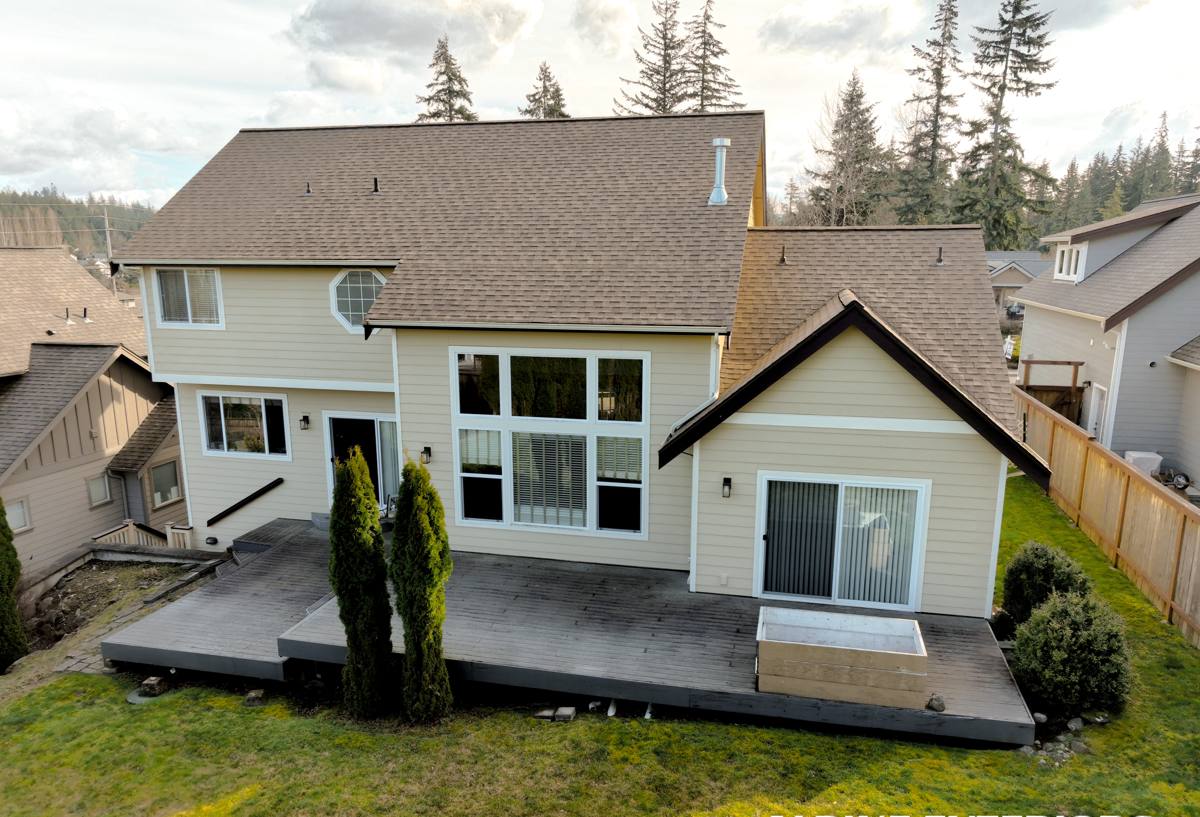
What Geneva Homes Actually Need From Their Siding
Before we talk about product, it helps to be specific about what "right for this climate" means in practical terms:
- Dimensional stability when it's saturated for days at a time — no swelling at the edges, no soft cores
- A factory finish that resists moss, mildew, and algae staining better than field-applied paint
- Resistance to plywood-style delamination or edge rot at butt joints and corners, which is where driving rain does the most damage
- A warranty structure that actually covers the coastal/high-moisture conditions this area sees, not just fine print exclusions
- Color retention that doesn't chalk or fade under repeated wet-dry cycling
This is the checklist we measure every product against, and it's the reason we standardized on James Hardie fiber cement rather than carrying multiple siding lines.
Why We Don't Install Everything on the Market
We get asked from time to time about vinyl, engineered wood siding, and a few other fiber cement brands. Our answer is consistent: we install James Hardie, exclusively. Vinyl siding softens and warps under sustained heat and can crack in a hard freeze, and its seams give moisture a path inward — not a great match for a climate that alternates between soggy and, on occasion, sharply cold. Engineered wood products depend heavily on an intact factory coating; once that's compromised at a cut edge or a fastener hole, the wood substrate is exposed to exactly the kind of standing moisture Geneva gets all winter. We'd rather put one product on a house and know how it performs in this exact climate than juggle five products and hope.
What Correct Fiber Cement Installation Involves
Fiber cement siding is only as good as the install behind it. Hardie's own installation instructions are specific for a reason — this is a rigid, cement-based product, and it doesn't forgive shortcuts the way a flexible material might.
The Parts That Matter Most in This Climate
| Step | Why It Matters in Geneva |
|---|---|
| Weather-resistive barrier + proper flashing | Driving rain off the water needs a drainage plane behind the siding, not just a barrier that blocks bulk water once |
| Rainscreen or furring where called for | Lets any moisture that does get behind the panel dry out instead of sitting against sheathing |
| Correct fastener pattern and clearance | Over- or under-driven nails create gaps that catch water and telegraph through the ColorPlus finish |
| Proper caulking at penetrations, not seams | Hardie panels are engineered with specific gapping; caulking the wrong joints traps moisture instead of shedding it |
| Ground clearance and grade slope | Keeps splash-back and standing water off the bottom course, a common failure point on shaded, damp lots |
| Factory-primed cut edges sealed on-site | Any exposed cut edge is a moisture entry point if it isn't sealed before the panel goes up |
Every one of these is a place where a rushed installer can save an hour and cost the homeowner years of siding life. On a lot with heavy tree cover — common around Sudden Valley — the drying time between rain events is shorter, so any mistake in the water-management details gets amplified.
How We Approach a Geneva Siding Job
1. Site and Exposure Assessment
We walk the property and note which elevations take the worst of the weather — usually the side facing the prevailing wind and rain, plus any wall that stays shaded and damp longer than the rest of the house. That tells us where to be most careful with flashing details and where moss growth is likely to return if the siding and finish aren't up to it.
2. Tear-Off and Substrate Check
Once the old siding comes off, we check the sheathing underneath for rot, soft spots, or prior water intrusion — common on older Whatcom County homes that have been through a few wet decades. Anything compromised gets addressed before new siding goes up; covering damaged sheathing with new siding just hides the problem.
3. Weather Barrier and Drainage Plane
We install a proper weather-resistive barrier and flashing system sized for this area's rain volume, with a drainage gap where the wall assembly calls for it.
4. James Hardie Panel Installation
Panels go up to Hardie's fastening and clearance specifications, with cut edges sealed and joints detailed to shed water rather than trap it.
5. Final Detailing and Walkthrough
Trim, caulking at true penetrations, and a walkthrough so the homeowner understands what maintenance (if any) the ColorPlus finish actually requires — which, done right, is minimal.
James Hardie Product Lines That Fit This Area
Hardie makes climate-engineered product lines, and for the Pacific Northwest we typically work with the HZ5 line, formulated for wetter, more moderate climates rather than the freeze-heavy HZ10 formulation used further inland and north. The distinction matters less for marketing and more for how the cement formulation handles repeated moisture cycling without the freeze-thaw stress you'd see in harsher interior climates.
Beyond the core plank and panel products, homeowners in Geneva typically choose between a few formats:
- Lap siding — the most common choice, available in several exposure widths and smooth or cedar-textured finishes
- Board and batten (vertical panels) — often used as an accent on gables or entry features
- Shingle-style panels — for homes wanting a traditional look without individual cedar shingle maintenance
All come with the factory-applied ColorPlus finish, which is baked on and warranted separately from the substrate — a meaningful advantage over field-painted siding in a climate where repainting every few years isn't realistic for most homeowners.
Cost Factors for a Geneva Fiber Cement Project
| Factor | How It Affects the Job |
|---|---|
| Home size and number of stories | More surface area and difficult access (steep lots common near the lake) affect labor time |
| Condition of existing sheathing | Rot repair found during tear-off adds cost but should never be skipped |
| Siding profile and accent details | Board and batten accents, trim work, and multiple exposure widths add complexity over a simple lap job |
| Tear-off vs. installing over existing siding | Full tear-off costs more up front but lets us verify and fix what's underneath |
| Site access and tree cover | Tight or heavily wooded lots around Sudden Valley can slow staging and material handling |
We don't quote a job without seeing the house — anyone who does is guessing, and on a property with the moisture exposure Geneva sees, guessing about sheathing condition or drainage detailing is how homeowners end up paying twice.
Signs Your Current Siding Is Already Losing the Fight
- Persistent green or black staining that comes back within weeks of cleaning
- Soft or spongy spots when you press on panels, especially near the bottom courses
- Visible cupping, warping, or panels pulling away from the wall at seams
- Paint that's peeling or bubbling rather than just fading
- Increased drafts or a musty smell along exterior walls, which can point to moisture already behind the siding
Any one of these on its own isn't necessarily an emergency, but on a Geneva property they tend to compound quickly given how little drying time the climate offers between storms.
Why Local Experience Matters Here
A crew that's worked Sudden Valley and the surrounding Lake Whatcom communities knows which elevations of a house take the worst weather, how shaded lots hold moisture longer, and where moss and mildew come back the fastest. That's not something you can fully account for from a generic install checklist — it comes from having done the work here, on homes dealing with the same salt air, rain patterns, and tree cover your property does. It also means we're not learning Whatcom County's building and moisture-management realities on your dime.
If your current siding is showing its age, or you're planning ahead of your next wet season, we're happy to walk your property and give you a straight assessment — no pressure, no upsell into products we don't stand behind. Reach out for a free estimate using the form below.