 Sudden Valley Siding
 Why Fairhaven's Climate Is Hard on Ordinary Siding
Fairhaven sits close enough to the water that salt-laden air is part of daily life, and that air doesn't stay near the shoreline — wind carries it up into the trees and onto every exposed wall in the neighborhood. Combine that with Whatcom County's long wet season, driving rain that comes in sideways off Bellingham Bay during winter storms, and a moss season that can stretch from fall through spring, and you have a set of conditions that punishes any siding material with a weak point. Salt accelerates corrosion in fasteners and trim. Sustained moisture finds gaps in caulking and paint film. Moss and algae hold water against a wall long after a storm has passed, feeding rot in anything that isn't genuinely resistant to it.
None of this means Fairhaven homes need anything exotic. It means they need siding installed to a standard that assumes the worst week of a Whatcom County winter, not the best week of a Whatcom County summer. That's the standard we hold every job to, and it's why we only install James Hardie fiber cement siding rather than the wider range of products other contractors carry.
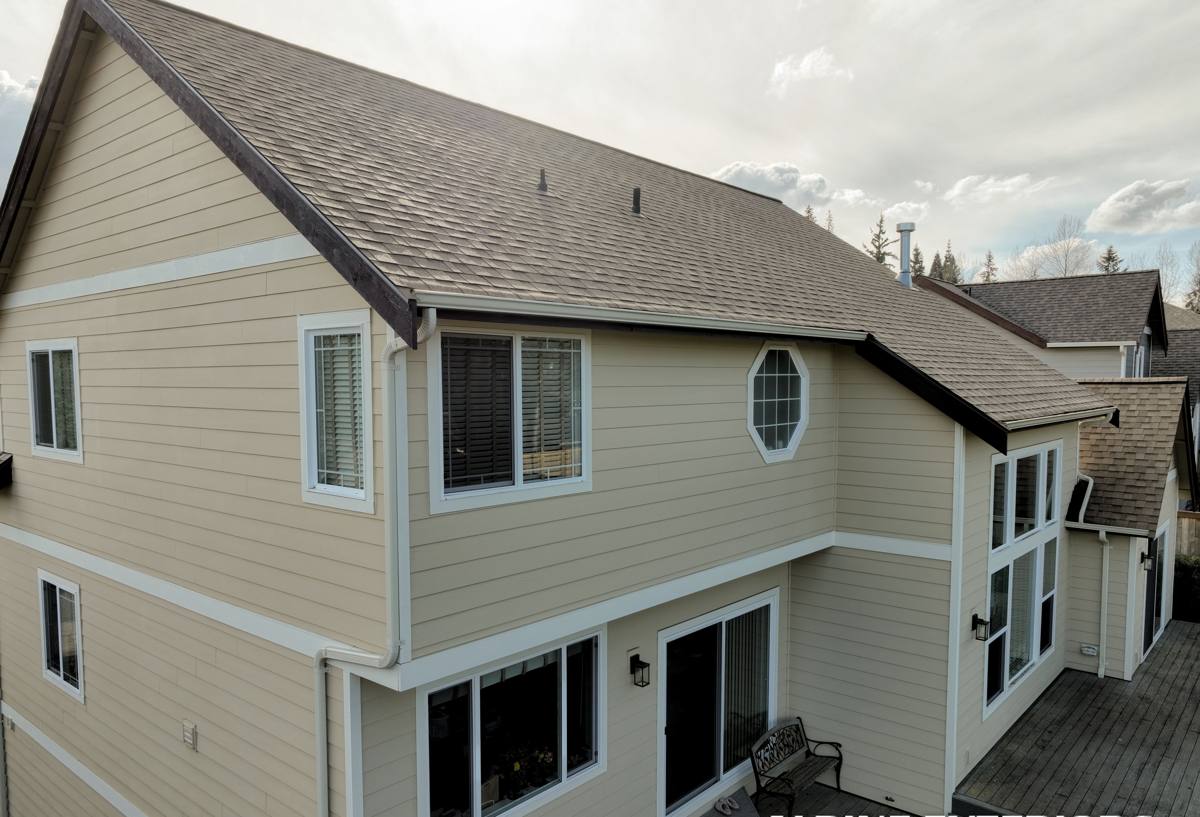
Why We Only Install James Hardie Fiber Cement
We get asked regularly why we don't offer vinyl, LP SmartSide, or other fiber cement brands. The honest answer is that we've seen how each of those products performs over a decade or two in this exact climate, and we'd rather stand behind one product we trust completely than offer several we'd have reservations about.
Vinyl is inexpensive and easy to install, but it's a petroleum-based product that expands and contracts with temperature swings, and its seams and J-channels give salt-laden moisture places to collect. LP SmartSide is a wood-strand product with an engineered resin coating — it holds up reasonably well when detailing is perfect, but it's still an engineered wood product, and engineered wood and sustained coastal moisture are not a combination we want our name attached to. Fiber cement from other manufacturers can be a reasonable product, but James Hardie's ColorPlus finish, HZ5 climate-engineered formulation, and transferable warranty are, in our professional judgment, the best-documented combination on the market for a marine-influenced climate like ours.
What Hardie Gets Right for This Area
- Non-combustible core — a real advantage during the dry-summer wildfire smoke seasons the Pacific Northwest has seen more of in recent years
- Engineered specifically for moisture cycling rather than adapted from a drier-climate product
- Factory-applied ColorPlus finish that doesn't rely on field-applied paint holding up against salt air
- A fastener and flashing system with a long track record when installed to manufacturer spec
The HZ5 System and Why It Matters Here
James Hardie manufactures regional formulations of its siding under what it calls the HZ (Hardie Zone) system. Whatcom County falls into the HZ5 zone, which is engineered for climates with sustained moisture exposure and freeze-thaw cycling rather than the hot, dry HZ10 formulation used in the desert Southwest. Using the correct zone product isn't a marketing detail — it affects how the board handles moisture absorption and expansion over its lifespan. We only order HZ5 product for Fairhaven and the rest of Sudden Valley's service area, and we check the batch documentation against the delivery to confirm it before installation starts.
Product Lines We Install
| Product | Typical Use | Why It Fits Fairhaven |
|---|---|---|
| HardiePlank lap siding | Primary wall cladding, most common choice | Widest color and texture range; proven performance in coastal wind-driven rain |
| HardiePanel vertical siding | Accent walls, gables, modern facades | Fewer horizontal seams for water to track along on exposed elevations |
| HardieShingle | Accent sections, dormers | Matches the shingle-style look common in older Whatcom County homes without the maintenance of cedar |
| HardieTrim | Corners, window and door casing | Non-combustible, consistent finish alongside the field siding |
What a Correct Installation Actually Involves
Fiber cement siding fails early almost always because of installation mistakes, not the product itself. In a climate like Fairhaven's, the margin for error is smaller than it would be somewhere drier, because any gap in the water management system gets tested by real rain within weeks, not years.
The Details That Matter Most
- A correctly lapped weather-resistant barrier behind the siding, integrated with window and door flashing rather than just stapled up and covered
- Rainscreen or furring strip installation where wall orientation and exposure call for it, so bulk water and vapor can drain and dry rather than sitting against the sheathing
- Manufacturer-specified fastener spacing and type — the wrong fastener in a salt-air environment corrodes faster and can streak the finish
- Proper clearance between the bottom of the siding and grade, decks, and roof lines so moisture and moss-prone debris don't sit against the board
- Caulked and back-primed cut ends, since factory ColorPlus protection doesn't extend to a field cut unless it's sealed
- Butt joints and corners detailed to shed water outward rather than trap it
Skipping any one of these doesn't usually show up on inspection day. It shows up two or three winters later as a dark stain at a butt joint, a soft spot at the bottom course, or moss establishing itself at a corner where water lingers. That's the failure pattern we get called out to fix on homes that had siding installed by crews unfamiliar with coastal detailing — and it's entirely avoidable with attention at install time.
Our Process for a Fairhaven Fiber Cement Job
1. On-Site Assessment
We walk the exterior with you, looking at current siding condition, existing moisture damage, wall orientation relative to prevailing weather, and any trouble spots like decks, hose bibs, or shaded north walls where moss tends to establish first.
2. Tear-Off and Substrate Check
Old siding comes off and we inspect the sheathing underneath before anything new goes up. Rot or soft sheathing gets addressed before the water-resistant barrier is installed — covering a problem with new siding just delays and hides it.
3. Water Management Layer
House wrap or building paper is installed and lapped correctly, integrated with flashing at every window, door, and penetration. Where the wall assembly calls for it, we install a rainscreen gap.
4. Siding Installation
HZ5 James Hardie product is installed to manufacturer fastener and clearance specifications, with cut ends sealed and joints detailed to shed water.
5. Final Walkthrough
We review the finished work with you, including care instructions specific to a salt-air, high-moss environment, before we consider the job complete.
What a Fairhaven Siding Job Typically Costs
Every home is different, and the only way to get an accurate number is a walk-through, but these are the main factors that move the price on a Sudden Valley or Fairhaven fiber cement project:
| Factor | Why It Affects Cost |
|---|---|
| Amount of existing damage | Rotted sheathing or framing found during tear-off adds repair scope beyond the siding itself |
| Wall complexity | Dormers, multiple gables, and cut-up facades take more labor and trim than a simple rectangular wall |
| Rainscreen requirement | Walls with heavy weather exposure may need a furring/rainscreen assembly, which adds material and labor |
| Product line mix | Combining lap siding with shingle or panel accents costs more than a single product throughout |
| Color and finish | Factory ColorPlus finishes vary modestly in price by color; custom field-painted finish adds a separate cost |
| Access and site conditions | Steep lots, limited driveway access, or multi-story walls affect staging and labor time |
Living With Fiber Cement Through Salt Air and Moss Season
Correctly installed HZ5 Hardie siding is genuinely low-maintenance compared to wood or engineered wood alternatives, but "low-maintenance" isn't "no-maintenance" in this climate. A once- or twice-a-year rinse-down removes salt residue and slows moss and algae establishment, especially on north-facing and shaded walls. Keep gutters clear so overflow doesn't run down the face of the siding, and keep plantings and mulch pulled back a few inches from the bottom course so moisture and debris don't sit against it. Because the ColorPlus finish is baked on at the factory, you're not chasing peeling paint the way you would with field-primed products — but a damaged panel should still be repaired or replaced promptly rather than left to let moisture behind the wall.
Why Hiring a Crew That Already Works Fairhaven Matters
Fairhaven's mix of older homes, newer infill, and a range of wall exposures to wind-driven rain means there's no single generic installation approach that works everywhere in the neighborhood. A crew that already works this part of Whatcom County has already seen which walls in this area take the worst weather, which older homes tend to have hidden moisture issues behind existing siding, and how to detail around the details that recur locally — deck ledgers, shaded north walls, and exposed gable ends. That local pattern recognition is the difference between a siding job that looks right on installation day and one that's still performing correctly ten winters from now.
Questions to Ask Any Siding Contractor Before You Hire
- Do you install a rainscreen or furring assembly where wall exposure calls for it, or is it flat-nailed to the sheathing everywhere?
- Which James Hardie climate zone product do you order for this area, and can you show it on the delivery documentation?
- What's your fastener spec, and do you follow manufacturer instructions or a generic install pattern?
- Do you inspect and repair sheathing before re-siding, or does new siding go straight over what's there?
- Can you walk me through how you'll detail the corners and butt joints on my specific home?
If your Fairhaven home's siding is showing moss staining, soft spots, or you're simply planning ahead for a replacement, we're happy to walk the exterior with you and give you a straight, no-pressure assessment. Use the form below to request a free estimate.