 Sudden Valley Siding
 Why Fairhaven Siding Wears Differently Than Siding Inland
Fairhaven sits close enough to the water that salt-laden air is a constant, low-grade stressor on exterior building materials — something homes further inland in Whatcom County simply don't deal with to the same degree. Add in the long stretches of driving rain that blow in off the Sound most of the year, plus a moss and algae season that can run from fall through spring in the shaded, moisture-heavy pockets common to this area, and you get a siding failure pattern that looks different from what we see on a dry-side house. Salt air accelerates corrosion on fasteners and metal trim, damp cycles keep organic growth active longer, and wind-driven rain finds every gap in caulking or flashing that a calmer climate would never expose.
None of this means Fairhaven homes need more repair work than the rest of Sudden Valley and greater Whatcom County — it means they need the right kind of repair work, done with materials and techniques that account for moisture and salt exposure instead of ignoring it. That's the lens we bring to every siding repair call in this neighborhood.
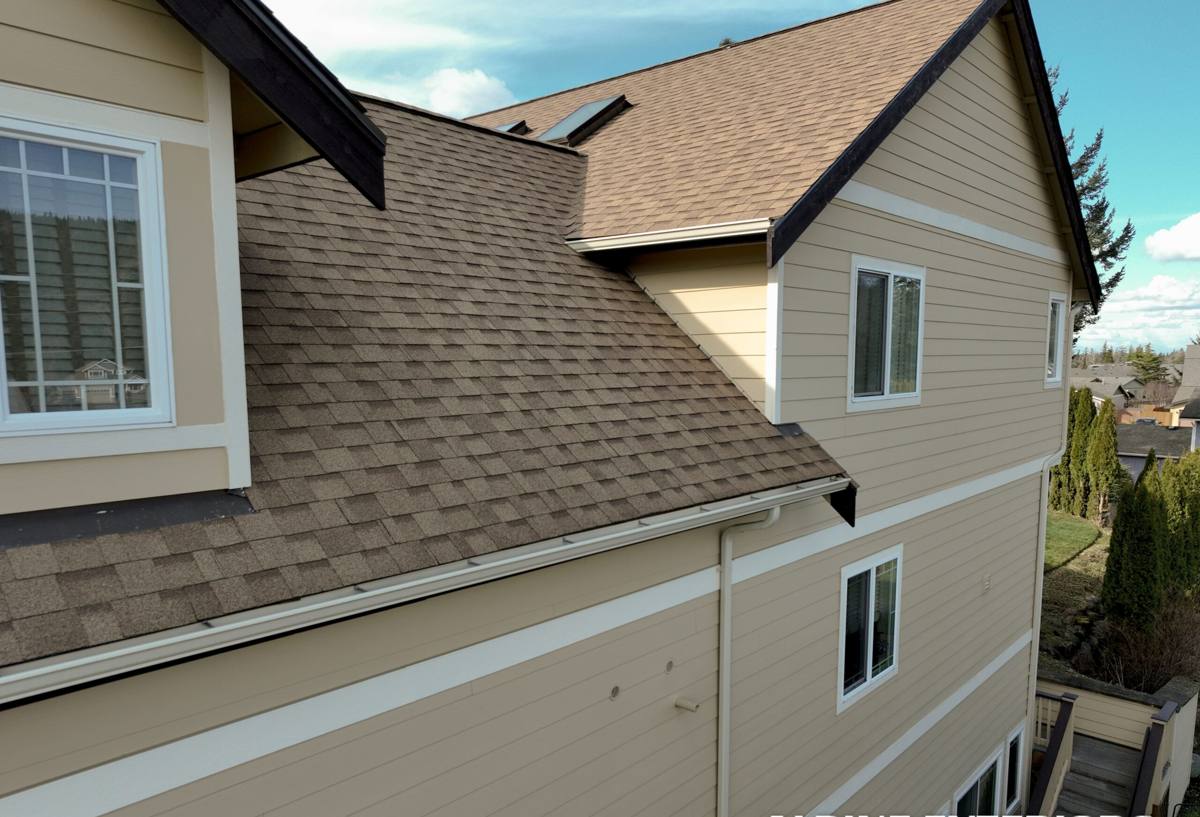
What Siding Repair Actually Involves in a Coastal-Adjacent Climate
"Siding repair" covers a wide range of problems, and lumping them together is how homeowners end up with a patch that fails again in a year or two. In Fairhaven, the repair calls we see most often break down into a few categories:
- Moisture intrusion behind the siding — usually from failed caulking, poor flashing at windows and trim, or siding that was never properly gapped and sealed at the factory-cut edges.
- Delamination or swelling on wood-based or engineered wood siding, where repeated wet-dry cycles have broken down the material at seams and butt joints.
- Moss and algae staining on north-facing and shaded wall sections, which is cosmetic on sound material but can mask trapped moisture underneath if left too long.
- Impact damage — cracked or dented panels from storm debris, tree limbs, or routine yard work.
- Fastener and trim corrosion, where salt air has accelerated rust on nails, screws, or metal flashing well before the siding field itself has failed.
Signs a Fairhaven Home Needs Siding Repair Soon
- Soft or spongy spots when you press on the siding near the bottom courses or around window trim
- Visible gaps, cracks, or separated caulk joints at butt seams and corners
- Paint that's bubbling, peeling, or failing faster than the rest of the house
- Dark streaking or persistent moss growth that comes back within weeks of cleaning
- Rust stains bleeding from nail heads or trim fasteners
- Any musty smell or interior wall staining that lines up with an exterior wall
Repair or Replace? How We Make That Call
Not every damaged section needs a full re-side, and we don't push replacement when a targeted repair will genuinely hold up. The honest answer depends on how much of the wall is affected, what's causing the damage, and what the siding is made of.
| Situation | Usually a Repair | Usually Full Replacement |
|---|---|---|
| Isolated impact damage (1-2 panels) | Yes | No |
| Moisture damage limited to one wall section | Yes, with root-cause fix | No |
| Widespread delamination or swelling | No | Yes |
| Original material is vinyl, LP, or old cedar nearing end of life | Sometimes, short-term only | Yes, for a lasting fix |
| Recurring moss/algae with no rot underneath | Yes (cleaning + sealing) | No |
| Damage traced to a single flashing or caulk failure | Yes | No |
The key question we're always answering first is why the section failed. Patching over a symptom without correcting the flashing, gapping, or drainage problem that caused it just buys a homeowner a few more years before the same spot fails again.
Why We Repair With James Hardie Materials — Not Whatever's on the Wall
We install and repair exclusively with James Hardie fiber cement siding. We don't stock or install vinyl, LP SmartSide, Cemplank, Allura, primed spruce, or cedar, and that standard applies to repair work too. If a Fairhaven home already has Hardie siding, a repair is straightforward — we match the existing HZ5 product line and ColorPlus finish so the patch blends in and carries the same moisture and fire resistance as the rest of the wall.
If a home has a different siding material and the damage is isolated, we'll tell you honestly what a like-for-like patch can and can't do — engineered wood and vinyl each have their own repair limitations, and we won't pretend a temporary fix is more durable than it is. When damage is widespread enough that a real fix means replacing whole wall sections, that's the point where we recommend transitioning to James Hardie rather than reinstalling a product with the same moisture-sensitivity or maintenance burden that caused the original failure. Fiber cement doesn't swell, delaminate, or feed moss the way wood-based products can, and in a climate with this much sustained dampness, that matters more here than in drier parts of the state.
Our Process for a Correct Repair
- On-site diagnosis. We look past the visible crack or stain to find the actual moisture path — flashing, caulk, grading, or a gap that was never sealed correctly.
- Root-cause correction first. Any flashing, house wrap, or drainage issue gets fixed before new siding goes back up. A cosmetic patch over an unfixed cause is not a repair we'll stand behind.
- Material matching. For existing Hardie siding, we match plank profile, exposure, and ColorPlus finish so the repair is not a visible patch job.
- Correct fastening and gapping. Fiber cement has specific fastener and clearance requirements — done wrong, this is where premature failures start. We follow manufacturer spec, not shortcuts.
- Sealant and trim detailing. Given how much wind-driven rain this area gets, we pay particular attention to caulk joints, kick-out flashing, and trim intersections — the spots that fail first.
- Final inspection. We walk the repair with you before calling it done.
What Affects the Cost of a Siding Repair
| Factor | Why It Matters |
|---|---|
| Extent of hidden moisture damage | Rotted sheathing or framing behind the siding adds scope beyond the visible panel |
| Material match | Matching an existing ColorPlus finish or discontinued profile can take more sourcing time than a stock replacement |
| Access and wall height | Second-story or hard-to-reach sections take longer and need more equipment |
| Root-cause repairs needed | Flashing, house wrap, or trim corrections add labor but prevent repeat failures |
| Number of separate damage areas | Several small spots across a house can cost more in aggregate than one larger contiguous section |
We give straightforward, itemized estimates so you know what you're paying for the visible repair versus what you're paying to fix the underlying cause — those are two different things and we don't blur them together.
Why It Matters to Hire a Crew That Already Works This Neighborhood
Fairhaven's exposure to salt air, wind, and sustained moisture isn't unique in the world, but it's specific enough that a crew unfamiliar with coastal-adjacent Whatcom County conditions can miss things — under-flashed trim that looks fine dry, fastener choices that corrode faster near salt air, or moss treatment that doesn't account for how quickly it returns in shaded wet spots. A crew that regularly works Fairhaven and the wider Sudden Valley area has already seen how these specific conditions play out on real houses, season after season, and diagnoses accordingly instead of guessing.
It also means faster turnaround on estimates and follow-up visits, since we're not routing a special trip across the county for a single job.
Keeping Repaired Siding Sound Afterward
- Rinse moss and algae off shaded wall sections at least once a year before it gets a foothold
- Keep gutters clear so overflow doesn't run directly down wall sections
- Trim back vegetation that keeps siding shaded and damp longer than the rest of the house
- Recaulk trim and butt joints on the schedule your siding manufacturer recommends — don't wait for visible gaps
- Walk the exterior once a year and press-test any area that looks discolored or slightly bowed
A correct repair should last as long as the surrounding siding when the root cause is actually fixed — recurring failures in the same spot are the clearest sign that something upstream was never addressed.
If you're seeing damage, staining, or soft spots on your Fairhaven home's siding, we're happy to take a look and give you a straightforward, no-pressure assessment of what's actually going on and what it will take to fix it right. Use the form below to request a free estimate.