 Sudden Valley Siding
 Windows Built for the Happy Valley Climate
Happy Valley sits inside the Sudden Valley community on Lake Whatcom, close enough to the water that homes here deal with a different set of pressures than a house ten miles inland. Salt-tinged air drifts up from Bellingham Bay on a southwest wind, driving rain comes in sideways off the lake during fall and winter storms, and the shoulder seasons stretch long and damp enough to grow moss on anything that stays wet too long. Windows are one of the first things in a house to show the strain of that combination. Old aluminum-frame units fog between the panes, wood sashes swell and stick, and vinyl frames that were never rated for this kind of exposure start to bow or discolor years before they should.
When we talk about "energy-efficient windows" for a Happy Valley home, we mean something more specific than a sticker on the glass. We mean a window and installation system matched to Whatcom County's wind-driven rain, temperature swings between summer afternoons and winter nights on the water, and the reality that a poorly flashed window here fails faster than the same window installed in a drier part of the state.
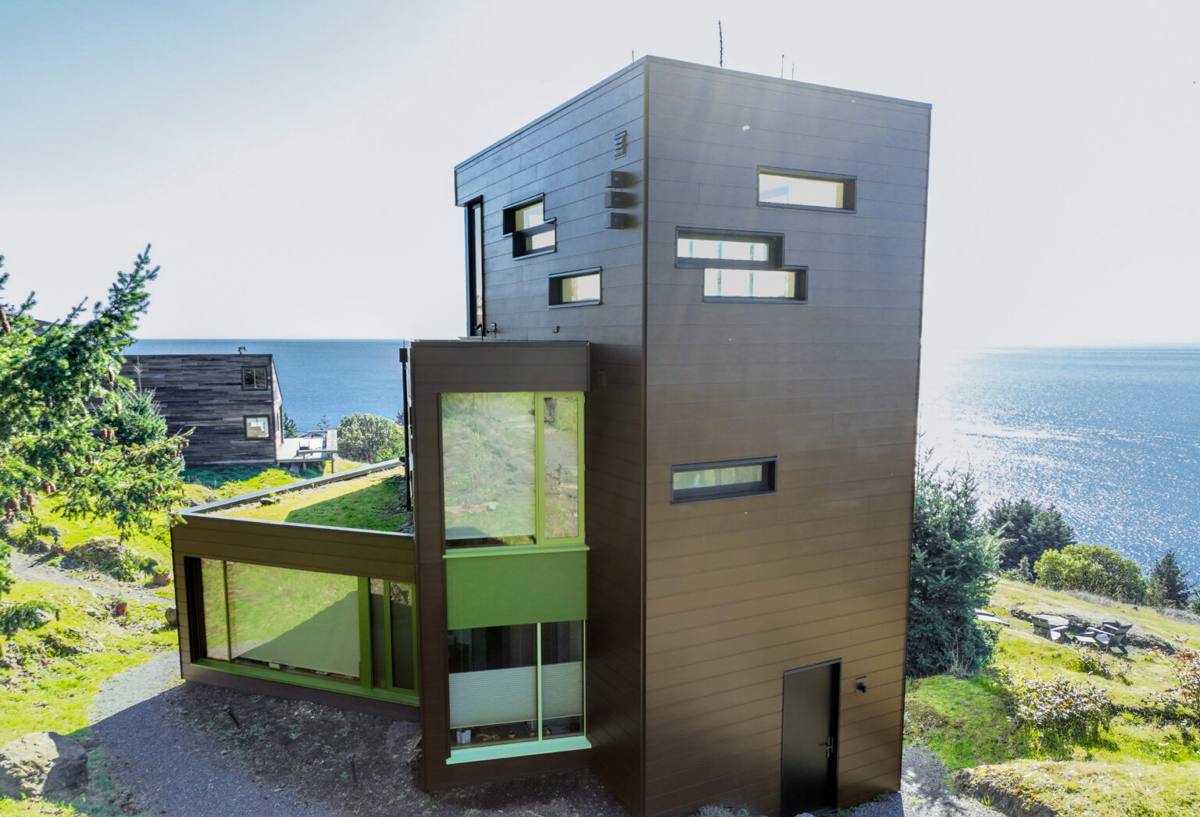
What Local Homes Actually Need From Their Windows
Most of the houses we work on around Sudden Valley and Happy Valley were built across a range of decades, and each era brings its own window problems. Older single-pane or early dual-pane aluminum units are the biggest energy drains — they conduct cold straight through the frame and fog up internally once the seal fails. Vinyl windows from the 1990s and early 2000s are often past their practical service life, with clouded glass and hardware that no longer locks tight. Even newer windows can underperform here if they weren't installed with the right flashing and sealant details for a lake-adjacent, high-moisture site.
Signs a Window Is No Longer Doing Its Job
- Visible fog, haze, or moisture trapped between the panes of glass
- Cold air noticeably moving past the frame on windy days
- Wood sashes that stick, swell, or show soft spots at the corners
- Condensation forming on the inside of the glass during cold snaps
- Frames that have discolored, chalked, or started to warp
- Rising heating bills without a clear explanation elsewhere in the house
If a house is showing two or three of these signs, it's usually not one bad window — it's the whole set reaching the end of its useful life at roughly the same time, which is common since most homes get their windows installed in a single pass.
Why Installation Quality Matters More Here Than the Glass Spec
Homeowners often assume the window unit itself — the glass package, the frame material, the brand — is what determines energy performance. In a climate like this one, installation is at least as important. A high-end window with poor flashing will leak water behind the siding within a few seasons, and once moisture gets into the wall cavity in a place that stays damp as long as Whatcom County does, it doesn't dry out on its own. We've opened up plenty of walls where the window itself was fine but the flashing was an afterthought, and the rot had already spread into the framing.
What a Correct Installation Includes
- Removing the old window and inspecting the rough opening and sill for hidden rot or moisture damage before anything new goes in
- Installing a sloped sill pan so any water that gets past the window drains outward instead of pooling
- Layering flashing tape and housewrap in the correct shingle-lap order so water sheds down and out, never in
- Setting the window level, plumb, and square, then securing it per the manufacturer's fastening schedule
- Sealing the interior air barrier separately from the exterior water barrier — these are two different jobs, not one bead of caulk
- Insulating the gap between the frame and rough opening without overpacking it, which can bow the frame
- Reinstalling or replacing trim and siding so the water management plane is continuous, not interrupted
Skip any one of those steps and the window may look fine for a year or two while quietly letting moisture into the wall — which, in this climate, turns into a much bigger repair than the original window job.
Choosing the Right Window for a Lake-Adjacent Property
Not every energy-efficient window on the market is a good fit for a home exposed to lake weather and salt-influenced air. We look at frame material, glass package, and hardware with this specific exposure in mind rather than defaulting to whatever is cheapest or most heavily advertised.
| Frame Material | Performance in This Climate | Trade-Offs to Know |
|---|---|---|
| Vinyl (quality-grade) | Good insulation value, no rot risk, holds up well to moisture | Lower-end vinyl can warp or discolor with sun and temperature swings; quality varies a lot by manufacturer |
| Fiberglass | Very stable in wet, variable climates; expands and contracts close to glass, reducing seal stress | Higher upfront cost than vinyl |
| Wood (clad exterior) | Strong insulator, classic look for older homes | Exterior cladding must be intact and well-sealed or moisture gets into the wood core |
| Aluminum | Durable frame, but conducts heat and cold directly | We generally steer homeowners away from bare aluminum here unless it's a thermally broken frame, given the energy loss |
For most Happy Valley homes we end up recommending vinyl or fiberglass with a dual-pane, low-E glass package and argon gas fill, because it balances upfront cost against long-term performance in a wet, temperature-variable climate. We'll walk through the honest trade-offs of each option for your specific house rather than pushing one product line.
Glass Package Basics Worth Understanding
Low-E (low-emissivity) coatings reflect radiant heat while still letting visible light through, which helps keep summer heat gain down and winter heat loss lower. Argon gas fill between panes adds insulation value over plain air fill at a modest cost increase. For most homes in this area, a standard dual-pane low-E unit with argon fill hits the right balance of performance and price — triple-pane is available but usually isn't necessary unless a home has an unusually exposed, wind-battered elevation facing the lake.
Moss, Algae, and the Long Wet Season
Whatcom County's wet season runs long, and anything that stays damp for extended stretches — trim, sills, the tops of window frames — becomes a candidate for moss and algae growth. This isn't just cosmetic. Moss holds moisture against the surface it's growing on, and around windows that means prolonged dampness right at a seam that's already vulnerable to water intrusion. Part of doing this job right is making sure water sheds cleanly away from the window head and sill so there's nothing for moss to take hold on in the first place. We also pay attention to drip caps and head flashing details that keep water moving off the top of the window rather than sitting on it.
Our Process for a Happy Valley Window Project
- On-site assessment: We walk the exterior and interior, check for signs of moisture damage around existing windows, and evaluate current frame condition, orientation, and exposure to prevailing weather.
- Honest recommendation: We tell you which windows genuinely need replacement now, which can wait, and which frame/glass combination fits your home and budget — no upselling windows you don't need.
- Detailed estimate: A written quote covering unit cost, installation, flashing and water management work, and any trim or siding repair the job requires.
- Rough opening inspection: Once the old window is out, we check the framing and sill for hidden rot before installing anything new — this is where problems that started years ago usually get found.
- Correct installation: Sill pan, flashing sequence, air sealing, and fastening done to manufacturer spec and matched to this climate's demands.
- Final walkthrough: We check operation, seal quality, and trim finish with you before calling the job done.
Questions Worth Asking Before You Hire Anyone for This Job
- Will you inspect the rough opening for rot before installing the new window?
- What's your flashing sequence, and how does it handle wind-driven rain specifically?
- Are you licensed and insured to work in Whatcom County?
- What warranty covers the window itself versus the labor and installation?
- Have you done work in Sudden Valley or similar lake-adjacent neighborhoods before?
Cost Factors for Window Replacement in This Area
Every window job is different, but a few factors consistently move the price up or down for homes in Happy Valley and the broader Sudden Valley area:
| Factor | Effect on Cost |
|---|---|
| Number of windows replaced at once | Doing multiple windows in one visit lowers the per-window labor cost compared to one-off replacements |
| Hidden rot found at the rough opening | Framing repair adds cost but is far cheaper to fix now than after another wet season |
| Frame material and glass package chosen | Fiberglass and upgraded glass packages cost more upfront than standard vinyl dual-pane |
| Second-story or hard-to-access windows | Staging and access add labor time |
| Matching existing trim and siding | Custom trim work to blend with existing exterior can add to the scope |
We provide a written, itemized quote before any work starts so there are no surprises once the job is underway.
Why Local Experience Matters for This Job
A crew that mostly works drier inland areas won't necessarily think twice about flashing details that matter a great deal on a lake-adjacent property in Whatcom County. We work in Sudden Valley and Happy Valley regularly, which means we've seen how these specific homes age, where water tends to find its way in, and which installation shortcuts show up as callbacks two or three years down the road. That local pattern recognition is the difference between a window job that just looks finished and one that actually holds up through another twenty years of lake weather.
If your Happy Valley home has windows showing their age, or you're planning ahead before the next wet season sets in, we're happy to take a look and give you a straightforward assessment — no pressure, no sales script. Reach out for a free estimate and we'll walk your home with you and lay out exactly what we'd recommend and why.