 Sudden Valley Siding
 Edgemoor's Weather Is Harder on Siding Than It Looks
Homes in and around Edgemoor deal with a combination most siding never gets designed for: salt-laden air moving in off the water, long stretches of driving, wind-blown rain, and a moss season that can run most of the year in Whatcom County. Individually, none of those is dramatic. Together, over ten or fifteen years, they're exactly what wears out lap siding from the outside in — and, if the water management behind it was ever marginal, from the inside out too.
We're a Sudden Valley-based crew, and Edgemoor is part of our regular service area, not a one-off job we drove out for. That matters more than it sounds like it should, and we'll get into why further down. First, it's worth being clear about what this climate actually does to a wall system, because that's what should drive the decision to replace siding in the first place.
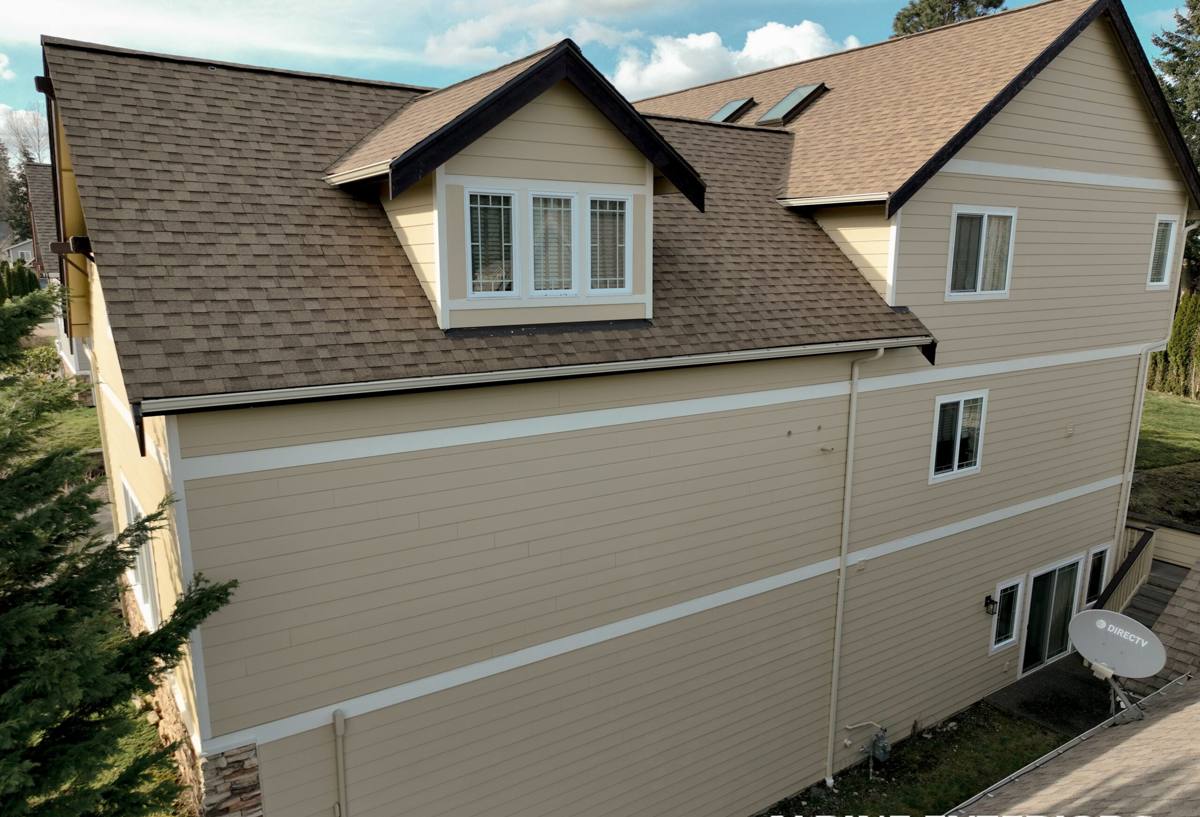
What Salt Air, Driving Rain, and Moss Actually Do
Salt air accelerates corrosion on anything metal — fasteners, flashing, trim screws — faster than it will a few miles inland. When those components fail quietly behind the siding, the siding itself can look fine for years while the assembly underneath is already compromised. Driving rain, especially wind-driven rain hitting a wall at an angle, finds every gap in caulking, every under-flashed window, and every place siding wasn't lapped correctly. And moss doesn't just sit on the surface — it holds moisture against the siding face and butt joints for extended periods, which is exactly the condition that makes wood-based products swell, delaminate, or rot.
None of this is unique to Edgemoor. It's the reality for most of coastal and near-coastal Whatcom County. But it's a good reason to treat "siding replacement" here as a moisture-management project first and a cosmetic project second.
Signs You're Past the Point of Repair or Repaint
A lot of homeowners call us for a repaint quote and end up needing a replacement conversation instead. A few signs tend to show up together:
- Soft or spongy spots when you press on the siding near the bottom courses or under windows
- Paint that's failing (peeling, bubbling) within two or three years of a repaint, especially on the north and west-facing walls
- Persistent moss or dark staining at horizontal joints that comes back within a season of cleaning
- Visible gaps, warping, or separation at butt joints and trim
- Musty smell or discoloration on interior walls that back up to exterior siding
One or two of these can sometimes be addressed with targeted repair. Several at once, especially combined with age, usually means the underlying wall assembly needs to be opened up and redone correctly — not just re-covered.
What a Correct Siding Replacement Actually Involves
Replacing siding well is mostly about what happens before the new siding ever gets installed. The finish material gets the attention, but the water-resistive layer behind it is what determines whether the job lasts five years or thirty.
Tear-Off and Sheathing Inspection
Once the old siding comes off, we inspect the sheathing underneath for rot, delamination, or soft spots — particularly around windows, doors, and any spot where the old siding showed problems. Any damaged sheathing gets replaced before anything new goes back on. Skipping this step is the single most common shortcut that leads to callbacks a few years later.
Water-Resistive Barrier and Flashing
A new weather-resistive barrier goes on correctly lapped, and flashing gets installed at every window, door, and horizontal transition so water is directed out and away from the wall, not behind it. In a climate with regular driving rain, this layer is doing most of the real work — the siding on top of it is the second line of defense, not the only one.
Rainscreen and Drainage Gap
Where conditions call for it, we build in a drainage gap behind the siding so any moisture that does get past the outer layer has somewhere to go and can dry out, rather than sitting against the back of the siding. This matters more in a moss-heavy, high-moisture area than it does in a drier climate, and it's an easy thing for a less careful crew to skip.
Fastening and Caulking Standards
Fasteners get installed to the manufacturer's specified pattern and depth, not just "close enough" — over-driven or under-driven nails are a common cause of premature siding failure. Caulking gets used at the joints and transitions the manufacturer actually calls for, not as a substitute for correct flashing.
Why We Only Install James Hardie Fiber Cement
We install James Hardie fiber cement siding exclusively. We don't install vinyl, LP SmartSide, or cedar, and we think that's worth explaining honestly rather than just stating as a policy. Each of those products has real strengths — vinyl is inexpensive and low-maintenance in dry climates, LP SmartSide is easier and faster to install than fiber cement, and cedar has a look a lot of homeowners genuinely love. But in a climate defined by salt air, driving rain, and sustained moisture, the trade-offs on all three point the same direction.
| Factor | Vinyl | LP SmartSide (engineered wood) | Cedar | James Hardie fiber cement |
|---|---|---|---|---|
| Moisture/rot resistance | Doesn't rot, but can warp and gap over time | Wood-based; vulnerable if moisture gets past the finish | Natural wood; needs consistent upkeep to resist rot | Non-combustible, fiber cement core is not wood — engineered to resist moisture damage |
| Performance in salt air / driving rain | Can become brittle and discolor with UV and salt exposure | Edge swelling is a known risk if joints aren't sealed and maintained | Needs regular sealing/staining to hold up | Climate-engineered HZ lines built for exactly these conditions |
| Maintenance | Low, but repairs can be hard to color-match | Periodic caulking and finish upkeep required | Ongoing staining/sealing on a multi-year cycle | Factory-applied ColorPlus finish reduces repainting cycles |
| Fire resistance | Melts/deforms under heat | Combustible (wood-based) | Combustible | Non-combustible material |
| Warranty | Varies by product line | Manufacturer warranty, moisture-sensitive claims common industry-wide | Typically no manufacturer warranty; performance depends on upkeep | Strong transferable manufacturer warranty when installed to spec |
We're not saying the other products are junk — they're not. We're saying that after years of doing this work in exactly this climate, fiber cement installed correctly gives homeowners here the best combination of longevity, low maintenance, and warranty protection. That's why it's the only thing we put on a house.
Our Edgemoor Siding Replacement Process
- On-site inspection. We walk the exterior, check for the failure signs above, and look at trim, flashing, and roofline details that affect the siding scope.
- Written scope and plan. You get a clear breakdown of what's being replaced, what siding line and profile we're recommending, and why — no vague allowances.
- Tear-off and sheathing check. Old siding comes off, sheathing is inspected and repaired as needed before anything goes back up.
- Water-resistive barrier, flashing, and drainage gap installed. This is the part that actually protects the house long-term.
- James Hardie siding installed to manufacturer fastening and clearance specs, including proper gaps at grade, decks, and roof lines to keep moisture from wicking in.
- Final walkthrough to check caulking, trim, and finish, and to register the manufacturer warranty in your name.
Why a Crew That Already Works Edgemoor Matters
Local experience shows up in details that are easy to miss from the outside. A crew that regularly works Edgemoor and the wider Sudden Valley area already knows how moss builds up on north-facing walls here, how much clearance to leave at grade given typical rainfall patterns, and which detailing tends to fail first on homes exposed to salt air. That's the kind of knowledge you only get from doing the work here repeatedly, not from a general contractor covering a much wider region.
It also matters logistically — scheduling, material delivery, and being able to come back quickly if a question comes up after the job is done are all easier when a crew is already working in the area regularly rather than passing through once.
If you're vetting any siding contractor for a replacement in this area, a few questions are worth asking before you sign anything:
- Do they inspect and repair sheathing before reinstalling, or just cover over what's there?
- What water-resistive barrier and flashing details do they use, specifically?
- Are they installing to the manufacturer's written fastening and clearance specifications?
- Is the manufacturer's warranty registered in your name after the job, and what does it actually cover?
- Do they have ongoing experience with homes in this specific climate, not just siding installation in general?
What Affects the Cost of a Siding Replacement
Every home is different, but the same handful of factors drive most of the variation in scope and price:
| Factor | Why it matters |
|---|---|
| Home size and number of stories | More square footage and taller walls mean more material and labor, plus added equipment needs for multi-story access |
| Tear-off complexity | Removing multiple old layers or siding installed over damaged sheathing takes longer than a single clean layer |
| Sheathing/moisture damage found during tear-off | Rot repair discovered once the old siding is off is common in this climate and should be budgeted as a possibility, not a surprise |
| Trim and detail work | Homes with more windows, dormers, and trim transitions require more flashing and cutting labor |
| Siding profile and finish selection | Different Hardie profiles and ColorPlus finishes carry different material costs |
Caring for Hardie Siding After Installation Here
Fiber cement siding installed correctly needs far less upkeep than wood-based alternatives, but "less" isn't "none," especially in this climate. A yearly rinse (not a high-pressure wash aimed directly at joints) keeps moss and algae from establishing on north-facing and shaded walls. Keeping gutters clear reduces the amount of water running down the wall face during heavy rain. It's also worth a periodic visual check of caulking at trim and window transitions, since UV and moisture cycling will eventually break down even good caulk — catching that early is a five-minute fix instead of a moisture problem later.
If you're weighing a siding replacement for a home in Edgemoor or elsewhere around Sudden Valley, we're glad to come take a look and give you a straightforward, no-pressure estimate based on what we actually see on your walls — use the form below to get started.