 Sudden Valley Siding
 Why Window Replacement in Deming Takes a Different Approach
Deming sits in a part of Whatcom County where the weather doesn't do anything in half measures. Winters bring long stretches of driving rain, humidity stays high most of the year, and anything wood, metal, or fabric-faced outdoors tends to grow moss or algae faster than it would in a drier climate. Even homes set back from the coast still sit inside that same marine-influenced weather pattern that keeps the whole region damp for months at a time. Windows take the brunt of that. They're the one part of the exterior envelope with moving parts, seals, and multiple materials meeting at odd angles — which means they're also the first thing to show trouble when water finds a way in.
A window that was installed correctly ten or fifteen years ago in a drier climate might be fine today. A window installed with shortcuts, or one that's simply reached the end of its seal life, is a different story here. Wood rot around a frame, fogged glass from a failed seal, and swollen sashes that stick in humid weather are all things we see regularly on homes in this area — and almost all of it traces back to water finding a path it shouldn't have.
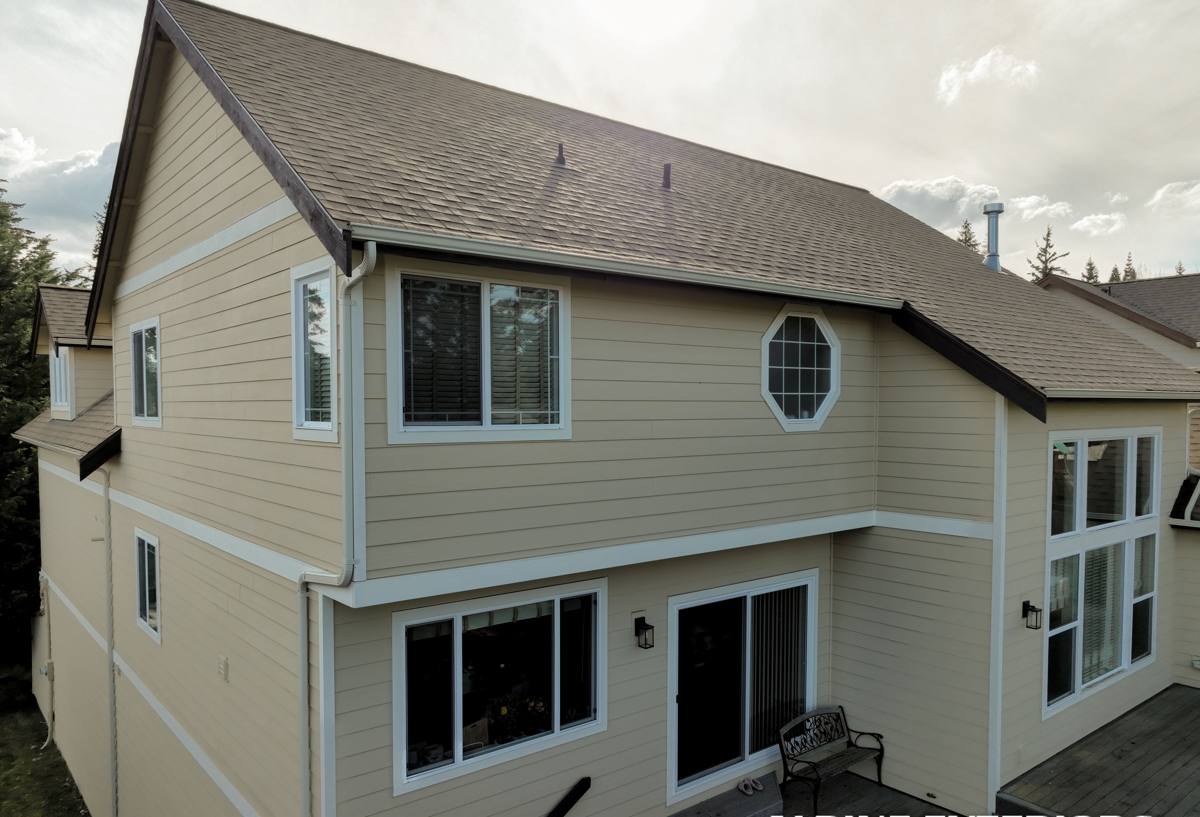
Signs a Deming Home's Windows Are Overdue for Replacement
Most homeowners don't think about their windows until something is visibly wrong, but by the time you can see the problem, water has usually been getting in for a while. Here's what we look for, and what you can check yourself:
- Fogging or a milky haze between panes of double-glazed glass — the seal has failed and the insulating gas or dead-air space is gone
- Soft or discolored wood on the interior or exterior frame, especially at the bottom corners where water pools
- Windows that are hard to open, close, or lock — often a sign the frame has swollen or shifted out of square
- Visible daylight or a noticeable draft around the frame when it's windy
- Moss or dark streaking on the exterior trim or sill that keeps coming back no matter how often it's cleaned
- A noticeable jump in heating costs without any other explanation
- Condensation forming on the inside of the glass regularly during cold, wet weeks
One or two of these on their own don't always mean full replacement — sometimes it's a repair or a re-seal. But when several show up on the same window, or on windows that are original to the house, replacement is usually the more honest recommendation than patching something that's going to keep failing.
What a Correct Window Replacement Job Actually Involves
Removal and Inspection
Pulling the old window out is also our best chance to see what's actually happening behind the trim. In a climate like this, we routinely find rot in the sheathing or framing around older windows that looked fine from the outside. If we find damage, we address it before the new window goes in — installing a new window into a wet or rotted opening just guarantees the same problem returns in a few years, only now it's hidden behind new material.
Flashing and the Moisture Barrier
This is the part of the job that matters most and shows the least once it's done. Proper flashing directs any water that gets past the exterior cladding down and out, away from the framing, instead of letting it pool at the sill or work its way inward. In a region that sees as much driving rain as Whatcom County does, flashing that's taped, lapped, and integrated correctly with the house wrap is not optional — it's the difference between a window that lasts and one that causes a rot problem five or ten years down the line.
Installation, Shimming, and Sealing
A window has to be set plumb, level, and square, then shimmed so it isn't relying on the surrounding frame to hold its shape. After that comes insulation around the gap (not packed too tight, which can bow the frame) and exterior sealant at the right joints — not everywhere, since sealing the wrong spots can trap moisture instead of shedding it. Interior and exterior trim goes back on last, once we've confirmed the window operates smoothly.
Choosing the Right Window for This Climate
Frame material matters more here than it does in drier parts of the country, because the window spends a large share of the year sitting in damp air. There isn't one "right" answer for every home — it depends on budget, the look you want, and how much upkeep you're willing to do.
| Frame Material | How It Handles This Climate | Trade-Offs |
|---|---|---|
| Vinyl | Won't rot, resists moisture well, low maintenance | Fewer color/finish options; can look less traditional on older homes |
| Fiberglass | Very stable in temperature and humidity swings, holds paint well | Higher upfront cost than vinyl |
| Aluminum-clad wood | Real wood interior with a protected exterior face | Interior wood still needs care; more expensive; any gap in the cladding lets moisture reach the wood |
| Solid wood | Classic look, works fine when maintained | Requires regular repainting/resealing — the maintenance burden is real in a wet climate |
For most Deming homes, we lean toward vinyl or fiberglass for the standard replacement job because they hold up to moisture without ongoing maintenance. Where a home's character calls for a wood look, aluminum-clad wood windows can work well, but it's worth understanding upfront that any coating or cladding needs to stay intact — a chip or crack in that protective layer in this climate can let rot start from the inside out, which is harder to catch early.
Full-Frame Replacement vs. Insert Replacement
There are two basic ways to replace a window, and which one is right depends on the condition of what's already there.
| Insert (Pocket) Replacement | Full-Frame Replacement | |
|---|---|---|
| What it is | New window fits inside the existing frame | Old frame is removed down to the rough opening |
| Best for | Existing frame is solid, dry, and square | Frame has rot, damage, or you're changing window size/style |
| Speed | Faster, less disruption to interior/exterior trim | Takes longer, more trim work involved |
| Access to check for hidden damage | Limited — you can't see behind the old frame | Full access to inspect and repair sheathing/flashing |
Insert replacement is a legitimate option and often the right call when the existing frame is in good shape. But given how often we find moisture damage behind older windows in this area, we don't recommend it sight unseen — it's worth having someone actually check the condition of the frame before deciding, rather than assuming the cheaper, faster option is the right one for that particular window.
How Our Process Works
- Walkthrough and assessment — we look at each window you're considering replacing, check for signs of moisture damage, and talk through what you actually need versus what can wait.
- Written estimate — clear pricing on materials, labor, and what's included, with no pressure to decide on the spot.
- Scheduling around the weather — in a climate that sees rain most of the year, we plan installation days carefully and protect open wall sections if weather turns while work is underway.
- Removal, inspection, and repair — old windows come out, any hidden rot or damage gets addressed before anything new goes in.
- Installation — proper flashing, shimming, insulation, and sealing, in that order.
- Final check and cleanup — every window gets tested for smooth operation and a tight seal before we consider the job done, and the site is cleaned up before we leave.
What Drives the Cost of a Window Replacement Project
Every home is different, and exact pricing depends on specifics we'd need to see in person, but the factors below are what typically move the number up or down:
| Factor | Effect on Cost |
|---|---|
| Number of windows being replaced | More windows generally lowers the per-window cost |
| Frame material chosen | Vinyl is typically the most budget-friendly; fiberglass and wood-clad cost more |
| Full-frame vs. insert replacement | Full-frame costs more due to added labor and trim work |
| Hidden damage found during removal | Rot repair adds cost but prevents a repeat failure |
| Window size and configuration | Large, custom, or multi-panel windows cost more than standard sizes |
| Access and height | Second-story or hard-to-reach windows take more time to install safely |
Homeowners in this area are usually looking at a broad range from a few hundred dollars per window on the low end for a straightforward vinyl insert replacement, up to well over a thousand per window for larger, full-frame, or higher-end material jobs. The only way to get a real number is to have someone look at your specific windows and openings.
Why Local Experience in Deming Matters
A window replacement crew that works regularly in this part of Whatcom County has already seen what the local weather does to a poorly installed window — the rot patterns, the flashing shortcuts that fail first, the moss buildup that signals a drainage problem rather than just a cleaning issue. That experience shows up in small decisions during the job: how much slope to build into a sill, which sealant actually holds up through a wet winter, and when to recommend a repair instead of a full replacement. It also means we're not guessing at what "normal" looks like for a home out here — we've worked on enough of them to know what holds up and what doesn't.
Caring for New Windows in a Wet Climate
New windows still need a little upkeep to get their full lifespan out of them, especially somewhere as damp as this:
- Rinse pollen, dirt, and organic buildup off tracks and sills a couple times a year so moss and algae don't get a foothold
- Check exterior caulking annually and touch up any spots that have cracked or pulled away
- Keep gutters and downspouts clear so overflow isn't running down against window trim
- Trim back vegetation that's shading windows and keeping them from drying out between rains
- Open and close each window a few times a season so tracks and hardware don't seize up
None of this takes much time, but skipping it is how a good installation ends up with the same moss and staining problems as the windows it replaced.
If your windows are showing any of the signs above, or you just want an honest read on whether repair or replacement makes more sense for your home, we're glad to come take a look. Fill out the form below for a free, no-pressure estimate.