 Sudden Valley Siding
 Deck Replacement Built for Silver Beach Conditions
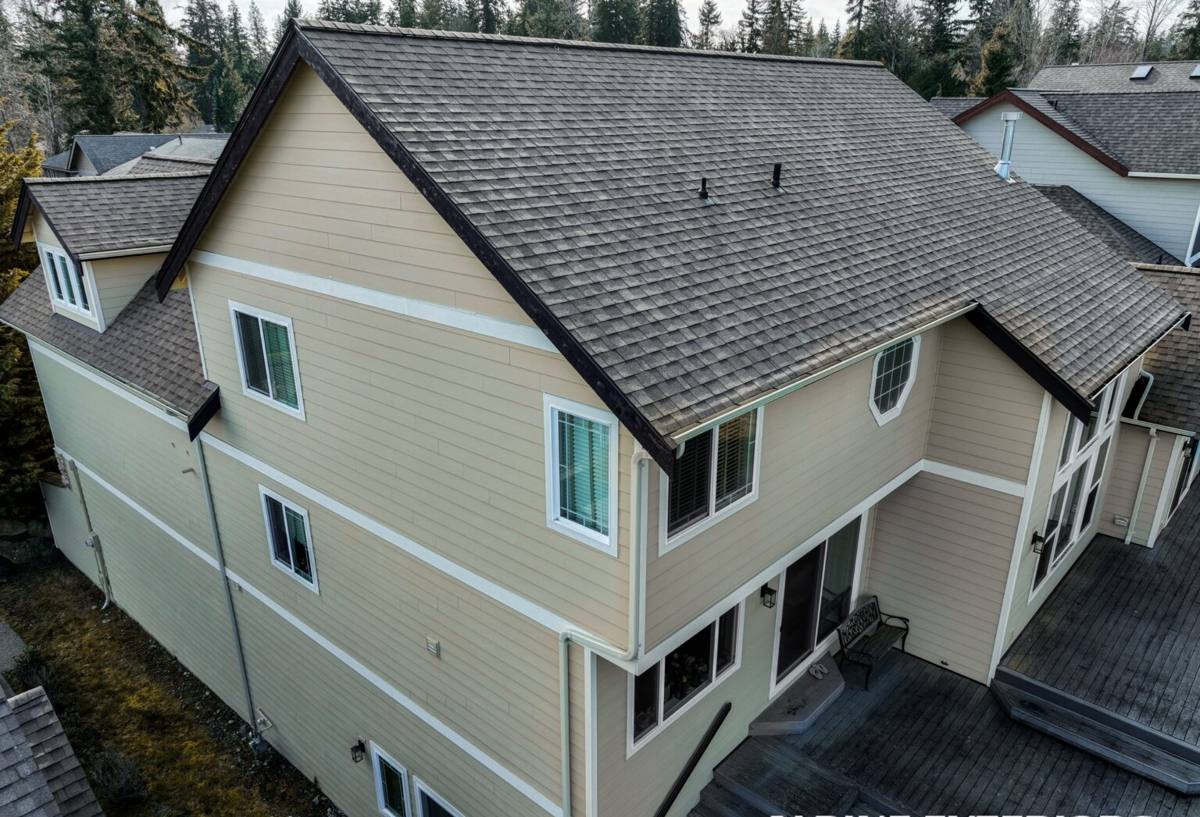
Homes around Silver Beach and the broader Sudden Valley area sit in one of the wetter, greener corners of Whatcom County. That's part of why people live here — the tree cover, the water nearby, the quiet. It's also exactly why decks in this pocket of the county fail faster than decks built the same way somewhere drier. Between the long shoulder-season rains, the marine-influenced air that keeps everything damp longer than homeowners expect, and a moss season that can stretch from late fall into spring, a deck here is doing more work than a deck in a dry inland climate. If it wasn't built with that in mind, it shows up in soft boards, black streaking, and ledger connections that were never properly flashed.
We replace decks in this area regularly, which means we're not guessing at how local conditions behave over a few seasons — we're seeing it firsthand on the decks we get called out to fix or replace. This page covers what actually matters for a Silver Beach deck replacement: the failure points specific to this climate, what a correct rebuild involves, and how we run the job from first look to final walkthrough.
Why Decks Near Silver Beach Wear Out Faster
Moisture That Doesn't Fully Dry Between Storms
In a lot of the country, decks get a real dry-out period between rain events. Around Sudden Valley, tree canopy and tree cover slow airflow across deck surfaces, and the driving rain that comes through in fall and winter tends to get pushed sideways under railings and against house walls by wind off the water. The result is wood and fasteners that stay damp longer, which accelerates rot in end grain, ledger boards, and anywhere two pieces of wood meet without a drainage gap.
Moss and Organic Growth
Moss doesn't just look bad — it holds moisture against the decking surface and, on stairs and ramps, it turns into a real slip hazard. A deck with poor airflow underneath, tight board spacing, or shaded northern exposure (common on wooded lots in this area) can grow a moss layer within a couple of seasons if the surface material and gapping weren't chosen with that in mind.
Salt and Marine Air Exposure
Whatcom County's proximity to Puget Sound and Bellingham Bay means homes throughout the region see some level of salt-laden, marine air, especially on windier days. That air accelerates corrosion on fasteners, joist hangers, and railing hardware that isn't rated for it. A deck built with standard interior-grade screws or uncoated brackets will show rust streaks and weakened connections years before a deck built with the right hardware spec.
What a Correct Deck Replacement Involves Here
A deck replacement isn't just pulling up old boards and laying down new ones. Done right for this climate, it starts underneath the surface most people never look at.
- Full inspection and replacement of the ledger board connection, with proper flashing so water can't get behind the house siding
- Joist hangers, structural screws, and fasteners rated for exterior and coastal-influenced exposure — not standard interior hardware
- Correct board spacing and framing height to allow airflow underneath the deck surface, which slows moss and mildew buildup
- Footings checked or replaced to current code depth and bearing, since older decks in this area were often built to lighter standards
- Decking material chosen with moss resistance, moisture behavior, and long-term maintenance in mind — not just upfront cost
- Stair and railing hardware upgraded to match the same corrosion resistance as the rest of the structure
Skipping any one of these is how a deck that looks fine in year one starts showing soft spots, staining, or loose railings by year three or four.
Choosing the Right Decking Material for This Climate
There's no single "best" decking material — there's a best fit for how a specific deck will be used, how much shade it sits in, and how much upkeep the homeowner wants to do. For Silver Beach and Sudden Valley properties, moisture behavior and moss resistance carry more weight than they would in a drier climate.
| Material | Moisture & Moss Behavior | Maintenance | Typical Lifespan |
|---|---|---|---|
| Pressure-treated wood | Absorbs moisture readily; needs sealing to resist staining and moss | Annual cleaning and periodic re-sealing | 10–15 years with upkeep |
| Cedar | Naturally rot-resistant but still needs finish maintenance in shaded, damp areas | Regular cleaning, re-staining every few years | 15–20 years with upkeep |
| Composite decking | Doesn't absorb water like wood; textured boards resist moss buildup better than smooth wood | Occasional washing, no sealing or staining | 25–30+ years, manufacturer-warrantied |
| PVC decking | Fully moisture-resistant surface; performs well in shaded, damp spots | Occasional washing | 25–30+ years, manufacturer-warrantied |
For decks that sit in heavy shade or close to tree cover — common throughout this area — we usually steer homeowners toward composite or PVC decking, specifically because the maintenance burden of keeping a wood surface moss-free in that kind of exposure adds up fast. That's a trade-off call based on upkeep and moisture behavior, not a knock on wood as a material — plenty of well-sunned, well-ventilated decks in the area still do fine with cedar or treated lumber and a regular maintenance routine.
Framing and Structure: The Part That Actually Determines Lifespan
The decking surface is what everyone sees, but the framing underneath is what determines whether the deck is still safe and solid in fifteen years. On older decks we replace in this area, the most common structural issues we find are undersized or corroded ledger connections, joists without proper hangers, and footings that were never poured to adequate depth for the soil and drainage conditions on the lot. A deck replacement gives us the chance to fix all of that at once — something you can't do with a simple resurfacing job.
We also pay close attention to grading and drainage around the footings during replacement, since standing water at the base of a deck post is one of the more overlooked contributors to long-term structural rot in this climate.
Our Deck Replacement Process
1. On-Site Assessment
We walk the existing deck, check the framing, ledger connection, footings, and hardware condition, and talk through how the space actually gets used — entertaining, grilling, stairs to the yard, whatever it is. That use case affects layout and material recommendations.
2. Straightforward Estimate
We put together a written estimate that breaks out demolition, framing, decking material, hardware, and railing, so there's no guessing what's driving the cost. No pressure to decide on the spot.
3. Removal and Structural Rebuild
We remove the old deck down to the framing (or fully to grade if the structure needs it), correct any footing or ledger issues, and rebuild the frame to current code with corrosion-resistant hardware throughout.
4. Decking, Railing, and Finish Work
Surface material goes down with proper spacing for drainage and airflow, followed by railing, stairs, and any trim or finish details.
5. Final Walkthrough
We walk the finished deck with the homeowner, cover basic maintenance for whatever material was installed, and answer any questions before we consider the job done.
Signs Your Silver Beach Deck Needs Replacing, Not Just Repairing
- Soft or spongy spots in the decking, especially near the house or at board ends
- Visible gaps, rust staining, or corrosion around fasteners and joist hangers
- A ledger board area that feels damp or shows staining on the siding above it
- Persistent moss or dark staining that comes back within weeks of cleaning
- Railings or stair stringers that flex or feel loose underfoot
- A deck built more than 15–20 years ago that hasn't had a structural inspection
If it's one board or a single connection, that's often a repair. If it's multiple items on that list, replacement is usually the more honest recommendation — patching a structurally tired deck just delays the same conversation a year or two down the road.
Why a Crew That Already Works Silver Beach Matters
General contractors who don't work this specific area regularly tend to default to generic specs — standard hardware, standard spacing, whatever they'd use anywhere else in Whatcom County. That's not necessarily wrong, but it's not tuned to what actually holds up here. A crew that's replaced decks around Sudden Valley and Silver Beach has already seen which ledger flashing details actually keep water out under driving rain, which hardware holds up against the marine-influenced air, and which decking surfaces genuinely resist moss versus which ones just look good in a showroom. That experience shows up in fewer callbacks and a deck that still looks and performs well after several wet Whatcom County winters, not just in the first summer.
Get a Free, No-Pressure Estimate
If your deck near Silver Beach is showing soft spots, moss that won't quit, or hardware that's starting to rust, it's worth having someone take a real look before you decide between repair and replacement. Fill out the form below for a free estimate — we'll walk the deck, give you an honest read on its condition, and lay out your options with no pressure either way.